Tag: Symphony

  • Robert Simpson Centenary A Life of Integrity

    Robert Simpson Centenary A Life of Integrity

    Integrity never guarantees popularity. But it may get you a mention on Classic Ross Amico on your centenary.

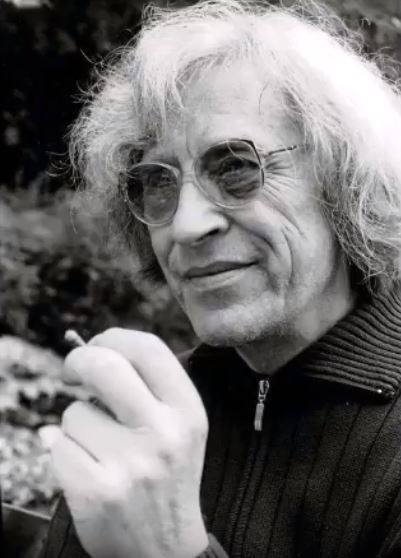
    Today is the 100th anniversary of the birth of English composer Robert Simpson. A conscientious objector during World War II, Simpson served in a mobile surgical unit during the London Blitz. On the side, he studied composition with Herbert Howells. Eventually music got the upper hand, and Simpson abandoned medicine. He did, however, become a doctor – a Doctor of Music – on graduation from Durham University.

    In 1951, he joined the staff of the British Broadcasting Corporation. There, he became one of the organization’s most-respected producers. He would remain with the BBC for the better part of three decades. When corporate meddling began to erode the quality of broadcast in the late ‘70s, Simpson was among those who protested the loudest. He clashed with management, went to the press, and ultimately resigned, only months before he would have been eligible to retire with full pension. (Ah, the world of radio. I know it well.)

    That kind of integrity is also reflected in his music, which includes 11 expertly-crafted symphonies and 15 string quartets. Simpson’s music has always had his admirers. Unusually for a living composer, a Robert Simpson Society was formed in 1980, with the aim of promoting his work.

    Simpson himself greatly respected Beethoven, Bruckner, Nielsen, and Sibelius. He gave insightful talks on their music and added to their scholarship. As a producer, he was an active champion of the works of Havergal Brian, the eccentric autodidact who wrote 32 symphonies – 20 of them after the age of 80. In particular, Simpson supervised the historic Proms broadcast of Brian’s Symphony No. 1, the “Gothic,” frequently cited as the largest symphony ever composed.

    In 1956, Simpson was awarded a Carl Nielsen Gold Medal. In 1963, he received a Medal of Honor from the Bruckner Society of America. Unusual for an amateur, he was also made a Fellow of the British Astronomical Association. (Astronomy was another one of Simpson’s great passions.) He refused an appointment as Commander of the Order of the British Empire in 1980.

    In 1986, he moved to Ireland. There, he lived on Tralee Bay in Kerry. Five years later, while on a lecture tour, he suffered a severe stroke which left him in debilitating pain for the remaining six years of his life. He died in 1997.

    Most of his major works have been documented on the Hyperion label, the symphonies conducted by Vernon Handley. His music has also been recorded by Sir Adrian Boult, Jascha Horenstein, William Boughton, and Rafael Wallfisch.

    The Fourth Symphony is as good an introduction as any, with a scherzo transparently modeled after its counterpart in Beethoven’s 9th. Further, the overall tone of the work strikes me as buoyant and optimistic. I hope you enjoy it. It’s not background music, but it is rewarding.

    The Symphony No. 4:

    To sample just the Scherzo:

    Simpson talks about Carl Nielsen:

    Simpson interviewed by Bruce Duffie:

    http://www.bruceduffie.com/simpson.html

    The Robert Simpson Society:

    The music of Robert Simpson

    A lifetime of integrity counts for something. But it certainly doesn’t hurt to have the compositional chops to back it up. Happy birthday, Robert Simpson.

  • Haydn Birthday Symphony Darth Vader’s Tune

    Haydn Birthday Symphony Darth Vader’s Tune

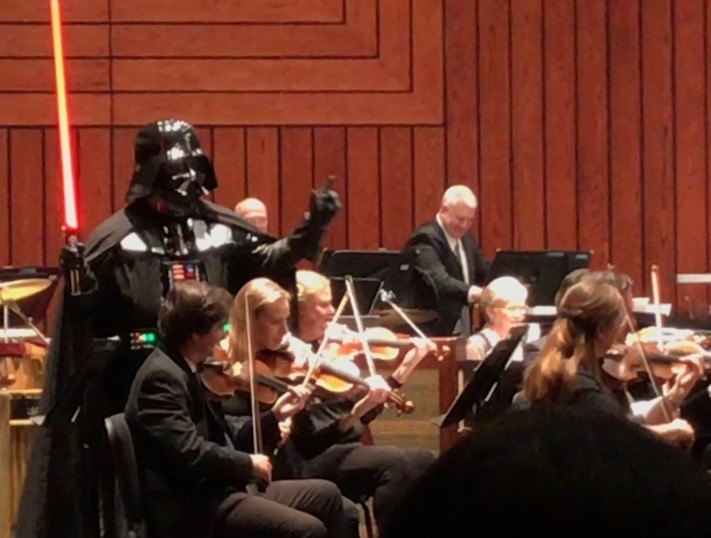
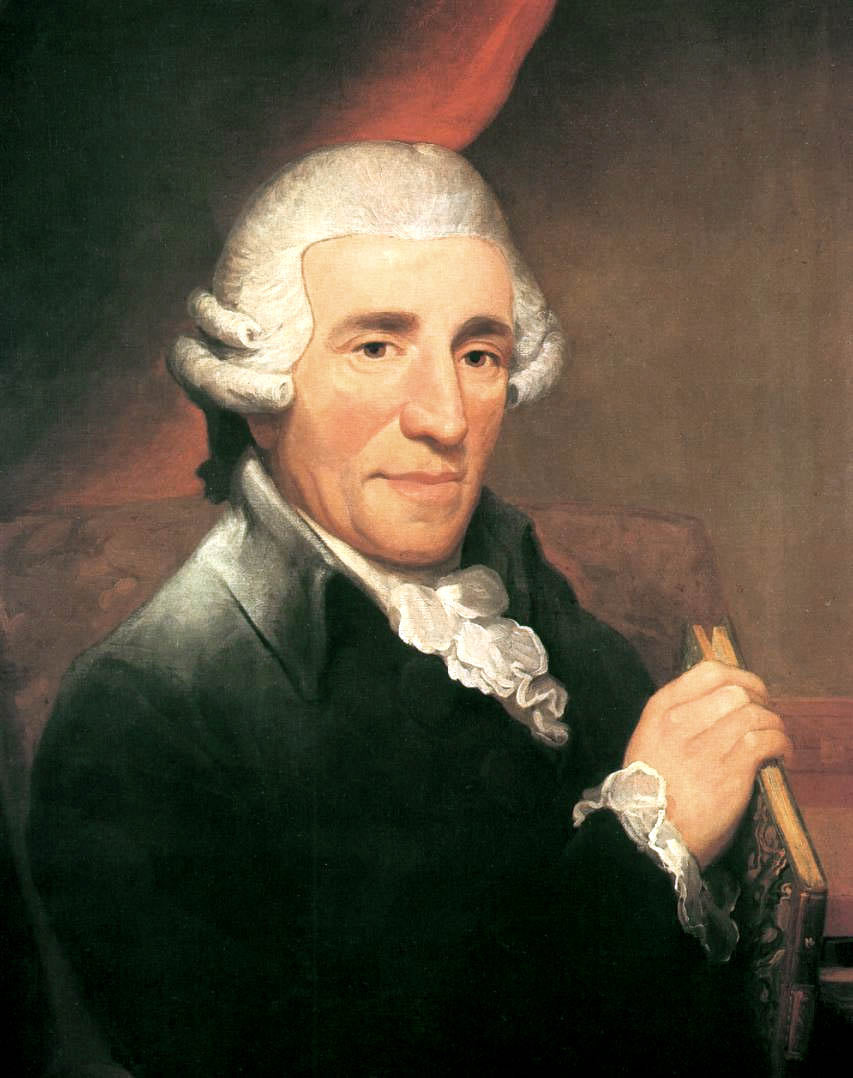
    Today is the birthday of one of the great composers. Just because we should be staying inside doesn’t mean we have to keep “Haydn” in isolation.

    Haydn brings light to the Dark Side. Enjoy Darth Vader’s favorite symphony.

  • Heinz Winbeck A Lost Symphony Found

    Heinz Winbeck A Lost Symphony Found

    The German composer Heinz Winbeck has died. I’m ashamed to say, before today I knew nothing about this man, who forged five epic symphonies. It would seem, upon listening to the Fifth, that my existence up until now has been a barren one.

    The symphony, composed in 2009, bears the subtitle “Jetzt und der Stunde des Todes” nach Motiven insbesondere des Finales der IX. Symphonie von Anton Bruckner (“Now and in the hour of death” on motives particularly from the finale of the 9th Symphony of Anton Bruckner).

    So much wonderful music in the world. It is one of life’s great tragedies that one will never be able to hear all of it. If you like Bruckner, prepare to be totally blissed out.

    https://www.youtube.com/watch?v=TmLmpqI2UX4&feature=youtu.be&t=2895

  • Floodgates of Music on WPRB

    Floodgates of Music on WPRB

    Après moi, le deluge!

    With still more heavy rain on the way this weekend – and rain in the forecast through at least Tuesday – I’ve affixed pontoons to my vehicle in my grim determination to fulfill a promise to open the floodgates on great music.

    This Sunday morning on WPRB, we’ll immerse ourselves in works related to excessive precipitation, swelling floodwaters, and uplifting rainbows. We’ll be sopping with symphonies, soaking in semi-operas, inundated with incidental music, and saturated by symphonic poems.

    French toast will be served tempest-tost, this Sunday morning from 7 to 10 EDT, on WPRB 103.3 FM and wprb.com. You’ll never Noah what hit you, on Classic Ross Amico.

  • Symphony or Concerto Genre Bending Music

    Symphony or Concerto Genre Bending Music

    Hector Berlioz’s “Harold in Italy” (viola and orchestra). Leonard Bernstein’s Symphony No. 2 “The Age of Anxiety” (piano and orchestra). Benjamin Britten’s Cello Symphony. These genre-bending works break all the rules. Are they symphonies or concertos?

    We won’t be hearing any of these this Thursday morning on WPRB, though we will be listening to a full playlist of “concertos” for orchestra and “symphonies” for orchestra with prominent part for solo instrumentalist.

    Generally speaking, the concerto for orchestra is a large-scale piece in which the various sections of an orchestra are each given an opportunity to shine. The symphonies with a prominent solo instrument? Well, there is really is no rule for that. Why Vincent d’Indy’s “Symphony on a French Mountain Air,” for piano and orchestra, is not a concerto is anyone’s guess, beyond the French custom, usually applied to organ works, of calling concertos symphonies. Call it Gallic contrarianism, if you will.

    Highlights of the morning will include music by one-time Classic Ross Amico guest Zhou Tian, whose Concerto for Orchestra has been nominated in the category of “Best Contemporary Classical Composition” for this year’s Grammy Awards; organ “symphonies” by Alexandre Guilmant and Aaron Copland; a concerto “symphonique” for piano and orchestra by Henry Charles Litolff; and a “symphony” for solo piano by Charles-Valentin Alkan.

    Prepare yourself for identity crises and plenty of disorientation, this Thursday morning from 6 to 11 EST, on WPRB 103.3 FM and wprb.com. Then, why should things be different this week from any other, on Classic Ross Amico?

Tag Cloud

Aaron Copland (92) Beethoven (95) Composer (114) Film Music (121) Film Score (143) Film Scores (255) Halloween (94) John Williams (185) KWAX (229) Leonard Bernstein (100) Marlboro Music Festival (125) Movie Music (136) Opera (198) Philadelphia Orchestra (88) Picture Perfect (174) Princeton Symphony Orchestra (106) Radio (87) Ralph Vaughan Williams (85) Ross Amico (244) Roy's Tie-Dye Sci-Fi Corner (290) The Classical Network (101) The Lost Chord (268) Vaughan Williams (103) WPRB (396) WWFM (881)

DON’T MISS A BEAT

Receive a weekly digest every Sunday at noon by signing up here


RECENT POSTS