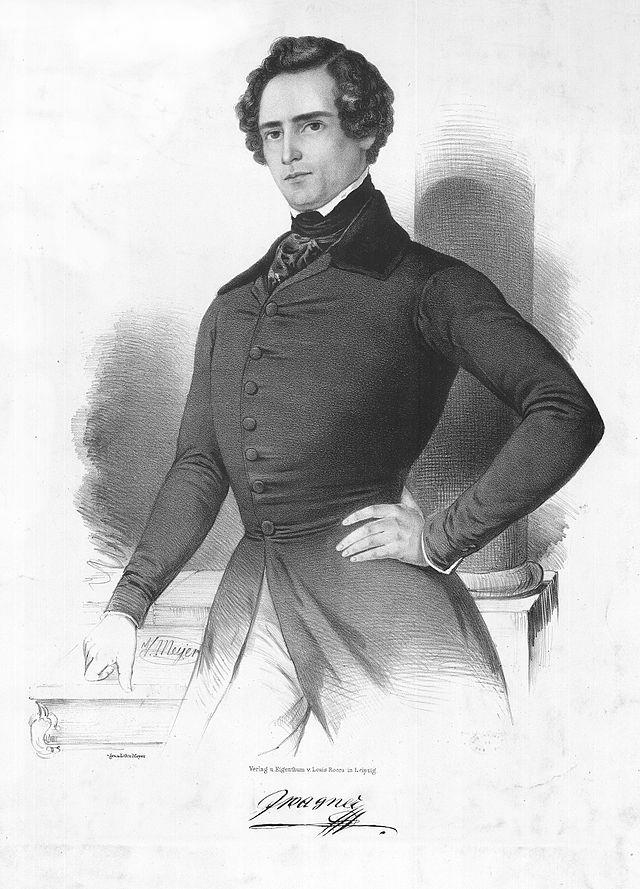
Wagner wrote symphonies? That’s right. He took a crack at writing two of them, in a Beethovenian style, before finding his niche as a revolutionary opera composer.
This week on “The Lost Chord,” we’ll hear Wagner’s Symphony in E, alongside early attempts by Gustav Holst and Claude Debussy. Judging from their mature works, these three would be among the least likely to attempt sonata form.
Impetuous youth! I hope you’ll join me for “Bold Heads on Young Shoulders” – audacious composers at the start of their careers strive for symphonic mastery – on “The Lost Chord,” now in syndication on KWAX Classical Oregon!
——–
Clip and save the start times for all three of my recorded shows:
PICTURE PERFECT, the movie music show – Friday at 8:00 PM EDT/5:00 PM PDT
SWEETNESS AND LIGHT, the light music program – Saturday at 11:00 AM EDT/8:00 AM PDT
THE LOST CHORD, unusual and neglected rep – Saturday at 7:00 PM EDT/4:00 PM PDT
Stream them, wherever you are, at the link!
https://kwax.uoregon.edu
Tag: Symphony
-
Impetuous Youth on “The Lost Chord”
-
Magnard Sohy: Music, War, and Remembrance
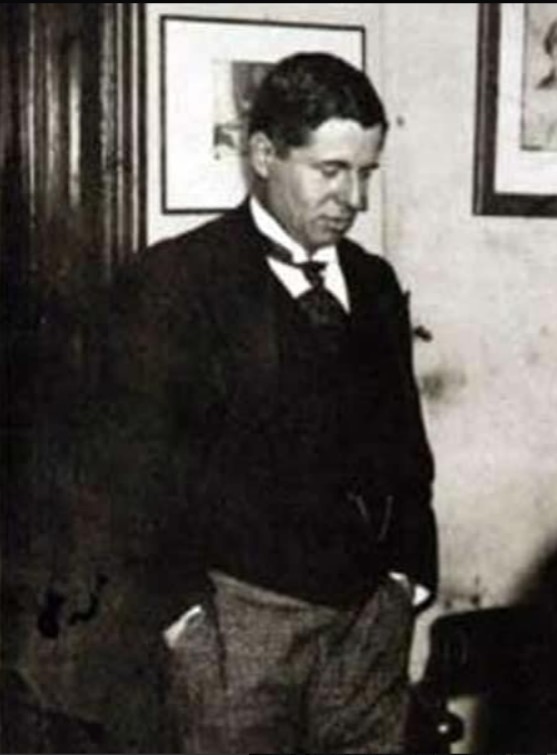
To say that French composer Albéric Magnard had a fiery disposition runs the risk of skirting bad taste.
It was on this date in 1914 that Magnard went out in a blaze of glory, when, at the age of 59, and as a civilian, he refused to surrender his property to invading German forces. After ushering his wife and two daughters out the back door, he opened fire on some trespassing soldiers, instantly killing one of them. In retaliation, the Germans set fire to his house. Magnard is assumed to have perished in conflagration. However, his body was never found.
A couple of weeks ago, I was streaming KWAX (as all good folks should), and for the first time encountered a symphony by Charlotte Sohy, written in 1917, that may have been composed in memory of Magnard. Sohy and her husband, Marcel Labey, were friends of the composer, and Sohy’s symphony shares the same key, the uncommon C-sharp minor, as Magnard’s Symphony No. 4.
Her symphony is subtitled “Grand Guerre,” or “Great War.” Marcel would survive the conflict, having served in the French army. He died in 1968. Sohy, who studied composition with Vincent d’Indy and was a cousin of Louis Durey (of “Les Six” fame), died in 1955.
Her symphony was never performed in her lifetime. It was heard for the first time in France only in 2019!
In this age of wonders, now you can enjoy it here:
Also, Magnard’s Symphony No. 4:
PHOTOS: Albéric Magnard and Charlotte Sohy
-

Mahler Still Talks to Us Today
As Oscar Wilde memorably observed, “… There is only one thing in the world worse than being talked about, and that’s not being talked about.”
Gustav Mahler’s unprecedentedly ambitious – and loud – masterworks caused his contemporaries to sit up and take notice. Reactions ranged from exaltation to confusion to outright hostility, and not necessarily in that order. Of course Mahler got the last laugh. Despite the high cost of presenting his symphonies, they are now more prevalent on concert programs than ever before. And the halls are packed.
You haven’t really made it until you are widely caricatured. You’ll find more examples by following the link below. Some of the portraits are affectionate; some are mean-spirited. Either way, it’s clear that Mahler was being talked about.
Happy birthday, Gustav Mahler!
-

Beethoven’s 9th: A Symphony of Brotherhood and Influence
In the past, May 7 was a day for frenemies, as I’ve always been fond of emphasizing the uneasy friendship of Brahms and Tchaikovsky on their birthday anniversaries – artists repelled by one another’s creations, who were pleasantly surprised by how well they got along once they met in person (though they still disliked one another’s music). The alcohol they consumed certainly could not have hurt.
However, today, we put all that frenemy business aside, as all men are brothers, when the birthdays of Brahms and Tchaikovsky coincide with the 200th anniversary of the premiere of Beethoven’s Symphony No. 9. The Ninth, of course, is the visionary symphony that climaxes with an ecstatic setting of Schiller’s “Ode to Joy.” Everyone knows the melody, even if they think they don’t. The text proclaims, depending on the translation, “All mankind will become as brothers!”
The tune is demonstrated here by Schroeder, insistently joyous even in the face of Lucy’s hostility:
Beethoven’s revolutionary masterwork, striking for both its scale (oversized orchestra with a quartet of vocal soloists and chorus) and length (running to well over an hour), cast a forbidding shadow. Much ink has been spilled about the struggles of composers throughout the 19th century to come to terms with the Ninth. In fact, I remember reading a book by conductor Felix Weingartner, a renowned Beethoven interpreter (he was the first to record all nine symphonies), titled “On the Performance of Beethoven’s Symphonies and Other Essays,” in which he addresses the successes and failures of all the major symphonic composers that followed.
The story of the legendary first performance of the work, on May 7, 1824, is well-known, but bears repeating. The auditorium of Vienna’s Theater am Kärntnertor (Carinthian Gate Theater) was packed – Schubert was in attendance, and so was Czerny – and the orchestra was staffed by many of the great musicians of the day. No complete roster of performers survives, but as was the case with the all-star team that played in the premiere of Beethoven’s 7th, many of Vienna’s most elite musicians participated.
It was Beethoven’s first public appearance in 12 years. By that time, of course, the composer was almost completely deaf. But that didn’t keep him from air-conducting as the ideal interpretation unfurled in his head. The official conductor was the theater’s kapellmeister, Michael Umlauf, and he instructed the musicians to watch him, not the composer, as he had witnessed an earlier disaster with Beethoven in the pit for a dress rehearsal for “Fidelio.”
According to one of the violinists, Beethoven “stood in front of a conductor’s stand and threw himself back and forth like a madman. At one moment he stretched to his full height, at the next he crouched down to the floor, he flailed about with his hands and feet as though he wanted to play all the instruments and sing all the chorus parts.”
When the piece concluded, the hall resounded with applause, but Beethoven was still conducting. The contralto soloist, Karoline Unger, approached the composer and gently turned him around to acknowledge the cheers. Members of the audience, who recognized they could not be heard, waved their handkerchiefs, hats, and hands, so that even in his isolation, the composer knew he had scored a hit.
Mankind never does seem to get its act together, but even as the world teeters on the brink of disaster, the Ninth continues to resonate. Concert halls fill wherever it is programmed. When the compact disc was developed, technicians standardized the length at 74 minutes, so that the format could accommodate a complete recording of the work. (In the days of LP, I recall some rather awkward breaks in the middle of the third movement.) Used as the prototype was Wilhelm Furtwängler’s 1951 recording.
In the history of music, the Ninth stands like the monolith in Stanley Kubrick’s “2001: A Space Odyssey.” (Interesting that Kubrick would use the work to such ironic effect a few years later in “A Clockwork Orange.”) There was music before the Ninth and there was music after the Ninth. From a certain point of view, everything seemed to culminate in its creation, and afterward, all was decadence. It is the Continental Divide of classical music.
For the Romantics, the Ninth changed everything. Every composer for a hundred years had to grapple with its influence. For the rest of the century, experiments with orchestra and chorus became larger and larger, setting all manner of aspirational texts. Mahler pushed 74 minutes to 90 with his Third Symphony. His Eighth is so large, it was dubbed “The Symphony of a Thousand.” In the 20th century, there was nowhere to go but down. Even as composers embraced the leaner textures of neoclassicism they continued to labor in the shadow of Beethoven, whether assimilating his lessons or rejecting them.
The inclusion of the chorus is the most obvious innovation, but Beethoven wouldn’t be Beethoven if there weren’t plenty else to reward a closer look, and musicians and scholars have been dissecting the work and studying its secrets for the past two centuries.
Brahms, who lived from 1833 to 1897, and Tchaikovsky, who lived from 1840 to 1893, were no different from their contemporaries in feeling the heat of the 9th. It is well-known that Brahms experienced enormous pressure in his own mastery of symphonic form, postponing his first symphony for many years, as he continued to hone his skills on works such as the orchestral Serenades and the Piano Concerto No. 1, the latter conceived on a suspiciously symphonic scale. It took him over twenty years to own up to an actual symphony.
At its debut, conductor Hans von Bülow dubbed it “Beethoven’s Tenth,” no doubt because of its excellence, but also because of the perceptible influence of the earlier composer. It was Bülow who also formulated “the three B’s,” grouping Bach, Beethoven, and Brahms in a spontaneously-erected pantheon that music-lovers still invoke. Brahms was surely relieved that the work was so rapturously received, but (being Brahms) he was also annoyed when it was pointed out that the chorale theme that forms the basis of the last movement bears an uncanny resemblance to Beethoven’s “Ode to Joy.” To this, Brahms gruffly responded, “Any ass can see that!”
I’ve cued the theme up for you at the link, but nothing’s stopping you from going back to listen to the entire symphony:
After the First, things came easier for Brahms. The ice broken, he composed his Symphony No. 2, with confidence, in a single summer.
In Tchaikovsky’s case, his own predilection gravitated more toward Mozart. This is evident, of course, in his Orchestral Suite No.4, subtitled “Mozartiana,” but also in the “Variations on a Rococo Theme” for cello and orchestra. He confided to his diary, “I do bow before the greatness of some of his works, but I do not love Beethoven.” That’s not to say he did not respect, or even revere him. His remarks are more nuanced than I make them out to be. You’ll find his complete thoughts here, including the diary entry from which I excerpt, at the bottom of the page:
Fascinating, then, that Tchaikovsky would exhibit such youthful bravado in setting Schiller’s text himself for his graduation examinations at the St. Petersburg Conservatory! This is a stunning display of self-assurance for a composer who frequently struggled with insecurity. He later dismissed the work as immature, but it is certainly worth hearing:
In Beethoven, as in all things, it seems, Brahms and Tchaikovsky were divided. Fortunately, they were united in the brotherhood of drink.
Happy birthday to the Felix and Oscar of classical music, and raise a glass to the most important symphony ever written, with a thought for the brotherhood of man, now to be desired as much as ever.
This brisk performance from 1958 is one of my favorites. Not for every day, perhaps, but thrilling.
Weingartner conducts in 1935
Furtwängler sets the standard length of the CD in 1951
Bernstein celebrates the fall of the Berlin Wall with a multinational ensemble in 1989, substituting “Freiheit” (Freedom) for Schiller’s “Freude” (Joy)
-
Mahler Meets Sibelius A Composer Clash
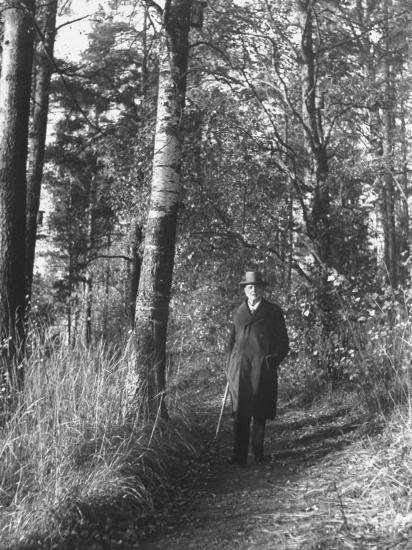
In 1907, Gustav Mahler visited Helsinki, where he met Jean Sibelius. The two towering composers went for a walk in nature, when unsurprisingly the talk turned to shop.
It was Mahler who lent an exclamation point, as they swapped observations on the symphony. Poor Sibelius was taken off-guard, as he was merely contemplating the nuts and bolts. “I admire its severity of form and profound logic,” he said. To which Mahler, seizing the advantage, replied, “A SYMPHONY MUST BE LIKE THE WORLD. IT MUST EMBRACE EVERYTHING!”
If I know Sibelius, after that, his private thoughts were full of vodka and cigars.
Happy birthday, Gustav Mahler, one intense S.O.B.
Tag Cloud
Aaron Copland (94) Beethoven (95) Composer (114) Film Music (148) Film Score (143) Film Scores (255) Halloween (97) John Williams (196) KWAX (232) Leonard Bernstein (105) Marlboro Music Festival (125) Movie Music (163) Mozart (91) Opera (215) Philadelphia Orchestra (90) Picture Perfect (174) Princeton Symphony Orchestra (110) Radio (90) Ross Amico (244) Roy's Tie-Dye Sci-Fi Corner (290) The Classical Network (101) The Lost Chord (269) Vaughan Williams (107) WPRB (397) WWFM (881)