Tag: The Song of Bernadette

  • Saints on Screen Classic Movie Scores

    Saints on Screen Classic Movie Scores

    This week on “Picture Perfect,” on this November 1st, the saints go marching in.

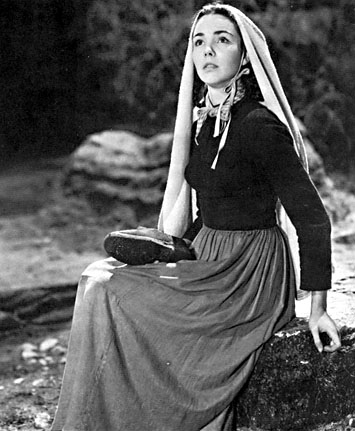
    We’ll hear a suite from “The Song of Bernadette” (1943), one of Jennifer Jones’ finest hours. Jones was honored with an Academy Award for her performance. The film was nominated in 12 categories. Franz Werfel’s novel relates the story of Bernadette Soubirous, a Lourdes peasant prone to visions of the Blessed Virgin Mary.

    Igor Stravinsky made several attempts to break into Hollywood film scoring, but he couldn’t keep up with the relentless schedule. He took a crack at the “Apparition of the Virgin” scene, but then had second thoughts. The project went to Alfred Newman, who won his third of nine Oscars. Stravinsky’s music was recycled in the second movement of his “Symphony in Three Movements.”

    The life of Joan of Arc has been translated to film many times. In the case of “Saint Joan” (1957), Otto Preminger adapted the play by George Bernard Shaw. Newcomer Jean Seberg was cast in the title role. Her inexperience brought her in for a sound critical drubbing. Even an old hand like screenwriter Graham Greene was not immune to critical barbs for the liberties he took in reworking Shaw’s play. Despite all that, the score, by Russian-born English composer Mischa Spoliansky, is lovely.

    By contrast, the film of “A Man for All Seasons” (1966), after the play of Robert Bolt, was lavishly praised, especially Paul Scofield’s performance as Sir Thomas More, for which he received an Academy Award for Best Actor. The film was the recipient of six Oscars in all, including that for Best Picture. The period-inflected score is by Georges Delerue.

    Henryk Sienkiewicz’s international bestseller, “Quo Vadis,” incorporates into its narrative Saints Peter and Paul, but the truly interesting characters are the cynical Petronius, who really knows how to throw a party, and the quite mad Nero, who plays the lyre, even as Rome burns.

    Miklós Rózsa’s score has been much-lauded for its attempt at historical authenticity – allegedly it incorporates early Greek, Hebrew and Sicilian melodies – though its popularity has been eclipsed, somewhat, by Rózsa’s “Ben-Hur” and “King of Kings.” “Quo Vadis” is really the film in which Rózsa lays out the blueprint for a decade or more of big screen piety. Bernard Herrmann called it “the score of a lifetime.”

    I hope you’ll join me for “Lives of the Saints,” on this All Saints’ Day, on “Picture Perfect,” music for the movies, now in syndication on KWAX, the radio station of the University of Oregon!


    Clip and save the start times for all three of my recorded shows:

    PICTURE PERFECT, the movie music show – Friday at 8:00 PM EDT/5:00 PM PDT

    SWEETNESS AND LIGHT, the light music program – ALL NEW! – Saturday at 11:00 AM EDT/8:00 AM PDT

    THE LOST CHORD, unusual and neglected rep – Saturday at 7:00 PM EDT/4:00 PM PDT

    Stream them, wherever you are, at the link!

    https://kwax.uoregon.edu/


    PHOTO: Jennifer Jones and the Lourdes’ prayer

  • Saints on Screen: The Music of Faith in Film

    Saints on Screen: The Music of Faith in Film

    This week on “Picture Perfect,” the saints go marching in.

    We’ll begin with a suite from “The Song of Bernadette” (1943), one of Jennifer Jones’ finest hours. Jones was honored with an Academy Award for her performance (the film was nominated in 12 categories). Franz Werfel’s novel tells the story of Bernadette Soubirous, a Lourdes peasant prone to visions of the Blessed Virgin Mary.

    Igor Stravinsky made several attempts to break into Hollywood, but he could never keep up with the grinding schedule. He took a crack at scoring the “Apparition of the Virgin” scene, but then thought better of it. The project went to Alfred Newman, who won his third Oscar (of nine). Stravinsky’s music would be recycled in the second movement of his “Symphony in Three Movements.”

    The story of Joan of Arc has been translated to film many times. In the case of “Saint Joan” (1957), Otto Preminger adapted the play by George Bernard Shaw. Newcomer Jean Seberg was cast in the title role. Her inexperience brought her in for a sound critical drubbing. Even an old hand like screenwriter Graham Greene was not immune to critical barbs for the liberties he took in reworking Shaw’s play. Despite all that, the score, by Russian-born English composer Mischa Spoliansky, is lovely.

    By contrast, the film of “A Man for All Seasons” (1966), after the play of Robert Bolt, was lavishly praised, especially Paul Scofield’s performance as Sir Thomas More (for which he received an Academy Award for Best Actor). The film won six Academy Awards in all, including that for Best Picture. The period-inflected score is by Georges Delerue.

    I suppose it’s impossible to get through Easter without some Biblical bombast, so why not go all out with “Quo Vadis” (1951)? Henryk Sienkiewicz’s international bestseller incorporates into its narrative Saints Peter and Paul, but the really interesting characters are the cynical Petronius (Leo Genn), who knows how to throw a party, and the quite mad Nero (Peter Ustinov), who plays the lyre even as Rome burns.

    Miklós Rózsa’s score has been much-lauded for its attempt at historical authenticity (the incorporation of contemporaneous Greek, Hebrew, and Sicilian melodies), though its popularity has been eclipsed, somewhat, by that of his work on “Ben-Hur” and “King of Kings.” “Quo Vadis” is really the film in which Rózsa lays out the blueprint for a decade or more of big screen piety. Bernard Herrmann called it “the score of a lifetime.”

    I hope you’ll join me in taking some time off for good behavior. That’s “Lives of the Saints,” on “Picture Perfect,” music for the movies, this Saturday evening at 6:00 EDT, on WWFM – The Classical Network and wwfm.org.


    PHOTO: Jennifer Jones and the Lourdes’ prayer
  • Lives of the Saints Classic Film Scores

    Lives of the Saints Classic Film Scores

    This week on “Picture Perfect,” on this November 1st, the saints go marching in.

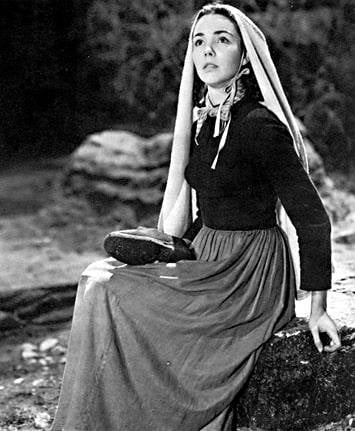
    We’ll hear a suite from “The Song of Bernadette” (1943), one of Jennifer Jones’ finest hours. Jones was honored with an Academy Award for her performance. The film was nominated in 12 categories. Franz Werfel’s novel relates the story of Bernadette Soubirous, a Lourdes peasant prone to visions of the Blessed Virgin Mary.

    Igor Stravinsky made several attempts to break into Hollywood film scoring, but he couldn’t keep up with the relentless schedule. He took a crack at the “Apparition of the Virgin” scene, but then had second thoughts. The project went to Alfred Newman, who won his third of nine Oscars. Stravinsky’s music was recycled in the second movement of his “Symphony in Three Movements.”

    The life of Joan of Arc has been translated to film many times. In the case of “Saint Joan” (1957), Otto Preminger adapted the play by George Bernard Shaw. Newcomer Jean Seberg was cast in the title role. Her inexperience brought her in for a sound critical drubbing. Even an old hand like screenwriter Graham Greene was not immune to critical barbs for the liberties he took in reworking Shaw’s play. Despite all that, the score, by Russian-born English composer Mischa Spoliansky, is lovely.

    By contrast, the film of “A Man for All Seasons” (1966), after the play of Robert Bolt, was lavishly praised, especially Paul Scofield’s performance as Sir Thomas More, for which he received an Academy Award for Best Actor. The film was the recipient of six Oscars in all, including that for Best Picture. The period-inflected score is by Georges Delerue.

    Henryk Sienkiewicz’s international bestseller, “Quo Vadis,” incorporates into its narrative Saints Peter and Paul, but the truly interesting characters are the cynical Petronius, who really knows how to throw a party, and the quite mad Nero, who plays the lyre, even as Rome burns.

    Miklós Rózsa’s score has been much-lauded for its attempt at historical authenticity – allegedly it incorporates early Greek, Hebrew and Sicilian melodies – though its popularity has been eclipsed, somewhat, by Rózsa’s “Ben-Hur” and “King of Kings.” “Quo Vadis” is really the film in which Rózsa lays out the blueprint for a decade or more of big screen piety. Bernard Herrmann called it “the score of a lifetime.”

    I hope you’ll join me for “Lives of the Saints,” on this All Saints’ Day, on “Picture Perfect,” music for the movies, this Friday evening at 6:00 EDT, on WWFM – The Classical Network and wwfm.org.


    PHOTO: Jennifer Jones and the Lourdes’ prayer
  • Saints on the Silver Screen

    Saints on the Silver Screen

    With Easter and Passover right around the corner, the most obvious course of action would be to program music from Biblical epics, but I’ve already done that in the past. In fact, last year I spread it out over two weeks, with one devoted to the Old Testament and the other to the New. It’s been done. This year, I figured I’d give it a rest (kind of) and instead present music from cinematic treatments of the lives of the saints.

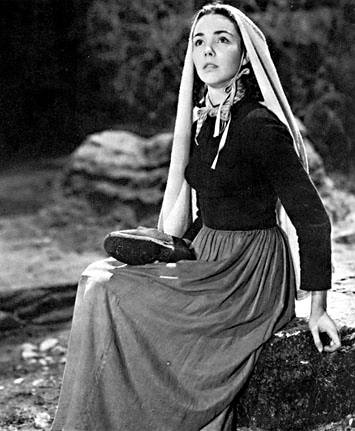
    We’ll hear a suite from “The Song of Bernadette” (1943), one of Jennifer Jones’ finest hours. Jones was honored with an Academy Award for her performance (the film was nominated in 12 categories). Franz Werfel’s novel tells the story of Bernadette Soubirous, a Lourdes peasant prone to visions of the Blessed Virgin Mary.

    Igor Stravinsky made several attempts to break into Hollywood, but he could never keep up with the grinding schedule. He took a crack at scoring the “Apparition of the Virgin” scene, but then thought better of it. The project went to Alfred Newman, who won his third (of nine) Oscars. Stravinsky’s music was recycled in the second movement of his “Symphony in Three Movements.”

    The story of Joan of Arc has been translated to film many times. In the case of “Saint Joan” (1957), Otto Preminger adapted the play by George Bernard Shaw. Newcomer Jean Seberg was cast in the title role. Her inexperience brought her in for a sound critical drubbing. Even an old hand like screenwriter Graham Greene was not immune to critical barbs for the liberties he took in reworking Shaw’s play. Despite all that, the score, by Russian-born English composer Mischa Spoliansky, is lovely.

    By contrast, the film of “A Man for All Seasons” (1966), after the play of Robert Bolt, was lavishly praised, especially Paul Scofield’s performance as Sir Thomas More (for which he received an Academy Award for Best Actor). The film won six Academy Awards in all, including that for Best Picture. The period-inflected score is by Georges Delerue.

    It’s sobering to look back and realize that such an intelligent, dramatic film could become such a popular success. “A Man for All Seasons” was the fifth highest-grossing film of 1966. The fifth highest-grossing film of 2014 was “The Hunger Games: Mockingjay – Part 1.”

    I guess it’s impossible to get through Easter without some Biblical bombast, so why not go all out with “Quo Vadis” (1951)? Henryk Sienkiewicz’s international bestseller incorporates into its narrative Saints Peter and Paul, but the really interesting characters are the cynical Petronius, who knows how to throw a party, and the quite mad Nero, who plays the lyre even as Rome burns.

    Miklós Rózsa’s score has been much-lauded for its attempt at historical authenticity (the incorporation of contemporaneous Greek, Hebrew and Sicilian melodies), though its popularity has been eclipsed, somewhat, by that of his work on “Ben-Hur” and “King of Kings.” “Quo Vadis” is really the film in which Rózsa lays out the blueprint for a decade or more of big screen piety. Bernard Herrmann called it “the score of a lifetime.”

    I hope you’ll join me for music from movies depicting the saints this week, on “Picture Perfect,” this Friday evening at 6, with a repeat Saturday morning at 6; or that you’ll listen to it later as a webcast at http://www.wwfm.org.

    PHOTO: Jennifer Jones and the Lourdes’ prayer

Tag Cloud

Aaron Copland (92) Beethoven (95) Composer (114) Film Music (120) Film Score (143) Film Scores (255) Halloween (94) John Williams (185) KWAX (229) Leonard Bernstein (100) Marlboro Music Festival (125) Movie Music (135) Opera (198) Philadelphia Orchestra (88) Picture Perfect (174) Princeton Symphony Orchestra (106) Radio (87) Ralph Vaughan Williams (85) Ross Amico (244) Roy's Tie-Dye Sci-Fi Corner (290) The Classical Network (101) The Lost Chord (268) Vaughan Williams (103) WPRB (396) WWFM (881)

DON’T MISS A BEAT

Receive a weekly digest every Sunday at noon by signing up here


RECENT POSTS