Tag: Vaughan Williams

  • Vaughan Williams Special on WPRB

    Vaughan Williams Special on WPRB

    It’s still days away at this point, but I wanted to let you know that, because Yom Kippur falls on a Wednesday this year, I will be swapping mornings with Marvin Rosen next week at WPRB 103.3 FM. That means that Classical Discoveries will be heard on Thursday, from 5:30 to 11 a.m. EDT, and that Classic Ross Amico (who needs his beauty sleep) will muddle through on Wednesday from 6 to 11 a.m.

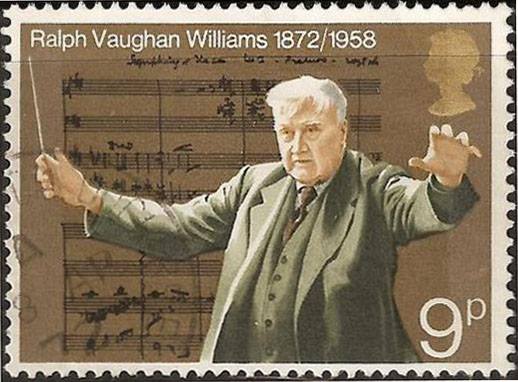
    Since Wednesday happens to be October 12, the birthday of Ralph Vaughan Williams, and since Vaughan Williams happens to be one of my very favorite composers, the morning will be devoted to a good number of RVW gems and rarities from my own extensive collection. These will include historic recordings, some featuring the composer himself, archived radio broadcasts, and at least one LP that was issued in 1977, now long out-of-print, which to my knowledge has never been reissued in any form. If you love Vaughan Williams, have affection for English music, or hunger for curiosities, you will not want to miss this show!

    Of course, I may be tossing in one or two favorites most everyone will recognize, in luminous performances from one of my favorite Vaughan Williams albums, in honor of the late Sir Neville Marriner, who died last week at the age of 92. But most of what you hear will be off the beaten path, of historic interest, or just plain beautiful and underexposed.

    Eight hours after Marvin concludes his special edition of “Classical Discoveries,” WPRB will commence a week-long Autumn Membership Campaign, on Thursday night at 7:00. The station conducts one pledge drive per year, so this will be your only chance to step up and support the music. It’s a little-known fact that WPRB, though housed in the belly of Princeton University’s Bloomberg Hall, receives no funding from the university. The hosts are all volunteers, given just about complete artistic control over their programs, and the playlists are assembled with love, passion and personality.

    If you care about classical music on WPRB, and in particular, if you like what I do on “Classic Ross Amico,” I hope you will consider taking your penny jar down to the financial institution of your choice and then pledging your commitment to thoughtful programming of unusual and neglected repertoire, all presented under the umbrella of vast, unwieldy themes.

    Please call 609-258-1033 on the morning of October 20, between 6 and 11 a.m. to pledge your support of the show. It will be the last day of the drive, so don’t think that your pledge won’t make a difference! I expect it’s going to be a tough row to hoe, since by then everyone will have supported their favorite shows of the previous six days, including “Classical Discoveries” and “Sunday Morning Opera.” So set aside a bone for “Classic Ross Amico,” if you are able. Mentioning that you like what I do when you call in to support somebody else’s show is nice, but in the end, if you really want to send a message to anyone who is not answering the phones, it is the tallies that do the talking.

    Do not think that $10 or $20 is not enough. Every little bit counts. But if you are able to pledge at a level of $45 or over, I will be happy to send you a very nice CD as a token of my thanks. All the CDs I will be offering will be hand-selected by me and sampled during the show on October 20. So you’ll have a chance to listen before you pledge, but please understand that copies will be limited, in some cases to a quantity of one!

    “Classic Ross Amico,” now in its second year, is but a blink in WPRB’s 75-year history. With your support, I’m hoping two years will turn into three, and three into ten. Who knows how far this thing will go. Yours is the juice that can fuel classical music’s heavy Chevy, the wind beneath the wings of “The Lark Ascending.” Thank you for your consideration. I’m sure RVW would concur!

  • Remembering Sir Neville Marriner

    Remembering Sir Neville Marriner

    Adieu, Sir Neville, and thank you for all your wonderful recordings. I cut my teeth on many of them – a cherishable album of Vaughan Williams, featuring Iona Brown in “The Lark Ascending;” Ottorino Respighi’s “The Birds” and “Ancient Airs and Dances” with the Los Angeles Chamber Orchestra; a gorgeous Fauré program, including “Pelléas et Mélisande” and “Masques et Bergamasques;” a haunting Scandinavian collection, featuring a spritely “Serenade for Strings” by Dag Wirén.

    You were always an alert accompanist in concerto recordings of Murray Perahia and Pepe Romero. You had a firm grasp of Rossini opera. You were a reliable conductor of Haydn and Mozart (your performances with the Academy of St. Martin-in-the-Fields were featured on the soundtrack to “Amadeus”). And you understood Virgil Thomson better than Stokowski.

    You crammed so much into a very long life (92 years). You performed with Pierre Monteux (who would become your teacher), Arturo Toscanini, Wilhelm Furtwangler and Henry Wood, for crying out loud. Your last concert was on Thursday!

    Way to go, Sir Neville. I will miss you, but I will always, always have your recordings. Thank you again for all the beautiful music.

    Sad news: Neville Marriner is gone, at 92

  • Vaughan Williams’ London Symphony on WWFM

    Vaughan Williams’ London Symphony on WWFM

    Principally because of alluring musical flights of fancy like “The Lark Ascending,” Ralph Vaughan Williams has been somewhat pigeon-holed as the foremost proponent of the “cow-pat school” of English composition. While he certainly did spend a good deal of his life strolling the English countryside, he considered himself first and foremost a Londoner. Join me this afternoon at 1:00 EDT to partake of Vaughan Williams’ Symphony No. 2, “A London Symphony.”

    Vaughan Williams claimed that while the work bore a programmatic subtitle, it was meant to be experienced primarily as “absolute” music. He preferred it be thought of as a symphony by a Londoner, as opposed to an attempt to portray the actual city.

    Nonetheless, the symphony contains allusions to street music, barrel organs, the jingle of hansom cabs, and the Westminster Chimes, among other things, and it certainly is tempting to conjure images of the hustle and bustle of Piccadilly Circus and, perhaps, in the slow movement, one of the nocturne paintings of James McNeill Whistler.

    It’s one of the featured highlights this afternoon, as the country mouse plays city mouse, from noon to 4 p.m., on WWFM – The Classical Network and at wwfm.org.


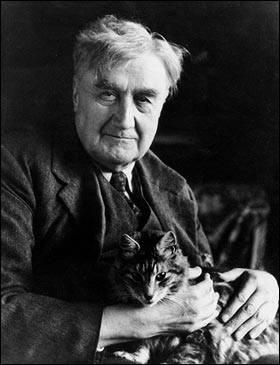
    PHOTO: Vaughan Williams and Foxy: “Did somebody say mouse?”

  • Lloyd & Vaughan Williams Symphonies on WPRB

    Lloyd & Vaughan Williams Symphonies on WPRB

    Right now on WPRB, we’re listening to the Symphony No. 4 by the underrated English composer George Lloyd, a work which grew out his experiences serving in the Royal Marines during WWII.

    Lloyd’s vessel was struck by a torpedo while he was manning the transmitting station deep within the ship’s hold. He nearly drowned, as many of his shipmates and close comrades actually did, in fuel oil. Though he survived the ordeal, he suffered from shell shock and could not speak for nearly a year.

    As he recovered, he began to compose again, hoping to exorcise his demons. The result was his Symphony No. 4, subtitled the “Arctic,” a surprisingly optimistic work, considering its genesis. But, as the composer points out, he also experienced much beauty during his service in the North Sea, including a memorable trip up the Norwegian coast.

    Of the infectious marches that characterize the work’s final movement, the composer remarked wryly, “… perhaps I was trying to end the symphony by reaffirming the old convention that when the funeral is over the band plays quick, cheerful tunes to go home.”

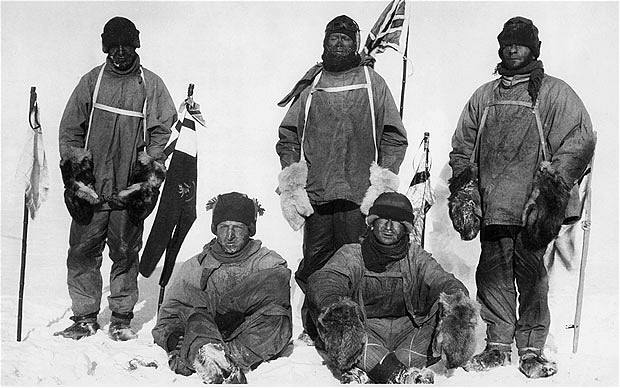
    Coming up in the 9:00 hour, we’ll have another English symphony, suggestive of the opposite pole, the Symphony No. 7 by Ralph Vaughan Williams, subtitled “Sinfonia Antarctica.” Vaughan Williams’ opus grew out of his film score for the Ealing Studios adventure “Scott of the Antarctic,” which starred John Mills as doomed explorer Robert Falcon Scott.

    Vaughan Williams’ symphony captures a sense of foreboding in the face of punishing elements and the desolation of the Antarctic landscape. Along the way, he evokes chill winds, crashing ice slides, and the play of penguins and whales.

    Sir Adrian Boult recorded the work twice. The earlier recording featured spoken prefaces by Sir John Gielgud, who reads from English poets and Scott’s diary. The performance itself is quite good, though expectedly not as vivid as the later, stereo remake. So as to share the best of both worlds this morning, I will interpolate the Gielgud readings into the stereo performance.

    Stick around, and you’ll also get to hear music inspired by the aurora borealis, by Uuno Klami and Geirr Tveitt. We’ll go to any lengths to keep cool, until 11 EDT on WPRB 103.3 FM and at wprb.com.

  • Vaughan Williams Pastoral Symphony Ormandy 1972

    Vaughan Williams Pastoral Symphony Ormandy 1972

    On this, the day after Memorial Day, I’ve stumbled across a YouTube video of a concert broadcast of Eugene Ormandy conducting the Philadelphia Orchestra in Ralph Vaughan Williams’ “A Pastoral Symphony” (his Symphony No. 3), which was completed in 1922.

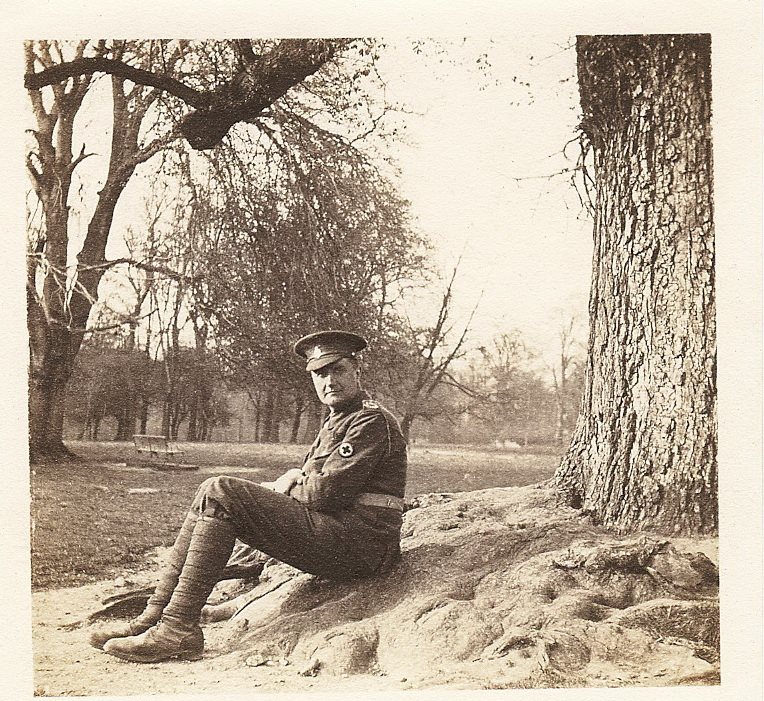
    While a good many of Vaughan Williams’ pieces are indeed pastoral, this one has something of a haunted undertow that belies its placid moniker. The composer was serving with the Royal Army Medical Corps in France during the First World War. At the end of the day, he would drive his ambulance up to the top of a hill and listen to a bugler practicing. On one occasion, the bugler accidentally played the interval of a seventh, as opposed to an octave. The trumpet solo in the second movement of the symphony enshrines this memory.

    It is pastoral, all right. As peaceful as the dead. The great Benita Valente sings the wordless soprano part in the final movement, like a distant milkmaid wandering the countryside. The contrast with the waste and destruction of the war leads to a moving and intense elegy that takes over, in this particular recording, around the 31 minute mark.

    Vaughan Williams’ next symphony, the Symphony No. 4, spilled over with rage and violence, clearing the air for one of the most hopeful utterances in all of music, his Symphony No. 5, composed, oddly enough, during the darkest days of World War II.

    Peter Warlock, who famously characterized Vaughan Williams’ music as “just a little too much like a cow looking over a gate,” called the Pastoral Symphony “a truly splendid work” and “the best English orchestral music of this century.”

    Ormandy and the Philadelphians performed the piece on October 12, 1972, to mark the centennial of Vaughan Williams’ birth. 1972 also happened to mark the semicentennial of “A Pastoral Symphony.”

Tag Cloud

Aaron Copland (92) Beethoven (94) Composer (114) Film Music (116) Film Score (143) Film Scores (255) Halloween (94) John Williams (185) KWAX (228) Leonard Bernstein (99) Marlboro Music Festival (125) Movie Music (131) Opera (197) Philadelphia Orchestra (86) Picture Perfect (174) Princeton Symphony Orchestra (106) Radio (86) Ralph Vaughan Williams (85) Ross Amico (244) Roy's Tie-Dye Sci-Fi Corner (290) The Classical Network (101) The Lost Chord (268) Vaughan Williams (99) WPRB (396) WWFM (881)

DON’T MISS A BEAT

Receive a weekly digest every Sunday at noon by signing up here


RECENT POSTS