Tag: Vaughan Williams

  • Byron Adams on Vaughan Williams & the Bard Music Festival

    Byron Adams on Vaughan Williams & the Bard Music Festival

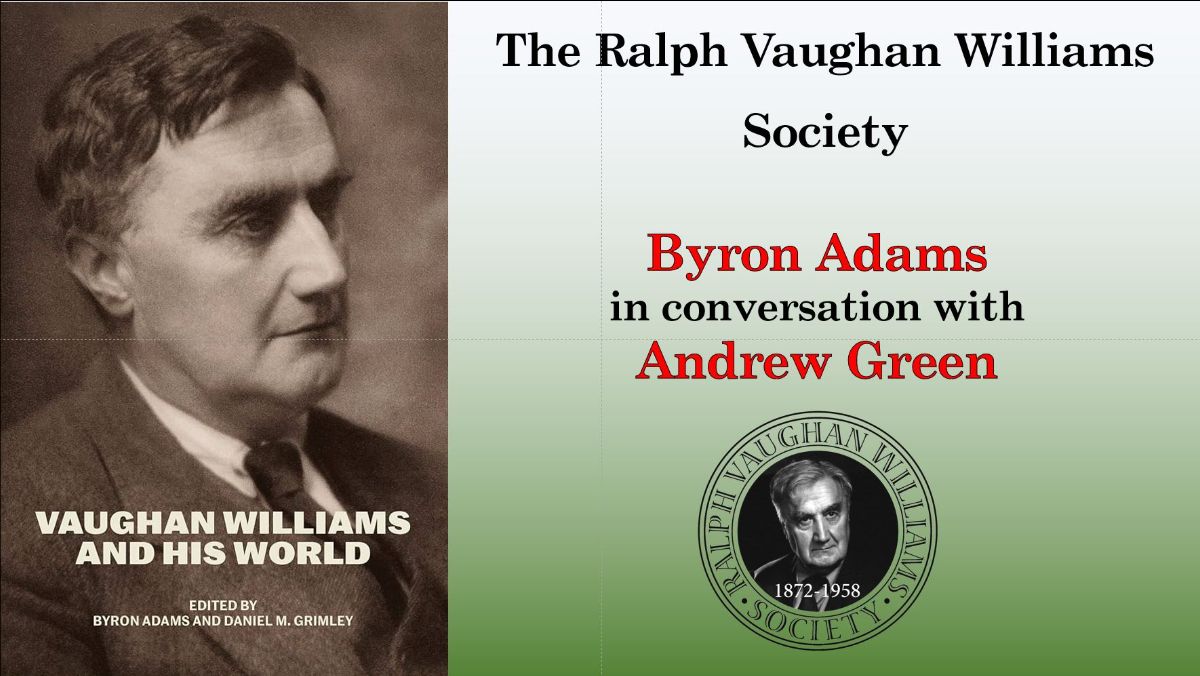
    It’s summer and a Sunday. As I continue to work on my appreciation of conductor Roger Norrington (who died on Friday), which hopefully I will have in satisfactory shape soon, I thought I’d share this interview with musicologist Byron Adams, conducted by Andrew Green of the Ralph Vaughan Williams Society.

    Adams, whose comments on this page are invariably illuminating (and always welcome), has been a passionate and lifelong advocate of Vaughan Williams, Elgar, and other British composers. If you ever attend concerts of the Philadelphia Orchestra, pay attention to who wrote the program notes. There’s a possibility it could be Byron!

    Adams is also a composer himself, a retired professor of music at the University of California, Riverside. The conversation at the link rightly emphasizes his contribution to the Bard Music Festival, especially in the editing of a tie-in volume of critical essays for the 2023 festival, devoted to “Vaughan Williams and His World,” published by University of Chicago Press. But you may also learn a thing or two about Vaughan Williams’ experiences in America and certainly more about the Bard Music Festival.

    Another one of Byron’s enthusiasms and areas of expertise is French music. He’ll be introducing a concert to be performed at Bard on the afternoon August 9 for a program he helped curate, titled “The French Connection,” designed to illuminate the experiences in Paris of – and French influences on – the subject of this year’s festival, the Czech composer Bohuslav Martinů. The concert will also include music by Alexandre Tansman, Albert Roussel, Maurice Ravel, and Josef Suk.

    Adams is a Bard stalwart, having for many years served on the program committee for the festival.

    Here’s a link to the complete schedule for “Martinů and His World,” which will take place at Bard College over two weekends, August 8-10 and 14-17.

    Bard Music Festival

    Watch the interview to find out which essay in his book drove him to drink!

    Fisher Center at Bard
  • Remembering Matthew Best & Ronald Corp

    Remembering Matthew Best & Ronald Corp

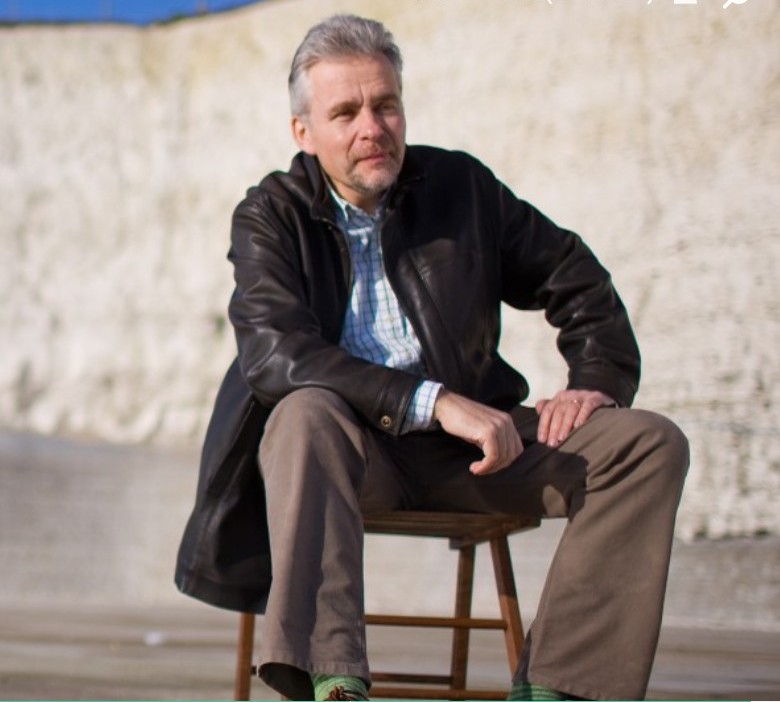
    Only days after the death of Ronald Corp (who passed on May 7), another conductor from the Hyperion Records stable, Matthew Best, has died. Best, who founded the Corydon Singers in 1973 (if my math is correct, at the age of 16!), made many cherishable recordings. Over the years, I’ve acquired a number of them. His Villa-Lobos disc that includes the composer’s “Missa São Sebastião” was a revelation.

    Of course, Best also recorded plenty of Vaughan Williams. Vaughan Williams had a lifelong fascination with John Bunyan’s “The Pilgrim’s Progress,” laboring at an opera on the subject for decades, finally completing it only later in life. In the process, he assimilated material from some of his earlier settings and inspirations. One such source was incidental music composed for a radio play in 1942, the broadcast of which featured John Gielgud as Christian. In 1990, Best recorded a distillation of this music as “The Pilgrim’s Progress: A Bunyan Sequence,” with Gielgud returning to reprise the role he created.

    Another program conducted by Best that includes Vaughan Wiilliams’ “Serenade to Music” and “Flos Campi” is also very highly prized. All four discs of his Vaughan Williams choral music performances were later collected and reissued as a set.

    A recording of his I especially value (not a part of that set) is of Vaughan Williams’ opera “Hugh the Drover.” “Hugh” is chock-full of folk melodies, both genuine and imitation, of a variety that fans of the composer will recognize and adore. It’s also the rare opera to actually feature a prize fight!

    This pugilistic interlude aside, there is a spirit of nostalgia and romance that permeates the score, and Best conveys it to perfection. I wouldn’t necessarily recommend it to opera die-hards who believe Verdi is the begin-all and end-all of the art form, but there’s a kind of twilit magic at play here that at times positively glows. I’ll be taking this with me today to keep me company during my Monday afternoon wildlife center food deliveries, an apt choice for farm and country.

    Best was also a formidable bass, who sang such operatic roles as Wotan, Scarpia, and Mozart’s Commendatore. He died on Saturday, aged only 68 years. That’s often only middle-age for someone in his profession.

    I didn’t mention Corp earlier, since I intend to honor him later this week on the next installment of “Sweetness and Light” (to be streamed on KWAX Saturday morning at 11:00 EDT/8:00 PDT). Corp too left many delightful recordings, including four discs of British Light Music that served to spark my interest in the genre. However, since Fate’s hammer has fallen twice, I am taking the opportunity to express, albeit briefly, my appreciation and gratitude for him, as well. Corp was 74 years-old.

    R.I.P.


    Best conducts Villa-Lobos, “Missa São Sebastião”

    Vaughan Williams’ “Serenade to Music”

    Corp conducts Armstrong Gibbs’ “At Dusk”

  • Wayne Oratorio Society Sings Vaughan Williams

    Wayne Oratorio Society Sings Vaughan Williams

    If this was the last concert I was able to enjoy before civilization crumbled, I might be well satisfied. But let’s hope it doesn’t come to that.

    I am confident in my assertion that Ralph Vaughan Williams, as an enthusiastic promoter of community musicmaking (he directed an amateur choir for nearly 50 years), would have been delighted by last night’s performance of “A Sea Symphony,” featuring the Wayne Oratorio Society and friends, at Wayne Presbyterian Church in Wayne, PA.

    The 140-voice choir (established in 1948) performed with great enthusiasm, and singers and orchestra were well-conducted by John Grecia, who led the score as if he had known it his entire life. The vocal solos (there are plenty of them) were sung, with commitment, by soprano Melanie Sarakatsannis and baritone Nicholas Provenzale, and the orchestra acquitted itself heroically on what I understand was minimal rehearsal.

    If you ever wanted to hear this piece live (which I myself have only encountered once before in concert), I think you will be glad you made the trip. There will be a second performance at the church tonight at 7:30. Get there early, because last night the venue was packed to the rafters. And bring a free will offering for the orchestra, which certainly earns its gas money.

    Thank you, Wayne Oratorio Society. Someday in the future I would love to hear RVW’s “Hodie” – if civilization endures.

    Want a taste? Somebody shared a clip on Facebook:

    Music at Wayne Pres


    FUN FACT: In 1932, Vaughan Williams was a visiting lecturer, right down the road, at Bryn Mawr College. The texts of these lectures were collected into the volume “National Music.” My copy was autographed by the composer’s wife and sometimes creative partner, the poet and author Ursula Vaughan Williams (née Wood).

  • Vaughan Williams Fan Must-See Event

    As a Vaughan Williams fan, I will definitely be attending this!

  • Vaughan Williams Birthday Radio Celebration

    Vaughan Williams Birthday Radio Celebration

    Ralph Vaughan Williams was born on this date in 1872. Since he happens to be one of my favorite composers, I couldn’t be more delighted that the anniversary happens to coincide with one my radio shows. I hope you’ll join me this morning on “Sweetness and Light” for what I guarantee will be a lovingly-curated Vaughan Williams miscellany.

    This will not be the usual collection of greatest hits (although we’ll enjoy one or two of those, as well). Among the rarer works will be the “Bucolic Suite” of 1900, when the composer was still feeling his way toward his mature style; also the “Stratford Suite,” made up of incidental music RVW provided for a number of the Shakespeare plays during the brief period he was music director at Stratford-on-Avon (1912-13). If you’re a Vaughan Williams fanatic, I’m sure you’ll recognize some of the melodies, derived from early music and folk song, many of which the composer employed in other, better-known works. The “Stratford Suite” appears on a new release, “Royal Throne of Kings,” chock-full of Vaughan Williams’ uncollected Shakespeare music, on the Albion Records label, the recording branch of the Ralph Vaughan Williams Society.

    Some of the music will be dreamy and luminous and some of it will be boisterous and earthy. You’re always safe with Uncle “Rafe.”

    Pour yourself a cuppa and join me for “Sweetness and Light,” this Saturday morning at 11:00 EDT/8:00 PDT, exclusively on KWAX, the radio station of the University of Oregon!

    Stream it wherever you are at the link:

    https://kwax.uoregon.edu/


    PHOTO: Vaughan Williams takes a slug from the mug

Tag Cloud

Aaron Copland (92) Beethoven (94) Composer (114) Film Music (116) Film Score (143) Film Scores (255) Halloween (94) John Williams (185) KWAX (228) Leonard Bernstein (99) Marlboro Music Festival (125) Movie Music (131) Opera (197) Philadelphia Orchestra (86) Picture Perfect (174) Princeton Symphony Orchestra (106) Radio (86) Ralph Vaughan Williams (85) Ross Amico (244) Roy's Tie-Dye Sci-Fi Corner (290) The Classical Network (101) The Lost Chord (268) Vaughan Williams (99) WPRB (396) WWFM (881)

DON’T MISS A BEAT

Receive a weekly digest every Sunday at noon by signing up here


RECENT POSTS