Tag: Violin Concerto

  • Elgar’s Enigmatic Violin Concerto

    Elgar’s Enigmatic Violin Concerto

    In 1905, the celebrated violinist Fritz Kreisler remarked to the press, “If you want to know whom I consider to be the greatest living composer, I say without hesitation Elgar… I say this to please no one; it is my own conviction… I place him on an equal footing with my idols, Beethoven and Brahms. He is of the same aristocratic family. His invention, his orchestration, his harmony, his grandeur, it is wonderful. And it is all pure, unaffected music. I wish Elgar would write something for the violin.”

    Two years later, Elgar complied, beginning work on a concerto at Kreisler’s request. (In 1909, the piece was formally commissioned by the Royal Philharmonic Society.) The completed work was given its first public performance in 1910 and received immediate, widespread acclaim. Kreisler himself was not disappointed. He declared it “the greatest violin concerto since Beethoven’s.”

    Heartbreakingly, plans for Kreisler and Elgar to record the work fell through. The first recording of the piece, using the acoustic process and an abridgement of the score, was in 1916, with Marie Hall the soloist and Elgar on the podium. Later, Hall would advise Ralph Vaughan Williams on the violin part of “The Lark Ascending,” which she would introduce in both versions (first for violin and piano, and then for violin orchestra).

    The first COMPLETE recording, made using the electrical process, which allowed for greatly improved dynamic range and realism, was set down in 1929 by Albert Sammons with Sir Henry Wood conducting.

    It was record producer Fred Gaisberg’s desire to preserve the concerto with Elgar conducting in better sound, with Kreisler reprising his interpretation, but when Kreisler proved to be elusive, he turned instead to the teenaged Yehudi Menuhin. In the event, Menuhin rose to the challenge and their recording of the concerto has remained in the catalogue since it was first issued in 1932.

    The Violin Concerto is not the work of a composer whose legacy was soon to be reduced to, and sadly dismissed as, one of pomp and empire, a relic of the Edwardian era. Rather, it is a confessional work of great tenderness and intimacy.

    There have been many theories as to whom the composer might have had in mind in prefacing his score with the Spanish superscription, “Aqui está encerrada el alma de…..” (“Herein is enshrined the soul of…..”). By Elgar’s own admission, the unusual ellipsis of five dots is meant to signify one of his acquaintances. Does it hint at his close friend and confidante Alice Stuart Wortley, married daughter of the painter John Everett Millais? “Windflower” was the affectionate name Elgar bestowed upon her, and he professed that the concerto is full of “windflower themes.”

    Or could it be Helen Weaver, a violinist to whom Elgar was briefly engaged, before they were divided by economic and religious objections on the part of her family? When Helen contracted tuberculosis, she departed for New Zealand, and Elgar never saw her again. (It is believed that Weaver is the subject of the penultimate variation, there identified with three asterisks, in Elgar’s “Enigma Variations.” The music quotes Mendelssohn’s “Calm Sea and Prosperous Voyage,” with a side-drum played in a manner perhaps suggestive of a steamer’s engine.)

    Or, as Elgar scholar Jerrold Northrop Moore suggested, are there actually multiple souls enshrined (Wortley and Weaver in the first movement; Elgar’s wife, Alice, and his mother in the second; and violinist W.H. “Billy” Reed, with whom he worked closely on the concerto, and the composer’s friend and publisher Augustus Jaeger, subject of the “Enigma’s” famous “Nimrod” variation, in the third)?

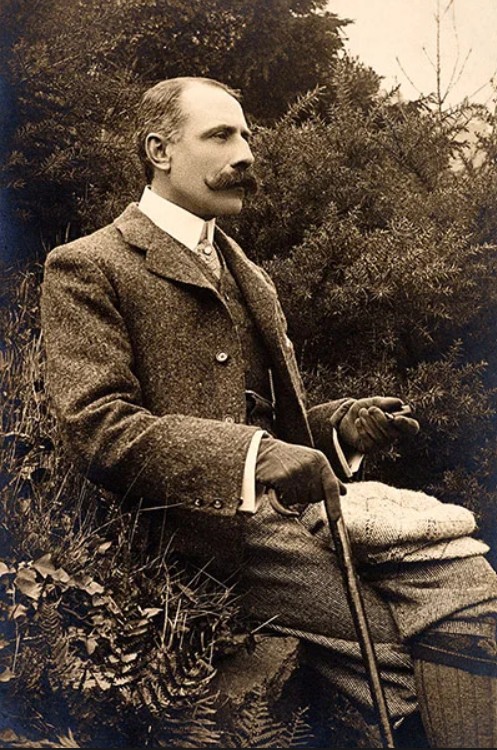
    Elgar, in his ceremonial music and portraits, may have projected an air of self-confidence and respectability, but beneath the veneer of that push-broom mustache and starched collar was an artist of great sensitivity, fundamental melancholy, and jealously guarded privacy.

    Raised Roman Catholic in a predominately Protestant country, he rose from lowly origins (his father worked in music sales, his mother was the daughter of a farm worker, and he was largely self-taught as a composer) to become the most celebrated musician in the land as Master of the King’s Music.

    It’s interesting that late in life Elgar affected to care more about attending the races than promoting his own music. Perhaps he would be amused to find himself characterized as a dark horse. On paper, he was the ultimate outsider. It’s hardly surprising that emotional and intellectual enigmas would underpin his greatest masterworks.

    Happy birthday, Sir Edward Elgar.


    Yehudi Menuhin and Elgar in 1932

    Tasmin Little and Andrew Davis at the Proms in 2011
  • Karlowicz & Mlynarski: Polish Romanticism

    Karlowicz & Mlynarski: Polish Romanticism

    This week on “The Lost Chord,” you might say it’s Poland spring. We’ll polish up on our Polish music with works by Mieczyslaw Karlowicz and Emil Mlynarski.

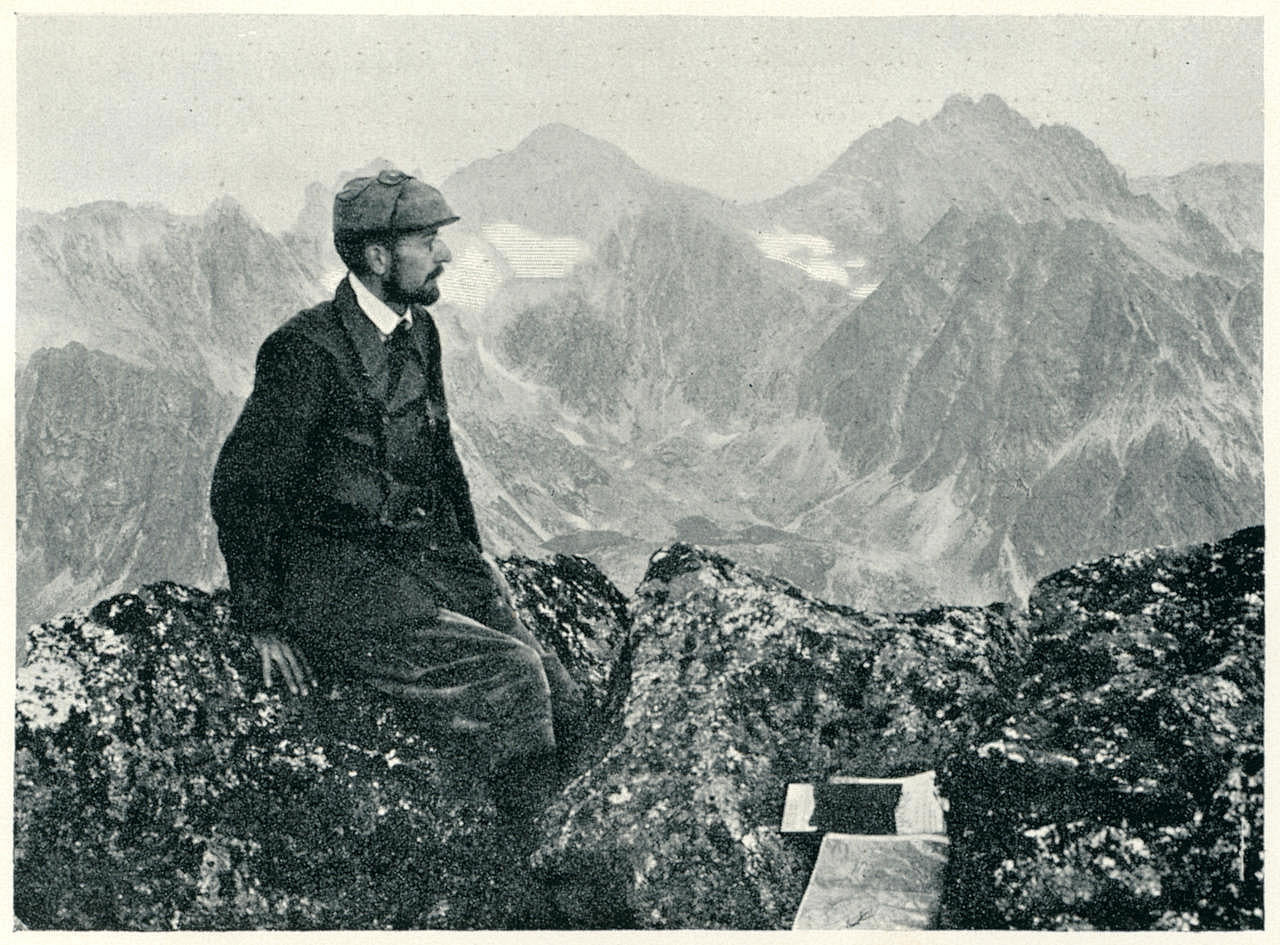
    Karlowicz, by all accounts one of the gloomiest of composers, embraced an outlook and philosophy that might well be described as pessimism leavened with pantheism. In this melancholy world, all love is unfulfilled or doomed, all existence leads to tragedy and destruction. The only place the composer seemed to find solace was in his beloved Tatras. He once noted, “Atop a high mountain, I become one with the surrounding space. I cease to feel individual. I can feel the mighty, everlasting breath of eternal being.”

    It is perhaps a kind of poetic justice that a life spent cultivating suicidal despair, and raising it to a level of high art, would be cut short, when Karlowicz was killed in an avalanche in 1909, aged only 32 years – a most fitting end for an orophile with fatalistic tendencies.

    We’ll hear one of the six symphonic poems upon which Karlowicz’s reputation, in large part, is based. “Stanislaw and Anna Oswiecim,” inspired by a painting of Stanislaw Bergmann, evokes a tale of forbidden love between brother and sister, ending in inevitable tragedy.

    Then it’s romance of different sort, with a violin concerto by Mlynarski. Mlynarski was recognized both at home and abroad as a staunch champion of Polish musical causes. He directed the Warsaw Opera and spearheaded the drive to build Warsaw Philharmonic Hall. He conducted festivals of Polish music in Paris, commissioned Sir Edward Elgar to write “Polonia” for a wartime Polish Relief Concert, and conducted the world premiere of Karol Szymanowski’s opera “King Roger.” He was, in fact, voted Poland’s most popular conductor. (Parenthetically, he also became the father-in-law of Artur Rubinstein.)

    Among his other achievements, he toured with the London Symphony Orchestra, became permanent conductor of the Scottish National Orchestra, shared concerts with Sir Thomas Beecham, and for a time was dean of the Curtis Institute of Music in Philadelphia.

    He was also an outstanding violinist. He studied with Leopold Auer, toured widely, and won a major composition award with his First Violin Concerto.

    Violinist Nigel Kennedy first encountered his music when he was handed a tape of Mlynarski’s Violin Concerto No. 2 by an anonymous Polish fan following a concert. Kennedy went on to make his own recording of the work. I think you’ll agree, it’s a very beautiful discovery.

    It will be a bird’s-eye view as we clear the bar, with an hour of Polish music, on “Pole Vault,” on “The Lost Chord,” now in syndication on KWAX, the radio station of the University of Oregon!


    Clip and save the start times for all three of my recorded shows:

    PICTURE PERFECT, the movie music show – Friday at 8:00 PM EDT/5:00 PM PDT

    SWEETNESS AND LIGHT, the light music program – Saturday at 11:00 AM EDT/8:00 AM PDT

    THE LOST CHORD, unusual and neglected rep – Saturday at 7:00 PM EDT/4:00 PM PDT

    Stream them, wherever you are, at the link!

    https://kwax.uoregon.edu/


    PHOTO: Mieczyslaw Karlowicz, man of destiny

  • Alban Berg’s Birthday Alma Mahler’s Scandalous Life

    Alban Berg’s Birthday Alma Mahler’s Scandalous Life

    Today is the 140th anniversary of the birth of Alban Berg.

    By coincidence, I just finally got around to watching “Bride of the Wind” (2001), about the life of Alma Mahler – unquestionably a fascinating figure. A composer herself (and also an author), Alma’s lasting contribution would be as a socialite who often left scandal and ruin in her wake.

    To its credit, the film does comment on the limitations imposed on women, even society women, at the time. Alma was the wife of composer-conductor Gustav Mahler, who firmly requested that she renounce her own ambitions to support his. Following his death, she would simultaneously promote and obscure his biography and intentions. She also married architect Walter Gropius (with whom she had had an affair during her marriage to Mahler), but not before a hot, crazy fling with the half-mad painter Oskar Kokoschka. Furthermore, she was romantically involved with writer Franz Werfel, and Lord knows who else.

    The film was directed by Bruce Beresford, of “Breaker Morant”/”Tender Mercies”/”Crimes of the Heart”/”Driving Miss Daisy” fame. Unlike those titles, however, the only gold “Bride of the Wind” would ever see would be that on the Klimt canvases it aspires to evoke.

    Underbaked, badly acted, poorly scripted, and blandly executed, it’s a missed opportunity, to be sure. Even the usually excellent Jonathan Pryce is ridiculous as Gustav Mahler. The scenes of him conducting teeter on the verge of parody. Well, come to think of it, he wasn’t all that convincing as Prince Philip on “The Crown,” either, but even with an actor of his caliber, surely 99-percent of the job comes down to casting. (I liked him fine as Pope Francis.)

    Fin-de-siècle culture vultures will get more out of it. As with Bradley Cooper’s Leonard Bernstein biopic, “Maestro,” a cavalcade of significant artistic and historical figures drop by, and you’re expected to deduce that some shmo with no lines is Arnold Schoenberg, because he’s bald, or another is Alexander Zemlinsky, because he’s got the nose. (Yes, I knew who they were immediately, but only a fraction of a percent of potential viewers would.) It’s the kind of movie that allows the NPR crowd to chuckle knowingly to themselves because they get the joke that Gustav Klimt is always hanging around with nude women. You get Mahler’s declaration that the symphony must be like the world. You get Kokoschka’s life-size Alma doll. If only they had gotten Jeffrey Tambor to play Schoenberg, now THAT would have been something.

    I streamed it for free on Tubi and still feel like I was overcharged. What a tepid movie about a figure who most certainly was NOT! The one thing it did bring home, through one of those “American Graffiti,” where-are-they-now-style epilogues, is just how astoundingly short history is, as some of the figures depicted lived well into my lifetime. There’s a famous photograph (not in the movie) of Bernstein genuflecting and kissing Alma’s hand, following a rehearsal of Mahler’s “Resurrection” Symphony at Carnegie Hall.

    So what’s the Alban Berg connection?

    While his is one of the few names that ISN’T dropped in the film, Berg composed his Violin Concerto of 1935 in memory of Manon Gropius, Alma and Walter’s daughter, who died of polio at the age of 18.

    Always regarded as the Romantic among serialists – one critic described him as “the Puccini of twelve-tone music” – Berg processes loss and grief with the kind of humanity that seems have eluded Schoenberg, his teacher. The concerto is a fine example of a talented artist bending the rules of a particular system to achieve his own expressive ends.

    A shimmering, unresolved longing imbues much of Berg’s music. It makes him effortlessly relatable and more easily discernible as a link to the more traditionally-minded among his Viennese contemporaries. His Violin Concerto really does touch people’s hearts. Furthermore, Berg is not above erecting signposts for the uninitiated, in his concerto alluding to a chorale melody employed by Johann Sebastian Bach and a Carinthian folk song.

    Berg himself died of a blood poisoning, the result of an insect sting, later the same year, at the age of 50. His output may be comparatively small, but his stature endures as one of the most important musical voices of the early 20th century. He is certainly the most readily approachable of composers of the Second Viennese School.

    Some scholars have pointed out that aspects of the anti-heroine of Berg’s opera “Lulu” – a femme fatale who captivates and destroys the men and women around her – may have been modeled in part on Alma’s personality. Berg was fascinated by Alma’s charm and the ease with which she navigated Vienna’s cultural milieu. The two definitely knew one another and in fact were close enough that the composer and his wife, Helene – who were childless – considered Manon their own daughter and kept a picture of her at their bedside.

    The last time I watched “Lulu,” a tree fell on my house. Thematically, I think that’s a worthy addition to Alma’s legacy!

    Happy birthday, Alban Berg.


    Alma Mahler, “Laue Sommernacht” (“Balmy Summer Night”)

    Berg, “Lulu Suite”

    Berg, Violin Concerto


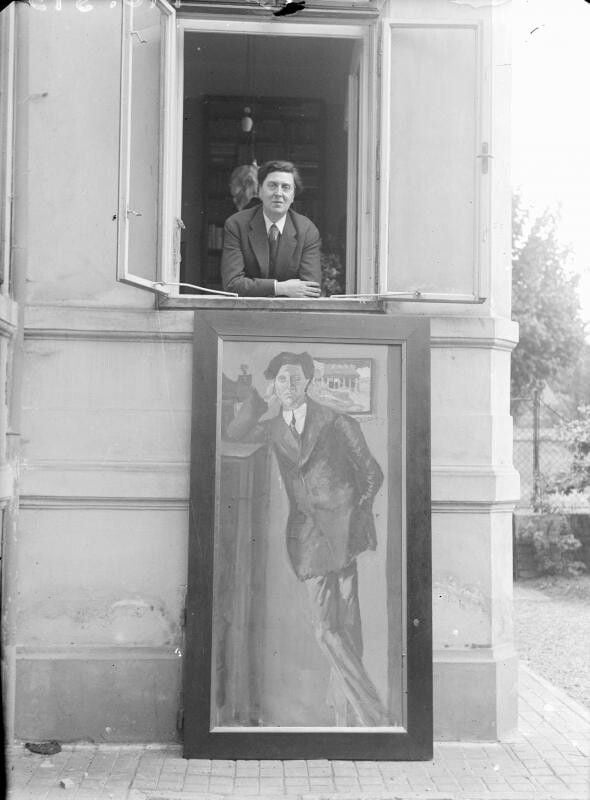
    CLOCKWISE FROM LEFT: Berg with portrait painted by Arnold Schoenberg; poster for “Bride of the Wind;” Alma Mahler, stylin’; Bernstein genuflecting

  • Princeton Symphony Conjures Mazzoli’s Magic

    Play Missy for me.

    According to composer Missy Mazzoli, her Violin Concerto (Procession) “casts the soloist as a soothsayer, sorcerer, healer and pied piper-type character, leading the orchestra through five interconnected healing spells.”

    Jennifer Koh, the violinist for whom the work was written, will weave her magic with the @[100043116381457:2048:Princeton Symphony Orchestra] this weekend.

    Also on the program will be Felix Mendelssohn’s beguiling “Hebrides Overture (Fingal’s Cave),” inspired by a trip to Scotland, and Jean Sibelius’ alchemical Symphony No. 2, embraced at its premiere as a symbol of Finnish nationalism, but described by its composer as “a confession of the soul.“

    Kenneth Bean will conduct at Richardson Auditorium in Princeton University’s Alexander Hall, this Saturday at 8 p.m. and Sunday at 4 p.m. For more information, visit princetonsymphony.org.

  • Korngold Prodigy Opera to Hollywood Legend

    Korngold Prodigy Opera to Hollywood Legend

    One of classical music’s most astonishing composer prodigies – sprung fully formed from the head of Zeus, as it were – Erich Wolfgang Korngold was the toast of Vienna. His opera “Die tote Stadt” was probably his greatest success, receiving double-premieres in Hamburg and Cologne. It became one of the most popular operas by a living composer during the 1920s.

    With the rise of the Nazis, Korngold and his family found refuge in Hollywood, where he wrote film scores for such classics as “Captain Blood” (1935), “The Prince and the Pauper” (1937), “The Adventures of Robin Hood” (1938), “The Private Lives of Elizabeth and Essex” (1939), “The Sea Hawk” (1940), and “Kings Row” (1942).

    Even as a boy, Korngold had amazed audiences with such works as the ballet-pantomime “Der Schneemann,” or “The Snowman,” composed at the tender age of 11 and first performed at the Vienna Court Opera in the presence of Emperor Franz Josef. His Piano Trio was composed at 13 and given its premiere by Artur Schnabel and members of the Vienna Philharmonic. The Sinfonietta, a symphony-in-all-but-name, was composed at 15 and first conducted by Felix Weingartner, while Korngold shared a box with an admiring (and, by his own admission, somewhat intimidated) Richard Strauss.

    With the premiere of his opera “Die tote Stadt,” or “The Dead City,” in 1920, at age 23, Korngold’s reputation seemed assured. He wrote a piano concerto for Paul Wittgenstein, undertook a revival of the operettas of Johann Strauss II, and was publicly honored by the president of Austria.

    However, the trajectory of his career took an unexpected turn with the ascendancy of Hitler. To escape the creep of fascism, Korngold embarked on a second career, settling in Hollywood to write film scores for Warner Brothers.

    The first of these was composed at the invitation of famed impresario Max Reinhardt, with whom Korngold had collaborated on the Strauss revivals. Reinhardt was in the process of adapting Shakespeare’s “A Midsummer Night’s Dream” for the big screen, and he enlisted Korngold to rework Felix Mendelssohn’s famous incidental music.

    In true Korngoldian fashion, the composer went well beyond what was expected, weaving in passages from Mendelssohn’s symphonies and “Songs Without Words,” writing his own connective material, and sprinkling the whole with fairy dust.

    Korngold’s work on “A Midsummer Night’s Dream” (1935) led to an exclusive contract at Warner’s, where the composer revolutionized the language of film music, applying the kind of opulence, pageantry and romance characteristic of his operas to silver screen historical dramas and swashbucklers.

    The result was kind of a pop cultural immortality, but to the detriment of his reputation as a serious composer. The center of European musical culture was off-limits, indeed severely limited by Nazi strictures, and the language of musical modernism, as exemplified by the output of his contemporary and compatriot Arnold Schoenberg, made Korngold seem positively old-fashioned. It would be decades before his reputation would recover, and unfortunately by then he was long dead.

    I feel like I was in on the ground floor of the Korngold revival, snapping up everything available, though a mere fraction of his output, shortly after it appeared on LP during the 1970s. Then came a veritable Korngold bumper crop during the compact disc era, especially in 1990s. Since then, we’ve been blessed especially with multiple recordings of the Violin Concerto, now in the repertoire of practically every major violinist.

    It’s been very exciting for me, personally, to live through the comeback of one of my favorite composers, and one who has been so important to me for most of my existence. Well before I knew anything about music, my best friend and I used to “sing” the music from “Robin Hood,” after the film’s television broadcasts, while executing curtain rod duels around the house.

    With gratitude to Erich Wolfgang Korngold on his birthday. May I obey all your commands with equal pleasure, sire!


    Good nine-minute primer on E.W.K.

    Violin Concerto

    https://www.youtube.com/watch?v=EsyMFDGvgBI

    Sinfonietta, composed at 15

    Marietta’s Lied from “Die tote Stadt”

    “The Sea Hawk”

    What say you to that, Baron of Loxley?

Tag Cloud

Aaron Copland (92) Beethoven (95) Composer (114) Film Music (120) Film Score (143) Film Scores (255) Halloween (94) John Williams (185) KWAX (229) Leonard Bernstein (100) Marlboro Music Festival (125) Movie Music (135) Opera (198) Philadelphia Orchestra (88) Picture Perfect (174) Princeton Symphony Orchestra (106) Radio (87) Ralph Vaughan Williams (85) Ross Amico (244) Roy's Tie-Dye Sci-Fi Corner (290) The Classical Network (101) The Lost Chord (268) Vaughan Williams (103) WPRB (396) WWFM (881)

DON’T MISS A BEAT

Receive a weekly digest every Sunday at noon by signing up here


RECENT POSTS