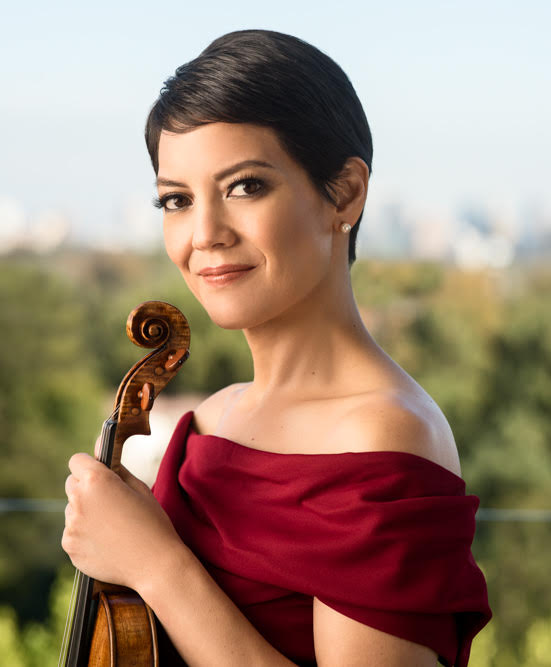
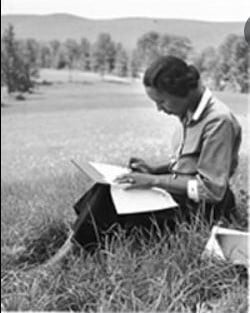
I first saw Anne Akiko Meyers with the Philadelphia Orchestra at The Mann Center back in 1991 (playing Samuel Barber’s Violin Concerto), and she was very special indeed. Ten years earlier, at the age of 11, she was already performing on “The Tonight Show with Johnny Carson.” The next year, she made her “Top 5” debut, with the New York Philharmonic. Meyers has long since been in demand as one of the world’s top-tier violinists.
This weekend, she will be the soloist on the opening concerts of the Princeton Symphony Orchestra in Arturo Márquez’s Violin Concerto “Fandango,” a piece that was given its premiere, by Meyers, last summer at the Hollywood Bowl.
The concerto will form the core of a Latin-inflected program that will also include Ruperto Chapí’s prelude to the zarzuela “La Revoltosa” and the U.S. premiere of Marcos Fernández-Barrero’s homage to Leonard Bernstein, “America.”
Joaquín Turina’s evocative “Danzas fantásticas” and Nikolai Rimsky-Korsakov’s colorful “Capriccio espagnol” will lend further zest to this musical paella.
Music director Rossen Milanov will conduct.
The concerts will take place at Princeton University’s Richardson Auditorium this Saturday at 8 p.m. and Sunday at 4 pm. For tickets and more information, visit princetonsymphony.org.
On this day when the birthdays of Johann Pachelbel and Engelbert Humperdinck are generally observed, Othmar Schoeck is foremost in my thoughts.
Schoeck (1886-1957) may be largely forgotten now, but he once enjoyed international recognition for his art songs, which he composed prolifically. He also produced opera, orchestral, and instrumental works. His ambitious Violin Concerto – some 40 minutes in length – was composed at white heat, out of love for Stefi Geyer, the same violinist who captivated Béla Bartók and inspired Bartók’s Violin Concerto No. 1.
Schoeck was born in Switzerland and spent most of his life there, other than a brief period during which he lived in Leipzig, where he studied with Max Reger. He had considered pursuing a career in the visual arts, as had his father, before finally committing himself to music. He was fortunate enough to secure patronage so that he could compose more or less undisturbed.
When Ferruccio Busoni settled in Switzerland during the First World War, the two developed a friendship, despite some disagreements on certain artistic matters. In fact, Busoni provided the libretto for Schoeck’s opera “Das Wandbild” (“The Picture on the Wall”), marked by the kind of chinoiserie that characterized Busoni’s own “Turandot” (in no way to be confused with the later, more famous opera by Puccini).
Schoeck’s music experienced a stylistic shift as he became acquainted with the works of Alban Berg and Arthur Honegger. A torrid affair with the pianist Mary de Senger seems to have changed him for good. When their relationship ended, so did Schoeck bid farewell to his earlier, Romantic style.
Though he was no Nazi sympathizer, Schoeck had the bad judgment or naivete to attend the premiere of one of his operas in Berlin in 1943. This led to a lot of stress at home, with the Swiss unhappy with his actions. Schoeck suffered a heart attack, but continued to compose. He died in 1957.
I seem to recall his reputation was such that the writer Hermann Hesse referred to Schoeck in one of his books – I think it was “Journey to the East” – in the same breath as Richard Strauss. I suppose it didn’t hurt that Hesse and Schoeck were friends and Schoeck set some of Hesse’s poems (as did Strauss). Hesse pitched the idea of an operatic collaboration, and even wrote a libretto, but the proposal never came to anything.
Here is Schoeck’s lovely “pastoral intermezzo,” as the composer described it, “Summer Night.” It tells of a summer harvest, during which field hands come to the aid of a widow and work all night in order to get in her crop, before embarking on their own day jobs.
Here’s a song, “Summer Night,” on a text of Hesse, with Dietrich Fischer-Dieskau
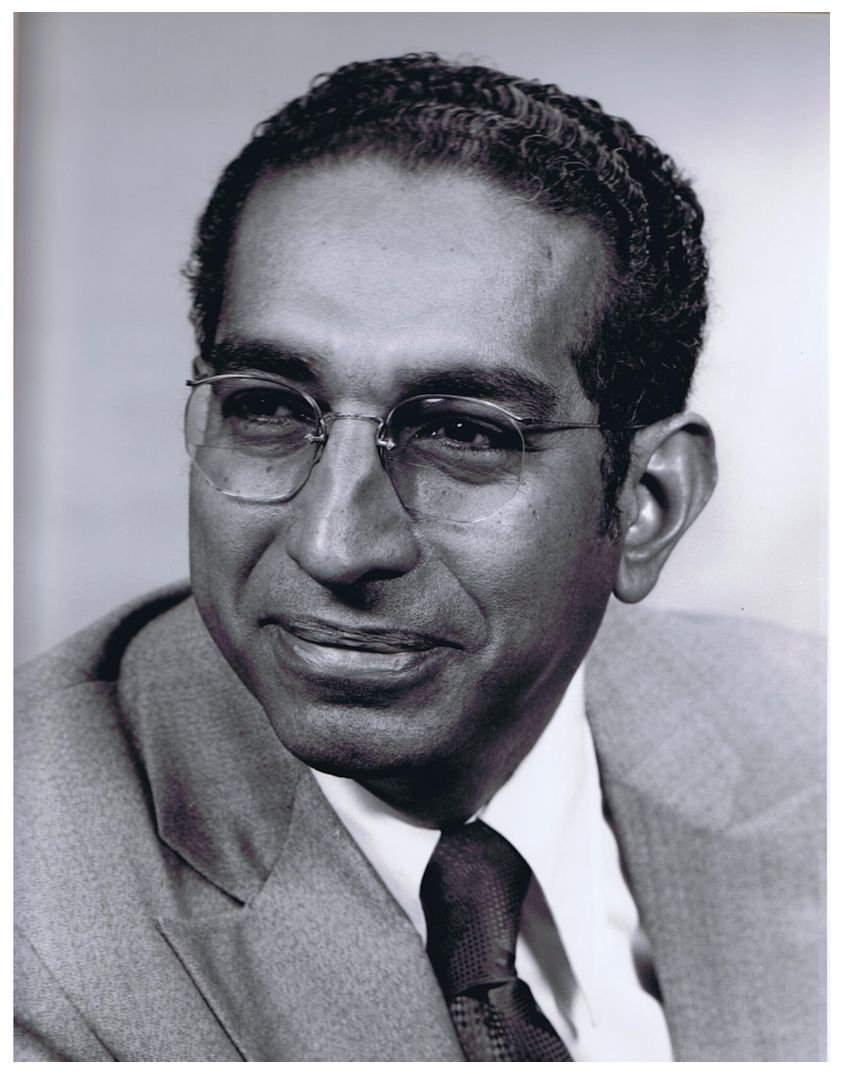
He’s not only Panama’s greatest composer. He’s Panama’s ONLY composer. At least according to Roque Cordero, stated half-jokingly in an interview he gave in 1989, when he had just turned 72 years-old.
Cordero’s music tends to balance Panamanian folklore with more advanced techniques, as exemplified in perhaps his most frequently performed work, the “Eight Miniatures for Small Orchestra” of 1948.
More challenging is his Violin Concerto from 1962. I only just came across a concert performance of the piece from 2010 with Rachel Barton Pine as soloist – in the work’s Panamanian premiere? – which I’m adding to the links below.
I was already familiar with the concerto from Paul Freeman’s “Black Composers Series,” which originally appeared on vinyl, on Columbia Records, back in the 1970s (reissued as a box set of CDs by Sony Classical only in 2019). Sanford Allen was the soloist in the world premiere recording. Barton Pine’s performance is distinguished not only by her characteristically superb commitment, but also because the concert actually took place in the composer’s home town of Panama City. Cordero was born there on this date in 1917.
He won a scholarship to pursue music education at the University of Minnesota. There he studied conducting with Dmitri Mitropolous. It was Mitropolous who introduced him to Ernst Krenek, with whom he studied composition at Hamline University. (Mitropolous, recognizing his promise, paid all his expenses.)
Back in Panama, Cordero became director of the National Music Institute and was appointed artistic director and conductor of the Panama National Symphony. Later, he was assistant director of the Latin American Music Center, professor of composition at Indiana University, and, from 1972, distinguished professor emeritus at Illinois State University. He died in Dayton, Ohio, in 2008, at the age of 91.
“I am Panamanian,” he told Bruce Duffie, in the 1989 interview linked below. “I am not an American citizen, simply because I represent something to my country. If I become an American citizen, I would be just one more composer of the United States. I am a composer from Panama. When you read about me, you will find that I am the only composer from Panama, and because I am the only one, I am called the best. If there were two, I wouldn’t be the best [laughs], and I have to be the best. Unfortunately, Panama doesn’t have a musical tradition. How I became a composer is a mystery to me, and to anyone who has studied the music of Latin America.”
Start with the “Adagio trágico” or “Sonatina Rítmica.” Then move on to “Eight Miniatures for Small Orchestra.” When you feel like your ears are awake, only then, check out Barton Pine’s performance of Cordero’s Violin Concerto.
Happy birthday, Roque Cordero!
“Adagio trágico” (1946-55), begun after the death of the composer’s mother; taken up again after the assassination of Panamanian President José Antonio Remón Cantera, whose wife had been one of Cordero’s benefactors
TONIGHT! The world premiere of Westminster Choir College graduate Julia Perry’s Violin Concerto!
It will be performed by Roger Zahab and the Pitt Symphony Orchestra – the orchestra of the University of Pittsburgh – alongside music of Sibelius (“Finlandia”), Bruch (Romance for Viola and Orchestra), and Schubert (the “Unfinished” Symphony). Watch it live on YouTube at 8:00 EST.
Perry received her B.M. and M.M. at Westminster, where she studied voice, piano, and composition, from 1943 to 1948. She went on to attend Juilliard, then continue her studies with Luigi Dallapiccola in Italy and Nadia Boulanger in Paris. The concerto was composed between 1963 and 1968.
The Pitt Symphony is a student orchestra, made up of enthusiastic non-music majors.
Watch the concert live by the following the link, at 8 pm:
Hopefully, the video will be archived for later enjoyment.