Tag: Virgil Thomson

  • American Composers Hit the Road

    American Composers Hit the Road

    I’m not sure that I would characterize Virgil Thomson’s music as being full of gas – though I suppose an argument could be made on occasion concerning his prose! That said, he did write what might very well be the only ballet set in a service station. The success of “Filling Station,” written for Leon Kirstein’s Ballet Caravan, gave Aaron Copland the confidence to follow through on his own Caravan commission, which resulted in “Billy the Kid.”

    You’ll have a chance to hear “Filling Station” tonight, on “The Lost Chord,” as American composers hit the road for Labor Day.

    Also on the program will be Frederick Shepherd Converse’s “Flivver Ten Million,” which celebrates the Ford Motor Company’s affordable assembly line automobile, from its creation in a Detroit factory to the manifest destiny of America’s roadways.

    John Adams’ “Road Movies” has nothing to do with Bob Hope and Bing Crosby, alas; what it is, however, is a violin sonata written firmly within the American tradition, with a special affinity at its core with Copland’s Violin Sonata.

    Finally, we’ll hear one of Michael Daughtery’s most performed works, the exuberant “Route 66,” inspired by the storied “Main Street of America.”

    Join me as we put the pedal to the metal, for “The Last Roads of Summer,” this Sunday night at 10 EDT on WWFM – The Classical Network and at wwfm.org.
  • American Composers Road Trip on WPRB

    American Composers Road Trip on WPRB

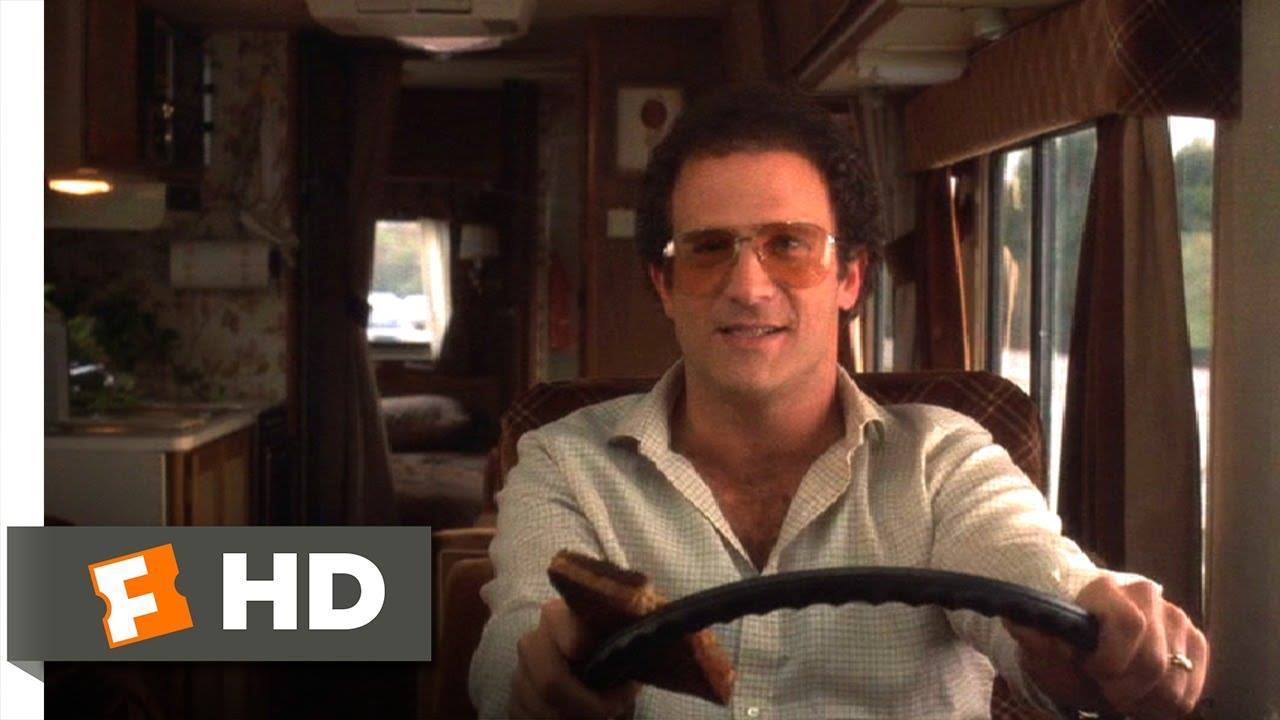
    Why is it I feel like Albert Brooks in “Lost in America?” Maybe because I’ve decided to sell my house, liquidate my assets, and drop out of society, “just like in ‘Easy Rider.’” Just kidding. I don’t have any assets. What I do have, however, is a bag full of CDs featuring music by American composers reflective of their experiences traveling across this picturesque country of ours.

    We’ll hear works inspired by the nation’s highways and byways, its cities, its vacation spots and its natural wonders. Sure, there’s every chance we may get lost (as in Paul Lansky’s “Travel Music”) or have to top off the tank (as in Virgil Thomson’s “Filling Station”), but that’s all part of the experience, isn’t it?

    At any rate, the RV is all gassed up and ready to go. We hit the road from 6 to 11 EDT on WPRB 103.3 FM and at wprb.com. We’ll try not to blow the nest egg, on Classic Ross Amico.

  • Virgil Thomson Birthday Composer & Critic

    Virgil Thomson Birthday Composer & Critic

    Today is the birthday of Virgil Thomson (1896-1989), faux naïf composer and feared critic of the New York Herald Tribune.

    I included two of Thomson’s “Five Blake Songs” on this week’s edition of “The Lost Chord” (which repeats tonight at 6 ET at wwfm.org), devoted yet again to recordings of American music by Eugene Ormandy and the Philadelphia Orchestra.

    The songs, written for baritone Mack Harrell, were originally recorded for Columbia Records in 1951. When the recording was reissued on CRI in the 1970s, Thomson himself suppressed the fourth of them, “The Little Black Boy,” which therefore was absent from the only CD issue, in 1989, on the Bay Cities label. I own both the original LP and the Bay Cities disc, but since I only had time for two songs anyway, I resorted to the more portable CD. Fortunately, another maniacal collector has posted all five on YouTube. Here they are for your enjoyment:

    It’s wonderful to have a composer like Thomson born so close to Thanksgiving. Here’s probably his best-known work, the “Symphony on a Hymn Tune”:

    And, for good measure, his concertino for harp, strings and percussion, “Autumn”:

    Happy birthday, Virgil Thomson!


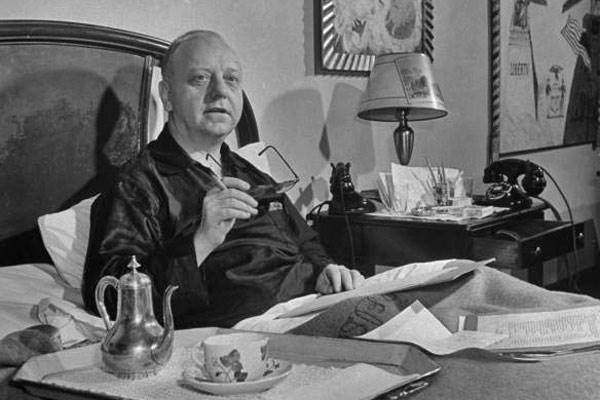
    PHOTO: Thomson, in his “office”

  • Ormandy’s Lost American Music Rediscovered

    Ormandy’s Lost American Music Rediscovered

    I hope you’ll join me tonight on “The Lost Chord,” as we round out our trilogy of programs featuring rarely-heard recordings of American music by Eugene Ormandy and the Philadelphia Orchestra.

    We’ll hear two songs (originally from a collection of five), after texts of William Blake, by Virgil Thomson; Roy Harris’ underrated Symphony No. 7, in a powerhouse performance; and Louis Gesensway’s “Four Squares of Philadelphia.”

    Gesensway was born in Latvia in 1906. A violin prodigy, he was one of the founders of the Toronto Symphony Orchestra. He came to Philadelphia at the age of 19, where he played in the orchestra under Stokowski and Ormandy.

    In his mid-20s, he took a leave of absence to study composition with Zoltán Kodály. “Four Squares of Philadelphia” was described by the composer as a “symphonic poem for large orchestra, narrator and street criers.”

    The piece opens with a recitation of William Penn’s prayer, then continues with musical evocations of Washington Square (captured in early morning, during Colonial times, with street criers hawking their wares), Rittenhouse Square (on a bright and cheerful afternoon), Logan Square (with its fountains at dusk), and Franklin Square (at night, reflective of noisy bridge traffic, with a side excursion into Chinatown, and interjections from the honky tonk joints located around the square in the 1950s).

    I hope you’ll join me for one more trip to the well, with “All-American Ormandy III,” tonight at 10 ET, or that you’ll listen to it (while you’re sitting in traffic, no doubt) when the show repeats Thanksgiving eve at 6. If your family is stressing you out, you can always catch it later as a webcast at wwfm.org.


    PHOTO: Statue of Penn high atop the city he founded

  • Thomson’s Louisiana Story Pulitzer & Ormandy

    Thomson’s Louisiana Story Pulitzer & Ormandy

    Yesterday, I posted about Virgil Thomson. On this date in 1948, the Philadelphia Orchestra gave the first performance of Thomson’s “Louisiana Story Suite.” As I mentioned, “Louisiana Story” was the first – and so far only – film score to be awarded the Pulitzer Prize for Music.

    Robert Flaherty’s semi-documentary, commissioned by the Standard Oil Company, whitewashes the impact of oil drilling in the bayous, which barely impacts a Cajun boy’s adventures with his pet raccoon. Much more irksome is a pesky alligator, for which Thomson composed a fugue.

    I’d also like to take this opportunity to give a belated nod to Eugene Ormandy, whose birthday I missed on Nov. 18. Ormandy, of course, was music director and conductor of the Philadelphia Orchestra for 44 years.

    Praise be! Somebody posted Ormandy’s recording of “Louisiana Story” on YouTube. I’m not sure that it’s ever appeared on CD. At any rate, it is currently unavailable.

    Here’s the complete film, if you’re interested. The print, posted by a Russian(!), is much better than an alternative, murkier print, also posted, if you can forgive the foreign subtitles.

    https://www.youtube.com/watch?v=lSvBQOSqHGI

    Happy Thanksgiving, everyone. Be careful driving!

Tag Cloud

Aaron Copland (92) Beethoven (95) Composer (114) Film Music (120) Film Score (143) Film Scores (255) Halloween (94) John Williams (185) KWAX (229) Leonard Bernstein (100) Marlboro Music Festival (125) Movie Music (135) Opera (198) Philadelphia Orchestra (88) Picture Perfect (174) Princeton Symphony Orchestra (106) Radio (87) Ralph Vaughan Williams (85) Ross Amico (244) Roy's Tie-Dye Sci-Fi Corner (290) The Classical Network (101) The Lost Chord (268) Vaughan Williams (103) WPRB (396) WWFM (881)

DON’T MISS A BEAT

Receive a weekly digest every Sunday at noon by signing up here


RECENT POSTS