Tag: Virgil Thomson

  • Real Presidents Don’t Lie (Compulsively)

    Real Presidents Don’t Lie (Compulsively)

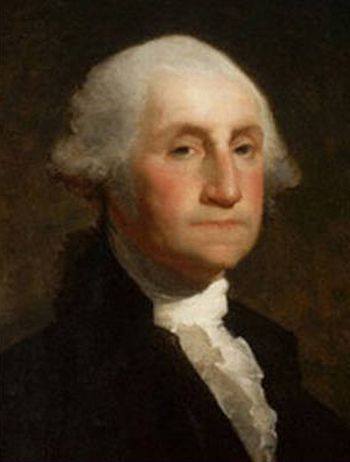
    My heart’s not really in Presidents Day this year. Draw your own conclusions. I started typing something up this morning, but as I warmed to the topic, it grew and grew, and then I didn’t have time to come back to it and wrangle it into shape. It’s a shame, because the material is time sensitive. Maybe I’ll rework it for the Fourth of July, when hardly anyone will see it. In the meantime, here’s a comic featuring antifa George Washington, making America great.

    Also, to keep it musical, I’ll include a link to Virgil Thomson’s ballet, “Parson Weems and the Cherry Tree,” a Bicentennial commission which, for some reason, is not to be found on the internet in its orchestral guise. Who knew that my recording would turn out to be such a collector’s item? Here, the work is posted in a transcription for piano. If you’re interested, it plays continuously over twelve tracks.


    Looking for Lincoln? Search for my post for February 12, Honest Abe’s birthday.

    Neither of these guys could tell a lie. Remind you of anyone we know? Me neither. Happy Presidents Day.

  • Washington & Lincoln in Music: Forgotten Gems

    Washington & Lincoln in Music: Forgotten Gems

    One never told a lie. The other gave everything to keep us united. We’ve come a long way, baby.


    Hard to believe, but Virgil’s Thomson’s George Washington ballet “Parson Weems and the Cherry Tree” (a Bicentennial commission) doesn’t seem to be posted anywhere online in the version for chamber orchestra. I did, however, find it for piano. You just have to let it play through, from tracks 10-21.

    Concert overture “McKonkey’s Ferry (Washington at Trenton)” by Trenton’s own George Antheil. Curious that a local boy would spell McConkey with two k’s!

    John Lampkin, “George Washington Slept Here”

    Roy Harris’ setting of Vachel Lindsay’s “Abraham Lincoln Walks at Midnight.” (The poem is posted below the video.)

    Florence Price’s setting of the same poem

    From “Abraham Lincoln: A Likeness in Symphony Form,” by Robert Russell Bennett

    More Lincoln music under my post for Lincoln’s birthday on February 12

    https://www.facebook.com/photo/?fbid=1489109922008066&set=a.883855802533484

  • Virgil Thomson Thanksgiving Birthday Music

    Virgil Thomson Thanksgiving Birthday Music

    Virgil Thomson was not only a composer, he was a writer on music, who wielded power of a kind unimaginable in this day of eroded standards, as a critic at the New York Herald-Tribune.

    Perhaps his brand of “faux-naïf” Americana is not for everyone. Still, it earned him a wide and enduring audience. His music for Robert Flaherty’s “Louisiana Story” (1948) remains the only film score ever to be awarded a Pulitzer Prize.

    For Thomson’s birthday, here’s some music to get you in the mood for Thanksgiving.

    His “Symphony on a Hymn Tune” was composed during his Paris years. Thomson, like Aaron Copland and so many others, studied in France with Nadia Boulanger. The symphony was inspired by the composer’s memories of his Kansas City boyhood. The “Sunday best” of the church hymns occasionally gets tangled up in a few modernistic burrs – the exchanges between the violin, cello, trombone, and piccolo at the end of the first movement, for instance – but in 1928, it was a landmark in terms of helping to establish a distinctly American idiom.

    More austere, perhaps, is Thomson’s symphonic poem “Pilgrims and Pioneers” – but just stick around for the fiddle tunes.

    Finally, a seasonal work: the Concertino for Harp, Strings and Percussion, “Autumn” – according to Thomson, actually more of a “portrait of an artist ageing.”

    Happy birthday, Virgil Thomson (1896-1989) – and Happy Thanksgiving!


    Check out Thomson on TV!


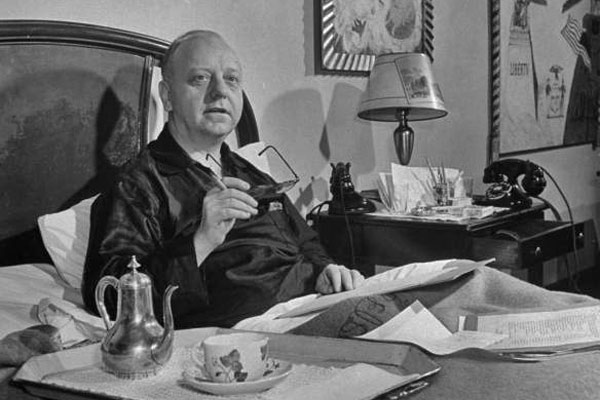
    PHOTOS: Thomson, enjoying all his pleasures at once

  • Semi-Documentary Film Scores Copland Thomson Kay

    Semi-Documentary Film Scores Copland Thomson Kay

    A “semi-documentary” is documentary-like, but allows staged or fictional elements, sometimes recreations or reenactments, sometimes flat-out embellishments, often with non-actors playing most of the roles. This week on “Picture Perfect,” enjoy music from four acclaimed examples.

    Aaron Copland, one of America’s most respected composers, was more active in film than most people realize. He even won an Academy Award in 1950, for his score to “The Heiress.”

    During World War II, Copland was approached by the Office of War Information to score a brief film about the resettlement of European refugees in a rural Massachusetts town. The film was called “The Cummington Story” (1945). The music is rather interesting in that, having been written at the height of Copland’s “populist” phase, he employs melodies which were later fleshed out into more familiar concert works, such as the Clarinet Concerto and “Down a Country Lane.”

    Director Robert Flaherty’s “Louisiana Story” (1948) is often misidentified as a straight documentary. (Flaherty made the first commercially-successfully, feature-length documentary, “Nanook of the North,” in 1922 – itself later revealed to have been more of a docudrama.) However, the plot is entirely fictional, an idealized story of a Cajun family that reaps the rewards of oil drilling that takes place in an inlet behind its house. The film was shot on location in bayou country, using Cajun locals as actors, giving it a certain verisimilitude.

    Although it was selected for preservation in the United States film registry by the Library of Congress as being “culturally, historically or aesthetically significant,” and its script was nominated for an Academy Award, “Louisiana Story” acts as a kind of time capsule in its naiveté. Perhaps the most interesting aspect of the entire project is the film’s score, by American composer and revered critic of the New York Herald Tribune, Virgil Thomson. So far, it is the only film score ever to be awarded the Pulitzer Prize for Music.

    Like Copland and Thomson, Ulysses Kay is associated more with his works for the concert hall. Nevertheless, he wrote music for numerous television shows and documentaries in the late 1950s and early ‘60s. His first scoring assignment was for an experimental quasi-documentary called “The Quiet One” (1948), a film about an abused African American child and his subsequent coming of age. The film received an Oscar nomination for Best Story and Screenplay, and was listed as one of the ten best movies of the year by the New York Times and the National Board of Review. Kay, a long-time resident of Teaneck, NJ, was a rarity in the world film scoring, a composer of color.

    Finally, we’ll turn to Morton Gould and “Windjammer” (1958), the only film ever to be shot in the widescreen “Cinemiracle” format. “Windjammer” depicts the training cruise of a fully-rigged sailing ship, from Oslo, across the Atlantic, to the Caribbean, New York, and back home again. Its dreamy theme music is full of the romance of the high seas.

    Artistic truth is based on fact this week. I hope you’ll join me for an hour of selections from semi-documentaries on “Picture Perfect,” music for the movies, now in syndication on KWAX, the radio station of the University of Oregon!


    Remember, KWAX is on the West Coast, so there’s a three-hour difference for those of you listening in the East. Here are the respective air-times for all three of my recorded shows (with East Coast conversions in parentheses):

    PICTURE PERFECT, the movie music show – Friday on KWAX at 5:00 PM PACIFIC TIME (8:00 PM EST)

    SWEETNESS AND LIGHT, the light music program – ALL NEW! – Saturday on KWAX at 8:00 AM PACIFIC TIME (11:00 AM EST)

    THE LOST CHORD, unusual and neglected rep – Saturday on KWAX at 4:00 PM PACIFIC TIME (7:00 PM EST)

    Stream all three, at the times indicated, by following the link!

    https://kwax.uoregon.edu/

  • Ormandy’s All-American Philadelphia Sound

    Ormandy’s All-American Philadelphia Sound

    This week on “The Lost Chord,” it’s one more trip to the well, with well-played works of American composers rendered by Eugene Ormandy and the Philadelphia Orchestra.

    Slake your thirst with selections from “Five Songs of William Blake” by Virgil Thomson (born on this date in 1896), the Symphony No. 7 by Roy Harris, and “Four Squares of Philadelphia” by Louis Gesensway.

    Gesensway was born in Latvia in 1906. A violin prodigy, he was one of the founders of the Toronto Symphony Orchestra. He came to Philadelphia at the age of 19, where he played under both Stokowski and Ormandy.

    In his mid-20s, he took a leave of absence to study composition with Zoltán Kodály. “Four Squares of Philadelphia” was described by the composer as a “symphonic poem for large orchestra, narrator and street criers.”

    The piece opens with a recitation of William Penn’s prayer, then continues with musical evocations of Washington Square (in early morning, during Colonial times, with street criers hawking their wares), Rittenhouse Square (on a bright and cheerful afternoon), Logan Square (with its fountains at dusk), and Franklin Square (at night, evocative of noisy bridge traffic, a side excursion into Chinatown, and musical interjections from the honky tonk joints located around the square in the 1950s).

    Be there or be square. Eugene Ormandy serves up the last of the Thanksgiving leftovers. I hope you’ll join me for “All-American Ormandy III,” now in syndication on KWAX, the radio station of the University of Oregon!


    Remember, KWAX is on the West Coast, so there’s a three-hour difference for the Trenton-Princeton area. Here are the respective air-times of my recorded shows (with East Coast conversions in parentheses):

    PICTURE PERFECT, the movie music show – Friday on KWAX at 5:00 PACIFIC TIME (8:00 PM EST)

    THE LOST CHORD, unusual and neglected rep – Saturday on KWAX at 4:00 PACIFIC TIME (7:00 PM EST)

    Stream them here!

    https://kwax.uoregon.edu/


    PLEASE NOTE: This show was recorded in 2015 and employs material reissued on compact disc for the first time on the Albany and Bay Cities labels. All three of these performances have since been remastered (including the wholly restored “Five Blake Songs”), as part of Sony Classical’s 120-CD box set of Ormandy’s Philadelphia mono recordings, “Eugene Ormandy: The Columbia Legacy,” in 2021.

    The first installment of Ormandy’s stereo recordings were released earlier this month in an 88-CD box, also from Sony, “Eugene Ormandy/The Philadelphia Orchestra: The Columbia Stereo Collection,” on November 17.

    Both Sony sets sound fantastic (with the caveat that the first is in mono). Both are highly recommended.


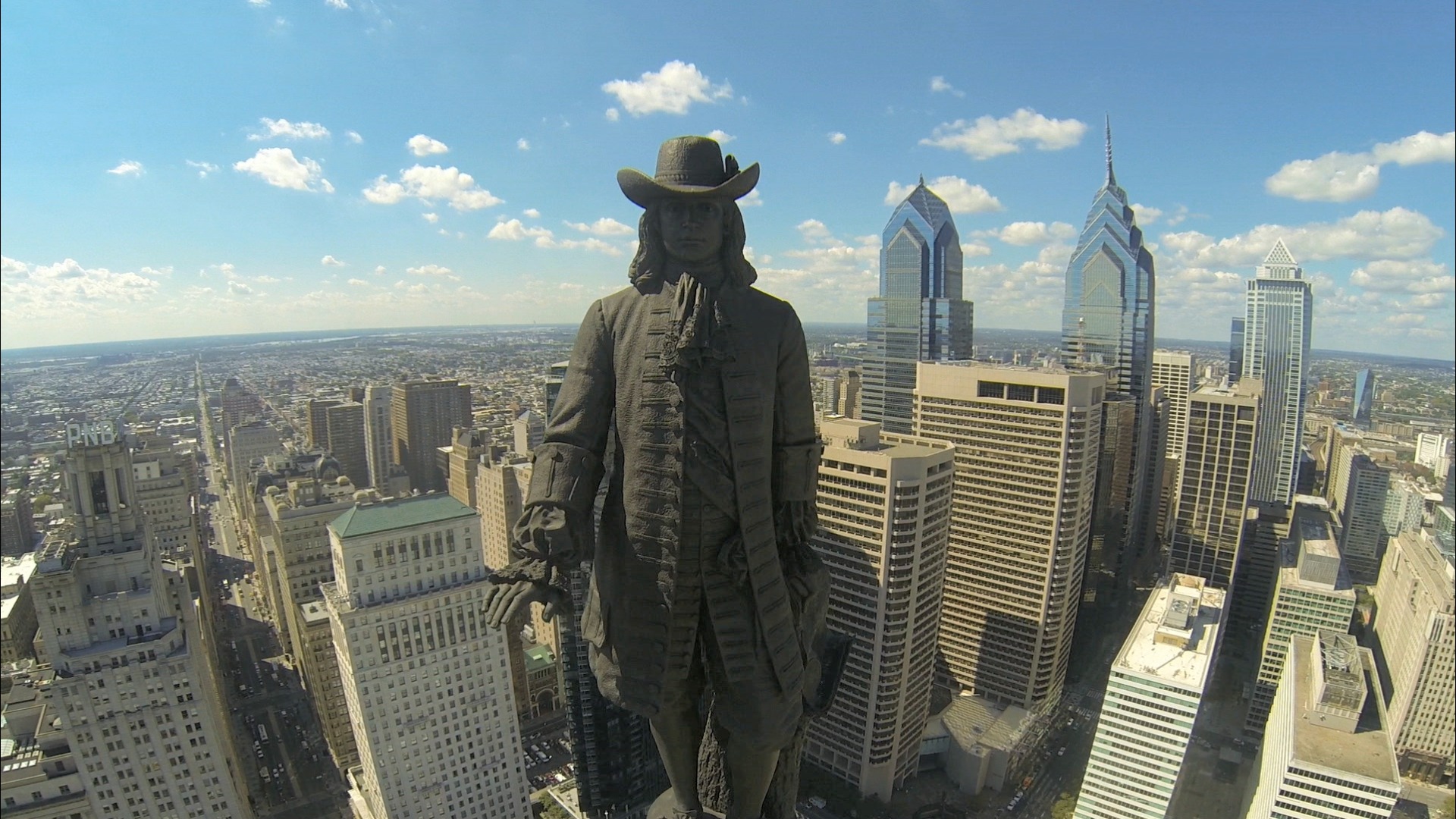
    PHOTO: Statue of Penn, high atop the city he founded

Tag Cloud

Aaron Copland (92) Beethoven (95) Composer (114) Film Music (120) Film Score (143) Film Scores (255) Halloween (94) John Williams (185) KWAX (229) Leonard Bernstein (100) Marlboro Music Festival (125) Movie Music (135) Opera (198) Philadelphia Orchestra (88) Picture Perfect (174) Princeton Symphony Orchestra (106) Radio (87) Ralph Vaughan Williams (85) Ross Amico (244) Roy's Tie-Dye Sci-Fi Corner (290) The Classical Network (101) The Lost Chord (268) Vaughan Williams (103) WPRB (396) WWFM (881)

DON’T MISS A BEAT

Receive a weekly digest every Sunday at noon by signing up here


RECENT POSTS