Tag: Vitězslava Kápralová

  • Kápralová and Smyth: Forgotten Female Composers

    Kápralová and Smyth: Forgotten Female Composers

    This Sunday night on “The Lost Chord,” the focus will be on outstanding works by two extraordinary female composers.

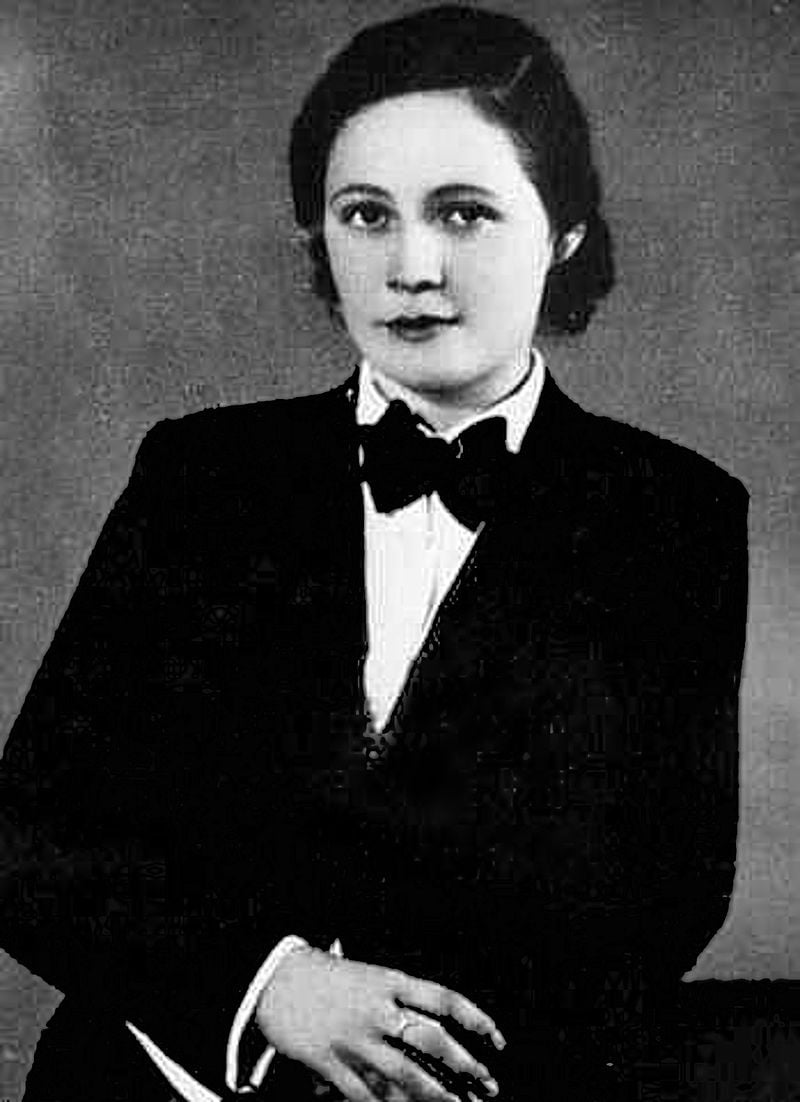
    Vitězslava Kápralová (1915-1940) was one of the great hopes of Czech music, a figure who undoubtedly would be much better known had she not died of tuberculosis at the age of 25. As it stands, her reputation is only beginning to emerge from the shadow of her teacher and lover, Bohuslav Martinu.

    Kápralová’s String Quartet was written while she was yet a student at the Prague Conservatory, where her teachers included Vitězslav Novák and Václav Talich. (She studied with Martinu later in Paris.) The work was completed in 1936, when Kápralová was about 21 years-old.

    More about Kápralová here, in this article written to mark her centenary in 2015:

    https://www.telegraph.co.uk/culture/music/classicalmusic/11365848/The-tragedy-of-Europes-great-forgotten-female-composer.html?fbclid=IwAR1EgKzOjglhAKe-58wHwivhYjI1LtTCPzgr0efhV0xuf0898oeeZYbJHU0

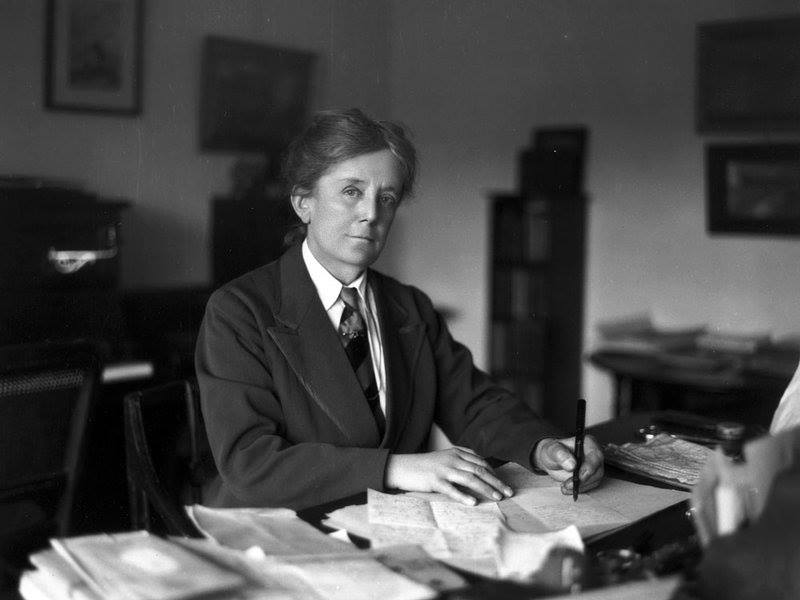
    Ethel Smyth (later DAME Ethel Smyth, 1858-1944) was one of the most vocal advocates of the women’s suffrage movement in England. She overcame early opposition to a career in music on the part of her father to receive the praise of George Bernard Shaw, who called her Mass “magnificent.”

    However, her works were often better-appreciated abroad. Her operas, in particular, were embraced in Germany. One of them, “Der Wald,” was the only opera by a woman composer mounted by New York’s Metropolitan opera for over a century!

    Smyth served time in prison for putting out the windows of politicians who opposed a woman’s right to vote. She also wrote for the cause “The March of the Women.” When Sir Thomas Beecham went to visit her in jail, he witnessed her conducting through the bars of her window with a toothbrush as her associates gathered for exercise in the courtyard.

    Smyth’s “Serenade in D” – a symphony in all but name – was her first orchestral score, composed in 1890, when she was about 32 years-old. In my opinion, it’s better than just about anything composed by her contemporary, Sir Hubert Parry, and much more compelling than the symphonies of Sir Charles Villiers Stanford.

    More about Smyth here, in this piece put together in connection with a revival of her opera, “The Wreckers,” by the great Leon Botstein:

    https://www.npr.org/sections/deceptivecadence/2015/07/23/410033088/one-feisty-victorian-womans-opera-revived?fbclid=IwAR2GIlgZ3p6rwkh8dFa-2H7X27tQPRRKFK_TLnuxWI67kayucG8tuXkOj5I

    I hope you’ll join me for music by these two extraordinary women – “A Woman’s Place is in the Concert Hall” – this Sunday night at 10:00 EDT, on WWFM – The Classical Network and wwfm.org.


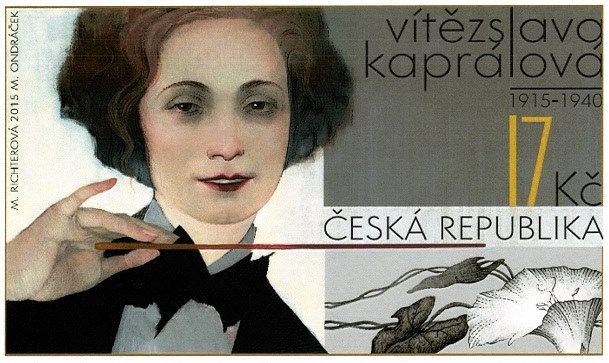
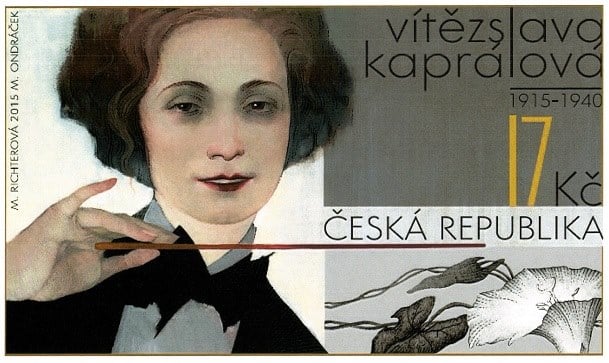
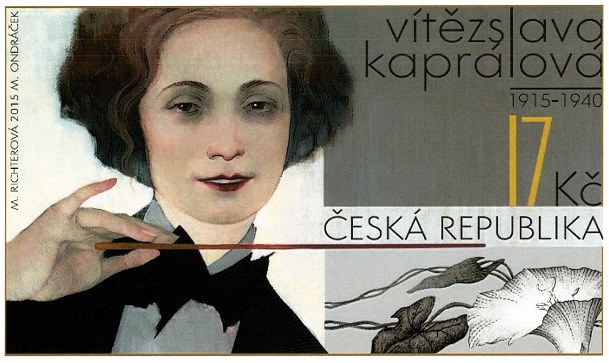
    Vitězslava Kápralová honored on a postage stamp; Ethel Smyth taken into custody
  • Kaprálová Remembered on The Classical Network

    Kaprálová Remembered on The Classical Network

    Vitězslava Kaprálová undoubtedly would be much better known had she not died of tuberculosis at the age of 25. This brilliant musician was poised to become perhaps the best-known woman composer and conductor in all of Europe. Among her teachers were Vitězslav Novák, Václav Talich, Charles Munch, Nadia Boulanger and Bohuslav Martinů.

    We’ll remember Kaprálová this afternoon on The Classical Network, on the anniversary of her birth, with a recording of the piece that brought her her greatest success, the “Military Sinfonietta.” Kaprálová herself conducted the work’s first performance, with Czechoslovakia’s president, Edvard Beneš, in attendance, in 1937. The next year, she conducted it again in London, with the BBC Symphony Orchestra, at the Festival of the International Society for Contemporary Music.

    Her relationship with Martinů deepened into one of romantic love. We’ll hear some of Martinů’s music, as well, alongside birthday tributes to Liszt pupil William Mason, Pulitzer Prize winners Norman Dello Joio and Leon Kirchner, Austrian composer and arranger Gottfried von Einem, and composer and writer of supernatural fiction E.T.A. Hoffmann.

    At 6:00, we’ll get a jump on the Lunar New Year on “Picture Perfect,” with music from movies set along the Silk Road, including “The Adventures of Marco Polo” (Hugo Friedhofer), “Genghis Khan” (Dusan Radic), “Mongol” (Tuomas Kantelinen), and “Crouching Tiger, Hidden Dragon” (Tan Dun).

    Cap your day with Kaprálová and a swathe of cinematic silk, from 4 to 7 p.m. EST, on WWFM – The Classical Network and wwfm.org.

  • Clara Schumann Bicentennial & Women Composers

    Clara Schumann Bicentennial & Women Composers

    Friday marks the bicentennial of the birth of Clara Schumann. Though her achievements as a pianist and a teacher outstripped her success as a composer, she, it must be remembered, was the product of a time when women did not receive the same advantages, in terms of education, opportunity, and acceptance, as their male counterparts.

    Be that as it may, Schumann proved to be a dynamo, caring for a family of eight children and a mentally ill husband, while earning the respect of her peers as a musician of impeccable taste and one of the outstanding keyboard interpreters of her day.

    To honor the contribution of women in music, I’ll be sharing recordings of works by female composers all month long, as part of my regularly scheduled air shifts. Tune in today to hear music by Vítězslava Kaprálová, Louise Talma, and Phyllis Tate.

    We’ll gain a little clarity for Clara, from 4 to 7 p.m. EDT, on WWFM – The Classical Network and wwfm.org.


    CLOCKWISE FROM LEFT: Vítězslava Kaprálová, Phyllis Tate and Louise Talma

  • Celebrating Kapralova and Smyth on WWFM

    Celebrating Kapralova and Smyth on WWFM

    In all likelihood you’ll be asleep by that time, thanks to the clock change, but in the event that you’ve overcompensated with too much caffeine, consider joining me tonight for “The Lost Chord,” when the focus will be on outstanding works by two extraordinary female composers.

    Vitězslava Kápralová (1915-1940) was one of the great hopes of Czech music, a figure who undoubtedly would be much better known had she not died of tuberculosis at the age of 25. As it stands, her reputation is only beginning to emerge from the shadow of her teacher and lover, Bohuslav Martinu.

    Kápralová’s String Quartet was written while she was yet a student at the Prague Conservatory, where her teachers included Vitězslav Novák and Václav Talich. (She studied with Martinu later in Paris.) The work was completed in 1936, when Kápralová was about 21 years-old.

    More about Kápralová here, in this article written to mark her centenary in 2015:

    https://www.telegraph.co.uk/culture/music/classicalmusic/11365848/The-tragedy-of-Europes-great-forgotten-female-composer.html

    Ethel Smyth (later DAME Ethel Smyth, 1858-1944) was one of the most vocal advocates of the women’s suffrage movement in England. She overcame early opposition to a career in music on the part of her father to receive the praise of George Bernard Shaw, who called her Mass “magnificent.”

    However, her works were often better-appreciated abroad. Her operas, in particular, were embraced in Germany. One of them, “Der Wald,” was the only opera by a woman composer mounted by New York’s Metropolitan opera for over a century!

    Smyth served time in prison for putting out the windows of politicians who opposed a woman’s right to vote. She also wrote for the cause “The March of the Women.” When Sir Thomas Beecham went to visit her in jail, he witnessed her conducting through the bars of her window with a toothbrush as her associates gathered for exercise in the courtyard.

    Smyth’s “Serenade in D” – a symphony in all but name – was her first orchestral score, composed in 1890, when she was about 32 years-old. In my opinion, it’s better than just about anything composed by her contemporary, Sir Hubert Parry, and much more compelling than the symphonies of Sir Charles Villiers Stanford.

    More about Smyth here, in this piece put together in connection with a revival of her opera, “The Wreckers,” by the great Leon Botstein:

    https://www.npr.org/sections/deceptivecadence/2015/07/23/410033088/one-feisty-victorian-womans-opera-revived

    I hope you’ll join me for music by these two extraordinary women – “A Woman’s Place is in the Concert Hall” – this Sunday night at 10:00 EDT, on WWFM – The Classical Network and wwfm.org.


    PHOTOS: Ethel Smyth at her desk (top); Vitězslava Kápralová taking up the baton (she studied conducting in Prague with Václav Talich and in Paris with Charles Munch)

  • Czech Composers Love and Masterpieces

    Czech Composers Love and Masterpieces

    Anyone at all acquainted with the life story of Leoš Janáček knows about his relationship with Kamila Stasslova. Stasslova was the married woman, 38 years Janáček’s junior, who was the recipient of his “intimate letters” (hence, the subtitle of his autobiographical String Quartet No. 2). Though the relationship was chaste one, she instilled in the composer an ardor which propelled him into the creation of a series of masterworks that spanned his final decade. This is the music which essentially made Janáček’s reputation.

    This Sunday night on “The Lost Chord,” we’ll have two more examples of Czech extramarital love that resulted in flowering creativity. Vitězslava Kaprálová undoubtedly would be much better known had she not died of tuberculosis at the age of 25. The brilliant Kaprálová seemed poised to become the best-known woman composer and conductor in Europe. Her teachers included Vitězslav Novák, Václav Talich, Charles Munch, Nadia Boulanger and Bohuslav Martinů.

    Her relationship with Martinů deepened into one of romantic love, which fueled some of the older composer’s most powerful works, as he grappled with his emotional turmoil, caught as he was between his wife and an irresistible attraction to his star pupil.

    Kaprálová reciprocated, producing a number of pieces under Martinů’s influence, generally submitting them for his approval. One such work was the “Partita for Piano and String Orchestra,” composed in 1938 and 1939. Martinů is said to have made a substantial contribution to its final version.

    The idea for this particular thesis came from a consideration of Zdeněk Fibich, the unsung Czech master who was roughly nine years younger than Dvořák. Fibich led something of a turbulent emotional life. When his first wife was about to give birth to twins, one of her sisters came to help out with the delivery. The sister and one of the newborns fell ill and died. They were followed within two years by the other child and Fibich’s wife.

    Fibich promptly married another of his wife’s sisters, only to abandon her and the son she bore him, in favor of one of his pupils, Anežka Schulzová. He documented the affair, musically, in his collection of piano pieces, “Moods, Impressions and Reminiscences,” composed between 1892 and 1899. He referenced material therein in a number of works written during the last decade of his life.

    One of these was the Symphony No. 2, which incorporates the musical reminiscence about the day he declared his love to Schulzová. This occurs in the second movement of the symphony, with another full-blown statement in the finale.

    Join me for this hour of unbalanced Czechs – “Bohemian Lifestyle: Illicit Love in Czech Music” – this Sunday night at 10 EDT on WWFM – The Classical Network; or listen to it later as a webcast, at wwfm.org.


    PHOTOS: The woman who stole Martinů’s heart gets her own postage stamp (top); and Zedněk Fibich, lady killer

Tag Cloud

Aaron Copland (92) Beethoven (95) Composer (114) Film Music (120) Film Score (143) Film Scores (255) Halloween (94) John Williams (185) KWAX (229) Leonard Bernstein (100) Marlboro Music Festival (125) Movie Music (135) Opera (198) Philadelphia Orchestra (88) Picture Perfect (174) Princeton Symphony Orchestra (106) Radio (87) Ralph Vaughan Williams (85) Ross Amico (244) Roy's Tie-Dye Sci-Fi Corner (290) The Classical Network (101) The Lost Chord (268) Vaughan Williams (103) WPRB (396) WWFM (881)

DON’T MISS A BEAT

Receive a weekly digest every Sunday at noon by signing up here


RECENT POSTS