This week on “The Lost Chord,” on the eve of International Women’s Day, the focus will be on outstanding works by two extraordinary female composers, from comparatively early in their respective careers.
Unfortunately, in the case of Vitězslava Kápralová (1915-1940), it was not to be a long one. One of the great hopes of Czech music, Kápralová undoubtedly would be much better known had she not died of tuberculosis at the age of 25. As it stands, her reputation is only beginning to emerge from the shadow of her teacher and lover, Bohuslav Martinů
Kápralová’s String Quartet was written while she was yet a student at the Prague Conservatory, where her teachers included Vitězslav Novák and Václav Talich. (She studied with Martinů later in Paris.) The work was completed in 1936, when Kápralová was about 21 years-old.
More about Kápralová here, in this article written to mark her centenary in 2015:
https://www.telegraph.co.uk/culture/music/classicalmusic/11365848/The-tragedy-of-Europes-great-forgotten-female-composer.html?fbclid=IwAR26f65euwM_lesL-fSWvTids3argkS6dbtmz5P3ruuP9cCYKUsn1F-IXC4
Ethel Smyth (later DAME Ethel Smyth, 1858-1944) was one of the most vocal advocates of the women’s suffrage movement in England. She overcame early opposition to a career in music on the part of her father to receive the praise of George Bernard Shaw, who called her Mass “magnificent.”
However, her works were often better-appreciated abroad. Her operas, in particular, were embraced in Germany. One of them, “Der Wald,” was the only opera by a woman composer mounted by New York’s Metropolitan opera for over a century!
Smyth served time in prison for putting out the windows of politicians who opposed a woman’s right to vote. She also wrote for the cause “The March of the Women.” When Sir Thomas Beecham went to visit her in jail, he witnessed her conducting through the bars of her window with a toothbrush as her associates gathered for exercise in the courtyard.
Smyth’s “Serenade in D” – a symphony in all but name – was her first orchestral score, composed in 1890, when she was about 32 years-old. In my opinion, it’s better than just about anything composed by her contemporary, Sir Hubert Parry, and much more compelling than the symphonies of Sir Charles Villiers Stanford.
More about Smyth here, in this piece put together in connection with a revival of her opera, “The Wreckers”:
https://www.npr.org/sections/deceptivecadence/2015/07/23/410033088/one-feisty-victorian-womans-opera-revived?fbclid=IwAR0XG4Np46RjSJWuUIYwENZ9zFIdkoQYGL7vncYT7i5qFK5_sREFzI56gKw
I hope you’ll join me for music by these two extraordinary women. That’s “A Woman’s Place is in the Concert Hall” on “The Lost Chord,” now in syndication on KWAX Classical Oregon!
——–
Clip and save the start times for all three of my recorded shows:
PICTURE PERFECT, the movie music show – Friday at 8:00 PM EST/5:00 PM PST
SWEETNESS AND LIGHT, the light music program – Saturday at 11:00 AM EST/8:00 AM PST
THE LOST CHORD, unusual and neglected rep – Saturday at 7:00 PM EST/4:00 PM PST
Stream them, wherever you are, at the link!
https://kwax.uoregon.edu
Tag: Vitězslava Kápralová
-

A Woman’s Place Is in the Concert Hall on “The Lost Chord”
-
Martinu’s World at Bard Music Festival
As a longtime attendee of the Bard Music Festival, I recognize that the schedule is not quite as brutal as it once was. There aren’t as many concerts (at one time, there were three in a day) and they now try to rein them in so that they clock at around two-and-a-half hours; but the rigors of travel, living off coffee and wraps and sleeping in a strange place, can still beat the tar out of you. Even so, I’m having a blast. I’ve said it before and I’ll say it again: Bohuslav Martinů is the sleeping giant of Czech music.
Leon Botstein, co-artistic artistic and music director of “Martinů and His World,” asserts that the composer’s star is on the rise. I certainly hope so. But if it is the case, I have yet to see it. I was happy to note the New York Philharmonic programmed the Cello Concerto No. 1 not too long ago, and I heard Steven Isserlis play the Cello Sonata No. 1 in Philadelphia this past season. Also, the Philadelphia Orchestra performed the Rhapsody-Concerto for viola, which I heard the orchestra for the first time some 40 years ago – in the mid-‘80s, the first Martinů piece I ever heard, as a matter of fact. It was love at first encounter.
Come to think of it, I guess that is a lot, compared to past seasons…
But a comment during yesterday morning’s panel Q&A got me thinking how many of Martinů works I have ever actually heard in person. I tallied eight, prior to the festival. So already, I’ve more than doubled my intake. I’ve gotten to know a portion of the composer’s prolific output (more than 400 works) mostly through recordings. And what varied and magnificent stuff it is! But I’ll have to go into all that in another post. The first concert begins this morning at 11:00 – a late morning at Bard, but a man’s got to eat breakfast and pack up.
This morning, I’m looking forward to hearing no less than four Martinů chamber works, along with a string quartet by his illicit sweetheart, Vítĕzslava Kaprálová. Later in the afternoon will be the jaunty suite from Martinů’s jazz ballet “La revue de cuisine,” the Piano Sonata No. 1, the Harpsichord Concerto (with Mahan Esfahani), and “Tre ricarcari,” in addition to Aaron Copland’s Sextet (a reduction of his then-deemed-to-be-unplayable “Short Symphony”) and Arthur Honegger’s neoclassical “Concerto da Camera.”
The 35th Bard Music Festival, “Martinů and His World,” will continue next weekend at Bard College in Annandale-on-Hudson, NY. According to Bard co-artistic director Christopher H. Gibbs, the festival will cover no less than 33 works by the composer on concerts presented over seven days.
Catch a rising star! For more information, visit
Fisher Center at Bard
-
Kapralova & Smyth: Forgotten Female Composers
This week on “The Lost Chord,” the focus will be on outstanding works by two extraordinary female composers, from comparatively early in their respective careers.
Unfortunately, in the case of Vitězslava Kápralová (1915-1940), it was not to be a long one. One of the great hopes of Czech music, Kápralová undoubtedly would be much better known had she not died of tuberculosis at the age of 25. As it stands, her reputation is only beginning to emerge from the shadow of her teacher and lover, Bohuslav Martinu.
Kápralová’s String Quartet was written while she was yet a student at the Prague Conservatory, where her teachers included Vitězslav Novák and Václav Talich. (She studied with Martinu later in Paris.) The work was completed in 1936, when Kápralová was about 21 years-old.
More about Kápralová here, in this article written to mark her centenary in 2015:
Ethel Smyth (later DAME Ethel Smyth, 1858-1944) was one of the most vocal advocates of the women’s suffrage movement in England. She overcame early opposition to a career in music on the part of her father to receive the praise of George Bernard Shaw, who called her Mass “magnificent.”
However, her works were often better-appreciated abroad. Her operas, in particular, were embraced in Germany. One of them, “Der Wald,” was the only opera by a woman composer mounted by New York’s Metropolitan opera for over a century!
Smyth served time in prison for putting out the windows of politicians who opposed a woman’s right to vote. She also wrote for the cause “The March of the Women.” When Sir Thomas Beecham went to visit her in jail, he witnessed her conducting through the bars of her window with a toothbrush as her associates gathered for exercise in the courtyard.
Smyth’s “Serenade in D” – a symphony in all but name – was her first orchestral score, composed in 1890, when she was about 32 years-old. In my opinion, it’s better than just about anything composed by her contemporary, Sir Hubert Parry, and much more compelling than the symphonies of Sir Charles Villiers Stanford.
More about Smyth here, in this piece put together in connection with a revival of her opera, “The Wreckers,” by the great Leon Botstein:
I hope you’ll join me for music by these two extraordinary women. That’s “A Woman’s Place is in the Concert Hall” on “The Lost Chord,” now in syndication on KWAX, the radio station of the University of Oregon!
Remember, KWAX is on the West Coast, so there’s a three-hour difference for those of you listening in the East. Here are the respective air-times for all three of my recorded shows (with East Coast conversions in parentheses):
PICTURE PERFECT, the movie music show – Friday on KWAX at 5:00 PM PACIFIC TIME (8:00 PM EST)
SWEETNESS AND LIGHT, the light music program – ALL NEW! – Saturday on KWAX at 8:00 AM PACIFIC TIME (11:00 AM EST)
THE LOST CHORD, unusual and neglected rep – Saturday on KWAX at 4:00 PM PACIFIC TIME (7:00 PM EST)
Stream all three, at the times indicated, by following the link!
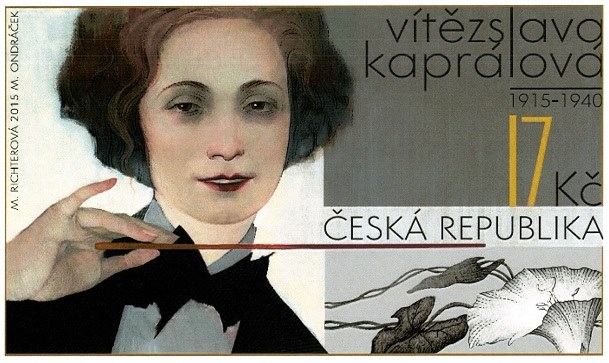
Vitězslava Kápralová honored on a postage stamp; Ethel Smyth taken into custody
-

Czech Composers’ Illicit Love Affairs
After 28 years of intimacy, I imagine there are moments when any relationship can feel strained. Without proper maintenance, even the strongest edifice can develop fissures. Lack of appreciation, lack of trust, unapologetic exploitation, and downright condescension hasten the erosion of kindly feelings.
I’m not saying that was the case with these Czech composers, but only just emerging from the slight regard I experienced at WWFM, after nearly three decades of sharing my life’s blood, I feel an especial sympathy for those who were compelled to move on.
Happily, I have found a loving home at KWAX, the radio station of the University of Oregon, where my shows continue to air in syndication, while I regroup, record, and reestablish my presence.
All this is preamble to my thesis this week on “The Lost Chord,” on which I’ll present two examples of Czech composers whose newfound love resulted in flowering creativity.
Anyone at all acquainted with the life story of Leoš Janáček knows about his relationship with Kamila Stasslova. Stasslova was the married woman, 38 years Janáček’s junior, who was the recipient of his “intimate letters” (hence, the subtitle of his autobiographical String Quartet No. 2). Though the relationship was a chaste one, she instilled in the composer an ardor that propelled him to the creation of a series of masterworks that spanned his final decade. This is the music that essentially made Janáček’s reputation.
Less well-known perhaps is the case of Vitězslava Kaprálová. As both a composer and a conductor, Kaprálová undoubtedly would have achieved much greater things had her life not been cut short by tuberculosis at the age of 25. Among her teachers were Vitězslav Novák, Václav Talich, Charles Munch, Nadia Boulanger and Bohuslav Martinů.
Her relationship with Martinů deepened into one of romantic love, which fueled some of the older composer’s most powerful works, even as he grappled with his emotional turmoil, caught as he was between his wife and an irresistible attraction to his star pupil.
Kaprálová reciprocated, producing a number of pieces under Martinů’s influence, generally submitting them for his approval. One such work was the “Partita for Piano and String Orchestra,” composed in 1938 and 1939. Martinů is said to have made a substantial contribution to its final version.
But really the idea for this particular topic grew out of a consideration of Zdeněk Fibich, the unsung Czech master who was roughly nine years younger than Dvořák. Fibich lived something of a turbulent emotional life. When his first wife was about to give birth to twins, one of her sisters came to help out with the delivery. The sister and one of the newborns fell ill and died. They were followed within two years by the other child and Fibich’s wife.
Fibich promptly married another of his wife’s sisters, only to abandon her and the son she bore him, in favor of one of his pupils, Anežka Schulzová. He documented the affair, musically, in his collection of piano pieces, “Moods, Impressions and Reminiscences,” composed between 1892 and 1899. He referenced material therein in a number of works written during the last decade of his life.
One of these was the Symphony No. 2, which incorporates the musical reminiscence about the day he declared his love to Schulzová. This occurs in the second movement of the symphony, with another full-blown statement in the finale.
Alas, these Czechs are not alone in having bounced. I hope you’ll join me for “Bohemian Lifestyle: Illicit Love in Czech Music,” now exclusively in syndication. You’ll find my shows on KWAX, with a link to the times of their streaming below.
Keep in mind, the station is on the West Coast, so there’s a three-hour time difference – actually rather convenient for those of us located in the vicinity of WWFM. Here are the conversions of the respective air-times:
PICTURE PERFECT – Fridays on KWAX at 5:00 PACIFIC TIME (8:00 PM EDT)
THE LOST CHORD – Saturdays on KWAX at 4:00 PACIFIC TIME (7:00 PM EDT)
In radio as in life: Vítězslava Kaprálova finds new love with Bohuslav Martinů
-
Czech Composers’ Forbidden Love Affairs
Anyone at all acquainted with the life story of Leoš Janáček knows about his relationship with Kamila Stasslova. Stasslova was the married woman, 38 years Janáček’s junior, who was the recipient of his “intimate letters” (hence, the subtitle of his autobiographical String Quartet No. 2). Though the relationship was a chaste one, she instilled in the composer an ardor which propelled him into the creation of a series of masterworks that spanned his final decade. This is the music which essentially made Janáček’s reputation as a composer for the ages.
This Sunday night on “The Lost Chord,” we’ll have two more examples of Czech extramarital love that resulted in flowering creativity. Vitězslava Kaprálová undoubtedly would be much better known had she not died of tuberculosis at the age of 25. Kaprálová was already launched on a promising, if sadly abbreviated, trajectory as a brilliant composer-conductor, attaining a level of respect unusual at the time for a woman in her field. Her teachers included Vitězslav Novák, Václav Talich, Charles Munch, Nadia Boulanger, and Bohuslav Martinů.
Her relationship with Martinů deepened into one of romantic love, which fueled some of the older composer’s most resonant works, as he grappled with the emotional turmoil, caught as he was between his wife and an irresistible attraction to his star pupil.
Kaprálová reciprocated his feelings, in the meantime producing a number of pieces under his influence, then submitting them for his appraisal. One such work was the “Partita for Piano and String Orchestra,” composed in 1938-39. Martinů is said to have made a substantial contribution to its final form.
The idea for the thesis of tonight’s show grew out of a consideration of Zdeněk Fibich, the unsung Czech master, who was roughly nine years younger than Dvořák. Fibich too suffered a turbulent emotional life. When his first wife was about to give birth to twins, one of her sisters came to help out with the delivery. The sister and one of the newborns fell ill and died. Within two years, they were followed by the other child and Fibich’s wife.
Fibich promptly married another of his wife’s sisters, only to abandon her and the son she bore him, for one of his pupils, Anežka Schulzová. Schulzová would serve not only as his muse, but also as an artistic collaborator. Fibich documented the affair musically in his collection of piano pieces, “Moods, Impressions and Reminiscences,” composed between 1892 and 1899. He would reference material from this collection in a number of other works written during the final decade of his life.
One of these was the Symphony No. 2, a musical remembrance of the day he declared his love to Schulzová. Material from Fibich’s “Moods” forms the basis of the second movement of the symphony, with another heartfelt quotation in the finale.
Life is complicated.
I hope you’ll join me for “Bohemian Lifestyle,” illicit love in Czech Music, this Sunday night at 10:00 EDT,” on WWFM – The Classical Network and wwfm.org.
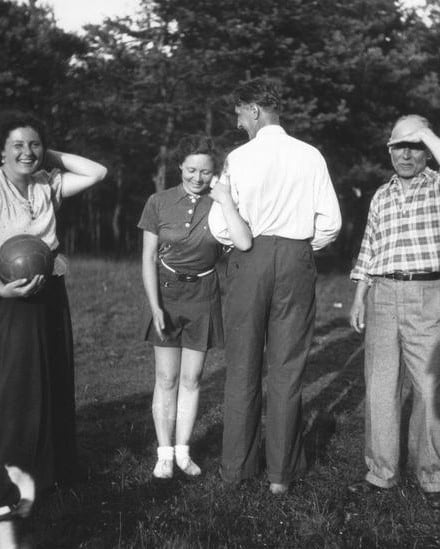
PHOTO: Vítězslava Kaprálová (center) with Bohuslav Martinů
Tag Cloud
Aaron Copland (93) Beethoven (95) Composer (114) Film Music (144) Film Score (143) Film Scores (255) Halloween (94) John Williams (195) KWAX (229) Leonard Bernstein (104) Marlboro Music Festival (125) Movie Music (159) Mozart (90) Opera (212) Philadelphia Orchestra (89) Picture Perfect (174) Princeton Symphony Orchestra (109) Radio (88) Ross Amico (244) Roy's Tie-Dye Sci-Fi Corner (290) The Classical Network (101) The Lost Chord (269) Vaughan Williams (105) WPRB (397) WWFM (881)