Anyone at all acquainted with the life story of Leoš Janáček knows about his relationship with Kamila Stasslova. Stasslova was the married woman, 38 years Janáček’s junior, who was the recipient of his “intimate letters” (hence, the subtitle of his autobiographical String Quartet No. 2). Though the relationship was a chaste one, she instilled in the composer an ardor which propelled him into the creation of a series of masterworks that spanned his final decade. This is the music which essentially made Janáček’s reputation as a composer for the ages.
This Sunday night on “The Lost Chord,” we’ll have two more examples of Czech extramarital love that resulted in flowering creativity. Vitězslava Kaprálová undoubtedly would be much better known had she not died of tuberculosis at the age of 25. Kaprálová was already launched on a promising, if sadly abbreviated, trajectory as a brilliant composer-conductor, attaining a level of respect unusual at the time for a woman in her field. Her teachers included Vitězslav Novák, Václav Talich, Charles Munch, Nadia Boulanger, and Bohuslav Martinů.
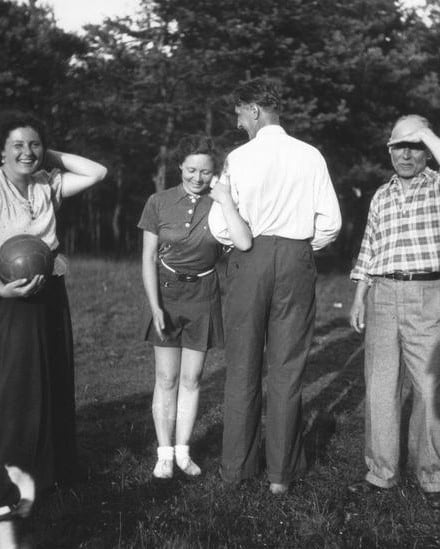
Her relationship with Martinů deepened into one of romantic love, which fueled some of the older composer’s most resonant works, as he grappled with the emotional turmoil, caught as he was between his wife and an irresistible attraction to his star pupil.
Kaprálová reciprocated his feelings, in the meantime producing a number of pieces under his influence, then submitting them for his appraisal. One such work was the “Partita for Piano and String Orchestra,” composed in 1938-39. Martinů is said to have made a substantial contribution to its final form.
The idea for the thesis of tonight’s show grew out of a consideration of Zdeněk Fibich, the unsung Czech master, who was roughly nine years younger than Dvořák. Fibich too suffered a turbulent emotional life. When his first wife was about to give birth to twins, one of her sisters came to help out with the delivery. The sister and one of the newborns fell ill and died. Within two years, they were followed by the other child and Fibich’s wife.
Fibich promptly married another of his wife’s sisters, only to abandon her and the son she bore him, for one of his pupils, Anežka Schulzová. Schulzová would serve not only as his muse, but also as an artistic collaborator. Fibich documented the affair musically in his collection of piano pieces, “Moods, Impressions and Reminiscences,” composed between 1892 and 1899. He would reference material from this collection in a number of other works written during the final decade of his life.
One of these was the Symphony No. 2, a musical remembrance of the day he declared his love to Schulzová. Material from Fibich’s “Moods” forms the basis of the second movement of the symphony, with another heartfelt quotation in the finale.
Life is complicated.
I hope you’ll join me for “Bohemian Lifestyle,” illicit love in Czech Music, this Sunday night at 10:00 EDT,” on WWFM – The Classical Network and wwfm.org.
PHOTO: Vítězslava Kaprálová (center) with Bohuslav Martinů
Leave a Reply