Tag: William Walton

  • Rutter’s Gloria with the Bach Choir

    Rutter’s Gloria with the Bach Choir

    Get your afternoon off to a glorious start with John Rutter’s “Gloria.” The “Gloria” will be the centerpiece of today’s Noontime Concert, featuring The Bach Choir of Bethlehem.

    Rutter’s “Gloria,” commissioned in 1974, is perhaps the composer’s most ambitious piece to have found permanent favor with audiences during the Christmas season. But of course the “Gloria” can be enjoyed at any time; it was given its world premiere in May. The work is a festive setting of the second part of the Latin Order of Mass, marked by fanfares aplenty. In fact, there would be no “Gloria” without the ceremonial precedent of William Walton. It’s only appropriate, then, that the concert open with Walton’s uplifting “Coronation Te Deum,” written for the 1953 coronation of Elizabeth II.

    In between will be more reflective music by American composer Morten Lauridsen – his 1980 cycle “Mid-Winter Songs,” after poetry of Robert Graves – and the choir’s namesake Johann Sebastian Bach – his Cantata 118 “O Jesu Christ, meins Lebens Licht” (“O Jesus Christ, light of my life”).

    The concert will be led by the ensemble’s long-time artistic director, Greg Funfgeld. The program was given twice – on March 17 at the State Theatre Center for the Arts in Easton, PA, and on March 18 at Bryn Mawr Presbyterian Church.

    The Bach Choir, which gave its first performance of Bach’s Mass in B minor all the way back in 1900, is America’s oldest Bach choir (established in 1898) and one of the crown jewels of the Lehigh Valley music scene. Its performances have attracted international acclaim.

    The ensemble will celebrate its 111th Annual Bach Festival in Bethlehem, PA, over the next two weekends, beginning on Friday. For tickets and a complete schedule, visit http://www.bach.org.

    Following today’s Noontime Concert, stick around for William Walton’s Symphony No. 1. Like the Graves poetry that forms the basis of Lauridsen’s “Mid-Winter Songs,” the genesis of Walton’s symphony was very much tied up with the complexities of its creator’s love-life.

    The glory of music prevails. Join me this Tuesday from 12 to 4 p.m. EDT, on WWFM – The Classical Network and wwfm.org.

  • Richard III Leighton on The Classical Network

    Richard III Leighton on The Classical Network

    We’ll begin and conclude by putting a little English on it, on The Classical Network.

    At 4:00, we’ll mark the birthday today of Richard III with works by William Walton and Bedrich Smetana. Then at 6:00, we’ll honor English composer Kenneth Leighton.

    Leighton’s “Veris Gratia” (1950) betrays a spiritual kinship with the music of Ralph Vaughan Williams, Herbert Howells, and his champion and friend Gerald Finzi.

    Completed at the age of 21, the suite is scored for oboe, cello and orchestra. Though the musical language is in the tradition of the English pastoralists, gentle, tonal and melodic, Leighton’s yearning to be his own man is already evident in some of the harmonies. The work is based on an earlier cantata of the same name, a setting of Medieval Latin lyrics in English translation. Finzi conducted the suite several times, including its first performance. In gratitude, Leighton dedicated the work to his memory, following Finzi’s untimely death.

    Leighton emerged from a working class background in Yorkshire. He exhibited talent early as a chorister and pianist, before receiving a scholarship to study Classics at Queen’s College, Oxford. Simultaneously, he embarked on a degree in music. There, he studied with Bernard Rose. Finzi and Vaughan Williams interceded on his behalf, facilitating and attending performances of his works. Leopold Stokowski conducted the premiere of his “Primavera Romana” with the Royal Liverpool Philharmonic.

    Soon after, Leighton left for Rome to study with Goffredo Petrassi. This led to his exposure to a wider range of European composers and techniques. In some of his pieces, he even flirts with serialism. He certainly developed a more modern, though generally lyrical and always personal style.

    As a person, he enjoyed family and teaching. He was less fond of the administrative duties that were part of being a university professor. At his core, he was a shy and private man, who cherished peace and quiet.

    Leighton is often reductively referred to as a “church composer,” which is ironic, since he was not overly fond of church or even conventionally religious. He preferred the transcendent qualities of poetry and nature, and enjoyed taking long walks through the Scottish Highlands with his dog. Though he spent much of his adult life in Scotland, on the faculty of the University of Edinburgh, Leighton never forgot his origins. He always regarded himself as a down-to-earth Yorkshireman.

    Watch for Clarence in the malmsey butt, then kick back with the cows, from 4 to 7 p.m. EDT, on WWFM – The Classical Network and wwfm.org.
  • Walton Bennett Biggs Birthday Music

    Walton Bennett Biggs Birthday Music

    Okay, kids! Get ready to celebrate the birthdays of Sir William Walton, Sir Richard Rodney Bennett, and E. Power Biggs today. In our last hour together, we’ll have some English music for children. All that and more, coming your way from 4 to 7 p.m. EDT, on WWFM – The Classical Network and at wwfm.org.

  • Composers and Koalas A Musical Encounter

    Composers and Koalas A Musical Encounter

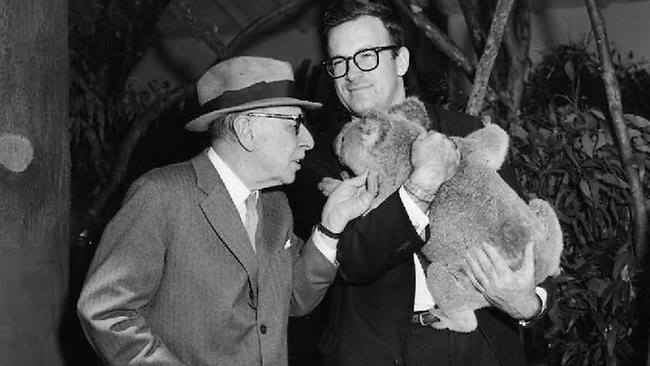
    Apropos of nothing – composers with koalas.


    PHOTOS: (Counter-clockwise from top) Igor Stravinsky, Sir William Walton and Leonard Bernstein

    Koala sings Mozart’s Requiem:

  • Shakespeare’s Cinematic Legacy: Walton & Olivier

    Shakespeare’s Cinematic Legacy: Walton & Olivier

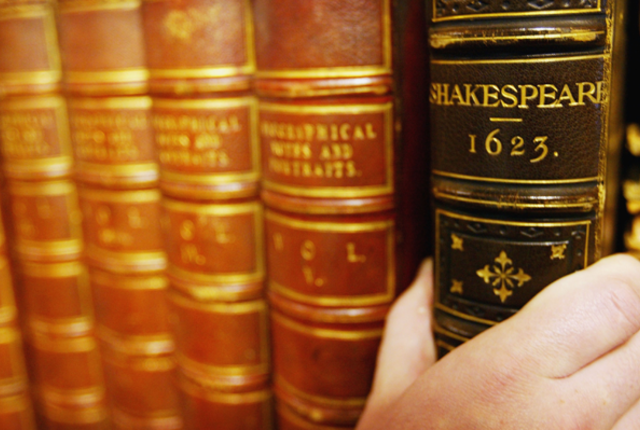
    April 23 marks the 400th anniversary of the death of William Shakespeare. We’ll honor the Bard on “Picture Perfect” over the coming weeks with music from film adaptations of his plays.

    William Walton may be the composer most associated with the cinematic Bard, thanks to his collaborations with Laurence Olivier. While Walton participated in three superb Olivier productions, beginning with “Henry V” in 1944, and continuing with “Hamlet” in 1948 and “Richard III” in 1955, the two had actually been brought together on an earlier Shakespeare project, in which Olivier appeared solely as an actor – a very charming version of “As You Like It.” The 1936 film was directed by Paul Czinner and starred his wife, Elisabeth Bergner, as Rosalind. Olivier appeared as the love-struck Orlando.

    Walton’s “Henry V” would become one of the most celebrated film scores of all time, certainly in terms of a so-called concert composer working in the cinema. The music is best known in a concert arrangement by Muir Mathieson, who conducted the orchestra on the film’s actual soundtrack. We’ll hear a recording that restores the composer’s original orchestration AND incorporates the chorus, as in the film.

    For Walton’s work on Olivier’s 1948 adaptation of “Hamlet,” the composer was nominated for an Academy Award for Best Original Score. The film won four Oscars in all, including that for Best Picture. Olivier directed himself in an Academy Award-winning performance. It was the first foreign film to be honored as Best Picture.

    Finally, we’ll turn to “Richard III,” from 1955, by which time both Olivier and Walton could be addressed as “Sir.” (Olivier was knighted in 1947; Walton received his knighthood in 1951.) Olivier gives a wry performance as the scheming Duke of Gloucester. While he very much enjoyed their ongoing partnership, Walton felt there was a limit to just how many ceremonial fanfares and battle charges he could compose. Across the head of the score he inscribed the instruction, in Italian, “Con prosciutto, agnello e confitura di fragole” – “With ham, lamb and strawberry jam.” Nevertheless, he manages to turn in yet another superb score.

    I hope you’ll join me for an hour of fanfares and battle charges, with an interlude of brooding over the skull of Yorick, this Friday evening at 6 EDT, with a repeat Saturday morning at 6; or that you’ll listen to it later as a webcast at wwfm.org.

    Here’s an appreciation of Walton’s Shakespearean achievements that ran in The Telegraph during the composer’s centenary in 2002, rightly noting his influence on John Williams:

    http://www.telegraph.co.uk/culture/music/classicalmusic/3574714/The-last-great-movie-composer.html

    #Shakespeare400

Tag Cloud

Aaron Copland (92) Beethoven (95) Composer (114) Film Music (120) Film Score (143) Film Scores (255) Halloween (94) John Williams (185) KWAX (229) Leonard Bernstein (100) Marlboro Music Festival (125) Movie Music (135) Opera (198) Philadelphia Orchestra (88) Picture Perfect (174) Princeton Symphony Orchestra (106) Radio (87) Ralph Vaughan Williams (85) Ross Amico (244) Roy's Tie-Dye Sci-Fi Corner (290) The Classical Network (101) The Lost Chord (268) Vaughan Williams (103) WPRB (396) WWFM (881)

DON’T MISS A BEAT

Receive a weekly digest every Sunday at noon by signing up here


RECENT POSTS