Tag: World War I

  • Magnard Sohy: Music, War, and Remembrance

    Magnard Sohy: Music, War, and Remembrance

    To say that French composer Albéric Magnard had a fiery disposition runs the risk of skirting bad taste.

    It was on this date in 1914 that Magnard went out in a blaze of glory, when, at the age of 59, and as a civilian, he refused to surrender his property to invading German forces. After ushering his wife and two daughters out the back door, he opened fire on some trespassing soldiers, instantly killing one of them. In retaliation, the Germans set fire to his house. Magnard is assumed to have perished in conflagration. However, his body was never found.

    A couple of weeks ago, I was streaming KWAX (as all good folks should), and for the first time encountered a symphony by Charlotte Sohy, written in 1917, that may have been composed in memory of Magnard. Sohy and her husband, Marcel Labey, were friends of the composer, and Sohy’s symphony shares the same key, the uncommon C-sharp minor, as Magnard’s Symphony No. 4.

    Her symphony is subtitled “Grand Guerre,” or “Great War.” Marcel would survive the conflict, having served in the French army. He died in 1968. Sohy, who studied composition with Vincent d’Indy and was a cousin of Louis Durey (of “Les Six” fame), died in 1955.

    Her symphony was never performed in her lifetime. It was heard for the first time in France only in 2019!

    In this age of wonders, now you can enjoy it here:

    Also, Magnard’s Symphony No. 4:


    PHOTOS: Albéric Magnard and Charlotte Sohy

  • Karl Muck and Anti-German Hysteria in WWI

    Karl Muck and Anti-German Hysteria in WWI

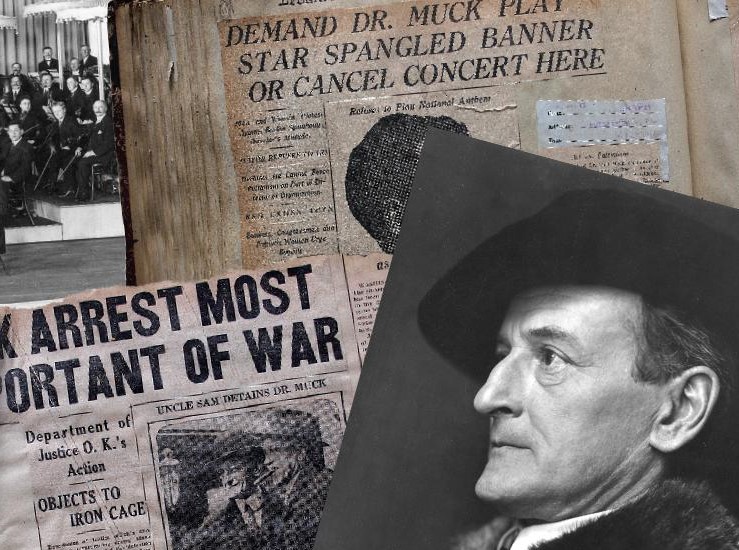
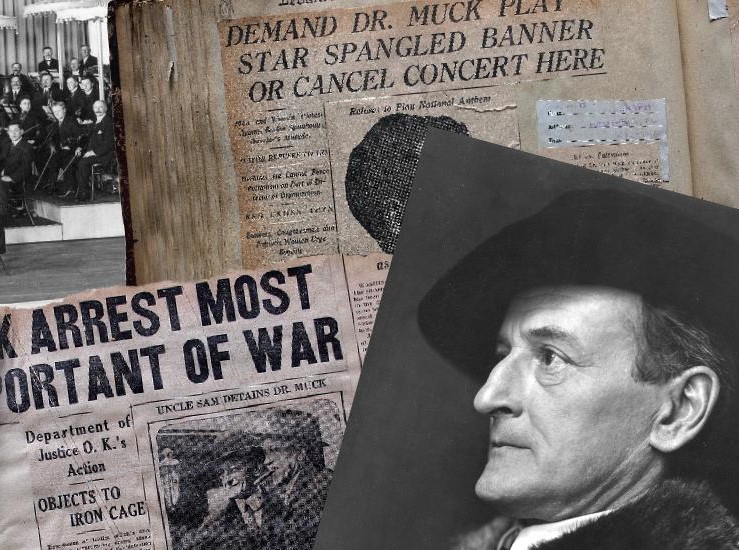
    In the last few months, any illusions that we’ve progressed as a nation and as a people have evaporated. Take the case of Karl Muck, who was arrested as an enemy alien on this date, all the way back in 1918.

    Muck served as music director of the Boston Symphony Orchestra during the first two decades of the 20th century. He, more than any other, was responsible for establishing the orchestra as a world-class ensemble.

    By happenstance, the conductor was born in Darmstadt, but his family had lived in Switzerland since 1867. Muck himself held Swiss citizenship since 1880. Nevertheless, during World War I, he was hounded by jingoistic factions of Boston society, a press that fomented anti-German sentiment, and overzealous federal agents who weren’t about to let him off the hook (despite the fact that he had earlier been cleared of any wrongdoing by the FBI).

    Tensions mounted after Muck allegedly refused to conduct the “Star-Spangled Banner” at the request of some women’s associations before a concert. The truth is, the request had never been communicated to the conductor by BSO founder Henry Lee Higginson, who personally declined a last-minute change in the program. When Muck found out about it, he was mortified and made sure to include the anthem on subsequent concerts.

    Unfortunately, the damage had already been done. Muck was arrested without a warrant and ended his American years in an internment camp in Georgia, set up for those suspected of being dangerous alien enemies of the United States. 29 other Boston musicians were also targeted, fired and imprisoned, because of their German or Austrian origins. Muck and his associates were among the lucky ones. In some areas of the country, suspects were actually lynched in the streets.

    Muck’s house and bank account were seized by the U.S. government. In 1928, nine years after his delayed release and deportation, he received a partial return of his assets.

    Ironically, before any of his troubles, Muck had actually offered to resign his post after war had been declared, concerned about the BSO’s image and his personal safety, given the rise of anti-German sentiment. It was Higginson who allayed his fears.

    Later, in 1933, Muck would face another political test. As chief conductor of the Hamburg Philharmonic since 1922, he actually did resign, in 1933, having become increasingly uncomfortable with Nazi ideology.

    Despite his treatment in the U.S., Muck looked back on his years in Boston as among the happiest and most fruitful of his career. Obviously, he meant from an artistic standpoint.

    Needless to say, his experiences here are eerily resonant in a way they would not have been only a few months ago. We should be looking back with wisdom, and a touch of revulsion, on a less-enlightened time when legal rights and due process were suspended in order to preserve an illusion of national security. As is all too often the case, the true enemies of the people were those who pushed “The Star-Spangled Banner” at the expense of facts and basic human decency.
  • Haydn Wood’s Enduring Melody

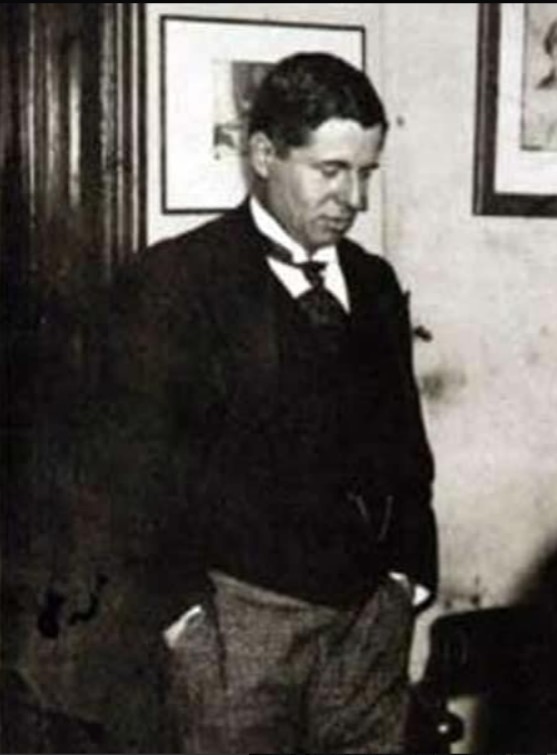
    Haydn Wood was born on this date in 1882. Although his name is pronounced “Hayden,” his parents, both musicians, indeed named him for Franz Joseph Haydn. Wood composed larger works for the concert hall, including concertos for piano and violin, and there was once a symphony, now lost, but his reputation rests on his light music and songs. He composed over 200 ballads.

    This was one of his biggest hits, one of the great tear-jerkers of the First World War. Wood was riding atop a double-decker bus when the melody came to him. He hopped off and jotted it down onto an envelope by lamplight. The text was added by Frederick Weatherly.

    During the war, the song sold 50,000 copies of sheet music. Its singing was used in the rehabilitation of shell-shocked soldiers, who had lost the ability to speak. It was recorded many, many times.

    These days, it’s often employed to add flavor to period dramas. Of the earliest recordings, John McCormack’s rendition was notably popular.

    Happy birthday, Haydn Wood!

  • Freedom’s Responsibility: Reclaiming Patriotism

    Freedom’s Responsibility: Reclaiming Patriotism

    “Freedom makes a huge requirement of every human being. With freedom comes responsibility. For the person who is unwilling to grow up, the person who does not want to carry his own weight, this is a frightening prospect.”

    Eleanor Roosevelt


    It is frustrating to log on to the internet every day and find the concepts of “patriotism” and “liberty” being so perverted. “Freedom,” or the children’s book version, is used as a cudgel by the selfish and self-righteous, and insecurity and division are sewn by unscrupulous politicians, who wave “America” like a red cape in a bull ring.

    So many have sacrificed so much for this country and the living dream of how great America can be. Now, it seems, we can’t even manage to be decent, compassionate, and respectful of our neighbors. Clearly, the important lessons need to be re-learned. The question is, why have they not been handed down?

    The bravery and sacrifice of the soldier at war is unfathomable. I think especially of those souls who were called up in the days of the draft, or who volunteered. What horrors were thrust upon them, and how well they acquitted themselves. I am thankful to those, like my grandfather, who did the heavy lifting, so that the rest of us wouldn’t have to.

    The least we can do now is assume responsibility as a nation, pull ourselves together, and ensure that their sacrifices continue to resonate.


    In Flanders fields the poppies blow
    Between the crosses, row on row,
    That mark our place; and in the sky
    The larks, still bravely singing, fly
    Scarce heard amid the guns below.

    We are the Dead. Short days ago
    We lived, felt dawn, saw sunset glow,
    Loved and were loved, and now we lie
    In Flanders fields.

    Take up our quarrel with the foe:
    To you from failing hands we throw
    The torch; be yours to hold it high.
    If ye break faith with us who die
    We shall not sleep, though poppies grow
    In Flanders fields.


    “In Flanders Fields” remembered:
    http://www.greatwar.co.uk/poems/john-mccrae-in-flanders-fields.htm?fbclid=IwAR2R5bVThWh1_p1CADTCNnzZ5RDSXiWGKbqxlnuDiPtMq0rIwtk9V74nT9o

    Charles Ives’ setting:

    Ives’ “Tom Sails Away”

    Ives’ “He Is There!”

    Germany’s perception of the American soldier in World War I:
    https://www.mentalfloss.com/article/57121/42-quotes-germans-about-american-troops-after-world-war-i?fbclid=IwAR0enSmw2rP_N6QaFNn5vqK-cHTMd_hgURbzcPPaG9mQq-0Vk4a5yZBKlu8

  • Karl Muck Patriotism Gone Wrong in Boston

    Karl Muck Patriotism Gone Wrong in Boston

    Here’s a fascinating article about exacting conductor Karl Muck, which I posted in the comments section as an afterthought to one of my posts yesterday, about Muck’s Bayreuth recording of selections from Wagner’s “Parsifal.”

    Muck served as music director of the Boston Symphony Orchestra during the first two decades of the 20th century. He, more than any other, was responsible for establishing the orchestra as a world-class ensemble.

    By happenstance, Muck was born in Darmstadt, but his family lived in Switzerland since 1867. Muck himself held Swiss citizenship since 1880. Nonetheless, he was hounded by jingoistic factions of Boston society, a press that fomented anti-German sentiment, and overzealous federal agents who weren’t about to let him off the hook (despite the fact that he had earlier been cleared of any wrongdoing by the FBI).

    Muck ended his American years in an internment camp in Georgia, set up for those suspected of being dangerous alien enemies to the United States. Other Boston musicians were fired because of their German or Austrian origins. Muck was one of the lucky ones. In some areas of the country, suspects were actually being lynched in the streets.

    Muck’s house and bank account were seized by the U.S. government. In 1928, nine years after his delayed release and deportation, he received a partial return of his assets.

    The article is a sobering look at a time when legal rights and due process were suspended in order to preserve an illusion of national security. As is all too often the case, the true enemies of the people were those who pushed “The Star-Spangled Banner” at the expense of facts and basic human decency.

    https://www3.bostonglobe.com/magazine/2017/11/02/the-muck-affair/QczxAVe0i2EJZpLPGEKR9H/story.html?arc404=true

Tag Cloud

Aaron Copland (92) Beethoven (95) Composer (114) Film Music (120) Film Score (143) Film Scores (255) Halloween (94) John Williams (185) KWAX (229) Leonard Bernstein (100) Marlboro Music Festival (125) Movie Music (135) Opera (198) Philadelphia Orchestra (88) Picture Perfect (174) Princeton Symphony Orchestra (106) Radio (87) Ralph Vaughan Williams (85) Ross Amico (244) Roy's Tie-Dye Sci-Fi Corner (290) The Classical Network (101) The Lost Chord (268) Vaughan Williams (103) WPRB (396) WWFM (881)

DON’T MISS A BEAT

Receive a weekly digest every Sunday at noon by signing up here


RECENT POSTS