Tag: World War I

  • George Butterworth Beyond the Battlefield

    George Butterworth Beyond the Battlefield

    As a classical music radio host of many years, it’s easy to fall back on the same biographical details whenever I come to announce a given composer’s works. This is especially true when the composer’s life contains some particularly lurid or poignant detail.

    But is it really fair to define someone by the manner of his or her death? After all, composers lived rounded lives like the rest of us, full of joys and sorrows. There must be some laughter even in a life weighted with misery, and tears in the make-up of any clown.

    So it was with George Butterworth. If we hear anything at all in the minute or two it takes to set up the broadcast of one of his works, it’s that Butterworth was cut down by a sniper during the Battle of the Somme at the age of 31. Of course, it doesn’t help that his compositions make one’s heart ache from their exquisite beauty.

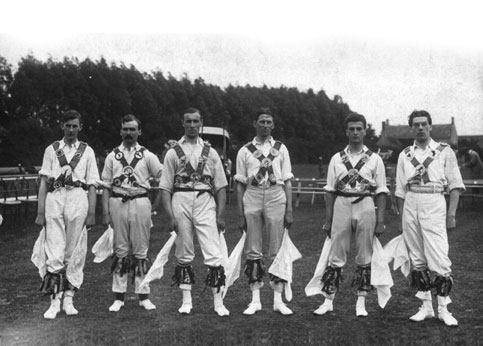
    In reading up on Butterworth in advance of celebrating the anniversary of his birth yesterday, I stumbled across this page and sat transfixed, as I viewed for the first time rare footage of him folk dancing with Cecil Sharp. It put a human face on this composer every bit as poignant as the idea of him being cut down in his prime. It’s especially amusing to see the two men get tangled up in their choreography and then continue on their merry way.

    https://www.warcomposers.co.uk/butterworthbio

    If you’re unfamiliar with Butterworth’s music, here are a few examples. Those inspired by the poems of A.E. Housman are especially poignant.

    The Banks of Green Willow:

    A Shropshire Lad (orchestral rhapsody):

    A Shropshire Lad (song cycle):


    PHOTO: Butterworth the morris dancer (second from left)
  • Foulds’ World Requiem Armistice Remembrance

    Foulds’ World Requiem Armistice Remembrance

    John Foulds conceived “A World Requiem” in the wake of World War I as a memorial to the dead of all nations. This Sunday night on “The Lost Chord,” we’ll conclude our two-part commemoration of the signing of the 1918 Armistice by highlighting the second half of this epic, 90-minute work for vocal soloists, massed choirs – including children’s choirs – large symphony orchestra, off-stage instrumentalists, and organ.

    The Requiem’s texts were derived from various spiritual sources by the composer’s wife, Maud MacCarthy, built on fragments from the Requiem Mass, as well as writings of John Bunyan and the Hindu poet Kabir. Its overall tone is more Brahms than Britten. The second part conveys radiant visions of paradise.

    “A World Requiem” was given its first performance on Armistice Day, November 11th, 1923, then performed annually for the next four years. After that, it lay unheard for some eight decades, until revived by conductor Leon Botstein. Botstein has dusted off more than his share of worthy curiosities, though few are more ambitious than “A World Requiem.” This world premiere recording, on Chandos Records, was taken from a live concert presented on Armistice Day, 2007, at the venue in which the work was first heard, Royal Albert Hall London.

    We’ll round out the hour with music by Cecil Coles, one of the many (too many) artists who lost their lives in combat. Coles was born in Scotland in 1888. He studied at Edinburgh University, the London College of Music, and Morley College; then in Stuttgart, where he remained as assistant conductor at the Stuttgart Royal Opera House. Forced to return to England before the outbreak of war, he enlisted for overseas service and was sent to the trenches in 1915. Coles was killed near the Somme on April 26, 1918, during a heroic attempt to rescue some wounded comrades.

    Coles had continued to compose even on the front lines. His manuscripts of the period, some still embedded with shrapnel, have been painstakingly reconstructed for a recording on Hyperion Records. We’ll hear one of the surviving movements from “Behind the Lines,” titled “Cortège” – a military funeral procession – especially poignant, given the composer’s fate. Coles was just 29 at the time of his death.

    “The War to End All Wars” was a lesson that won’t be learned, apparently, but it’s healthy to reflect on the horror, the heroism, the waste, and the sacrifice. Join me in marking the centenary of the Armistice, on “A Farewell to Arms, Part II,” this Sunday night at 10:00 EST, on WWFM – The Classical Network and wwfm.org.

  • Britten’s War Requiem Love & War on WWFM

    Britten’s War Requiem Love & War on WWFM

    “War is sweet to those who have no experience of it, but the experienced man trembles exceedingly at heart on its approach.” Unfortunately, little has changed since the Greek poet Pindar wrote those words 2600 years ago.

    Benjamin Britten’s powerful and moving “War Requiem” was written in 1961-62 for the consecration of a rebuilt Coventry Cathedral, after the original 14th century structure was destroyed by bombs during World War II. The work interweaves poetry of Wilfred Owen with traditional texts from the Mass for the Dead. Owen was killed in action in 1918, one week before the signing of the Armistice that ended World War I. The “War Requiem” became an instant classic, embraced by audiences and critics around the world and documented on a recording that became an unlikely bestseller.

    Britten’s masterpiece will be performed at Princeton University’s Richardson Auditorium, in Alexander Hall, tonight and tomorrow at 7:30 p.m. Vocal soloists Sarah Pelletier, William Burden, and Andrew Garland will join the combined forces of the Princeton University Glee Club, Princeton Pro Musica, the Princeton High School Women’s Choir, and the Princeton University Orchestra, conducted by Michael Pratt. The performances take place in a year that marks the centenary of the end of World War I, which went into effect at the 11th hour of the 11th day of the 11th month of 1918.

    Because of the work’s massive demands, seating will be even more limited than usual, with the performers spilling off the stage and into the audience. Can’t get in? Join us tonight on The Classical Network to hear a live broadcast, beginning at 7:30 p.m. EDT.

    Filmmakers, and writers before them, have long realized that nothing heightens the affect of romantic passion in narrative form quite like the turbulent backdrop of war. War supplies impediments, spectacle, often tragedy – and possibly even a few Oscars.

    This week on “Picture Perfect,” there will be plenty of valor, nobility, and sacrifice to tug at the heart strings, as we examine love in time of war, with music from “Casablanca” (Max Steiner), “Doctor Zhivago” (Maurice Jarre), “The English Patient” (Gabriel Yared), and “Cyrano de Bergerac” (Dimitri Tiomkin). Join me for an hour of impossible love, missed opportunities, and doomed romance, this Friday evening at 6:00 EDT.

    Then stay tuned for Britten’s “War Requiem,” beginning at 7:30, on WWFM – The Classical Network and wwfm.org.

  • Ravel’s War A Memorial Day Tribute

    Ravel’s War A Memorial Day Tribute

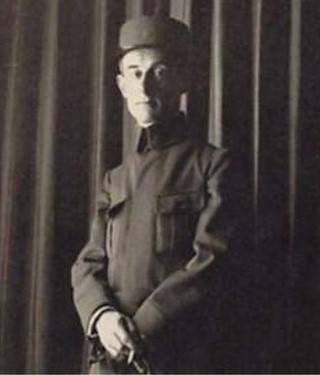
    With the outbreak of World War I, Maurice Ravel did his patriotic duty and enlisted in the French army. He was rejected from the infantry and the air force on account of his diminutive size and precarious health, but he learned to drive a truck and cared for the wounded at Verdun on the Western Front.

    Ravel survived the war, but six of his friends were not so lucky. His “Le tombeau de Couperin” was ostensibly written as a tribute to the Baroque master, Francois Couperin, but each of the movements is dedicated to one of the fallen. Hear it this morning on WPRB103.3 FM and wprb.com, as part of a Memorial Day salute to the musical dead of all countries – the soldiers who laid down their lives in combat and the unfortunate civilians who were collateral casualties.

    We’ll have pieces of war and prayers for peace until 11:00 EDT on Classic Ross Amico.

    Read more about Ravel’s war experiences here:

    http://www.bbc.co.uk/guides/z2nk6sg


    PHOTO: Ravel in uniform

  • Musical Memorials for the Fallen Composers

    Musical Memorials for the Fallen Composers

    War, what is it good for? Absolutely nothin’.

    Still, a great many brave soldiers laid down their lives in combat and numerous unfortunate civilians were collateral casualties. Join me this Thursday morning, in advance of Memorial Day, as we salute the musical dead of all countries.

    We’ll hear music by composers who died too young: George Butterworth, André Caplet, Cecil Coles, Enrique Granados, Ivor Gurney, Frederick Septimus Kelly, Alberic Magnard, Rudi Stephan, and Anton Webern. We’ll also hear elegies for the fallen by Romeo Cascarino, Aaron Copland, Bernard Herrmann, Gustav Holst, Charles Ives, Maurice Ravel, and Ralph Vaughan Williams.

    The morning’s highlight will be John Fould’s “A World Requiem,” scored for a mass of soloists, choristers, and orchestral musicians to rival those of Mahler’s “Symphony of a Thousand.” Composed between 1919 and 1921, the piece was conceived by Foulds as a memorial to the dead of all nations in the wake of the First World War. It was given its first performance at Royal Albert Hall on Armistice Night, November 11, 1923. It then lay in neglect for 80 years, until it was resurrected by Leon Botstein, who conducted the work’s revival at Royal Albert Hall on November 11, 2007. We’ll hear his recording, which was issued two months later on the Chandos label.

    I hope you’ll join me for pieces of war and prayers for peace, Thursday morning from 6 to 11 EDT, on WPRB 103.3 FM and wprb.com. Sleep is short, but memory is long, on Classic Ross Amico.


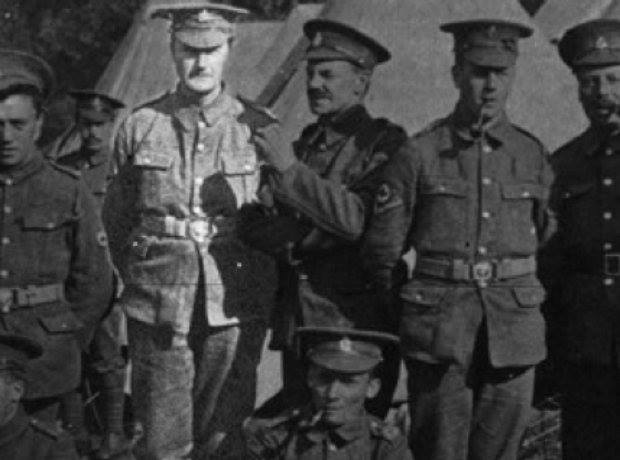
    PHOTO: Ralph Vaughan Williams in uniform. His protégé, George Butterworth, honored with the Military Cross for acts of valor on the Somme, was killed by a German sniper at the age of 31.

Tag Cloud

Aaron Copland (92) Beethoven (95) Composer (114) Film Music (120) Film Score (143) Film Scores (255) Halloween (94) John Williams (185) KWAX (229) Leonard Bernstein (100) Marlboro Music Festival (125) Movie Music (135) Opera (198) Philadelphia Orchestra (88) Picture Perfect (174) Princeton Symphony Orchestra (106) Radio (87) Ralph Vaughan Williams (85) Ross Amico (244) Roy's Tie-Dye Sci-Fi Corner (290) The Classical Network (101) The Lost Chord (268) Vaughan Williams (103) WPRB (396) WWFM (881)

DON’T MISS A BEAT

Receive a weekly digest every Sunday at noon by signing up here


RECENT POSTS