Tag: WWFM

  • Support Classical Music Travel the World with WWFM

    Support Classical Music Travel the World with WWFM

    There’s no noon concert like no Noon Concert.

    Instead, we’ll have wall-to-wall music about travel on The Classical Network, as we continue with our end-of-the-fiscal-year fundraiser. We’re asking not only that you contribute, but that you contribute to the programming. If you’re planning to take a trip yourself, let us know where, when you make your donation, and we’ll try to play something associated with that particular locale.

    Even if you haven’t any travel plans at the moment, let us know where you’d like to go someday. If the destination is particularly challenging – and challenging is always interesting – there could be a slight delay in our musical response, as we may have to draw from our own personal collections, but we’ll do our best to celebrate your contribution ASAP.

    It all ties in with our new WWFM travel mug, yours for a contribution of $120. If you go for it, take it with you and photograph it with an identifiable landmark. We’ll post some of the best shots on the station’s Facebook page.

    There is no “easy pass” in classical radio. Help us cover the tolls by calling us at 1-888-232-1212, or by contributing online at wwfm.org.

    With your help, we’ll continue to go places, both today and well into the future, on WWFM – The Classical Network and wwfm.org. Thank you for your support!

  • Classical Music Summer Escape No Travel Needed

    Classical Music Summer Escape No Travel Needed

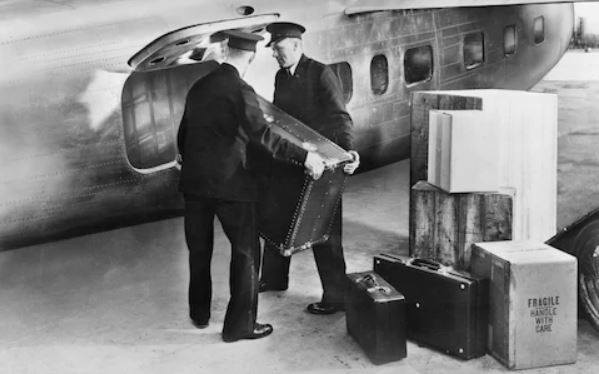
    Any exciting trips planned for the summer? You don’t need a plane ticket or even a car to be transported.

    We know the music we share on The Classical Network has the power to take you places. Whether your thoughts are guided by descriptive titles (“Capriccio Espagnol,” “Hungarian Rhapsody,” the “Grand Canyon Suite”), your intellect engaged by the trajectory of a symphony or a fugue, or your sense of fantasy stirred by a transcendent performance, we are your source – and destination – for great music.

    We at The Classical Network are always happy to do the driving. But this week we’re asking you to chip in for the gas. After all, it is the end of our fiscal year. Your gift in any amount will make you a member, and it will ensure that we have enough fuel for our continuing adventures. Call us today at 1-888-232-1212, or donate online at wwfm.org.

    With WWFM – The Classical Network, you never have to worry about what to pack. We depart this afternoon at 4:00 EDT. With your help, we will go far. Thank you, as always, for your support!

  • Vaughan Williams’ London Symphony on WWFM

    Vaughan Williams’ London Symphony on WWFM

    It’s a rainy day in Princeton town. Join me this afternoon on The Classical Network, as I’ll pay tribute to our meteorological sister city – London!

    It was George Butterworth who suggested to Ralph Vaughan Williams that he compose a purely orchestral symphony. Of course, RVW had already composed “A Sea Symphony,” on texts of Walt Whitman, but that work was as much a cantata as anything else. Vaughan Williams told Butterworth it was never in his thoughts to write a symphony, but privately the suggestion got his gears turning.

    The result was Vaughan Williams’ second symphony, advertised as “A London Symphony.” The piece would prove to be the first of RVW’s eight purely orchestral essays in the form that would go on to become some of the most frequently-played by any English composer. Unfortunately, Butterworth would not live to witness his friend’s enduring success. He would be killed by sniper fire on the Somme in 1916.

    Vaughan Williams’ symphony underwent numerous revisions from its original version of 1914-15 to the final form of 1936 that we know today. The original, revived only in 2001, with the permission of the composer’s widow, Ursula, is a remarkable achievement in its own right. Like an x-rayed painting by an Old Master, the work reveals aspects of its creation previously undreamed of by even the most ardent RVW admirer.

    Over time, Vaughan Williams not only revised the music, but also seemingly his thoughts on the piece, gradually transforming it from a nostalgic portrait of London to what he liked to refer to as a “Symphony by a Londoner.” In this way, he could downplay the descriptive elements of the work and push for its acceptance as “absolute” music.

    Along the way, he jettisoned about a third of the original music. Heard as it was originally conceived, the piece is revealed to be more ambitious, darker perhaps, containing, as RVW later grumbled to Bernard Herrmann, “some horrible modern music – awful stuff.”

    The composer dedicated the piece to George Butterworth, without whom it would not have been composed. The original version of “A London Symphony” will form the centerpiece of this afternoon’s playlist.

    First, it’s off to New York town, for our Noontime Concert. The period instrument ensemble Juilliard415 will present a concert titled, appropriately enough, “Eye of the Storm.” The program will include works by Heinrich Ignaz Franz von Biber, Johann Joachim Quantz, Francois Couperin, and Jean-Marie Leclair.

    It’s another concert brought to us by Gotham Early Music Scene, or GEMS. GEMS’ Midtown Concerts series is held at the chapel of St. Bartholomew’s Church, 325 Park Avenue, in New York City. Free concerts take place at St. Bart’s on Thursdays at 1:15 p.m. For more information, visit GEMS’ website, gemsny.org, and click on the events calendar.

    Have an umbrella on hand and get ready to slip into a nice cup of tea, from 12 to 4 p.m. EDT, on WWFM – The Classical Network and wwfm.org.


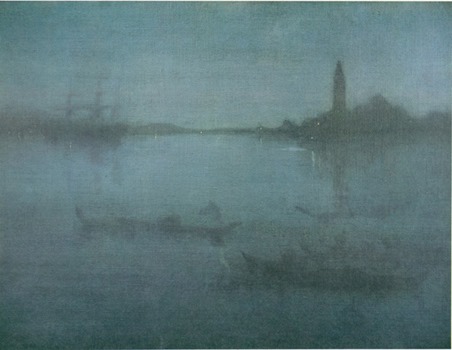
    “There was no fog in London until Whistler started painting it.” – Oscar Wilde

  • Stravinsky’s Money Music WWFM Birthday

    Stravinsky’s Money Music WWFM Birthday

    No applause, please! Just throw money.

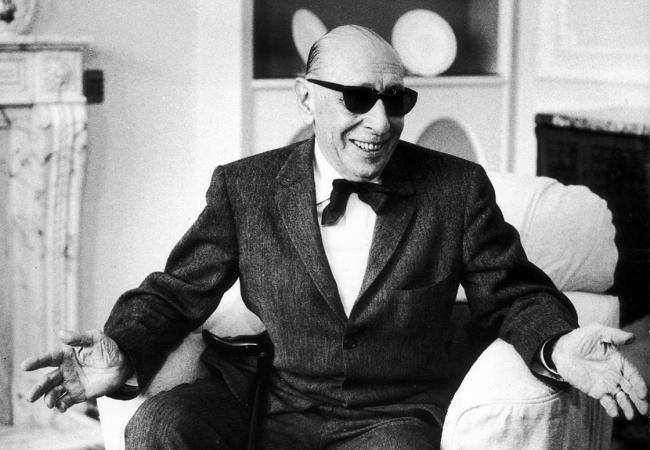
    There’s plenty to cheer about on the birthday of Igor Stravinsky, even if the composer could be a mite transparent in his focus on the bottom line. In a practice that would later become commonplace in rap, Stravinsky adopted a dollar sign for use in his monogram.

    Join me today on The Classical Network, as we celebrate one of the greatest composers of the past century. He was certainly one of the best-marketed.

    You can bet your bottom dollar on $travinsky, among our featured composers, from 4 to 7 p.m. EDT, on WWFM – The Classical Network and wwfm.org.

  • Father’s Day Reflections Loss & Legacy

    Father’s Day Reflections Loss & Legacy

    It’s Father’s Day. Both my folks are gone, and I had a rather complex relationship with my biological father, who died of cancer a little over a year ago. Still, toward the end, I visited him a lot, and we kind of became friends. At least I developed a better, or more rounded, understanding of him, though we still had a few adventures that reminded me of why it was probably a good thing that my mother herded us out of the nest when she did.

    My old man could be an amusing personality if he were a work of fiction, or if he could be taken in at a safe remove. Also, in his way, he had a kind heart. His circle included a remarkable number of outsiders and societal cast-offs, and he managed to take care of many of them, after his fashion. But he was not one to be bound by rules or, more strictly speaking, the law. At best, he could be considered a bit of a scapegrace; at worst, he was an ardent hellraiser, especially in his prime.

    But spending time with him later in life, it was fascinating to discover that, whether he knew it or not, he did live by a kind of code. Also, given his nature, I learned that a lot of what the rest of us had resented all these years was probably not entirely his fault. He just wasn’t cut out to raise a family. You can’t really fault a striped hyena for not being able to fly.

    I could tell you stories about my dad that would make you howl with laughter or make your blood curdle, but instead I’ll just tie this in with my program tonight on “The Lost Chord,” which will consist of two pieces by American composers, written in loving memory of their fathers – with perhaps just a transitional bit of advice to get to know your parents, for better or worse, while there’s still time.

    In 1999, composer Eric Ewazen was commissioned by an oboist-friend, Linda Strommen, who had recently lost her father, to write a new work as a kind of memorial tribute. Having recently experienced the death of his own father, the composer embarked on the project with a special sense of poignancy. He recollected that the day his father passed – Christmas Day, 1997 – an essay had appeared in the Cleveland Plain Dealer, by Richard Feagler. It consisted of funny, heartfelt stories of relatives and parents, long since departed. Near the end of the essay, titled “Christmas Past Comes Alive at Aunt Ida’s,” Feagler describes those beloved souls, “moving, though they can’t feel the current, down a river of time.”

    Ewazen borrowed this image for the title of his concerto, “Down a River of Time,” a contemplation of that inexorable, rushing river – the first movement influenced by its ebbs and flows, hopes and dreams; the second attempting to convey emotions felt during times of loss, sorrow, resignation, tenderness, and peace in remembrance of happier, distant times. In the final movement, happier memories prevail, and feelings of strength and determination dominate.

    Ewazen studied at, among other places, the Eastman School of Music. Howard Hanson had been director there for some 40 years. Along with the opera “Merry Mount,” Hanson came to regard his Symphony No. 4 as a personal favorite, a purely orchestral requiem, dedicated to the memory of his father. It falls into four movements, each bearing a Latin subtitle – “Kyrie,” “Requiescat,” “Dies Irae,” and “Lux Aeterna.” The work was given its first performance in 1943, with the composer conducting the Boston Symphony. It was awarded the Pulitzer Prize for Music in 1944.

    It sure as hell beats another necktie. Spare a thought for the Old Man, and then join me for “Day of the Dad,” this Sunday night at 10:00 EDT, on WWFM – The Classical Network and wwfm.org.

Tag Cloud

Aaron Copland (93) Beethoven (95) Composer (114) Film Music (124) Film Score (143) Film Scores (255) Halloween (94) John Williams (188) KWAX (229) Leonard Bernstein (101) Marlboro Music Festival (125) Movie Music (139) Opera (202) Philadelphia Orchestra (89) Picture Perfect (174) Princeton Symphony Orchestra (106) Radio (87) Ralph Vaughan Williams (85) Ross Amico (244) Roy's Tie-Dye Sci-Fi Corner (290) The Classical Network (101) The Lost Chord (268) Vaughan Williams (103) WPRB (396) WWFM (881)

DON’T MISS A BEAT

Receive a weekly digest every Sunday at noon by signing up here


RECENT POSTS