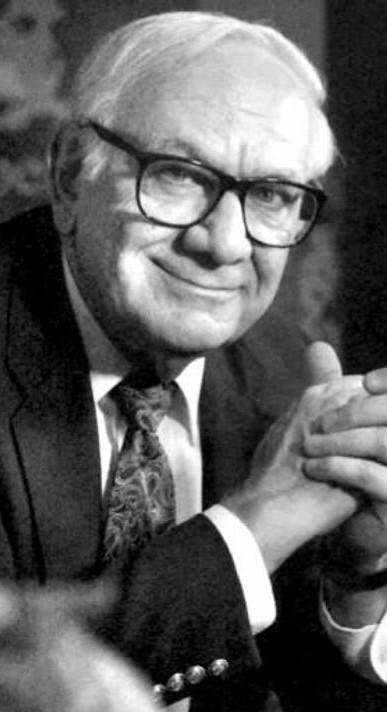
This Sunday night on “The Lost Chord,” I’ll be honoring the late American composer Dominick Argento. Argento died on February 20 at the age of 91. Join me for his “Valentino Dances,” “Six Elizabethan Songs,” and “A Ring of Time.” It’s an hour of “Argento Mementos,” this Sunday night at 10:00 EST, on WWFM – The Classical Network and wwfm.org.
Tag: WWFM
-
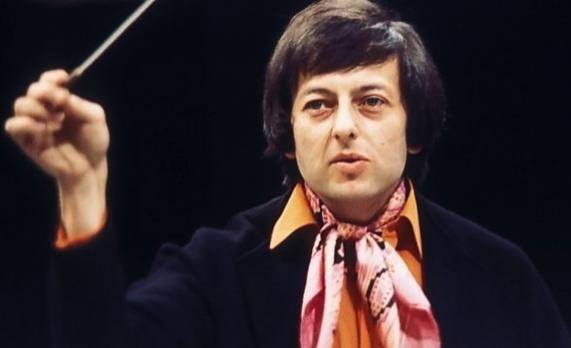
Remembering André Previn a Musical Giant
It’s been impressive and heartwarming to observe the outpouring of affection for André Previn the past couple of days. Previn, of course, died on Thursday at the age of 89.
A fabulous and frequently stunning musician, he was not only a top conductor, but also a fine pianist – fluent in both the classical and jazz worlds – a talented composer, totally without pretense, a crackerjack writer of film scores and musical arrangements, an author, an entertaining raconteur, and a sly wit. He was a true Renaissance man, like Leonard Bernstein, though he tended to play his cards a little closer to the vest. His love life could be a little over the top – he was married five times – and who knows, if he had come up in the age of Twitter, maybe he would have taken more of a beating.
Previn never achieved the level of public adulation that Lenny did, which is why the tsunami of love from all quarters kind of comes as a surprise to me. A pleasant surprise, granted. Criticisms of some of his musical performances were akin to damning with faint praise. On the other hand, when he was on, he was really on. The man could conduct the tar out of Rachmaninoff, Vaughan Williams, Prokofiev, Shostakovich, and William Walton, and he could surprise in his easy mastery of composers such as Richard Strauss.
I was lucky enough to see him conduct live twice. In 1995, he led a luminous performance of Vaughan Williams’ Symphony No. 5, with the Curtis Symphony Orchestra, which he recorded with the ensemble shortly thereafter. As is generally the case – Curtis is one of the top conservatories in the world – the students played like gods.
Later, I saw him lead the Philadelphia Orchestra, in 2009. On the program was Mozart’s Piano Concerto No. 24 and Strauss’ “Symphonia Domestica.” It was a shock to realize at that point that Previn was 80, and it was with concern that I watched as he stepped with evident care onto the stage, as if he were living the famous Danny Kaye routine. It was painful to see, and one of those instances where you wonder if the conductor is even going to make it to the podium.
The Mozart may not have been transcendent, but it was still a joy to hear him play (he conducted from the keyboard), even if some of the facility was diminished; but the Strauss, which he conducted from a chair, was as assured as it had been when he made his knock-out recordings of the complete tone poems with the Vienna Philharmonic.
I was also fortunate enough to interact with him twice. The first time was wholly by chance. It was in the early ‘90s, a day like any other day, and I walked out of my apartment building in Philadelphia to encounter André Previn passing on the street. Startled, I said the first thing that popped into my head – which was, I am embarrassed to report, “Maestro! Good to see you!” To which he replied with a wry smile, “Good to see you, too.”
It was on 18th Street, below Spruce. He was heading south into a residential neighborhood, where he must have been staying, because at the time there was nothing else in that direction. Of course, I lived a block and half from the Curtis Institute.
The second time was an actual conversation, in which we got to talk music. It was in the late ‘90s or early 2000s, and Previn was engaged in recording a couple of Korngold albums. I know it was after he did the symphony, but it may have been before he recorded the film scores, both for Deutsche Grammophon. He remarked that he would love to record the complete “Die tote Stadt” with Renée Fleming, but it was a matter of getting their schedules to mesh. Can you imagine? Unfortunately, it never came to pass. I also asked him why he didn’t include the overture in his otherwise fine recording of Korngold’s “Much Ado About Nothing.” His answer, again with that smile: “I didn’t know there was an overture!”
Because of the timing of his death, it’s been hard to engineer a proper tribute, but I will be working Previn’s recordings into my air shifts over the coming week. So you’ll have a good chance of encountering his artistry if you tune in on Monday from 4 to 7 p.m., Tuesday from 1 to 4 p.m., and Wednesday from 4 to 6 p.m. In fact, I am planning to make the playlist on Tuesday all-Previn, encompassing his talents as conductor, pianist, and composer.
On Friday at 6 p.m., “Picture Perfect” will focus on his work in the film industry. He was involved with 50 movies, and on top of everything else won four Oscars.
Then next Sunday night, February 10, on “The Lost Chord,” I’ll present an hour of his original concert music, at 10 p.m.
All times are EST, and all shows can be heard on WWFM – The Classical Network and at wwfm.org.
Finally, Patrick Jonathan reminded me of this classic Morecambe and Wise sketch with “Mr. Preview” conducting the Grieg Piano Concerto. As an American, it is my only exposure to Morecambe and Wise, but it has the reputation of being the ne plus ultra of the team’s career.
-
Chopin Brouwer Saint David and Previn on WWFM
There’s so much going on, and I’ve got only two hours to touch on everything today on The Classical Network!
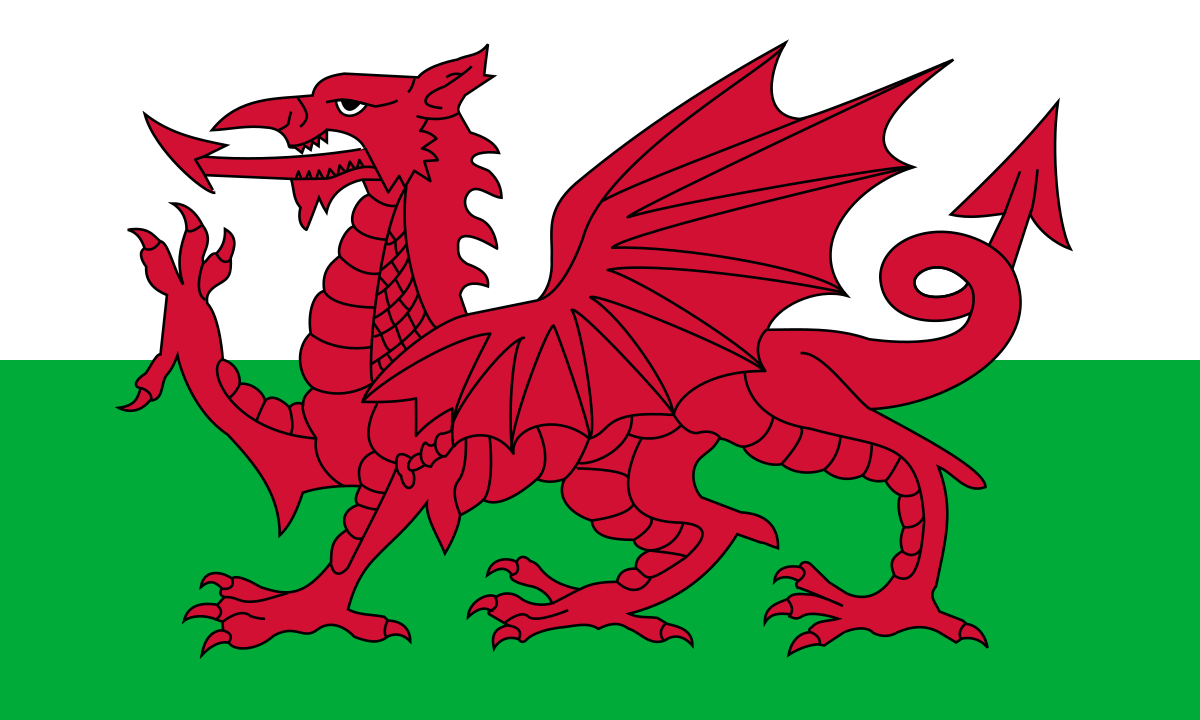
To begin with, March 1 is the anniversary of the birth of Frederic Chopin. You can’t ignore that. It’s also the 80th birthday of Cuban composer and guitarist Leo Brouwer. AND it’s the feast day of Saint David, the patron saint of Wales.
And let me express my regret right away to any of you of Welsh descent: I had fully intended to do a “Picture Perfect” (this evening at 6:00) made up entirely of music from movies set in Wales. However, because of some last-minute editing issues – I had not anticipated having to jettison half of my recorded script for this week’s edition of “The Lost Chord” on account of having chosen way too much music for my memorial to the late Dominick Argento (to air Sunday at 10:00 p.m.) – I am falling back on an encore broadcast of PP from three years ago.
It’s still a good show (“Behind-the-Scenes Hollywood”), and timely, as it runs so close upon the heels of Oscar. Listen in for music by Franz Waxman (“Sunset Boulevard”), David Raksin (“The Bad and the Beautiful”), Dominic Frontiere (“The Stunt Man”), and Ludovic Bource (“The Artist”).
In the meantime, I will do my best to include a few works by Welsh composers, between 4 and 6 p.m. It is also, after all, the birthday of the Welsh harpist John Thomas.
And of course, we lost André Previn yesterday. It pains me to have to postpone a proper memorial – he was such a superb and versatile musician – but you can tune in next week for all-Previn playlists on both “Picture Perfect” and “The Lost Chord.” In the meantime, Previn will be represented on every one of my weekday air shifts, including this afternoon’s.
I’ll do the best that I can, with my abbreviated Friday, from 4 to 6 p.m. EST. Don’t forget, “Picture Perfect” is on the way at 6! My weekend will be well-earned today, on WWFM – The Classical Network and wwfm.org.
-

Mendelssohn & Reger: Bridging Worlds at Marlboro
On this week’s “Music from Marlboro,” we’ll have music by two undersold composers who seemed trapped between two worlds.
While Felix Mendelssohn and Max Reger were very much figures of their respective times, they both found abundant inspiration in music of the past, frequently the distant past. In addition, they often gave the impression of being just a little tentative when it came to exploring musical trends of the present.
Common to both was an overarching respect for the works of Johann Sebastian Bach. It was Mendelssohn, of course, who at the age of 20 would engineer the first modern performance of Bach’s “St. Matthew Passion.”
Reger composed a lot of fugues and sets of variations, fancying himself the heir of Beethoven and Brahms; but also, in his own gargantuan, overbaked way, modeling himself on the Baroque’s most outstanding genius.
Though both Mendelssohn and Reger subsumed romantic characteristics into their music, neither did so at the expense of traditional forms. There are exceptions to every rule, as they say, but generally speaking Mendelssohn’s more emotional utterances seemed to flow most convincingly in the works of his early maturity.
When he came to write his String Quartet in A minor, it was not Bach but Beethoven who was foremost in his thoughts. The composer was 18 years-old at the time of Beethoven’s death in 1827. He was clearly intoxicated by the Master’s late quartets, which had only recently been published.
Though certainly influenced by Beethoven, Mendelssohn’s own essay in the form is quite at odds with the introspection of Beethoven’s Op. 135. In contrast, he infuses his own quartet’s Classical structure with a passionate Romanticism. That the synthesis would be so successful is hardly surprising from a teenaged marvel who, within the last two years, had already written an astonishing Octet for Strings and the overture to “A Midsummer Night’s Dream.” In his quartet, Mendelssohn also explores the possibilities of cyclic form more exhaustively than just about any other composer before César Franck.
We’ll hear the Quartet in A minor performed at the 1995 Marlboro Music Festival by violinists Lisa-Beth Lambert and Hiroko Yajima, violist Annemarie Moorcroft, and cellist Sophie Shao.
There are times when Reger’s music can be beyond rigorous. In fact, it might be better termed “Regerous.” Perhaps the craziest exemplar of vertiginous Teutonic counterpoint, he could write organ music of such density that the individual voices get lost in a tangle, deep inside a knot, somewhere in an impenetrable thicket.
However, on two pianos, it all seems to make sense. The program will begin with a 1977 performance of Reger’s “Introduction, Passacaglia and Fugue,” Op, 96, performed by Marlboro stalwart Luis Batlle and a 19 year-old Yefim Bronfman.
Were they born too late, or merely uneasy with the more progressive impulses of their times? Quiet your head and enjoy the music. I hope you’ll join me for works by Reger and Mendelssohn on the next “Music from Marlboro,” this Wednesday evening at 6:00 EST, on WWFM – The Classical Network Network and wwfm.org.
Marlboro School of Music and Festival: Official Page
-

Classical Music Today WWFM
If you’ve a hankering to hear a symphony by Otakar Ostrčil or a concerto by Boris Papandopulo, you’ve come to the right place.
We’ll also celebrate the birthdays today of pianists Rena Kyriaku and Dame Myra Hess and legendary tenor Enrico Caruso, with perhaps a little Armin-Louis Couperin tossed into the mix.
I’ll be a little mixed up myself, between 4 and 7 p.m. EST, on WWFM – The Classical Network and wwfm.org.
Tag Cloud
Aaron Copland (94) Beethoven (95) Composer (114) Film Music (149) Film Score (143) Film Scores (255) Halloween (99) John Williams (197) KWAX (233) Leonard Bernstein (105) Marlboro Music Festival (125) Movie Music (164) Mozart (91) Opera (215) Philadelphia Orchestra (90) Picture Perfect (174) Princeton Symphony Orchestra (110) Radio (90) Ross Amico (244) Roy's Tie-Dye Sci-Fi Corner (290) The Classical Network (101) The Lost Chord (269) Vaughan Williams (107) WPRB (397) WWFM (881)