Tag: WWFM

  • Baroque Italy Concert on The Classical Network

    Baroque Italy Concert on The Classical Network

    Get a taste of the good life on today’s Noontime Concert on The Classical Network.

    “La Bella Vita: Hidden Gems of Baroque Italy” presages a renaissance of GEMS’ Midtown Concerts series. The free lunchtime programs are presented on Thursdays at 1:15 p.m., at St. Bartholomew’s Church, 50th Street and Park Avenue, in Midtown Manhattan.

    This afternoon’s broadcast will feature DuoSeraphim – soprano Sarah Hawkey and gambist Niccolo Seligmann – in works by Claudio Monteverdi, Diego Ortiz, Bartolomeo Tromboncino, and Barbara Strozzi. The concert was originally presented on December 28, 2017.

    The 2018-2019 season of Midtown Concerts will commence this Thursday with a program of 16th and 17th century music for voice and viol, performed by the duo Lyracle.

    Today’s concert broadcast is made possible in part by Gotham Early Music Scene, or GEMS. GEMS is a non-profit corporation that supports and promotes artists and organizations in New York City devoted to early music – music of the Middle Ages, Renaissance, Baroque, and early Classical periods. For more information about the St. Bart’s concerts and other GEMS’ events, look online at gemsny.org.

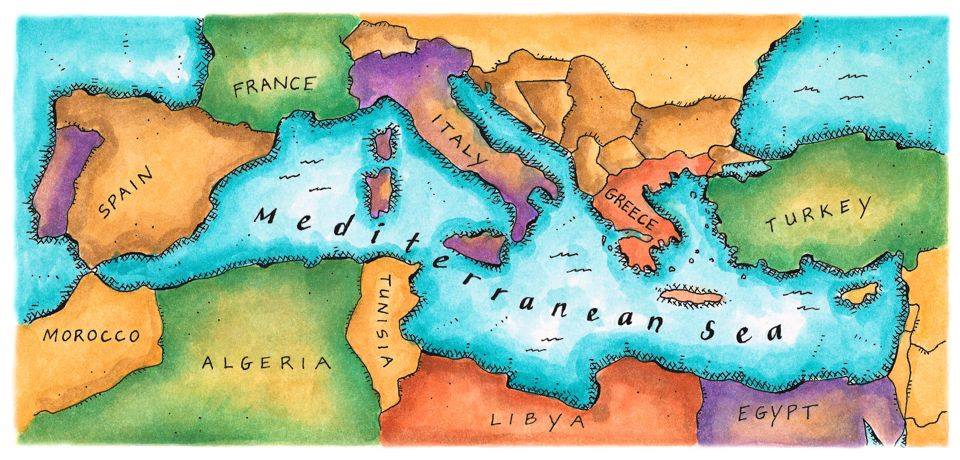
    Then linger in the Mediterranean a while longer with guitarist John McLaughlin’s “Mediterranean Concerto” and other works. Life is good, from 12 to 4 p.m. EDT, on WWFM – The Classical Network and wwfm.org.

  • Labor Day Concert: Music for Workers and Wonders

    Labor Day Concert: Music for Workers and Wonders

    Sorry to be posting so late, but I had some computer woes this morning, so I am racing to ketchup – er, catch up, I mean. Not surprisingly, I am distracted by thoughts of Labor Day.

    Get ready for a real labor of love, as we hear selections about work and the worker, punctuated by music inspired by man-made and natural wonders. On the roster is Tobias Picker’s “Keys to the City” (written to mark the 100th anniversary of the Brooklyn Bridge), John Alden Carpenter’s ballet “Skyscrapers,” Samuel Jones’ Symphony No. 3 (a musical response to Texas’ Palo Duro Canyon), and Jett Hitt, Composer’s “Yellowstone” for violin and orchestra. Hitt, who holds a doctorate in composition, conducts guided horseback tours at the national park!

    In addition, there will be lighter pieces about picnic foods and gazebo dances.

    I hope your Stanley thermos is full of iced coffee. Put away your hard hat and lunch pail and join me for one final helping of baked beans and corn-on-the-cob for Labor Day, this afternoon from 4 to 7 p.m. EDT, on WWFM – The Classical Network and wwfm.org.


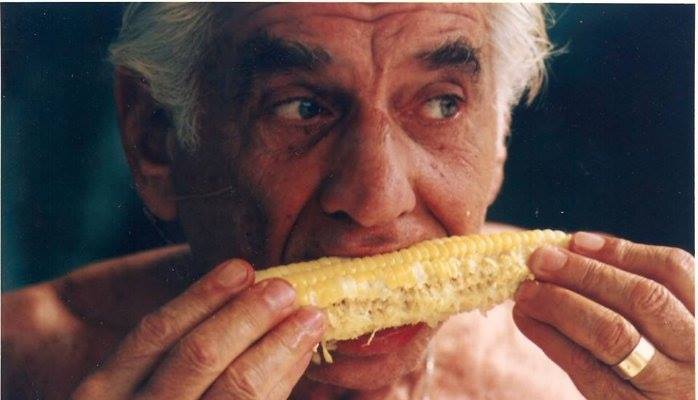
    PHOTOS: Bernstein, Gershwin, and Copland wring the last from their summer

  • Rebecca Clarke and Eric Coates Born on This Day

    Rebecca Clarke and Eric Coates Born on This Day

    On this date in 1886, two noteworthy figures in English music were born.

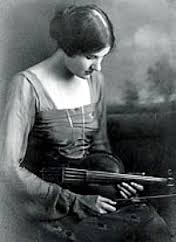
    Rebecca Clarke entered London’s Royal College of Music at a time when female students were still considered anomalies. Her teacher, Sir Charles Villiers Stanford, persuaded her to switch from violin to viola, since from that vantage she would be better able to absorb the mechanics of the orchestra. Also, thanks to musicians like Lionel Tertis, the viola was just beginning to be viewed as a viable instrument in itself.

    Clarke played in the Queen’s Hall Orchestra, under Sir Henry Wood. Then in 1916, she packed up and moved to America. Critics tended to praise her works which were listed in concert programs under male pseudonyms, while those identified as her own were often dismissed.

    The notable exception of her career was her Viola Sonata, which tied for first place in a competition sponsored by Elizabeth Sprague Coolidge with a work of Ernest Bloch. Even so, there were some who grumbled that the work couldn’t possibly have been composed by a woman, and that perhaps Bloch himself had even written it.

    Clarke married James Friskin, a founding member of the Juilliard School faculty, in 1944, and although he was supportive of her endeavors, lack of recognition and struggles with depression resulted in her ultimately giving up on composing. She died in 1979, at the age of 93. Today, her sonata is considered one of the great works written for the viola.

    Here’s Rebecca Clarke’s “Morpheus”:

    By contrast, Eric Coates enjoyed enormous popularity as a master of British Light Music. Ironically, Coates had taken viola lessons with Tertis at the Royal Academy of Music.

    Among his best-known works are his “London Suite,” and this one, the perfect Coates confection for a late summer day:

    I hope you’ll join me this afternoon for works by Clarke and Coates. They’ll be among my featured composers between 4 and 7 p.m. EDT, on WWFM – The Classical Network and wwfm.org.

  • Vaughan Williams Remembered on WWFM

    Vaughan Williams Remembered on WWFM

    With all the hoo-ha surrounding the 100th anniversary of the death of Claude Debussy, it’s easy to forget that Ralph Vaughan Williams (who studied for a time with Ravel) died 60 years ago today. Yeah, I know 60 doesn’t quite have the marketing punch of 50 or 100, but Vaughan Williams is one of my all-time favorite composers, so I am going to go with it.

    This Sunday night on “The Lost Chord,” we’ll remember one of England’s finest composers by way of three rare recordings he made of his own music.

    Unlike Sir Edward Elgar, who was given the opportunity to record most of his major output, Vaughan Williams was generally overlooked as a conductor by the major labels – which is a shame, because the few recordings he did make are superb.

    Among the acoustical documents, none match the hilarity of RVW’s 1925 performance of “The Wasps” overture. Vaughan Williams’ recording is by far the fastest – and jauntiest – “Wasps” on record, although I’m unsure whether it is due to the composer’s own preference, or because of the limitations of the technology. It’s hard not to smile at such manic high spirits.

    By contrast, his 1937 recording of the Symphony No. 4 is a masterpiece of temperament and ferocity – all the more jarring in that the turbulence evoked in the work is not at all what most people associate with this composer. The urgency of the music is captured, eerily, at a time when the ink was still fresh on the page and the world was on the brink of chaos. It certainly belies the snide dismissal of much of the composer’s output as languid “cow-pat” music.

    In all, Vaughan Willliams’ meager commercial discography as a conductor wouldn’t even fill two hours. It is most fortunate, then, that a few concert recordings have emerged over the years. We’ll conclude with of one of RVW’s loveliest pieces, the “Serenade to Music,” the work which actually brought tears to the eyes of Sergei Rachmaninoff at its first performance in 1938. The text is from Act V, scene I, of Shakespeare’s “The Merchant of Venice.”

    “How sweet the moonlight sleeps upon this bank!
    Here will we sit and let the sounds of music
    Creep in our ears: soft stillness and the night,
    Become the touches of sweet harmony.”

    This performance was captured at Royal Festival Hall on November 22, 1951. Vaughan Williams was 79 years old. What’s especially remarkable is that the recording features 11 of the 16 soloists who sang in the work’s 1938 premiere. We’ll hear it from a compact disc issued on Albion Records, the official label of the Ralph Vaughan Williams Society.

    Vaughan Williams’ ashes are interred in Westminster Abbey alongside some of the nation’s greatest artists – yet, in some measure, the composer is still underestimated, especially by those outside the British Isles. I hope you’ll join me as we remember RVW on the 60th anniversary of his death. That’s “Vaughan, But Not Forgotten,” this Sunday night at 10:00 EDT, on WWFM – The Classical Network and wwfm.org.
  • Bernstein’s Chichester Psalms on Musical Saw

    Bernstein’s Chichester Psalms on Musical Saw

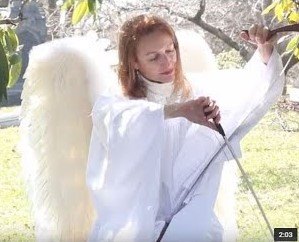
    Now here’s something you don’t hear every day: a selection from Leonard Bernstein’s “Chichester Psalms,” played at Bernstein’s grave on the MUSICAL SAW.

    Natalia ‘Saw Lady’ Paruz – musical saw player shared this video on WWFM’s Facebook page yesterday afternoon, in celebration of “Uncle Lenny” for the 100th anniversary of his birth. Bernstein was born on this date in 1918.

    We’re still soliciting listener anecdotes and observations. Our hosts will be happy to share your Bernstein-related thoughts over the air, interspersed with classic Bernstein recordings, right up until 5:00 p.m. today. Send your Lenny stories to WWFM via the station’s Facebook page at WWFM – The Classical Network or by email at info@wwfm.org. Make sure to type “Bernstein” in the subject line.

    Sure, playing Bernstein on the musical saw is quixotic, but who knew it would be so beautiful?

Tag Cloud

Aaron Copland (93) Beethoven (95) Composer (114) Film Music (124) Film Score (143) Film Scores (255) Halloween (94) John Williams (188) KWAX (229) Leonard Bernstein (101) Marlboro Music Festival (125) Movie Music (139) Opera (202) Philadelphia Orchestra (89) Picture Perfect (174) Princeton Symphony Orchestra (106) Radio (87) Ralph Vaughan Williams (85) Ross Amico (244) Roy's Tie-Dye Sci-Fi Corner (290) The Classical Network (101) The Lost Chord (268) Vaughan Williams (103) WPRB (396) WWFM (881)

DON’T MISS A BEAT

Receive a weekly digest every Sunday at noon by signing up here


RECENT POSTS