Right now on WPRB, we’re listening to the Symphony No. 4 by the underrated English composer George Lloyd, a work which grew out his experiences serving in the Royal Marines during WWII.
Lloyd’s vessel was struck by a torpedo while he was manning the transmitting station deep within the ship’s hold. He nearly drowned, as many of his shipmates and close comrades actually did, in fuel oil. Though he survived the ordeal, he suffered from shell shock and could not speak for nearly a year.
As he recovered, he began to compose again, hoping to exorcise his demons. The result was his Symphony No. 4, subtitled the “Arctic,” a surprisingly optimistic work, considering its genesis. But, as the composer points out, he also experienced much beauty during his service in the North Sea, including a memorable trip up the Norwegian coast.
Of the infectious marches that characterize the work’s final movement, the composer remarked wryly, “… perhaps I was trying to end the symphony by reaffirming the old convention that when the funeral is over the band plays quick, cheerful tunes to go home.”
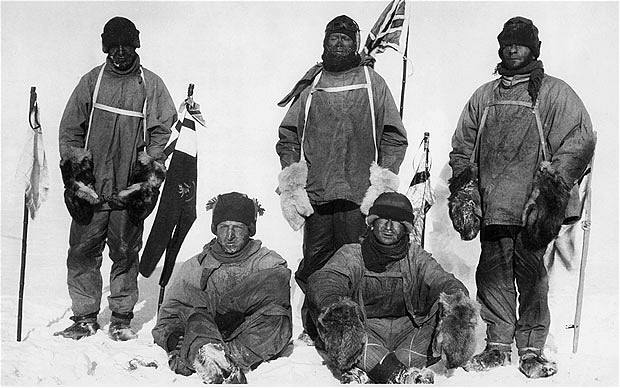
Coming up in the 9:00 hour, we’ll have another English symphony, suggestive of the opposite pole, the Symphony No. 7 by Ralph Vaughan Williams, subtitled “Sinfonia Antarctica.” Vaughan Williams’ opus grew out of his film score for the Ealing Studios adventure “Scott of the Antarctic,” which starred John Mills as doomed explorer Robert Falcon Scott.
Vaughan Williams’ symphony captures a sense of foreboding in the face of punishing elements and the desolation of the Antarctic landscape. Along the way, he evokes chill winds, crashing ice slides, and the play of penguins and whales.
Sir Adrian Boult recorded the work twice. The earlier recording featured spoken prefaces by Sir John Gielgud, who reads from English poets and Scott’s diary. The performance itself is quite good, though expectedly not as vivid as the later, stereo remake. So as to share the best of both worlds this morning, I will interpolate the Gielgud readings into the stereo performance.
Stick around, and you’ll also get to hear music inspired by the aurora borealis, by Uuno Klami and Geirr Tveitt. We’ll go to any lengths to keep cool, until 11 EDT on WPRB 103.3 FM and at wprb.com.
Leave a Reply