Who’s peekin’ out from under a stairway,
Calling a name that’s lighter than air?
Who’s bending down to give me a rainbow?
Everyone knows it’s Hindy.
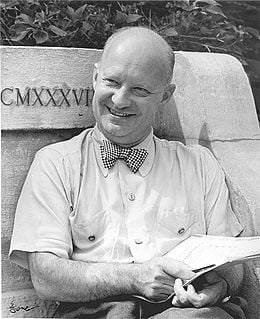
Today is the birthday of my best fiend, Paul Hindemith. Yes, you read that correctly. It’s not a typo. I don’t mind saying it: sometimes I loves him, sometimes I hates him. We are, in the parlance of the age, frenemies.
Paul Hindemith’s influence on 20th century music is incalculable. It’s difficult for me to think of any mid-century composer, especially of those active in the United States (Hindemith taught at Yale), that didn’t have their Hindemith moment. If they didn’t embrace serialism, that is. Sometimes they did both.
Is this a good thing? If it’s Norman Dello Joio, yes. If it’s Yehudi Wyner, not so much. (Sorry, Yehudi).
As is the case with most of us, there is no one Hindemith. People evolve over time. So there is the enfant terrible Hindemith, who delighted in upsetting the apple cart with foxtrots and sirens and grating harmonies. (He was denounced by Goebbels as an “atonal noisemaker.”) Then there was an equally subversive transformation, when Hindemith must have decided the best way to give the finger to fascism was to appeal directly to the people. The best revenge is writing well, and Hindemith began to write very well indeed. What’s more, he began to reach deeper.
A proponent of what he described as “Gebrauchsmusik,” or “utility music” – music for use, written for a purpose, often performance by amateurs (which one might say is a good thing) – he was kind of like a 20th century Telemann, spewing well-crafted music by the yard. But the price of such extraordinary productivity is that he often ran the risk of teetering into prolixity, and what we sometimes wind up with is an awful lot of limp noodles. Hindemith could be a real noodler. But when he was on, he was on, and some of the orchestral pieces, especially, can be glorious, thrilling, and even transcendent in their luminosity.
My personal breakthrough with this composer came with an album released in the late 1980s, on London Records, with Herbert Blomstedt and the San Francisco Symphony. Not only does it contain the most exciting recording of Hindemith’s “Symphonic Metamorphosis on Themes by Carl Maria Weber” I have ever heard – and that’s saying something, since it must be his most-recorded work – but it also introduced me to an unexpectedly moving piece called “Trauermusik” (“Mourning Music,” or “Funeral Music”).
On January 19, 1936, Hindemith, a violist, was in London to give the British premiere of his new concerto, “Der Schwanendreher.” A few minutes before midnight, King George V died. The concert was cancelled, but the BBC and conductor Sir Adrian Boult wanted to make use of Hindemith in whatever it was they decided to do in its place. The next morning, they set Hindemith up in a quiet office, with plenty of pencils and a stack of blank sheet music, and six hours later he emerged with a new concert piece, which he played the same night as part of a special memorial broadcast. That’s the kind of a composer Hindemith was.
Toward the end of the work Hindemith quotes a chorale by Johann Sebastian Bach, “Fur deinen Thron tret ich hiermet” (“Here I stand before Thy throne”). It was the composer’s great good fortune that the melody turned out to have added resonance, as it is widely recognized in England as “the Old 100th.” What could easily have been a mere occasional work, destined for a single performance and then lost to oblivion, actually turned out to be one of his most moving pieces.
Here is Hindemith that actually touches the heart. The violist is Geraldine Walther, then principal violist of the SFS, and later a member of the Takács Quartet. I had the pleasure to actually meet her once, after a Takács concert, to tell her just how much this recording has meant to me. (Sometime later, someone sent me an email in her name, claiming that she was stranded on an island and needed money to get home. But that’s another story.)
Okay, Hindemith, so you have a soul. You’ve shown me your humanity. Later, I caught his opera, “Mathis der Maler,” at New York City Opera. I even bought the t-shirt.
Prior to that, I remember, during my freshman year of college, my roommate had an LP of the cello sonatas, stowed among the debris packed solid beneath his bunk. It was the property of Easton Area Public Library. He was not the most unlikely person to have stolen the Hindemith cello sonatas – he was more the kind of guy who just didn’t return things to the library – but in an era when we were listening to an awful lot of Beethoven, this stuff was pretty heavy metal.
Here’s a worthwhile Hindemith piece I discovered as part of an extensive set of his orchestral works recorded by Werner Andreas Albert, who died last weekend – a Concerto for Woodwinds, Harp and Orchestra (1949). Note the quotation from Mendelssohn’s “Wedding March” in the last movement, a surprise for the composer’s wife. The premiere took place on their silver wedding anniversary.
Hindemith conducts his “Symphonia serena” (1946):
Kammermusik No. 1 (1921). I’m sure Goebbels didn’t like this one.
Happy birthday, Paul Hindemith. I’d gladly come to your party, but I’ve got my fingers crossed that the cake will be angel food, and not overbaked kugel.
PHOTO: He was a snappy dresser, too
Leave a Reply