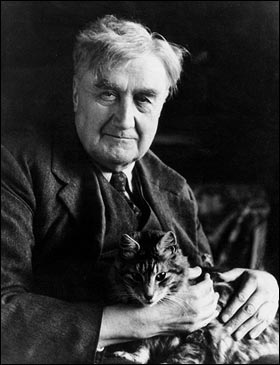
A good rainy day. The perfect time to hunker down with Ralph Vaughan Williams.
Here are links to two of his symphonies – the first, his most desolate, the Symphony No. 6, and the second, his most unambiguously hopeful, the Symphony No. 5. In common with the greatest classics, both exist outside of time – they are timeless – yet both speak perfectly to the present. Life in the time of Coronavirus
Vaughan Williams’ Sixth Symphony (1944-47) is full of tension, turbulent, bleak, with a few wistful passages that seem to reflect on a lost world. Though the composer denied any extramusical program, the last movement has been interpreted by many as an aural portrait of the world laid waste. Some have attributed the barren atmosphere as a response to the atomic bomb.
https://www.youtube.com/watch?v=I1suBbnp5Go
The Symphony No. 5 (1938-43), by contrast, is a balm for the soul. Though completed at the height of World War II, the symphony is a musical celebration of the endurance of humanity and tradition against an implacable enemy. The work shares much in common with Vaughan Williams’ passion project, the opera “The Pilgrim’s Progress,” which he had already been writing for 30 years. Not only does it quote some of the opera’s themes, it also reflects its spirit. The piece is brimming with solace, hope, and indescribable beauty.
Vaughan Williams dedicated the work to Jean Sibelius, “without permission and with the sincerest flattery.” When Sibelius heard the piece, he confided to the conductor Sir Adrian Boult, “This Symphony is a marvelous work… the dedication made me feel proud and grateful… I wonder if Dr. Williams has any idea of the pleasure he has given me?”
Keep calm and carry on. Pour youself a cuppa. Listen to Ralph Vaughan Williams, and find your strength.
Leave a Reply