Stop me if I told you this before.
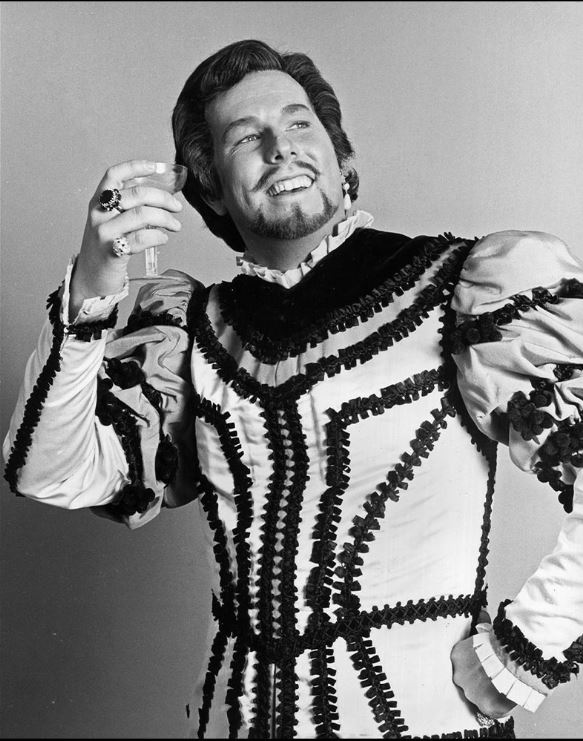
Last night, I watched the first act of the Met stream of “Don Giovanni,” a performance from 1978, with Joan Sutherland, Julia Varady, Huguette Tourangeau, Gabriel Bacquier as Leporello, and a 31 year-old James Morris as the Don. I would have never thought that Morris’ voice could ever have been so supple. I became familiar with him only later, from his more ponderous roles, especially Wotan.
I actually had the opportunity to work with him once, at the old Opera Company of Philadelphia (since rebranded Opera Philadelphia). He played the Count in a production of “The Marriage of Figaro,” during the brief window in which I was employed as an assistant stage manager. Really, I was more of a glorified gofer, without the glory, but I did get to wear a headset backstage and cue the singers when it was time for them to make their entrances, or to have a union laborer shatter a flower pot in a barrel. I was very green, and you had to be a total self-starter. The extent of my direction would be “Go and find me a sword,” or “We need you to rent a truck,” and that was that. It could be a little stressful.
At first, Morris was flattered that I was awed by his presence, having just watched him in the PBS “Ring” broadcast (he even signed my copy of “Das Rheingold”), but later, he started to get a little annoyed when things didn’t always go as smoothly as they did at the Met. In particular, I don’t think he was happy with my entrance cues. I had to wait, with my hand up in a “get ready” position, until I received clearance from the stage manager, through my headset, so that I could give the go-ahead. (Well, I did delay a little bit on the flower pots, because it got a bigger laugh from the audience if they would shatter a beat later than expected.)
Morris would stand there and look at me, with his hand on a plywood door, and finally, when he couldn’t take it anymore, in exasperation, he would jump the cue. I’d tell the stage manager, the stage manager would mutter to himself, and he’d make a note in the score to cue the entrance a few bars earlier. But it never seemed early enough for Morris.
Also, I remember one night, just as he was going down on his knee for his big moment, in the second of silence before “Contessa, perdono,” somebody’s watch beeped in the wings. He was livid. His adorable wife, Susan Quittmeyer, who sang Cherubino, was forever smoothing his feathers and sending me out for the balm of coffee.
My favorite memory is when, in rehearsal, they asked me to stand in as a super. I was to be one of the Count’s servants, and I got to do a scene with Morris. This led to some moments of unintentional hilarity, since I really didn’t know what was expected of me, and I would repeatedly miss my marks (which, to be fair, were not indicated). Morris would laugh and guide me into place.
I only worked there for three weeks, the duration of a single production, since the job only paid a hundred dollars a week, and they expected you to be available at all hours. There were morning, afternoon, and evening rehearsals. Obviously, that was unsustainable for someone in his early 20s. I’m glad I had the experience, though. I wonder if it’s how George Plimpton felt when he played for the Detroit Lions or stepped in to the percussion section of the New York Philharmonic?
It was also during that production that I was late for rehearsal once, and nearly knocked Charles Dutoit on his can in the Academy green room. (Dutoit was guesting that week with the Philadelphia Orchestra.)
I’ve got some other juicy stories of backstage goings-on with some of the other singers, but I think it’s probably best, from a legal standpoint, if I wait until everyone is dead.
It’s a rainy day, and I’m up for Act II. The Met “Don Giovanni” streams free, through about 6:00 tonight, at metopera.org
Leave a Reply