Tag: The Marriage of Figaro

  • Mozart Overexposure and Rediscovery

    Mozart Overexposure and Rediscovery

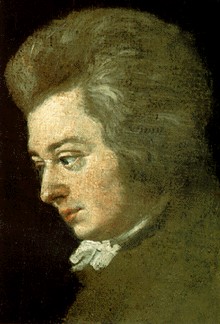
    I’m a jaded old bastard, but a fair one, I hope, so I’ll be the first to admit I haven’t always given Mozart a fair shake. There have been times when I’ve had the privilege to attend an all-Mozart concert, and I’ve taken a look at the program and rolled my eyes. What a jerk thing to do. One of the greatest composers who ever lived, whose gift to posterity has been one of sublime beauty, and I’m that ungrateful? The fault, dear Brutus, is not in Mozart, but in myself.

    Part of the problem is that he’s so damned overexposed. Mozart is everywhere. How often in movies has “Eine kleine Nachtmusik” been used as shorthand to signify stuffy lawn parties thrown by the snooty rich? Yet, as a teenager, the music delighted me so, I remember bringing the record with me to school. (The bulk of the album was devoted to the “Jupiter” Symphony.)

    Mozart makes our babies smarter. He’s had chocolates named after him. He’s underscored romantic interludes in “Elvira Madigan” and jealous rivalry in “Amadeus.” He’s reminded prisoners of the persistence of beauty in “The Shawshank Redemption.” His music has been used to sell cars, sneakers, and coffee. It’s been quoted, sampled, and parodied. It’s been assimilated into a collage of our collective cultural detritus.

    On the surface, It’s so easy to digest. And there’s nothing wrong with that. Much of our greatest art tends to appeal on more than one level. It’s accessible on first acquaintance, but it’s also capable of conveying more profound truths. The more you live with it, the more it reveals. That’s what makes it “classic.”

    Beneath the enchanting veneer of beauty, conjured with seeming inevitability – an ordered universe, always fresh, out of the Enlightenment – Mozart reminds us of our humanity, plumbing emotional depths and scaling spiritual heights, affirming the meaning of our existence in manner that cannot be captured in words, all the while delighting the ear.

    The first opera I really got to know (after devouring Gilbert & Sullivan) was “The Magic Flute.” The last concert I ever heard with my mother was of the last three symphonies. I’d go so far as to say that “The Marriage of Figaro” saved my life. For an entire month, I had the great good fortune to work as an intern on a professionally staged production with some major singers, and I got to know the score extraordinarily well. The music was like a life buoy tossed to me across the centuries at a time I struggled to keep my head above choppy waters. To this day, it remains my favorite opera.

    Of course, Mozart has been around for a long time, and as human beings, one of our more regrettable attributes is that even the most breathtaking vistas tend to lose their grip on our attention if we see them every day. We decorate our walls with artwork and pictures and memorabilia, but how often do we notice them? We play music on the radio, but how often do we focus enough to truly listen? It’s nice to have these things in our lives, of course. They lend color to a workaday existence. But we tend to be creatures of the moment, and it doesn’t take much to divert our attention.

    Mozart, we are undeserving of your gifts. Thanks for everything, and happy birthday.
  • Backstage with James Morris at Opera

    Backstage with James Morris at Opera

    Stop me if I told you this before.

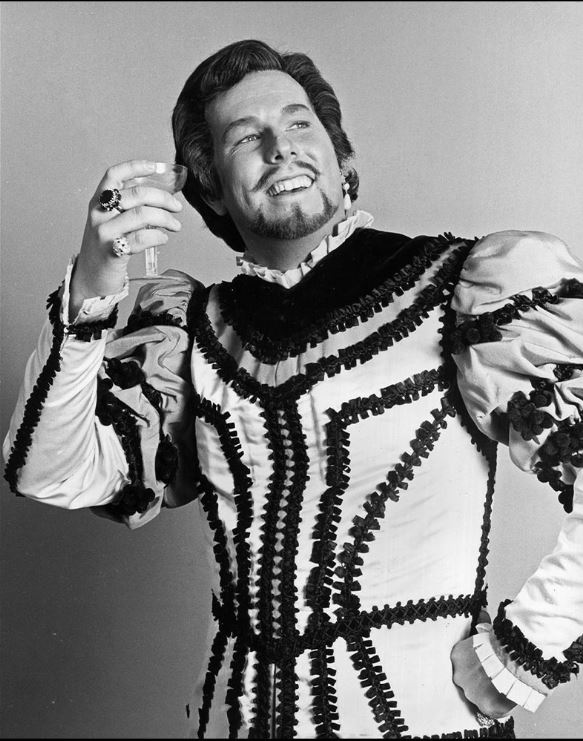
    Last night, I watched the first act of the Met stream of “Don Giovanni,” a performance from 1978, with Joan Sutherland, Julia Varady, Huguette Tourangeau, Gabriel Bacquier as Leporello, and a 31 year-old James Morris as the Don. I would have never thought that Morris’ voice could ever have been so supple. I became familiar with him only later, from his more ponderous roles, especially Wotan.

    I actually had the opportunity to work with him once, at the old Opera Company of Philadelphia (since rebranded Opera Philadelphia). He played the Count in a production of “The Marriage of Figaro,” during the brief window in which I was employed as an assistant stage manager. Really, I was more of a glorified gofer, without the glory, but I did get to wear a headset backstage and cue the singers when it was time for them to make their entrances, or to have a union laborer shatter a flower pot in a barrel. I was very green, and you had to be a total self-starter. The extent of my direction would be “Go and find me a sword,” or “We need you to rent a truck,” and that was that. It could be a little stressful.

    At first, Morris was flattered that I was awed by his presence, having just watched him in the PBS “Ring” broadcast (he even signed my copy of “Das Rheingold”), but later, he started to get a little annoyed when things didn’t always go as smoothly as they did at the Met. In particular, I don’t think he was happy with my entrance cues. I had to wait, with my hand up in a “get ready” position, until I received clearance from the stage manager, through my headset, so that I could give the go-ahead. (Well, I did delay a little bit on the flower pots, because it got a bigger laugh from the audience if they would shatter a beat later than expected.)

    Morris would stand there and look at me, with his hand on a plywood door, and finally, when he couldn’t take it anymore, in exasperation, he would jump the cue. I’d tell the stage manager, the stage manager would mutter to himself, and he’d make a note in the score to cue the entrance a few bars earlier. But it never seemed early enough for Morris.

    Also, I remember one night, just as he was going down on his knee for his big moment, in the second of silence before “Contessa, perdono,” somebody’s watch beeped in the wings. He was livid. His adorable wife, Susan Quittmeyer, who sang Cherubino, was forever smoothing his feathers and sending me out for the balm of coffee.

    My favorite memory is when, in rehearsal, they asked me to stand in as a super. I was to be one of the Count’s servants, and I got to do a scene with Morris. This led to some moments of unintentional hilarity, since I really didn’t know what was expected of me, and I would repeatedly miss my marks (which, to be fair, were not indicated). Morris would laugh and guide me into place.

    I only worked there for three weeks, the duration of a single production, since the job only paid a hundred dollars a week, and they expected you to be available at all hours. There were morning, afternoon, and evening rehearsals. Obviously, that was unsustainable for someone in his early 20s. I’m glad I had the experience, though. I wonder if it’s how George Plimpton felt when he played for the Detroit Lions or stepped in to the percussion section of the New York Philharmonic?

    It was also during that production that I was late for rehearsal once, and nearly knocked Charles Dutoit on his can in the Academy green room. (Dutoit was guesting that week with the Philadelphia Orchestra.)

    I’ve got some other juicy stories of backstage goings-on with some of the other singers, but I think it’s probably best, from a legal standpoint, if I wait until everyone is dead.

    It’s a rainy day, and I’m up for Act II. The Met “Don Giovanni” streams free, through about 6:00 tonight, at metopera.org

  • Mozart Birthday Bash on WWFM!

    Mozart Birthday Bash on WWFM!

    Well, the day is finally upon us. Get ready for wall-to-wall Mozart, as Alice Weiss (9 to noon), Ross Amico (noon to 3), and David Osenberg (3 to 6) select from their own favorites to celebrate the master’s 261st birthday. I’ve already pulled aside a couple of concertos, a wind serenade, and some rarely-heard incidental music. I’m also flirting with the idea of playing one of the larger choral works. It will all hinge on what Alice comes up with this morning. Also, David has invited me to sit in to talk with him for a little bit about why we love “The Marriage of Figaro,” and to play excerpts from some of the recordings. So my 3:00 quitting time may be a little fluid.

    I’ll be back at 6:00, of course, for “Picture Perfect.” The Mozart celebration is underway right now, on WWFM – The Classical Network, and at wwfm.org.

    Rock me, Amadeus!

  • Easter Vivaldi and Mom’s Love of Music

    Easter Vivaldi and Mom’s Love of Music

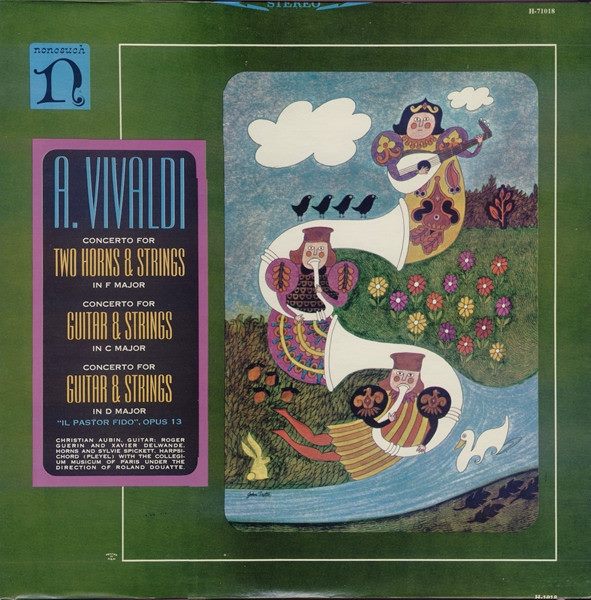
    One of my favorite Easter memories is of when I came downstairs and found a couple of Vivaldi LPs next to my basket. Now, Vivaldi isn’t even remotely my favorite composer, but I thought that was just the greatest thing ever. I listened to those records with every bit as much pleasure as I experienced when I devoured my chocolate rabbit (and of course they’ve lasted a great deal longer).

    That’s the kind of thoughtful gesture my mom would make. She always started with something nice and then took it to the next level. Mom was fond of Vivaldi’s Guitar Concerto in D. We weren’t a “classical music” family – I was the first to fall under the spell – but Mom caught on fast. She liked Vivaldi and Bach and jogged to Sousa marches.

    That’s not to say she didn’t always have an appreciation for it. She took me to plenty of piano and chamber recitals after she realized I had been bitten by the bug, and we attended every Gilbert & Sullivan production in the area. She encouraged me in my record collecting. I wonder if she ever thought, “My god, what have I done?”

    In her last few years, Mom became interested in learning more about opera, after I had gotten her a nice compilation of arias for a gift. I could see she was a little puzzled by it at first, though Mom being Mom, she never would have expressed anything other than gratitude. But she actually grew to really enjoy it.

    A number of years earlier, she had attended part of a dress rehearsal for “The Marriage of Figaro” I had assistant stage managed with what was then the Opera Company of Philadelphia. It made her proud to see me in the wings with my headset, doing something I enjoyed (which was mostly cueing singers when it was time for them to go on and signaling stage hands when to smash flower pots). There was a lot of funny business on stage, though no supertitles until the actual performances. But it was pure farce, with powdered wigs flying around and people diving under furniture. I think she probably was already interested in seeing a complete opera then. I don’t know why my parents couldn’t make that one – they lived only about an hour and a half away – since that would have been pretty much ideal.

    Instead, I wound up taking her to a threadbare production of Boito’s “Mefistofele” at the New York City Opera. It was essentially the same production Norman Treigle had triumphed in, in the early 1970s, but 20 years later it was looking kind of shabby – which surprised me, since everything I had seen at City Opera up until that point (Korngold’s “Die tote Stadt,” Busoni’s “Doktor Faust,” Hindemith’s “Mathis der Maler,” Tippett’s “The Midsummer Marriage”) had been so good. I should have just taken her across the plaza to the Met for a buffo romp. It’s one of my regrets that I did not. Hopefully they’ve got “Figaro” in heaven.

    Our last concert together featured the Chamber Orchestra of Philadelphia in Mozart’s final three symphonies.

    Happy birthday, Mom. Thanks for everything.

  • Why I (Sometimes) Hate Mozart

    Why I (Sometimes) Hate Mozart

    Dear Wolfgang,

    Sorry for being such an idiot. I confess to feeling total disappointment when your music is listed on a concert program or announced on the radio, yet when I actually listen to it, it almost always yields rewards.

    You wrote my favorite opera of all time (“The Marriage of Figaro”). You wrote the favorite opera of my youth (“The Magic Flute”). You wrote a piece I could not stop listening to when I was in high school (“Eine kleine Nachtmusik”). There are pieces you wrote that I adore. So why do I bear so much prejudice against you?

    Maybe it’s for the same reason some people hate John Williams or Stephen King. If it’s popular, it can’t be good, right? Right?

    (Please note: I adore John Williams.)

    Happy birthday, Wolfgang Amadeus Mozart (1756-1791).

    With a shout-out to poor Edouard Lalo (1823-1892)!

    Very truly yours,

    R

Tag Cloud

Aaron Copland (92) Beethoven (95) Composer (114) Film Music (123) Film Score (143) Film Scores (255) Halloween (94) John Williams (187) KWAX (229) Leonard Bernstein (101) Marlboro Music Festival (125) Movie Music (138) Opera (202) Philadelphia Orchestra (89) Picture Perfect (174) Princeton Symphony Orchestra (106) Radio (87) Ralph Vaughan Williams (85) Ross Amico (244) Roy's Tie-Dye Sci-Fi Corner (290) The Classical Network (101) The Lost Chord (268) Vaughan Williams (103) WPRB (396) WWFM (881)

DON’T MISS A BEAT

Receive a weekly digest every Sunday at noon by signing up here


RECENT POSTS