As a classical music radio host of many years, it’s easy to fall back on the same biographical details whenever I come to announce a given composer’s works. This is especially true when the composer’s life contains some particularly lurid or poignant detail.
But is it really fair to define someone by the manner of his or her death? After all, composers lived rounded lives like the rest of us, full of joys and sorrows. There must be some laughter even in a life weighted with misery, and tears in the make-up of any clown.
So it was with George Butterworth. If we hear anything at all in the minute or two it takes to set up the broadcast of one of his works, it’s that Butterworth was cut down by a sniper during the Battle of the Somme at the age of 31. Of course, it doesn’t help that his compositions make one’s heart ache from their exquisite beauty.
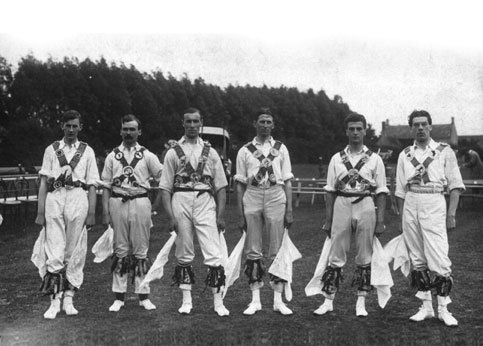
A few years ago, I was doing some quick research on Butterworth, born on this date in 1885, when I stumbled across this webpage and sat transfixed, as I viewed for the first time rare footage of him folk dancing with Cecil Sharp. It put a human face on this composer every bit as poignant as the recollection of his untimely death. It’s especially amusing to see the two men get tangled up in their choreography and then continue on their merry way.
https://www.warcomposers.co.uk/butterworthbio
It’s also worth mentioning, in Vaughan Williams’ sesquicentennial year, that it was Butterworth who first suggested to his friend that he tackle a purely orchestral symphony. (RVW’s first symphony, “A Sea Symphony,” had been scored for chorus and orchestra.) The result was “A London Symphony,” Vaughan Williams’ Second, which he dedicated to Butterworth before his untimely demise.
Vaughan Williams remembered, “We were talking together one day when he said in his gruff, abrupt manner: ‘You know, you ought to write a symphony.’ I answered… that I’d never written a symphony and never intended to… I suppose Butterworth’s words stung me and, anyhow, I looked out some sketches I had made for… a symphonic poem about London and decided to throw it into symphonic form… From that moment, the idea of a symphony dominated my mind. I showed the sketches to George bit by bit as they were finished, and it was then that I realised that he possessed in common with very few composers a wonderful power of criticism of other men’s work and insight into their ideas and motives. I can never feel too grateful to him for all he did for me over this work and his help did not stop short at criticism.”
RVW’s “A London Symphony”
If you’re unfamiliar with Butterworth’s own music, here are a few examples. Those inspired by the poems of A.E. Housman are especially moving.
“The Banks of Green Willow”
“A Shropshire Lad” (orchestral rhapsody)
“A Shropshire Lad” (song cycle):
https://www.youtube.com/watch?v=e3fgjfi8OCs
PHOTO: Butterworth the morris dancer (second from left)
Leave a Reply