Tag: English Folk Music

  • Celebrating Holst Folk Music & The Planets

    Celebrating Holst Folk Music & The Planets

    This week on “Sweetness and Light,” to mark the sesquicentenary of the birth of Gustav Holst (born on this date in 1874), we’ll have a down-to-earth celebration of the composer of “The Planets.”

    Holst wrote some very interesting and effective works in a modestly modernist style, but the emphasis this morning will be on his delectable folk-inflected music. In the company of his lifelong friend, Ralph Vaughan Williams, Holst struck out for the fields and fens, documenting by cylinder and notating by hand songs of the English countryside, preserving them against the oblivion of encroaching industrialization. Recognizing their rich potential as raw material for the development of a distinctly “English” national sound, the two artists began assimilating characteristics into their own respective styles.

    Since Holst’s day job was as director of the St. Paul’s Girls’ School (from 1905 until his death in 1934), it’s hardly surprising that the larger portion of the music to be heard during the hour will be devoted to pieces introduced by the students and faculty.

    We’ll enjoy a worthy successor to the popular “St. Paul’s Suite” of 1913, the “Brook Green Suite,” composed two decades later. The St. Paul’s School is located on Brook Green in Hammersmith, London. The performance will surely be of added interested in that it will be conducted by composer’s daughter, Imogen Holst.

    Of course, when celebrating Holst, we can’t very well ignore “The Planets.” For a light music show, it goes without saying, the most jovial of these is “Jupiter, the Bringer of Jollity.” The big tune at its generous heart was further popularized as the patriotic hymn “I Vow to Thee, My Country.” Holst was a master orchestrator (it’s amusing to reflect that his instrument was the trombone), but I think you’ll find his own arrangement for two pianos to be fresh and surprisingly illuminating. Our performers will be Richard Rodney Bennett and Susan Bradshaw.

    The Suite No. 2 for Military Band of 1911 is based on a number of delightful folk tunes, including “Swansea Town,” “I’ll Love My Love,” “A Blacksmith Courted Me,” “Dargason,” and “Greensleeves.” We’ll hear it played by the Dallas Wind Symphony, directed by Howard Dunn. And as a bonus, we’ll follow it with Holst’s setting of one of the songs for men’s chorus, sung by the Baccholian Singers of London.

    Finally, we’ll have the substantial choral ballet of 1926, “The Golden Goose,” on a scenario adapted from a tale of the Brothers Grimm,” again given its debut at St. Paul’s. This one is long on charm, chockful of good tunes in a folk style. Hilary Davan Wetton will direct the Guildford Choral Society and Philharmonia Orchestra. What’s not to love?

    There’s gold in them thar hills! I hope you’ll join me for a Holst sesquicentennial tribute, on “Sweetness and Light,” this Saturday morning at 11:00 EDT/8:00 PDT, exclusively on KWAX, the radio station of the University of Oregon!

    Stream it wherever you are at the link:
    https://kwax.uoregon.edu/

  • Gustav Holst Beyond The Planets A Musical Genius

    Gustav Holst Beyond The Planets A Musical Genius

    It’s interesting that Gustav Holst and Ralph Vaughan Williams were born only three weeks apart, albeit separated by two years. Uncle Ralph’s birthday looms on October 12 – but for today, we celebrate Holst!

    “Gustav” may be a strange name for one of England’s greatest composers. Even stranger, he was actually christened Gustavus. Also, there was a “von” in his name – Gustavus Theodore von Holst. Holst’s father was of Swedish, Latvian, and German descent. His great-grandfather had also been a composer, who taught harp at the Imperial Russian Court in St. Petersburg. Continuing in the family trade, his grandfather set up shop in England. In doing so, he added the “von,” thinking it lent a little gravitas and might help to drum up business. Sensibly, Gustav dropped the prefix with the outbreak of war with Germany in 1914.

    Like Vaughan Williams, Holst was born in Gloucestershire. Both were students at the Royal College of Music, who studied with Sir Charles Villiers Stanford. Significantly, they were also linked by a common destiny, spearheading a movement to establish a distinctly “English” national sound in music. They accomplished this by getting their hands dirty, tying on their boots and striking out for the fields and fens, to collect songs of the countryside, already endangered by encroaching industrialization. In some of their best original music, both composers assimilate English folk inflections into their respective styles.

    Holst himself was an exacting teacher, who took his duties very seriously. However, in common with the best of his profession, he never imposed his will on his students, but rather shepherded them in finding their own solutions. Holst served as director of music at St. Paul’s Girls’ School, Hammersmith, and at Morley College.

    Of course his masterpiece would be “The Planets,” composed between 1914 and 1916. Hard to believe, in a world of composers schooled on the piano, that Holst’s principal instrument was the trombone! I recall listening to this music for the first time in my teens and thinking “Jupiter,” in particular, positively exuded “England.” Its roistering, galumphing, perhaps even Falstaffian antics give way to a stately, processional theme, later adapted into the patriotic hymn “I Vow to Thee, My Country.” But with the passage of time, and longer familiarity, “The Planets’” English identity, detectable in every note, has become increasingly evident.

    Even so, Holst was never of a provincial mindset. On the contrary, he was a much more adventurous – and frequently modernist – composer than he is frequently given credit for having been. His literary inspirations were far-ranging, from Thomas Hardy to Walt Whitman to Sanskrit. His music is often less emotive than Vaughan Williams’. I’ve always detected more of an objective detachment in his works. Remarked Vaughan Williams, “He was not afraid of being obvious when the occasion demanded, nor did he hesitate to be remote when remoteness expressed his purpose.”

    The two were one another’s most constructive critics. When Holst died, comparatively young, at the age of 59, Vaughan Williams felt his friend’s passing keenly. Aside from the personal loss, from a professional and artist standpoint, suddenly he was bereft of his most valued confidante and advisor.

    Holst’s legacy can be detected best in those composers who reacted against Vaughan Williams and the pastoral school. His economy and restraint appealed to the generation of Walton, Britten, and Tippett. Also – and I never see this remarked upon – I detect his spirit often in the film and concert music of Bernard Herrmann. (Herrmann was a great anglophile, who championed Holst.) There is a certain aloofness, perhaps even a chill, in the work of both artists, but also great sensitivity.

    Happy birthday, Gustav Holst (1874-1934)! You may be regarded by some as a one-hit wonder, but it is an assessment made in ignorance. May the inertia of your greatest success carry listeners far beyond “The Planets.”


    The composer’s most famous music, “Mars, the Bringer of War” (1914)

    “Jupiter, the Bringer of Jollity” (1914)

    “Beni Mora” (1910)

    Vaughan Williams’ setting of “Seventeen Come Sunday” from his “English Folk Song Suite” (1923)

    Listen for the tune in Holst’s “Somerset Rhapsody” (1906), about three minutes in

    “Choral Hymns from the Rig Veda” (1911), anticipating Britten?

    First Choral Symphony (1923-24); RVW expressed only “cold admiration” for it

    “Hammersmith” (1930), prelude and scherzo

    6 Choral Folk Songs (1916): “Song of the Blacksmith”
    https://www.youtube.com/watch?v=DbNwpJPlpAQ

    12 Welsh Folk Songs (1930-31): “My sweetheart’s like Venus”

    Finally, a collaborative work, “Pan’s Anniversary,” a masque written by Ben Jonson, circa 1620, revived in 1905 for a production at Stratford-upon-Avon. Vaughan Williams composed most of the incidental music, with Holst stepping up to arrange some dance tunes under considerable time pressure. The piece was released for the first time on Albion Records, the recording branch of the Ralph Vaughan Williams Society, with some colorful bonuses.

    https://rvwsociety.com/pans-anniversary/

    You can sample the entire album, including an arrangement of the “Fantasia on a Theme by Thomas Tallis” for voices and strong octet, here:

    The Albion catalogue sports much unusual and intriguing RVW fare, often in world premiere recordings. You’ll find some great gift ideas for the musical anglophile who “has everything.”

    https://rvwsociety.com/albionrecords/

    If nothing else, get them a subscription to the Ralph Vaughan Williams Society Journal.

    https://rvwsociety.com/

    While I’m at it, I should also mention there is a society devoted to Gustav Holst!

    http://www.holstsociety.org/index.php


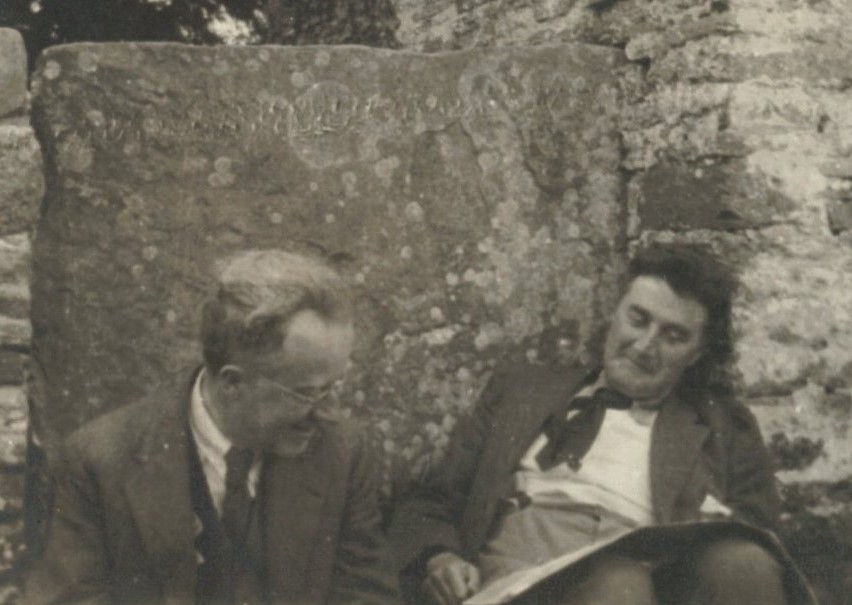
    PHOTO: Holst (left) with Vaughan Williams, who never could tie a tie

  • Pastoral Piano English Folk Idylls

    Pastoral Piano English Folk Idylls

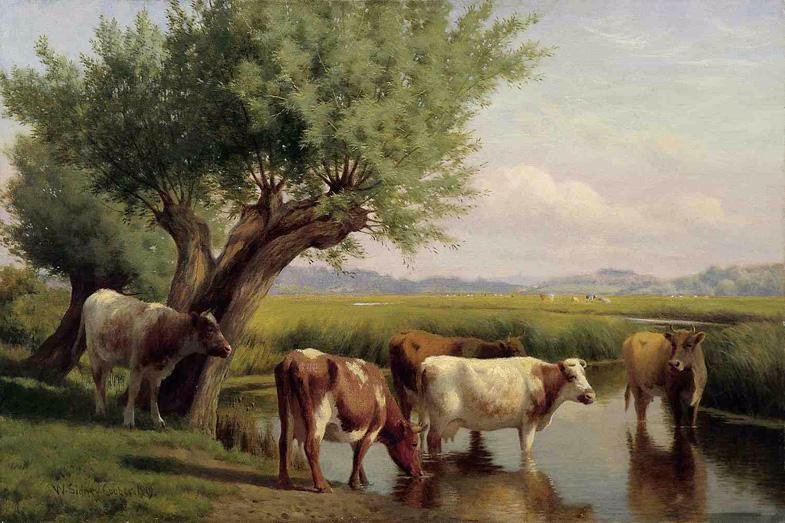
    According to a certain school of thought, folk music – music of the land – embodies the spirit of a nation. And no nation’s composers milked that cow quite as soulfully as the English.

    This Sunday night on “The Lost Chord,” we’ll have an hour of bucolic reflections for the keyboard of a time lost to technology and industrialization.

    We’ll begin with Gerald Finzi’s “Eclogue” for piano and string orchestra. Originally drafted in the mid-‘20s as the projected slow movement of a piano concerto, the material was later reshaped by the composer, who was content to let it stand on its own. In case you’re not familiar with the term, an eclogue is a short pastoral poem.

    If you find yourself transported by this, I think you will also really enjoy Cyril Rootham’s “Miniature Suite” of 1921. Rootham, better known for his choral music, was a friend of Ralph Vaughan Williams and Gustav Holst. His work at Cambridge University exerted a significant influence over English musical life. Like the “Eclogue,” the “Miniature Suite” is scored for piano and strings.

    In between, I’ll provide a palate cleanser in the form of E.J. Moeran’s “Summer Valley.” Moeran was one of the last composers to really thrive on English folk music. “Summer Valley,” composed for solo piano in 1925, was dedicated to Frederick Delius.

    Finally, we’ll engage in a bit of musical time travel. In addition to the whole folk song perspective, England is justifiably proud of its formal musical past. The legacy of the Tudors was a particular influence on works such as Benjamin Britten’s “Gloriana,” Gordon Jacob’s “William Byrd Suite,” and Vaughan Williams’ “Fantasia on a Theme by Thomas Tallis.”

    In the case Herbert Howells – like Rootham, a composer better recognized for his choral endeavors – he fell under the spell of the clavichord, after he was lent one by one Herbert Lambert, a photographer with a passion for building replicas of early keyboard instruments.

    The fortuitous encounter led to the composition of three suites, written in different periods of Howells’ life, which hark back to the glory days of the “Fitzwilliam Virginal Book.” All three sets are characterized by an inventive blend of Tudor and English folk influences. Each of the individual movements are dedicated to a friend or colleague of the composer. We’ll hear the first set, titled “Lambert’s Clavichord,” written in 1927, which was sanctioned for performance on the modern piano.

    I hope you’ll join me for an hour of musical escapes to the countryside and the golden musical past. That’s “Idyll Thoughts” – pastoral English works for piano – this Sunday night at 10:00 EDT, on WWFM – The Classical Network and wwfm.org.

  • George Butterworth: More Than a War Casualty

    George Butterworth: More Than a War Casualty

    As a classical music radio host of many years, it’s easy to fall back on the same biographical details whenever I come to announce a given composer’s works. This is especially true when the composer’s life contains some particularly lurid or poignant detail.

    But is it really fair to define someone by the manner of his or her death? After all, composers lived rounded lives like the rest of us, full of joys and sorrows. There must be some laughter even in a life weighted with misery, and tears in the make-up of any clown.

    So it was with George Butterworth. If we hear anything at all in the minute or two it takes to set up the broadcast of one of his works, it’s that Butterworth was cut down by a sniper during the Battle of the Somme at the age of 31. Of course, it doesn’t help that his compositions make one’s heart ache from their exquisite beauty.

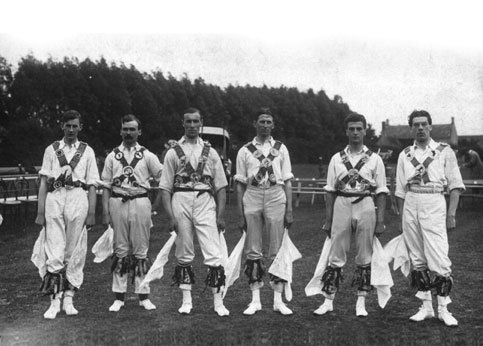
    A few years ago, I was doing some quick research on Butterworth, born on this date in 1885, when I stumbled across this webpage and sat transfixed, as I viewed for the first time rare footage of him folk dancing with Cecil Sharp. It put a human face on this composer every bit as poignant as the recollection of his untimely death. It’s especially amusing to see the two men get tangled up in their choreography and then continue on their merry way.

    https://www.warcomposers.co.uk/butterworthbio

    It’s also worth mentioning, in Vaughan Williams’ sesquicentennial year, that it was Butterworth who first suggested to his friend that he tackle a purely orchestral symphony. (RVW’s first symphony, “A Sea Symphony,” had been scored for chorus and orchestra.) The result was “A London Symphony,” Vaughan Williams’ Second, which he dedicated to Butterworth before his untimely demise.

    Vaughan Williams remembered, “We were talking together one day when he said in his gruff, abrupt manner: ‘You know, you ought to write a symphony.’ I answered… that I’d never written a symphony and never intended to… I suppose Butterworth’s words stung me and, anyhow, I looked out some sketches I had made for… a symphonic poem about London and decided to throw it into symphonic form… From that moment, the idea of a symphony dominated my mind. I showed the sketches to George bit by bit as they were finished, and it was then that I realised that he possessed in common with very few composers a wonderful power of criticism of other men’s work and insight into their ideas and motives. I can never feel too grateful to him for all he did for me over this work and his help did not stop short at criticism.”

    RVW’s “A London Symphony”

    If you’re unfamiliar with Butterworth’s own music, here are a few examples. Those inspired by the poems of A.E. Housman are especially moving.

    “The Banks of Green Willow”

    “A Shropshire Lad” (orchestral rhapsody)

    “A Shropshire Lad” (song cycle):

    https://www.youtube.com/watch?v=e3fgjfi8OCs


    PHOTO: Butterworth the morris dancer (second from left)

  • Happy Birthday Gustav Holst!

    Happy Birthday Gustav Holst!

    It’s interesting that Gustav Holst and Ralph Vaughan Williams were born three weeks apart (though separated by two years). Uncle Ralph’s birthday is coming up on October 12, but today is a day to celebrate Holst, born on this date in 1874.

    “Gustav” may seem like a strange name for one of England’s greatest composers. Even more peculiar, he was actually christened Gustavus. Also, there was a “von” in his name – Gustavus Theodore von Holst. Holst’s father was of Swedish, Latvian, and German descent. His great-grandfather had also been a composer, who taught harp at the Imperial Russian Court in St. Petersburg. Continuing in the family trade, his grandfather set up shop in England. In doing so, he added the “von,” thinking it lent a little gravitas and that it might help to drum up some business. With the outbreak of war with Germany in 1914, sensibly Gustav dropped the prefix

    Like Vaughan Williams, Holst was born in Gloucestershire. Both were students at the Royal College of Music, who studied with Sir Charles Villiers Stanford. Significantly, they were also linked by a common destiny, spearheading a movement to establish a distinctly “English” national sound in music. They accomplished this by getting their hands dirty, tying on their boots and striking out for the fields and fens, documenting by cylinder and notating by hand songs of the English countryside, already endangered by encroaching industrialization. In some of their best original music, both composers assimilate native folk inflections into their respective styles.

    Holst himself was an exacting teacher, who took his duties very seriously. However, in common with the best of his profession, he never imposed his will on his students, but rather shepherded them in finding their own voices and solutions. Holst served as director of music at St. Paul’s Girls’ School, Hammersmith, and at Morley College.

    Of course his masterpiece would be “The Planets,” composed between 1914 and 1916. Hard to believe, in a world full of composers schooled on the piano, that Holst’s principal instrument was the trombone! I recall listening to this music for the first time in my teens and thinking “Jupiter,” in particular, exuded “England.” Its roistering, galumphing, perhaps Falstaffian antics give way to a stately, processional theme, later adapted by the composer into the patriotic hymn “I Vow to Thee, My Country.” But with the passage of time, and longer familiarity, “The Planets’” English identity, is detectable to me in every note.

    For all that, Holst was never of a provincial mindset. On the contrary, he was a much more adventurous – and frequently modernist – composer than he is frequently given credit for. His literary inspirations were far-flung, from Thomas Hardy to Walt Whitman to Sanskrit. His music is often less emotive than Vaughan Williams’. I’ve always detected more of an objective detachment in Holst’s works. Remarked Vaughan Williams, “He was not afraid of being obvious when the occasion demanded, nor did he hesitate to be remote when remoteness expressed his purpose.”

    The two were one another’s most constructive critics. When Holst died, young, at the age of 59, in 1934, Vaughan Williams felt his friend’s passing keenly. Adding to the personal loss of a lifelong companion, from a professional and artistic standpoint, suddenly he was bereft of his most valued confidante and advisor.

    Holst’s legacy can be detected best in those composers who reacted against Vaughan Williams and the pastoral school. His economy and restraint appealed to the generation of Walton, Britten, and Tippett. Also – and I never see this remarked upon – I detect his spirit often in the film and concert music of Bernard Herrmann. (Herrmann was a great anglophile, who championed Holst.) There is a certain aloofness, a chill even, in the work of both artists, but also great sensitivity.

    Happy birthday, Gustav Holst! You may be regarded by most as a one-hit wonder, but you connected squarely, and the resulting line drive carried further than is generally accepted.


    “Jupiter” (1914)

    “Beni Mora” (1910)

    Bernard Herrmann conducts “The Planets” (complete)

    https://www.youtube.com/watch?v=CX_dTxshVh8

    Vaughan Williams’ setting of “Seventeen Come Sunday” from his “English Folk Song Suite” (1923)

    Listen for the tune in Holst’s “Somerset Rhapsody” (1906), about three minutes in:

    “Choral Hymns from the Rig Veda” (1911), anticipating Britten?

    “Hammersmith” (1930), prelude and scherzo

    “Song of the Blacksmith”

    https://www.youtube.com/watch?v=DbNwpJPlpAQ

    “My sweetheart’s like Venus”


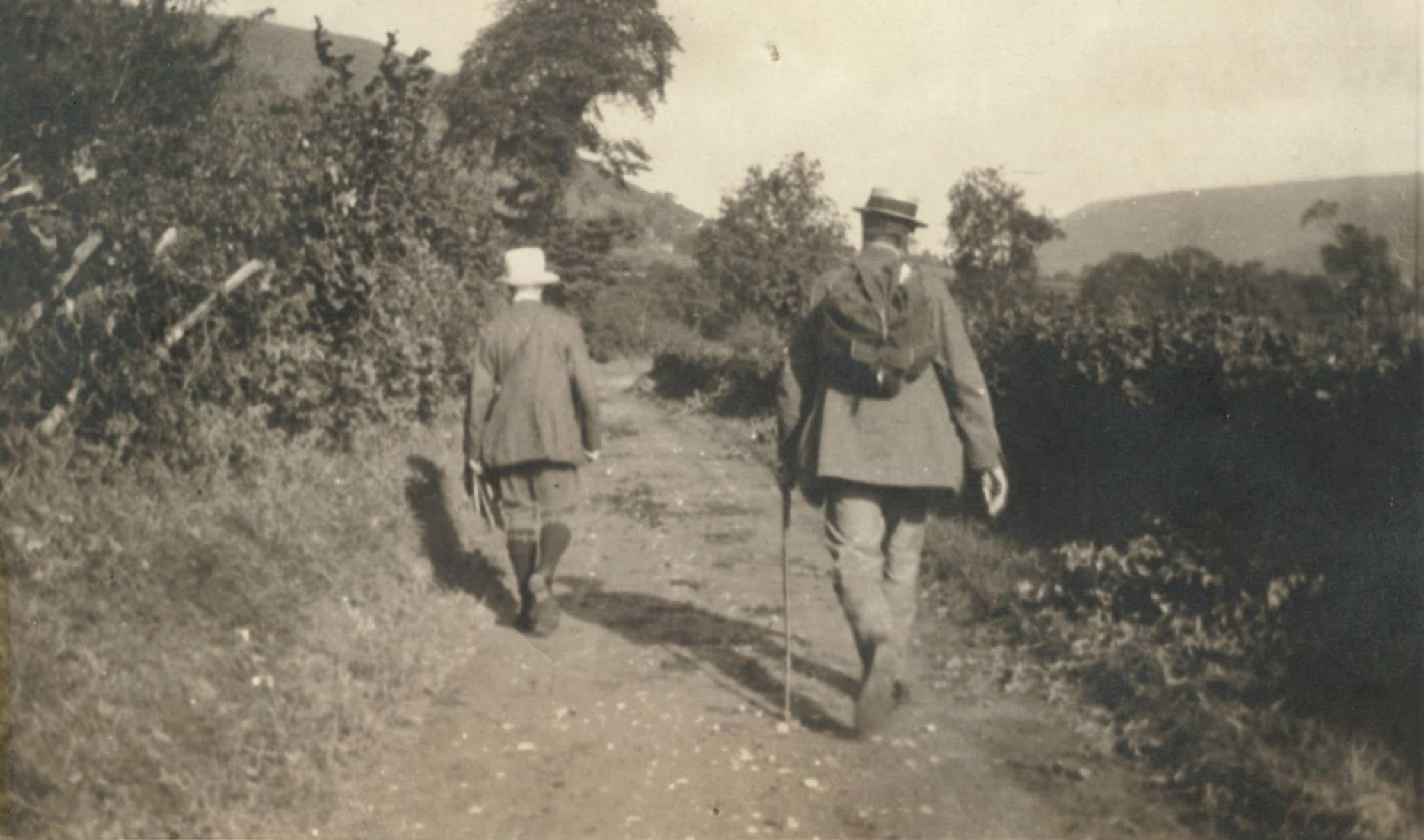
    PHOTO: Holst and Vaughan Williams in the Malvern Hills in 1921

Tag Cloud

Aaron Copland (92) Beethoven (95) Composer (114) Film Music (124) Film Score (143) Film Scores (255) Halloween (94) John Williams (188) KWAX (229) Leonard Bernstein (101) Marlboro Music Festival (125) Movie Music (139) Opera (202) Philadelphia Orchestra (89) Picture Perfect (174) Princeton Symphony Orchestra (106) Radio (87) Ralph Vaughan Williams (85) Ross Amico (244) Roy's Tie-Dye Sci-Fi Corner (290) The Classical Network (101) The Lost Chord (268) Vaughan Williams (103) WPRB (396) WWFM (881)

DON’T MISS A BEAT

Receive a weekly digest every Sunday at noon by signing up here


RECENT POSTS