Did you know that the term “grandfather clock” entered the language as a result of a song by Henry Clay Work?
This is something I learned on a visit to the exhibition “Striking Beauty: New Jersey Tall Case Clocks, 1730-1830,” now on display at Morven Museum & Garden in Princeton. I visited the show over the summer, but the installation will be in place through February 18, 2024.
The reason I am thinking of it now is that today is Work’s birthday anniversary. Work lived from 1832 to 1884. Although he was born and died in Connecticut, in his 20s, he labored as a printer, setting type in Chicago. There he composed in his head, against a background of noisy machinery. He conceived his greatest songs during the American Civil War, achieving a popularity even greater than Stephen Foster’s. “My Grandfather’s Clock,” published in 1876, sold over a million copies of sheet music, and popularized the term “grandfather clock” to describe a longcase clock.
Although his heart was in the right place, as a dyed-in-wool abolitionist (the family home was a stop on the Underground Railroad and his father was imprisoned for assisting runaway slaves), in common with other songwriters of his day, Work composed a number of songs that were used in minstrel shows. He also appropriated what he perceived as Irish dialect. It was a thing. People, like history, are complex.
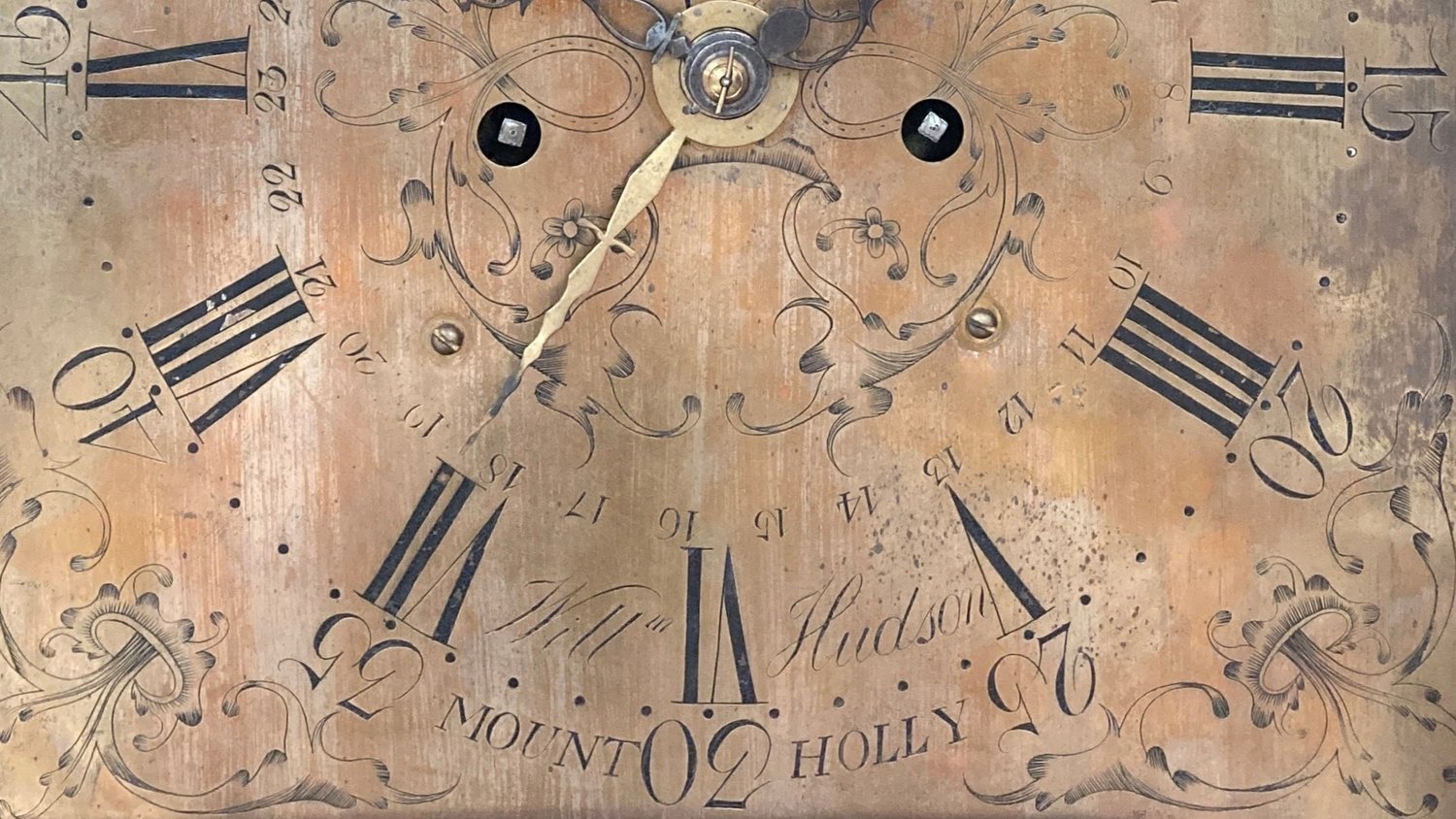
There’s certainly a lot of history on display in the Morven exhibit, billed as “the most comprehensive look ever given to the ingenious work of New Jersey clock makers.” No less than 50 tall case clocks are on view in five galleries.
The former New Jersey Governor’s Mansion was originally built by Richard Stockton, signer of the Declaration of Independence.
If you’re looking for something to do on a lovely autumn weekend, definitely consider checking it out. When the clocks begin to chime, it is quite the time machine indeed!
Henry Clay Work, “Grandfather’s Clock”
Leave a Reply to GoalsiamCancel reply