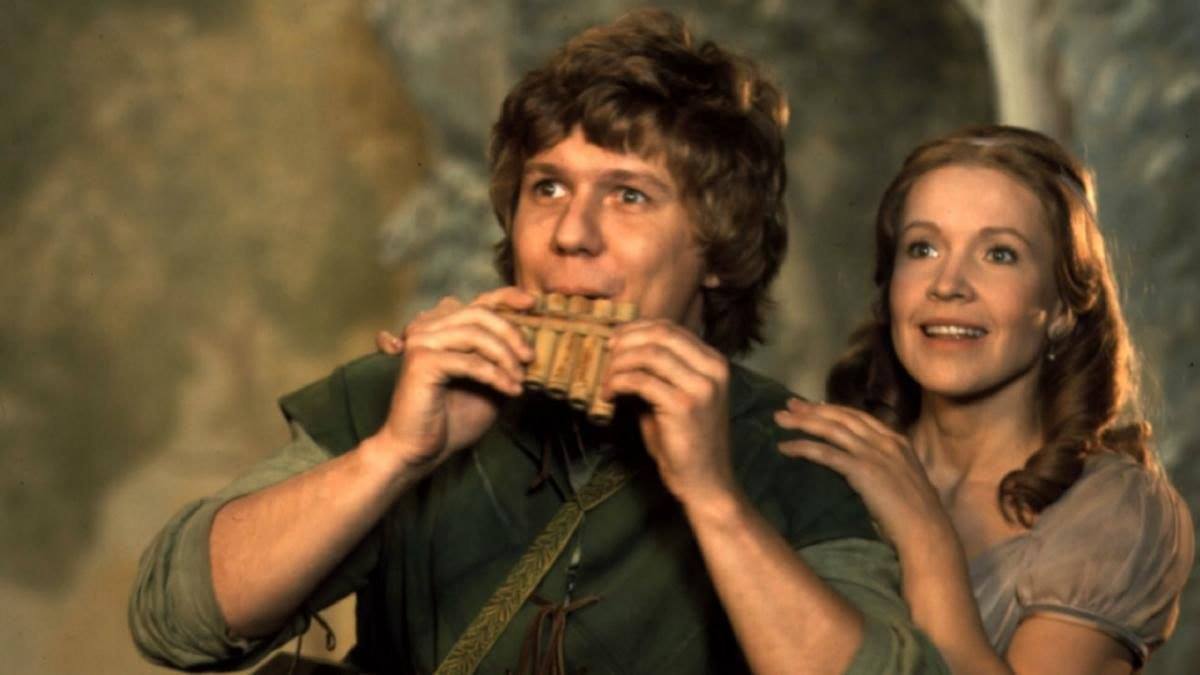
From time to time, I guess even Ingmar Bergman needed a break from existential dread. How else to explain his delightful adaptation of “The Magic Flute?” Originally intended for television, Bergman’s playful and inventive 1975 film of Mozart’s 1791 singspiel had a lot to do with setting me on the path to become an opera lover.
The conceit, to set the action as a live performance in the historic Drottningholm Palace Theater (a reproduction, since there were concerns about the actual theater safely accommodating a film crew), is disarming and inspired. All the stagecraft is laid bare. The scenery is evidently painted plywood, the animals are all people in suits, and the characters pause from time to time to hold up little signs with moralistic aphorisms on them as they sing their arias.
Bergman’s film begins outside the actual theater and then enters the hall during the overture to register the facial expressions of a audience members as they anticipate the curtain rising. Most especially the camera lingers on the eager face of an impressionable young girl. It’s evident that the director would like us to experience it all from her perspective, through a lens of innocence.
By contrast, we’re also taken backstage, to glimpse Papageno, fallen asleep and nearly missing a cue, Sarastro between acts studying the score to “Parsifal,” and one of Monostatos’ minions reading a Donald Duck comic book.
Sure, there are moments of despair even here, as a couple of the characters contemplate suicide (we also get a memorable vision of hellfire), but it’s all dispelled in a decisive victory of good over evil, an endorsement of universal brotherhood, and a resolution of unalloyed joy.
It was Mozart’s librettist, Emanuel Schikaneder, who suggested during rehearsals that Papageno stammer in excitement at the recognition of his desired Papagena, in their famous duet. Here’s what Bergman does with it.
On Mozart’s birthday anniversary, I think it’s time to revisit this film.
Behold! Here it is on YouTube.
Leave a Reply