Tag: Wolfgang Amadeus Mozart

  • Johann Michael:  The Hidden Haydn

    Johann Michael: The Hidden Haydn

    He ain’t heavy; he’s Haydn’s brother.

    Though Johann Michael Haydn’s entrance into a musical career was eased by his yet-to-be-famous older brother, he very much earned a reputation on his own merits. Michael started out as an organist and chorister (gone to Vienna at age 8; employed as an organist there by age 12). It’s said that Michael was the brighter student of the two and that his singing was more admired.

    In 1762, Michael arrived in Salzburg, where he rose through the ranks to become concertmaster and organist to Archbishop Sigismund Schrattenbach. In Schrattenbach’s service, he churned out more than 360 compositions. The Haydns met Wolfgang Amadeus Mozart in Salzburg. Naturally, his music made a great impression. What’s surprising, perhaps, is that their music made a great impression on him, as well.

    For years, Michael’s Symphony No. 26 was misidentified as Mozart’s Symphony No. 37. Mozart had borrowed the work to perform in Linz. On another occasion, Mozart stepped up to fulfill one of Michael’s commissions (anonymously) when Michael was too ill to do so himself. When he came to write his Requiem in 1791, Mozart clearly remembered the requiem mass Michael had composed some 20 years earlier on the death of his employer.

    For his part, Mozart’s father, Leopold, disapproved of Michael’s heavy drinking. Perhaps that only made him all the more appealing to his son.

    Joseph Haydn also thought very highly of his brother’s music. He found his sacred works to be particularly effective, bearing an intimate and devotional stamp in contrast to his own more secular, monumental approach. At a point, Michael received a job offer from Joseph’s former boss, Prince Nikolaus Esterházy, but he opted to remain in Salzburg. He would die there at the age of 68.

    This summer’s Bard Music Festival, “Mozart and His World,” offered rare opportunities to hear Michael Haydn’s Requiem and the opening movement of his Symphony No. 26, long attributed to Mozart as his Symphony No. 37. Mozart only wrote the intro; the rest is hidden Haydn.

    Happy birthday, JMH.
    ________________________________________

    FUN FACT: Franz Joseph and Johann Michael had a still younger brother named Johann Evangelist. He was a tenor, whom the family nicknamed Hansl (without the “e”).

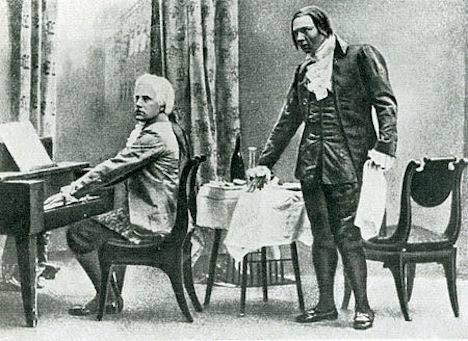
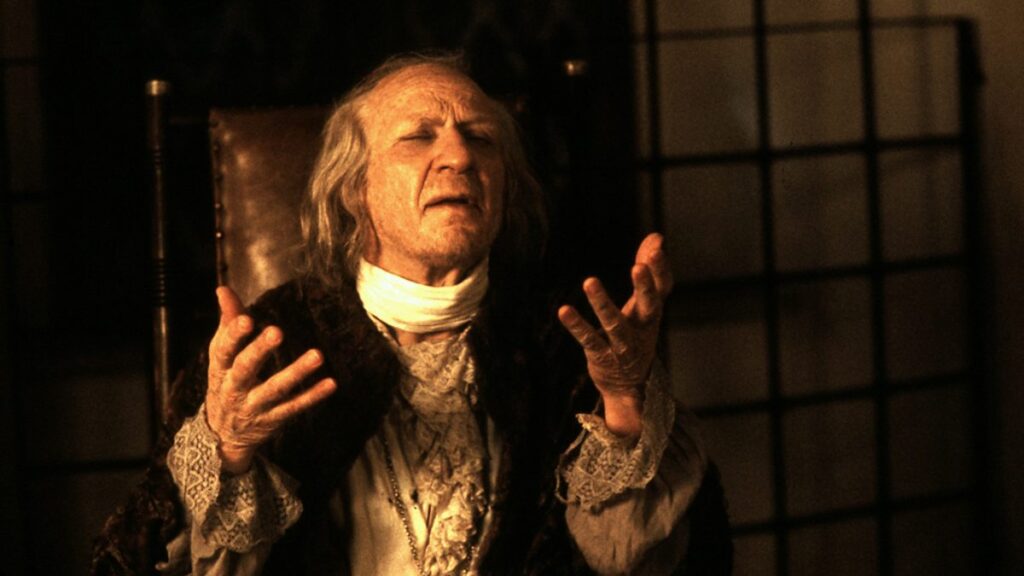
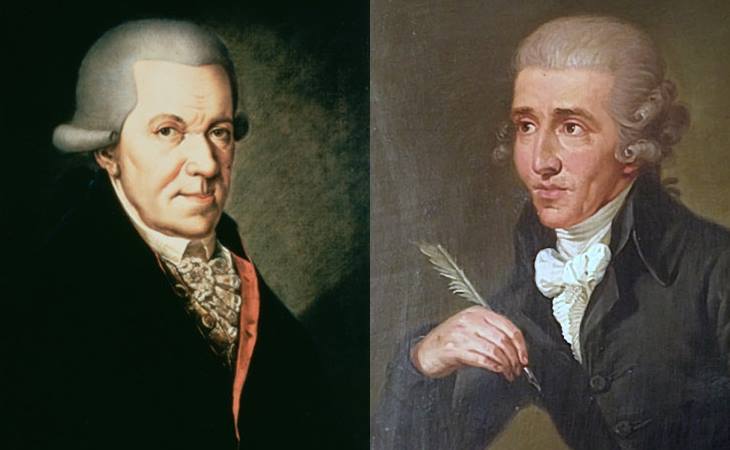
    IMAGES: Those talented Haydn boys, Michael (left) and Joseph, knocking out another symphony
  • Tim Curry:  From Frank N. Furter to Mozart (With a Digression on Frank Langella’s Dracula)

    Tim Curry: From Frank N. Furter to Mozart (With a Digression on Frank Langella’s Dracula)

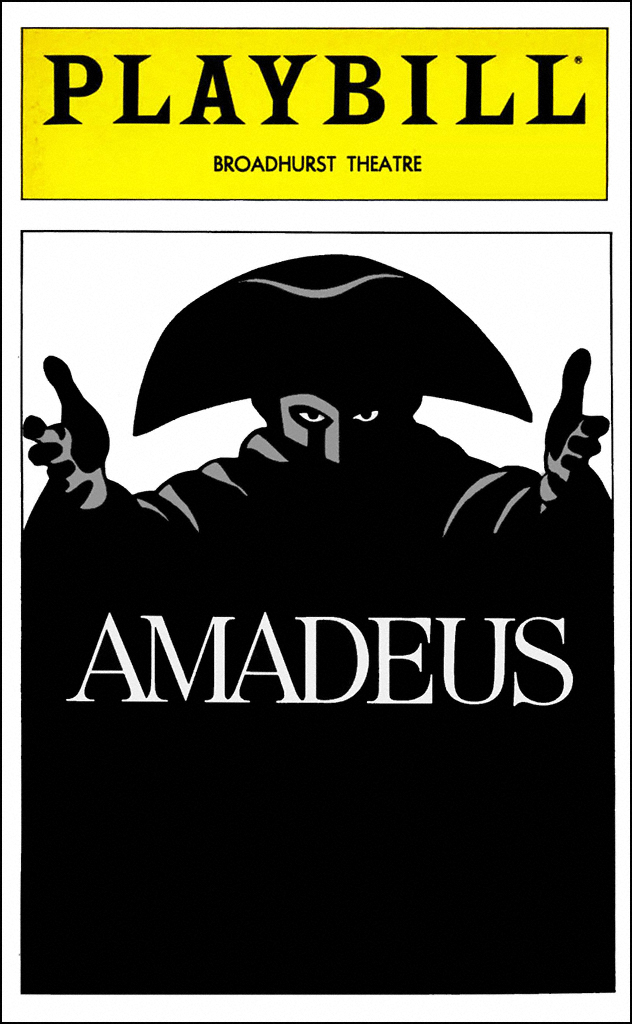
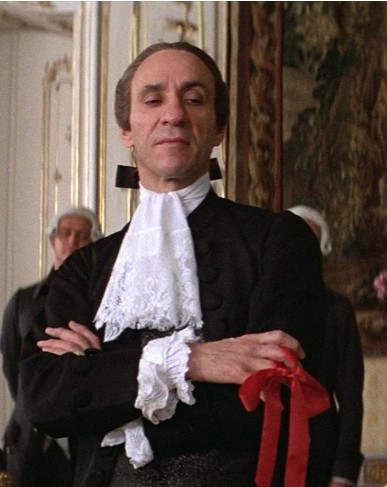
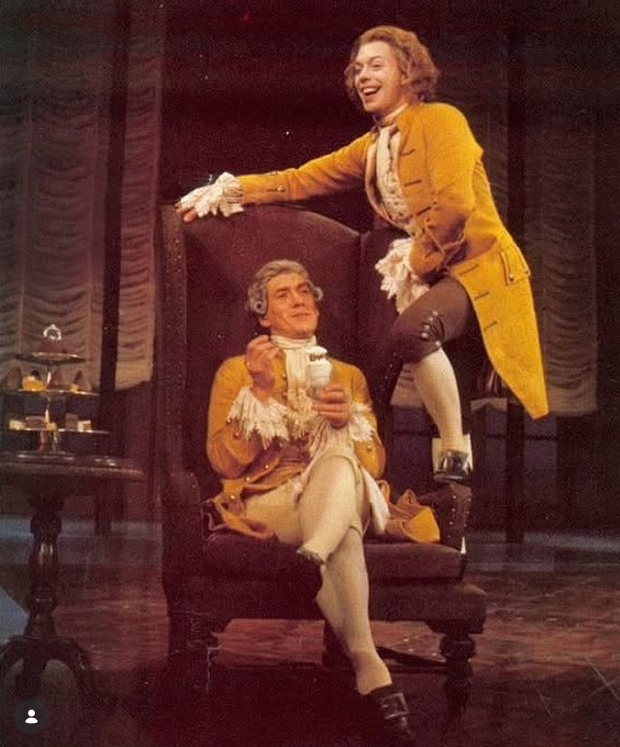
    And now Tim Curry is gone. He’ll always be remembered for his audacious turn as Frank-N-Furter, but here he is as Mozart, with Ian McKellen as Salieri, in “Amadeus.” This production of Peter Shaffer’s play opened on Broadway in December 1980, its U.S. debut, also featuring Jane Seymour as Constanze. “Amadeus” was first presented in London in 1979, with Paul Scofield as Salieri and Simon Callow as Mozart. Curry’s death was announced yesterday. He was 80 years old.

    There are a few Broadway shows I missed that I would have loved to have seen. In 1980, I was still basically a kid, and if my parents didn’t take me to see something, I didn’t see it. Thankfully, we did go to a few shows a year, mostly musicals, though my parents went to more (which I don’t begrudge them!). Given my burgeoning interest in classical music (I made them listen to a cassette of the “Eroica” Symphony on a drive in to the city), I don’t know why we didn’t see “Amadeus.”

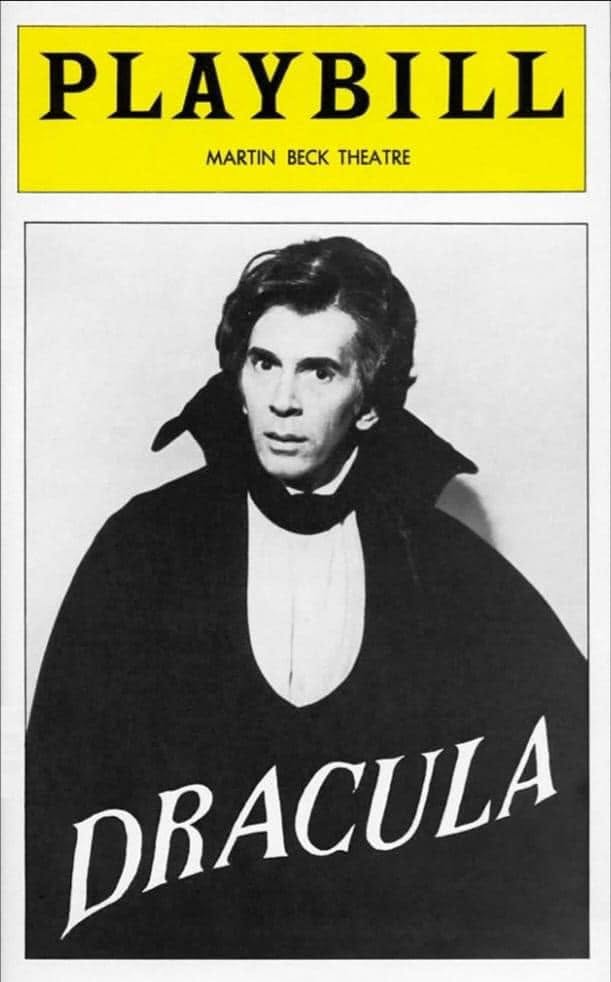
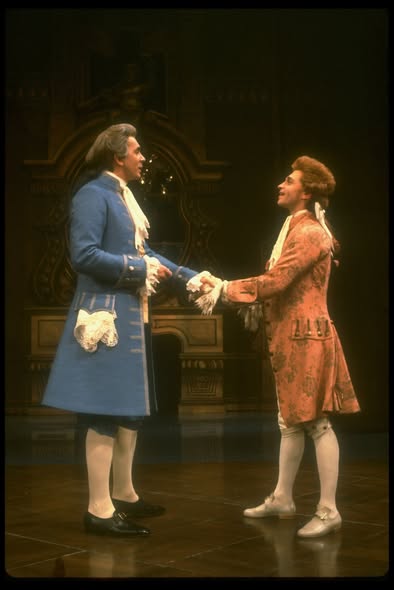
    Another show I would have gone crazy for was the Edward Gorey production of “Dracula,” with Frank Langella (who also played Salieri on Broadway, opposite Dennis Boutsikaris as Mozart). Before I was bitten by the classical music bug, I was crazy for the Universal horror pictures. My parents did see this one. I don’t know why I wasn’t invited. I can’t complain, though. I saw a lot. I just should have seen these two!

    From what I understand, there is an audio-visual recording of the McKellen-Curry “Amadeus” archived at the New York Public Library of the Performing Arts, but it is accessible only for research purposes. I don’t know if “Dracula” was documented.

    I was beyond excited when I saw the trailer for Langella’s film version (with music by John Williams!), but by all accounts, the Broadway show was the one to see. The film was viewed as a disappointment (and, Langella aside, it is), but on Broadway it was a sensation, with Tony Awards for Gorey’s costume designs and for “Most Innovative Production of a Revival.”

    Bela Lugosi appeared in the original Broadway production in 1927, 50 years earlier. Of course, Lugosi went on to star in the classic 1931 film and was typecast as a horror actor for the rest of his life.

    You’ll find images of the “Amadeus” Playbill at the link:

    https://playbill.com/production/amadeus-broadhurst-theatre-vault-0000002018

    Langella and Boutsikaris in “Amadeus”

  • Antonio Salieri:  Sustained by Centuries of Notoriety

    Antonio Salieri: Sustained by Centuries of Notoriety

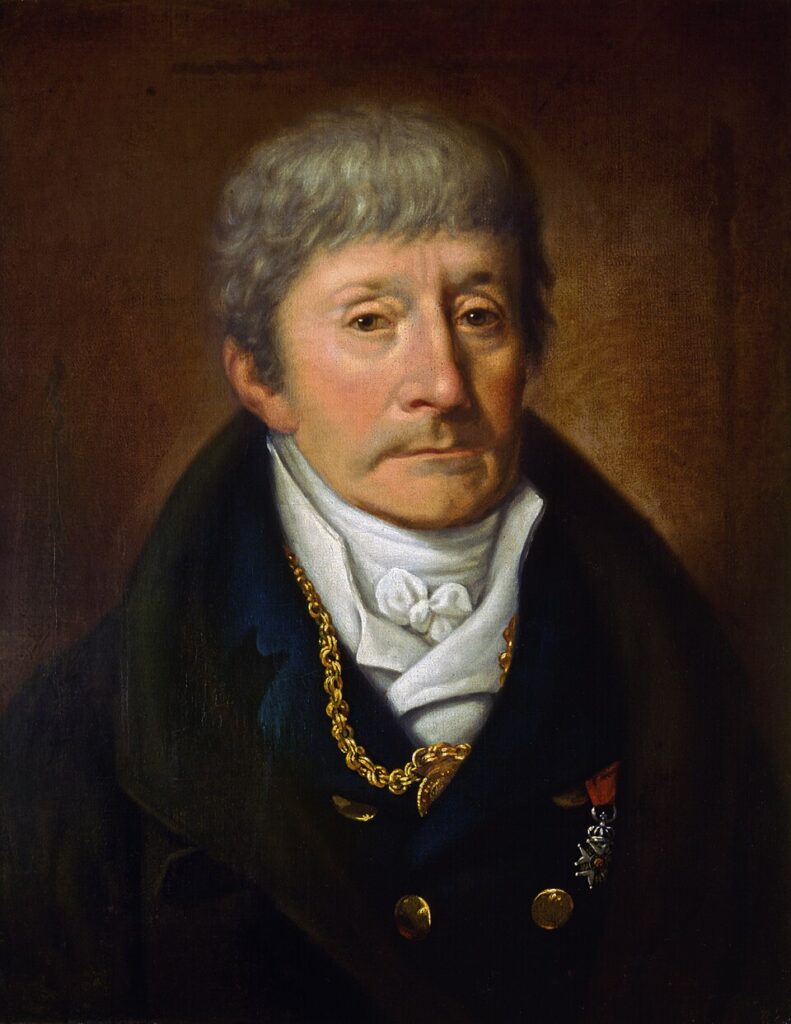
    In 1830, roughly 150 years before Peter Shaffer’s “Amadeus,” Alexander Pushkin seized onto the rumor that Antonio Salieri poisoned Mozart, for his poetic drama “Mozart and Salieri.” To put it in historical context, Salieri had died only five years earlier, at the age of 74, outliving Mozart by nearly 34 years. (Mozart died at 35 in 1791.) How did the rumor come about? Well, Mozart himself started it.

    Symptoms of the composer’s final illness were noted during the first performance of his opera “La Clemenza di Tito,” when he was observed by a friend to be pale and sad. When Mozart returned to Vienna to continue work on his Requiem, he remarked to Constanze, his wife, that he suspected he had been poisoned – with aqua toffana, a slow-acting arsenic-based agent – at least according to her recollections 25 years later, in 1824. However, such a crime would have required repeated doses, and Mozart subsequently waffled on the assertion. What’s certain is that three months later, he was dead.

    Nobody knows the whereabouts of Mozart’s body, so we can’t dig up his remains and do forensic testing (thank goodness), but his physician dismissed poisoning as a cause, with confidence.

    Ironically, Salieri actually did confess to Mozart’s murder, but he did so in an unbalanced frame of mind. He was slipping into dementia, haunted by the rumors, and even attempted suicide (only providing more grist for the mill). In more lucid moments, he repeatedly, vehemently denied it.

    The actual relationship between the two was much more nuanced, significantly less bitter and more collegial. For his part, Salieri revived “The Marriage of Figaro.” He was also responsible for arranging first performances of Mozart’s Piano Concerto No. 22 (K. 482), the Clarinet Quintet, and the Symphony No. 40. He was full of praise for “The Magic Flute.” He also took Mozart’s younger son Franz Xaver as a pupil. (Salieri’s other students included Beethoven, Hummel, Czerny, Schubert, and Liszt.)


    I’ve never actually read Pushkin’s “Mozart and Salieri” (also the basis for Rimsky-Kosakov’s one-act opera of 1897). It’s only ten pages long in my Modern Library edition of Pushkin poems, prose & plays. Is it disrespectful to read it on Salieri’s birthday?

    Hey, in 1830, Salieri was beyond feeling a thing. As far as I’m concerned, artists of Pushkin’s and Shaffer’s abilities can play with historic fact if it’s in the service of expressing greater truths. Where would Salieri be if not for “Amadeus?” Now everyone knows his name, and many of his works have been revived and recorded, thanks to his enduring notoriety.


    Compare this with actual composer-murderer Carlo Gesualdo. Your average person on the street has no idea who Gesualdo is. He still awaits his Peter Shaffer.

    FUN FACT: The relationship of Mozart and Salieri is also dealt with in Albert Lortzing’s singspiel “Szenen aus Mozarts Leben” (“Scenes from Mozart’s Life”) of 1832, for which Lortzing repurposes Mozart’s music.

    Here’s a 1958 Russian television production of Pushkin’s play, the only one of his dramatic works to be staged in his lifetime, closed captioned in English. Pushkin died from a wound received in a duel at the age of 37.


    Russian film of Rimsky-Korsakov’s opera (without subtitles)


    U.S. performance work from the 1980s, sung in English


    Beethoven’s Variations on Salieri’s “La stessa, la stessissima”


    The theme, from Salieri’s “Falstaff”


    Overture to “Les Horaces”


    Concerto for Flute, Oboe and Orchestra


    “Das Lob der Musik” (“The Praise of Music”)


    A Mozart and Salieri collaborative effort, the cantata “Per la ricuperata salute di Ofelia”


    “De Profundis”


    “I absolve you.”


  • Where Are the Saint-Saëns Concertos of Yesteryear?

    Where Are the Saint-Saëns Concertos of Yesteryear?

    For some reason, I’ve really been hooked on the Saint-Saëns piano concertos lately. I don’t know why. I’d just been itching to hear them again. I used to have ample opportunities to play them on the air, along with a great many other Romantic concertos by lesser-known composers, but now that I don’t have a regular live air shift, opportunities haven’t been so abundant. It’s even worse for shorter works. Who puts in a CD to listen to a three or even a ten-minute track? It really puts a crimp in my holidays, especially, I can tell you. There’s so much great music I used to share, that I only really ever listened to myself while weaving it into my radio shows.

    Anyway, back to Saint-Saëns. I’ve had a double-disc set with me whenever I’ve been in the car for the past few weeks, and it has been a delight to have them in my life again. The Concerto No. 2 is the most performed and recorded, I think, or it was. Sometimes you would see No. 4 (often coupled with 2). And No. 5 gets a boost, no doubt because it’s got a nickname (the “Egyptian,” written while the composer was on a trip to North Africa, in the finale riffing on some exotic scales). But I think the only ones I have encountered in concert are 2 and 5. Why are they not performed more often?

    Some enterprising music director would do well to perhaps swap out the overexposed – and, in my opinion, much weaker – Chopin concertos. For that matter, for as fine as they are, the Ravel concertos could probably use a rest. And what’s the deal with Liszt’s Piano Concerto No. 2? For as much as I admire Liszt, do we really need to hear it so often? No. 1 is so much better. Rachmaninoff? Forget about it. I love the concertos, as do audiences everywhere, but give somebody else a chance already.

    After all, Saint-Saëns has already proved himself. His “Organ” Symphony is played everywhere and for good reason: it elicits ecstatic responses from listeners. But “Carnival of the Animals?” A fun piece, well-crafted, and full of sly wit, but again, how many times do we have to hear it, at the expense of all the other fun, well-crafted, and slyly witty pieces he composed? There are an awful lot of them that we never, ever hear, especially in concert.

    Camille Saint-Saëns (1835-1921) should require no lance-breaking from me. A child prodigy who lived to a venerable age, there is not one phase of his maturity (which started early) that does not reward exploration.

    Perhaps the reason the concertos popped into my head was because of the proximity of the Bard Music Festival. I’ve been to at least some of 13 of the last 18 festivals. Of course, I can never get enough of Sibelius, Vaughan Williams, Korngold, Martinů, and even Rimsky Korsakov, all given the Bard treatment in recent years. But thinking back, one of my favorite festivals turned out to be the one devoted to Saint-Saëns in 2012. It was just full of revelations and, all around, a really good time. I can’t believe it was 14 years ago!

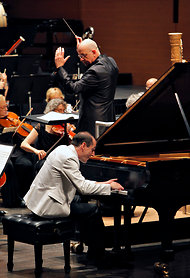
    Anyway, on one of the concerts, Danny Driver, who is a Bard stalwart with an active concert career and a sizable discography (recording for, among other labels, Hyperion), was the soloist on one of the concerts in the “Egyptian” concerto, with Leon Botstein conducting the American Symphony Orchestra. I found the audio posted online. You can hear just how much the audience enjoyed it from their spontaneous cries afterward. I’ll share the link to the last movement below.

    Unfortunately, for as seldom as the concertos are performed, we almost never hear Nos. 1 & 3. And they are wonderful. Do they plumb the depths of existence? Of course not. But they are great fun. One is consistently tickled by the level of craftsmanship, the melding in his music of French and German influences, the way he plays with structure, and the seeming effortlessness of the writing. I know I’m flirting with cliché in saying so, but it’s as if he’s stringing pearls. No. 1 is so uplifting and heroic. Somebody bring it back, please!

    But of course, these are the assessments of one who also hopes someday to be able to hear the Josef Rheinberger concerto!

    The Bard Music Festival, this year devoted to “Mozart and His World,” will conclude this afternoon at Bard College at 3:00 EDT with a complete semi-staged performance of “The Abduction from the Seraglio.” The program will also be available for livestreaming. You’ll find more information at the link!

    https://fishercenter.bard.edu/what-we-do/bard-music-festival/

    Danny Driver plays Saint-Saëns at Bard

    https://www.youtube.com/watch?v=mPqpIHHAmrs&list=RDmPqpIHHAmrs&start_radio=1

    I may get around to sharing some of my other favorite neglected Saint-Saëns in the comments later. You must feel free to share some of yours as well!

  • Wolf Pack:  Friends and Associates of Wolfgang Amadeus Mozart on “The Lost Chord”

    Wolf Pack: Friends and Associates of Wolfgang Amadeus Mozart on “The Lost Chord”


    This week on “The Lost Chord,” with my head full of Mozart from this year’s Bard Music Festival (“Mozart and His World,” at Bard College in Annandale-on-Hudson, NY, through tomorrow), I recall a show I put together in 2006 of music composed by a few of Mozart’s friends and associates.

    The program includes a Trio in F major for three basset horns attributed to Anton Stadler, the clarinetist who inspired Mozart to write his great masterworks, the Clarinet Concerto and the Clarinet Quintet. Mozart regarded Stadler as an intimate friend. However, it’s been suggested Stadler may have betrayed that trust. In fact, there’s a letter from Mozart’s wife, Constanze, which reveals the clarinetist claimed to have lost some Mozart manuscripts when his suitcase stolen. Among them – some trios for basset horn! You connect the dots.

    But what really reminded me of the show was music of Franz Xaver Süssmayr, who famously completed Mozart’s Requiem. Süssmayr’s “Sinfonia turchesca” will be featured on a Bard concert tonight at 7:00. (Concerts from the Fisher Center at Bard are available for livestream. I’ll include a link below.) The “Sinfonia turchesca” is tricked out with a battery of drums, cymbals, and triangles, to be played “in the Turkish style,” as was all the rage in those days. The Battle of Vienna of 1683 proved to be the beginning of the end of centuries of Turkish hostilities. Turkish percussion instruments were sent as diplomatic gifts to the various European courts. The Ottoman influence informed such works as Mozart’s “Turkish” Concerto, “The Abduction from the Seraglio” (to be heard complete at Bard tomorrow, with livestream option), Haydn’s “Military” Symphony, and the janissary interlude in the finale of Beethoven’s 9th.

    Finally, we’ll hear selections from a rediscovered singspiel by the company that gave us “The Magic Flute,” including the first Tamino (composer Benedikt Schack), the first Sarastro (Franz Xaver Gerl), “Flute” conductor (Johann Baptist Henneberg), “Flute” impresario, librettist, and Papageno (Emanuel Schickaneder), and Mozart himself. The story shares in common with “Flute” a divided family – in this case, two brothers – representing the powers of good and evil; parallel romantic couples of contrasting dispositions – one spiritual, and the other of an earthier bent; temples and purification rituals; an enchanted weapon; and arcane Masonic and alchemical symbolism.

    “The Philosopher’s Stone” was recorded in 1999 by Martin Pearlman and Boston Baroque for the Telarc label, and the work’s a blast. (I had the privilege to hear a few of the duets sung live at Bard last weekend.) We’ll have time for selections from Act I.

    Aaa-OOOO! It’s an hour of music by those who ran wild with Wolfgang Amadeus Mozart. I hope you’ll join me for “Wolf Pack” on “The Lost Chord,” now in syndication on KWAX Classical Oregon!

    ——-
    Clip and save the start times for all three of my recorded shows:

    PICTURE PERFECT, the movie music show – Friday at 8:00 PM EDT/5:00 PM PDT

    SWEETNESS AND LIGHT, the light music program – Saturday at 11:00 AM EDT/8:00 AM PDT

    THE LOST CHORD, unusual and neglected rep – Saturday at 7:00 PM EDT/4:00 PM PDT

    Stream them, wherever you are, at the link!

    https://kwax.uoregon.edu

    For livestreams of “Mozart and His World from the Fisher Center from Bard (concerts from Olin Hall, across campus, are unavailable), visit:

    https://fishercenter.bard.edu/what-we-do/bard-music-festival/

    ——-

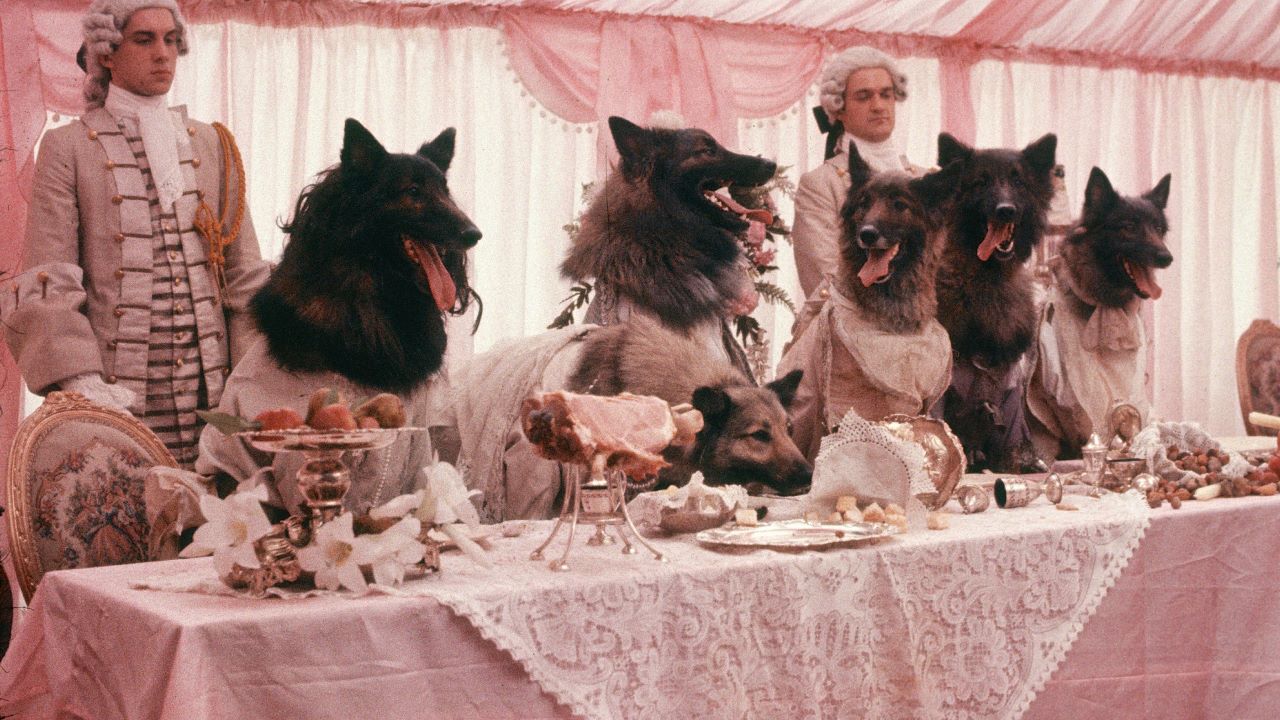
    Still from “The Company of Wolves” (1984)

Tag Cloud

Aaron Copland (94) Beethoven (95) Composer (114) Film Music (148) Film Score (143) Film Scores (255) Halloween (97) John Williams (196) KWAX (232) Leonard Bernstein (105) Marlboro Music Festival (125) Movie Music (163) Mozart (91) Opera (215) Philadelphia Orchestra (90) Picture Perfect (174) Princeton Symphony Orchestra (110) Radio (90) Ross Amico (244) Roy's Tie-Dye Sci-Fi Corner (290) The Classical Network (101) The Lost Chord (269) Vaughan Williams (107) WPRB (397) WWFM (881)

DON’T MISS A BEAT

Receive a weekly digest every Sunday at noon by signing up here


RECENT POSTS