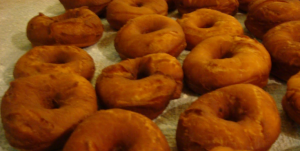
Fasnacht Day! That happy day when I’d blow into the house, an oblivious boy, and be arrested by the smell of freshly made doughnuts. I never understood when it would happen, or its significance. All I knew is that I’d come home one day to find my grandmother frying the most heavenly treats.
Why fasnacht? When I asked, my grandmother didn’t know. I suppose it’s something she did by rote. But go ahead and look it up on the internet. A fasnacht is a fried doughnut served up on Shrove Tuesday (Fat Tuesday, if you prefer), on the eve of Lent. I guess traditionally it was a way to clear out all the tasties that, as a good Christian, you’re not supposed to eat again until Easter. Be that as it may, I would think any good done by the fast would be offset by the indulgence of so much fried lard up front.
I miss those doughnuts. Now THOSE were doughnuts. The closest I’ve been able to find out in the real world are the Italian zeppoli. Not quite the same – and apparently the zeppoli can vary – but they have a similar, unhealthy, fried, powdered sugary goodness. If you find a light and puffy zeppola, it would bear little resemblance to my grandmother’s fasnachts, which were always quite cakey.
My grandmother was an undistinguished cook, but boy could she make fasnachts.
I know I’m mixing traditions, but “Laissez les bon temps roulez!”
“Mardi Gras” by American composer Edward Joseph Collins:
Roman Carnival antics by Giovanni Croce:
PHOTO: You’ll find fasnachts in all varieties, but these best resemble my grandmother’s recipe.
Leave a Reply