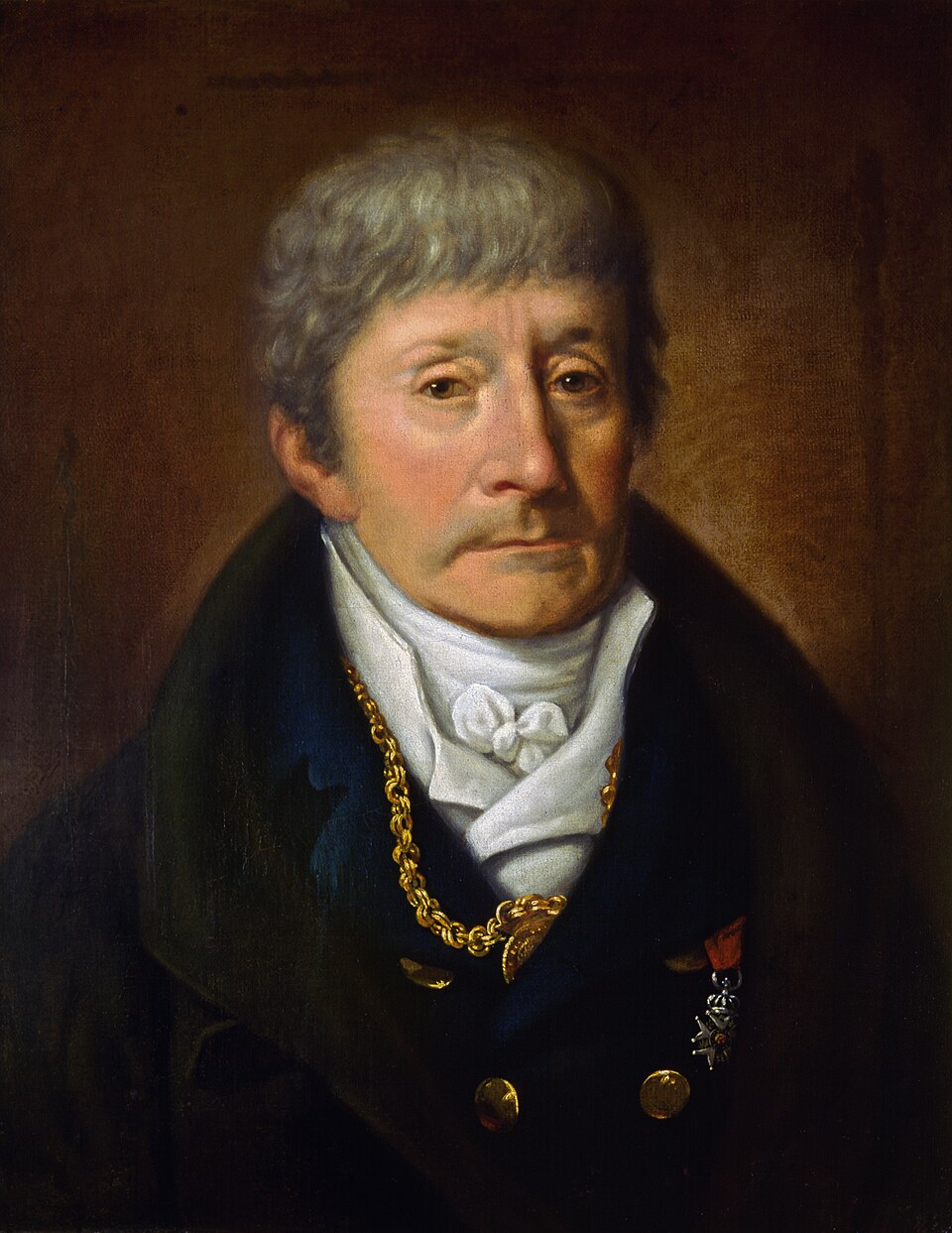
Today’s post began as a response to a question by Jon Haag at the bottom of yesterday’s remarks about the Bard Music Festival, in which I shared news of some newly-rediscovered music by Antonio Salieri: “Do these new found works bring a better appreciation of Antonio’s works or is that still up for debate?”
But of course, I got carried away – enough so that I thought, “Hey, I could use this for today’s post.” With that in mind, here are my two cents about Salieri.
*****
I’m not sure how much is up for debate, really, once people’s awareness is expanded beyond “Amadeus” – a great play and a great film, but reminiscent of my remark on your Freddie Mercury biopic comment the other day, the figure of Salieri was leveraged for dramatic purposes. The historic Salieri was never the envious, scheming hack of Peter Shaffer’s imagination. However, thanks to “Amadeus,” that’s how he is widely perceived.
Ironically, if not for the widespread success of the movie, most people would probably never even have heard of him. So poor Antonio has Shaffer to thank, at least, for making him a household name.
Incidentally, Shaffer was not the first to tell this story. Rumors of Salieri having contributed to Mozart’s early demise have followed him down the centuries. It was the subject of a play by Pushkin and an opera by Rimsky-Korsakov. But it’s all bunk.
Happily, the resulting prurient interest also spurred a revival of performances and recordings of his music. And you know what? The music is not half-bad. Don’t pay attention to the blithe dismissals of classical music know-it-alls (as the genre surely does attract its share of bitchy wisenheimers).
Was Salieri as “good” as Mozart? Of course not. But who was? His music may lack the facility, invention, and humanity of Mozart at his finest. But Salieri was certainly capable, he could delight or be dramatic, and he could write a good tune. I don’t claim to be a Salieri expert, but I have heard more of his music than most.
As for the rediscovery of these 149 pieces, I very much doubt they will change his standing, as it were, but yes, more information always brings a better appreciation, or at least a more complete understanding. It’s seldom that a musical manuscript is discovered that completely revolutionizes anyone’s perception of a composer. It’s more like filling in a detail on a portrait or finding a missing puzzle piece.
These particular works are interesting in that they reveal something of his friendship with confidant and kindred spirit Prince Joseph von Dietrichstein. The pieces were copied in the composer’s own hand, cherrypicked for inclusion in four red leatherbound volumes, presumably to commemorate works of his that were performed at the prince’s gatherings.
Lost works by major composers actually turn up with surprising frequency. A “new” song by Ralph Vaughan Williams was discovered only a few weeks ago. A couple of years ago, there was a waltz attributed to Chopin. The biggest one in recent memory was the rediscovery of a work by Stravinsky, written in memory of his teacher, Rimsky-Korsakov. It’s no masterwork, but it’s interesting, in light of the two composers’ relationship. But it’s still an early work and doesn’t particularly sound like the influential composer Stravinsky was soon to become.
Once in a while, somebody thinks they landed a big fish. In the early 20th century, a new “Beethoven” symphony was found. Of course, it turned out to be by somebody else. In the earlier ‘80s, there was a hullabaloo about a rediscovered Mozart symphony – also probably not by him, but I like it.
Salieri composed 37 operas, in addition to orchestral works, concertos, chamber music, and sacred pieces. His own music aside, he was an influential figure, as Imperial Kapellmeister at the Habsburg court in Vienna. Among his pupils were Beethoven, Schubert, Liszt, and Mozart’s son, Franz Xaver.
Far from blackballing his colleague, Salieri revived “The Marriage of Figaro.” He was also responsible for arranging first performances of Mozart’s Piano Concerto No. 22 (K. 482), the Clarinet Quintet, and the Symphony No. 40. He was full of praise for “The Magic Flute.”
The two composers even collaborated on a cantata, “Per la ricuperata salute di Ofelia” (“For the recovered health of Ophelia”), rediscovered in 2016. The cantata was written in 1785, to celebrate the recently-convalesced soprano Nancy Storace, who was soon to create the role of Susanna in Mozart’s “Figaro.”
This will be one of the works performed at this year’s Bard Music Festival, “Mozart and His World” – as mentioned in yesterday’s post, archived at the link:
https://rossamico.com/2026/06/03/mozart-and-his-world-including-salieri-at-the-bard-music-festival/
——-
Salieri, Concerto for Flute, Oboe and Orchestra
Mozart and Salieri collaborative effort, the cantata “Per la ricuperata salute di Ofelia”
Rediscovered “Odense” Symphony, attributed to Mozart
Stravinsky’s “Funeral Song”
Waltz attributed to Chopin
News of Salieri rediscoveries, now in English
Leave a Reply