No doubt you follow this page because of our shared interest in classical music, classic movies, or classic books. Collectively, these form the core of my being.
However, I also happen to love animals. I mean, like crazy love. If they’re not dangerous to humans, I allow spiders to roam free, and I won’t kill a mosquito if I can help it. I don’t care if you’re a chipmunk or a skunk, you are welcome in my yard. I am thankful to abut a stretch of woodland and open space, so I get my share of raccoons, foxes, and deer.
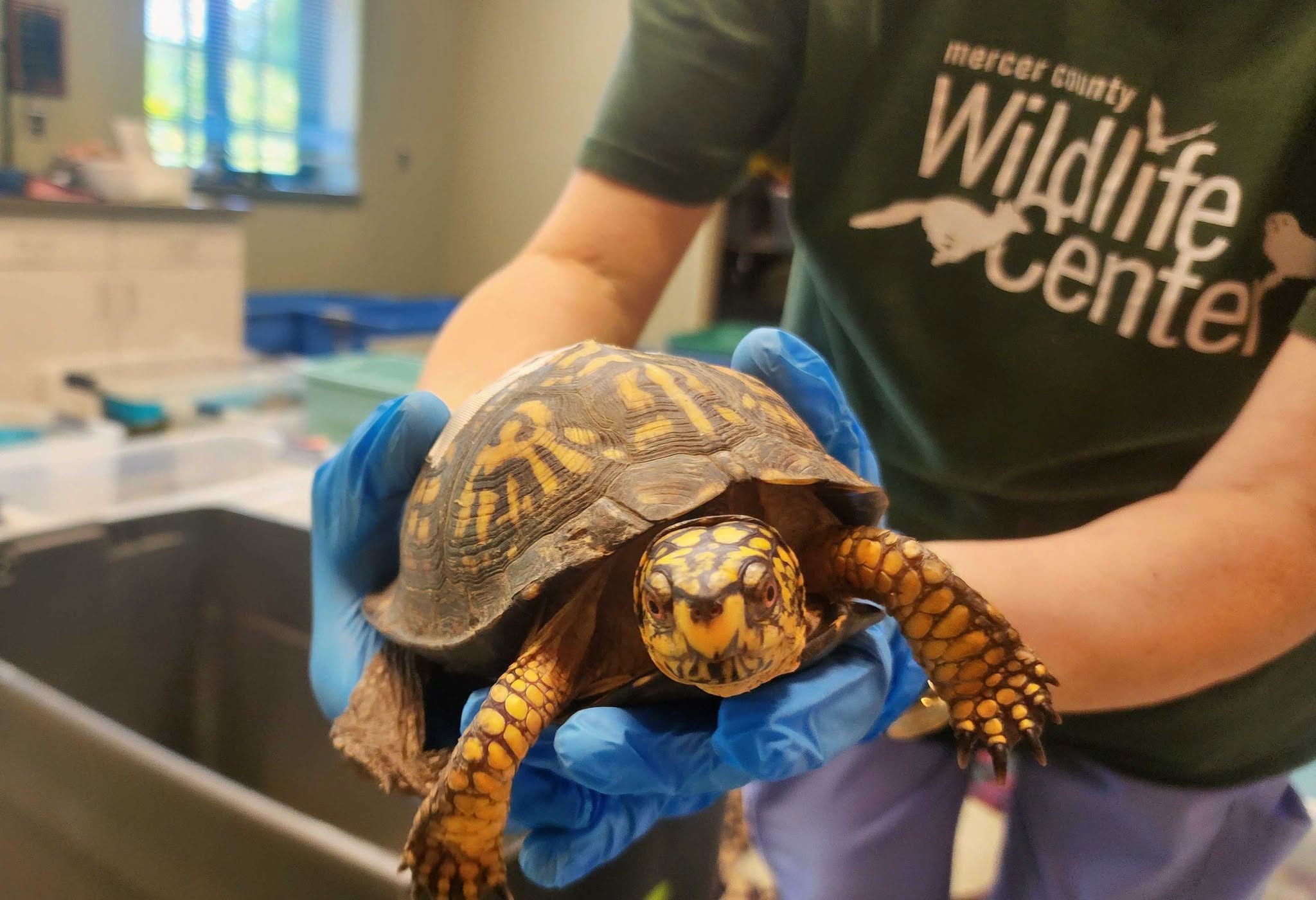
For a number of years now, I’ve also volunteered at Mercer County Wildlife Center. They do great work there, and they work HARD, rehabilitating injured or immature raccoons, squirrels, opossums, groundhogs, rabbits, skunks, deer, snakes, waterfowl, raptors, in fact all manner of birds, bats, foxes, and a whole lot more – just about anything that would live locally in the wild (except for wolves, bobcats, and bears!). Among these are turtles, most of which are housed in what is known as the Shell Shack.
Well, the Shell Shack just got a lot cozier, as the center recently took in more than 150 box turtles, dumped on a river bank in Cranford, NJ. If you haven’t heard about it, google “Cranford turtles.”
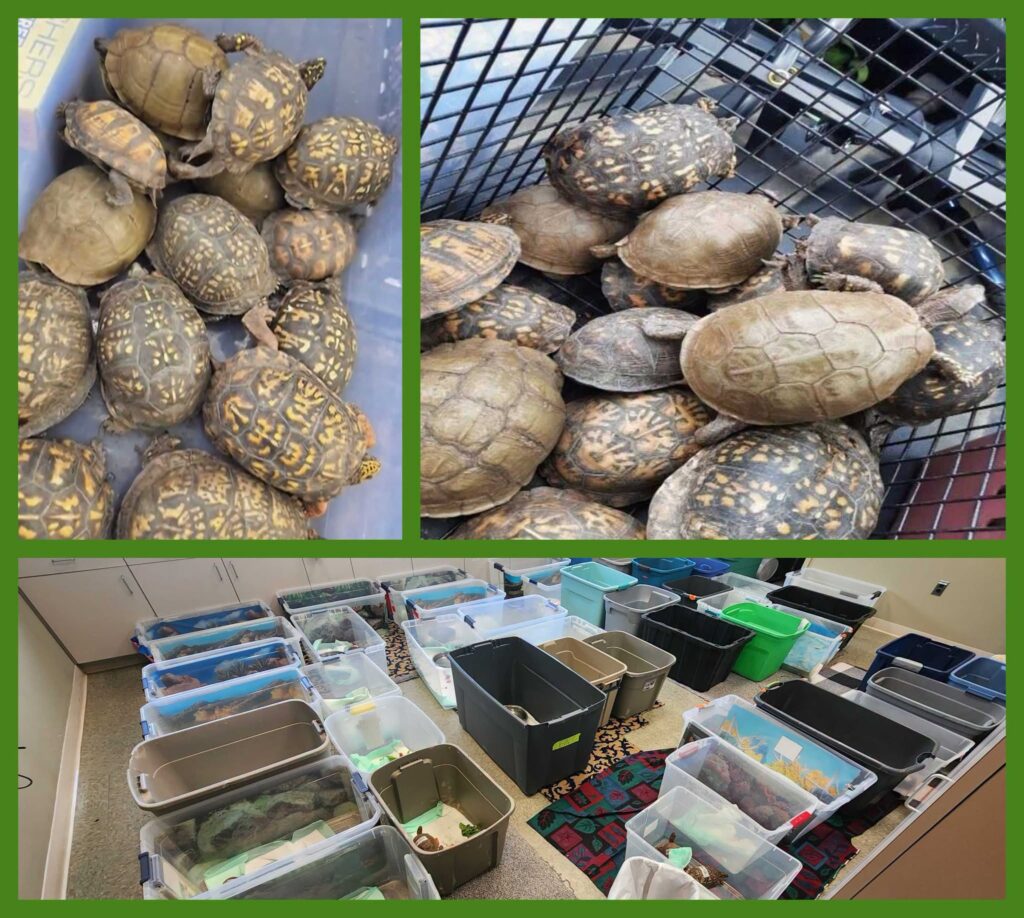
Nobody knows how or why they got there. While a fair number of them are Jersey box turtles, many are non-native to the state. International wildlife trafficking is a thing, a lucrative if unscrupulous business, and apparently there’s a huge market for American turtles in the Far East. Or it could have been an insane hoarder. Who knows? What’s evident is that somebody had to get rid of their collection.
Whatever their secret origin, Mercer County Wildlife, good folks that they are, agreed to take them in and have worked hard to accommodate the sudden influx. The count has swollen to 167 turtles!
I can’t convey strongly enough what an important resource this wildlife rehabilitation center is. It enlists roughly 85 volunteers – joined by student interns in the summers – largely, but not exclusively, for feeding and cleaning. (And how rewarding is it to syringe feed a baby squirrel?) The staff fields about 10,000 phone calls annually. The release rate of successfully rehabilitated animals stands at around 70 percent. That’s about 3,000 animals a year saved.
Otherwise healthy animals that cannot be returned to the wild on account of permanent injuries – for example, an eagle that can’t fly well enough to hunt, and an otherwise exuberant turtle who had been mishandled over a long period before being turned in (but now zips happily around a huge tank in the lobby) – are kept for educational outreach.
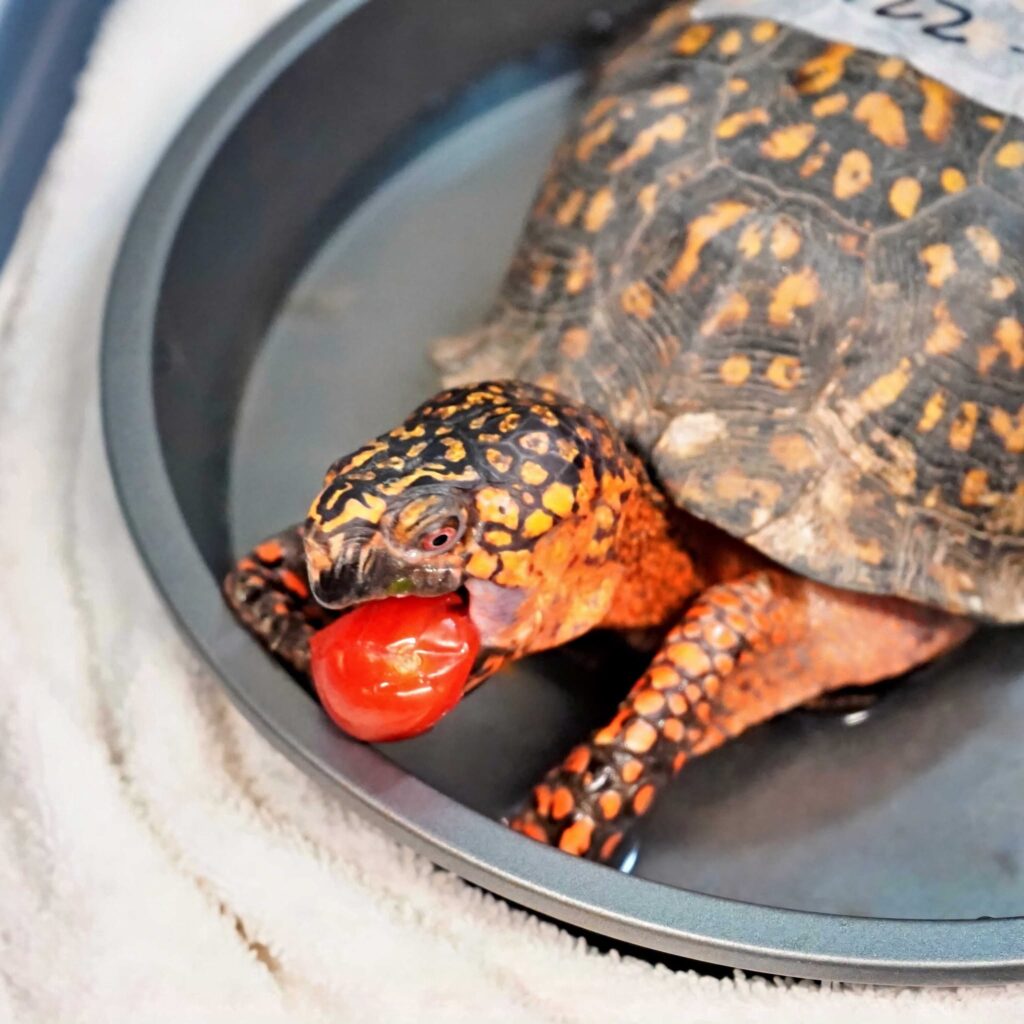
The Cranford box turtles are all set up now, but they still require maintenance and feeding, as do all of the other animal patients.
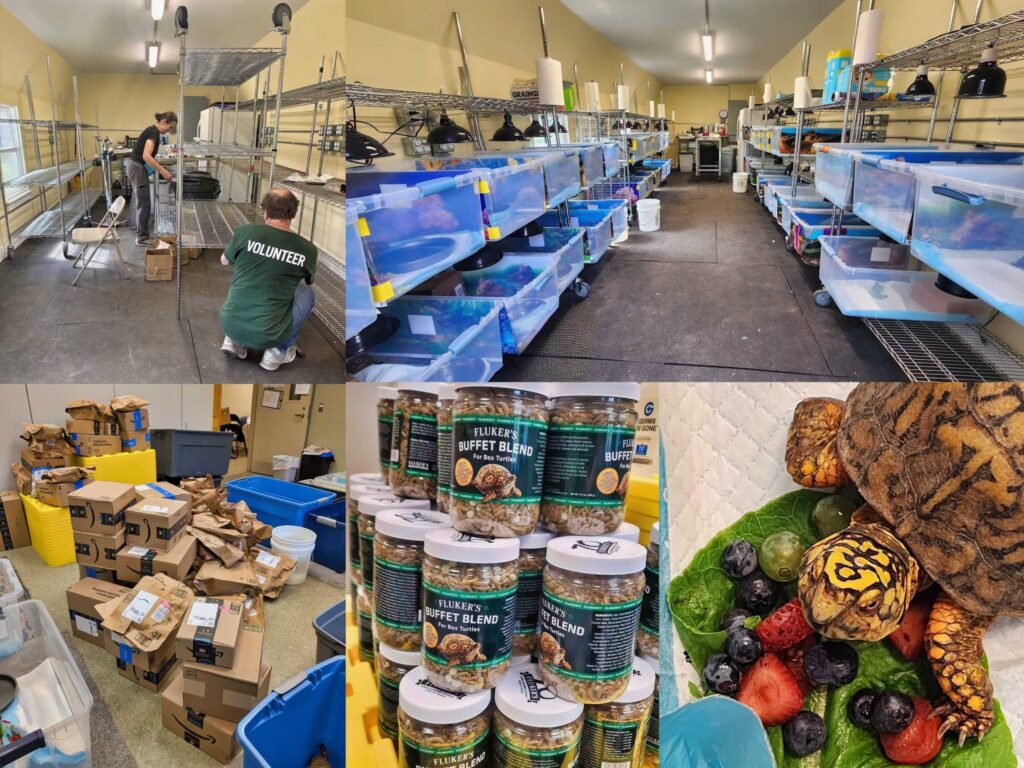
Please keep Mercer County Wildlife Center in mind when you plan your charitable giving. A donation in any amount would be welcome, much appreciated, and put to very good use. Thanks for anything you do to help and protect our wildlife!
Donate here: https://www.wildlifecenterfriends.org/donate
Click the tab at the top of the page at the link for turtle updates and photos!
Leave a Reply