Category: Daily Dispatch

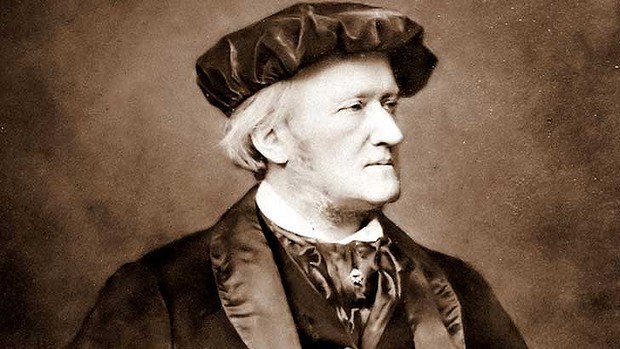
  • Wagner A Love-Hate Birthday Serenade

    Wagner A Love-Hate Birthday Serenade

    “Of all the bête, clumsy, blundering, boggling, baboon-blooded stuff I ever saw on a human stage, … and of all the affected, sapless, soulless, beginningless, endless, topless, bottomless, topsiturviest, tongs and boniest doggerel of sounds I ever endured the deadliness of, that eternity of nothing was the deadliest, so far as the sound went. I never was so relieved, so far as I can remember in my life, by the stopping of any sound – not excepting railway whistles – as I was by the cessation of the cobbler’s bellowing.”

    – John Ruskin on “Die Meistersinger”

    “For me Wagner is impossible… he talks without ever stopping. One just can’t talk all the time.”

    – Robert Schumann

    “One can’t judge Wagner’s opera ‘Lohengrin’ after a first hearing, and I certainly don’t intend hearing it a second time.”

    – Gioachino Rossini

    “I love Wagner. But the music I prefer is that of a cat hung up by its tail outside a window and trying to stick to the panes of glass with its claws.”

    – Charles Baudelaire

    “I like Wagner’s music better than any other music. It is so loud that one can talk the whole time without people hearing what one says. That is a great advantage.”

    – Oscar Wilde

    “Is Wagner a human being at all? Is he not rather a disease? He contaminates everything he touches – he has made music sick. I postulate this viewpoint: Wagner’s art is diseased.”

    – Friedrich Nietzsche

    “Every time I listen to Wagner, I get the urge to invade Poland.”

    – Woody Allen

    “I have witnessed and greatly enjoyed the first act of everything whichWagner created, but the effect on me has always been so powerful that one act was quite sufficient; whenever I have witnessed two acts I have gone away physically exhausted; and whenever I have ventured an entire opera the result has been the next thing to suicide.”

    – Mark Twain

    “Wagner’s music is better than it sounds.”

    – Edgar Wilson “Bill” Nye

    Happy Birthday, Richard Wagner (1813-1883). Tune in today to make what you will of his art, from 4 to 7 p.m. EDT, on WWFM – The Classical Network and wwfm.org.

  • Vintage Wagner on The Lost Chord

    Vintage Wagner on The Lost Chord

    Time to get out the crazy helmets. Tomorrow, May 22, is the birthday of Richard Wagner (1813-1883). This Sunday night on “The Lost Chord,” we’ll honor his legacy with a handful of historic recordings.

    American baritone Lawrence Tibbett never actually sang the role of Wotan on-stage, in the context of a “Ring” cycle. However, he did record “Wotan’s Farewell and Magic Fire Music,” magnificently, in 1934, with the Philadelphia Orchestra and Leopold Stokowski.

    Karl Muck was a victim of anti-German sentiment during his time as music director of the Boston Symphony Orchestra, which, unfortunately, happened to coincide with the First World War. Be that as it may, he was held in the highest regard by fellow musicians and thought by many to be one of Wagner’s finest interpreters. We’ll hear a fascinating 1927 recording of the Transformation music and the beginning of the Grail Scene from Act III of “Parsifal,” made at the Festspielhaus in Bayreuth. The recording employs the original bells designed by Wagner, which would be melted down by the Nazis for ammunition during the Second World War. So this will be a rare opportunity to experience the “Parsifal” Wagner actually knew. Muck was principal conductor of the Bayreuth Festival since 1903. He conducted “Parsifal” at Bayreuth 14 times between 1901 and 1930.

    Finally, we’ll return to “Die Walkure” to wrap things up on a buoyant note with Siegmund and Sieglinde’s love music from Act I, which concludes with the lovers fleeing together into the welcoming spring. Nine months later, Sieglinde gives birth to Siegfried, the saga’s hero-without-fear. Lotte Lehmann strikes sparks with legendary Danish heldentenor Lauritz Melchoir in a 1935 recording with Bruno Walter and the Vienna Philharmonic.

    The power of these performances has been undiminished by the passage of time. Join me for “Vintage Wagner,” this Sunday night at 10 EDT, on WWFM – The Classical Network and wwfm.org.


    PHOTOS: Lotte Lehmann as Sieglinde and Lauritz Melchior as Siegmund

  • Carlos Païta Rediscovered Firebrand Conductor

    Carlos Païta Rediscovered Firebrand Conductor

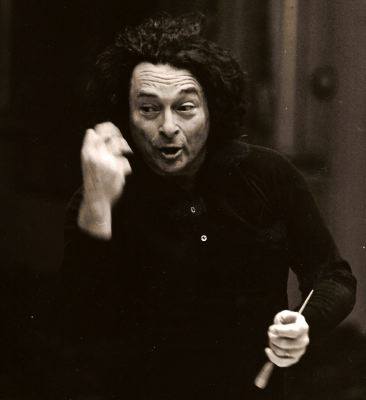
    Even somebody who knows a lot about a subject learns something new all the time. One of my latest “discoveries” is the conductor Carlos Païta (1932-2015), the Argentinean firebrand who made some breathtaking records during the era of London “Phase 4,” but has since largely fallen through the cracks.

    Païta settled in Switzerland, where he was attended to by Furtwängler’s widow, and a special label, Lodia, was founded to reissue both his studio-forged treasures and live concert recordings.

    His recordings of Wagner and Berlioz, which I discovered while sorting through a box of duplicates culled from donations to WWFM, knocked me back on my heels. Who is this guy? There is abundant evidence posted on YouTube. Païta’s conducting technique while rehearsing Beethoven’s 5th symphony is way, way over the top, but another video of his conducting Weber’s “Oberon Overture” suggests he may have dialed it down a bit during his actual concerts. His Janáček is stunning.

    In fact, everything I have sampled with him has been exceptional, yet somehow this musical colossus never settled in with a major orchestra. How could he not have enjoyed a major career?

    Païta would have been 85 this year. Head over to YouTube, search under his name, and prepare for a “wasted” Saturday.

    Or tune in to WWFM – The Classical Network on Monday, from 4 to 7 p.m. EDT, to hear his extraordinary Wagner recordings on Richard Wagner’s birthday. Really, he will spoil it for you when you try to return to many of your previous favorites.


    Carlos Païta, keeping the warhorses fresh:

  • Star Wars Soundtrack 40th Anniversary

    Star Wars Soundtrack 40th Anniversary

    “Star Wars” – the original, as opposed to “Star Wars Episode IV: A New Hope,” as it has been known since its 1981 reissue – was released for the first time, in theaters, on May 25, 1977. Needless to say, the film became a pop cultural phenomenon that went on to assume mythological proportions.

    This week on “Picture Perfect,” we revisit a long time ago (40 years, to be exact) in a galaxy far, far away, as we listen to selections from John Williams’ classic score. In an era when pop music was threatening to swamp the movies, Williams’ paradoxically fresh-yet-retro heroic take was credited with singlehandedly reviving the fortunes of the orchestral film score. “Star Wars” went on to become the best-selling orchestral soundtrack of all-time.

    The fashion these days is to present a score note-complete and sequentially, as it appeared in the film. But there was an art to how the composer and supervising music editor (in this case, Kenneth Wannberg) used to arrange these soundtrack albums to create a special kind of listening experience.

    Buck the trend of digital complexity and note-complete soundtrack recordings by kicking back and listening to the music as you first enjoyed it at home in 1977, with selections from the original 2-record set. The exact contents of the double-LP album have been unavailable for years, until a quite recent vinyl reissue of the complete “Star Wars” soundtracks.

    The Force is strong with this one. Join me for 40 years of “Star Wars” on “Picture Perfect,” this Friday evening at 6 EDT, on WWFM – The Classical Network and wwfm.org.

  • Circus Music Farewell to Ringling Bros

    Circus Music Farewell to Ringling Bros

    Ladies and gentlemen, boys and girls, children of all ages…

    As Ringling Bros. and Barnum & Bailey Circus prepares to take its final bow, we salute the circus this Thursday morning on WPRB.

    Join me to hear works such as Douglas Moore’s “The Pageant of P.T. Barnum,” Nino Rota’s “La Strada Ballet” and Rodion Shchedrin’s “Old Russian Circus Music.” I’ll also have snappy circus favorites like Julius Fucik’s “Entry of the Gladiators,” Juventino Rosas’ “Over the Waves” (a.k.a. the trapeze music), and Aram Khachaturian’s “Sabre Dance.” Perhaps there will even be a circus-oriented film score or two.

    The traveling circus’ roots reach back deep into the 19th century. Ringling Brothers will stream its final performance, from Uniondale, NY, on its Facebook page, Sunday evening at 7:00 EDT.

    For now, it will be a morning of pure nostalgia, a musical nod to a fading piece of Americana, from 6 to 11 EDT, on WPRB 103.3 FM and wprb.com. We’ll have more circus music than clowns in a clown car, on Classic Ross Amico.

Tag Cloud

Aaron Copland (93) Beethoven (95) Composer (114) Film Music (139) Film Score (143) Film Scores (255) Halloween (94) John Williams (195) KWAX (229) Leonard Bernstein (103) Marlboro Music Festival (125) Movie Music (154) Mozart (88) Opera (210) Philadelphia Orchestra (89) Picture Perfect (174) Princeton Symphony Orchestra (108) Radio (88) Ross Amico (244) Roy's Tie-Dye Sci-Fi Corner (290) The Classical Network (101) The Lost Chord (268) Vaughan Williams (103) WPRB (396) WWFM (881)

DON’T MISS A BEAT

Receive a weekly digest every Sunday at noon by signing up here


RECENT POSTS