Category: Daily Dispatch

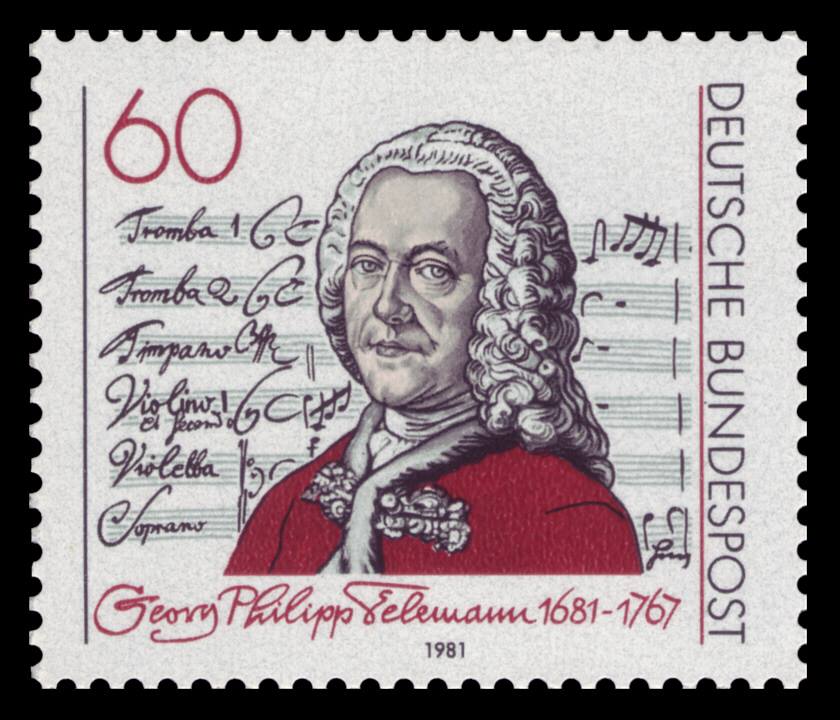
  • Telemann The Genius Overshadowed

    Telemann The Genius Overshadowed

    Poor Telemann. You were a casualty of having done your job too well.

    A composer of genius, you were virtually self-taught, against the opposition of your family. In addition, you taught yourself flute, oboe, violin, recorder, double bass, etc. You spun out music by the yard. In fact, you wrote more music than Bach and Handel combined, over 3000 works, making you one of the most prolific composers of all time. Yet nothing in your oeuvre has captured the public imagination quite like the “Brandenburg Concertos” or the “Water Music.”

    Of course, you wrote Water Music, too.

    On the other hand, you were recognized in your lifetime. You were an innovator, taking what you needed from the Italians and the French to bolster your own style, and your contemporaries bought and studied your scores. You were offered the cantorate of the Thomaskirche in Leipzig ahead of Bach. You counted Bach among your friends, as well as Handel. Bach even requested that you become the godfather of his son, Carl Philipp Emanuel.

    You lived an unusually long life (86 years), though it was not without its miseries. Your first wife died young. Your second ran up gambling debts in amounts larger than your annual income, and ultimately your friends had to bail you out. As you grew older, you suffered further indignities, including failing eyesight.

    Celebrated in your own day, by the 19th century you were dismissed as a “polygraph,” someone you had simply composed too much. In a sense, you were a victim of your own success.

    Still, you continue to give employment to thousands of early music specialists, who have done much to restore your reputation. I think at least you deserve a little recognition on your birthday:

    Happy Birthday, Georg Philipp Telemann (1681-1767).


    One of my favorite Telemann moments, the “Air à l’Italien” from the Suite in A Minor for Flute and Orchestra:

  • Snow Day Classical Music Escape on WWFM

    Snow Day Classical Music Escape on WWFM

    Toward the end of a season which has left many of us scoffing at the forecasters, it’s entirely possible we are now up against a storm that is more than a simple “cry wolf.”

    Join me this afternoon to take your mind off the impending snowpocalypse, with a couple of works inspired by Bulgarian folk music by Pancho Vladigerov and Derek Bermel, an historic Mozart recording conducted by Fritz Busch, a flute sonata by French Baroque composer Michel Blavet, a symphonic poem by Hugo Wolf, and a piece or two by Ralph Vaughan Williams, among others.

    At a time like this, alongside bread and milk, music is the thing we need most. We’ll have it in abundance today, between 4 and 7 p.m. EDT – and all throughout the storm, in fact – on WWFM – The Classical Network. Please support us at wwfm.org.

  • Stephen Dodgson Composer Remembered

    Stephen Dodgson Composer Remembered

    The English composer Stephen Dodgson was born on St. Patrick’s Day, March 17, 1924. At the time I spoke with him in 2012, he was the closest living relative to share the surname Dodgson with his famous forebear, Charles Dodgson, better known as Lewis Carroll.

    At 88, he was in good physical health, it seemed, but unfortunately he was developing serious problems with his memory. His wife informed me after our interview, which took place via telephone, that he had good days and bad days, and that he had been perfectly lucid the day before. In any case, he was a perfectly articulate and charming man, who even invited me to dinner at his house outside of London. However, at the end of 15 or 20 minutes, I still had nothing that I could use on my radio show, “The Lost Chord.”

    Dodgson wasn’t making a lot of sense that afternoon, but when it came to his music, it was like a cloud lifted. He may not have been able to stay on topic long enough to give me any useful audio, but he had no trouble at all naming some of his favorite pieces.

    After the program aired, in October of 2012, I was told by his wife that the two were able to listen to the webcast and that it brought Stephen a lot of pleasure to hear it. I was sorry to learn that he died six months later, nearly a month after his 89th birthday. This Sunday night on “The Lost Chord,” I will be rebroadcasting that program, a few days in advance of what would have been Dodgson’s 93rd birthday.

    The composer was perhaps best known for his guitar music, beginning with a commission from Julian Bream in 1952. The show will open and close with selections from “Watersmeet,” from 2002, written for John Williams (the guitarist was to have been the Dodgsons’ dinner guest on the night that we spoke), for solo guitar and guitar ensemble.

    Flutist Robert Stallman, who lived in Philadelphia for many years, will perform Dodgson’s Flute Quintet, composed in 2003. We’ll also hear the cantata “The Last of the Leaves,” from 1975, on texts of Austin Dobson, Ernest Rhys, G.K. Chesterton and Harold Monro, with bass Michael George and clarinetist John Bradbury. This was an absolute favorite of the composer and his wife.

    Dodgson wrote no symphonies, but he wrote eight large-scale orchestral movements, which he called “Essays.” He selected the fifth of those for inclusion in our program. The Essay No. 5 was composed in 1985.

    Stephen Dodgson was a gentleman in all regards. He was also an educator (beginning at the Royal College of Music in 1947) and a radio host (with the BBC). I am sorry I wasn’t able to take him up on his invitation for dinner, but it was a pleasure at least to make contact with him by telephone, since I genuinely admire his music. I hope you’ll join me tonight at 10:00 EDT* for “Dodgson’s Choice,” on WWFM – The Classical Network and at wwfm.org.


    *Did you remember to turn your clocks ahead?


    ON A RELATED NOTE: The Stephen Dodgson Charitable Trust has been quite active recently in promoting his music. You can learn more at their Facebook page, Stephen Dodgson – composer, or at stephendodgson.com.

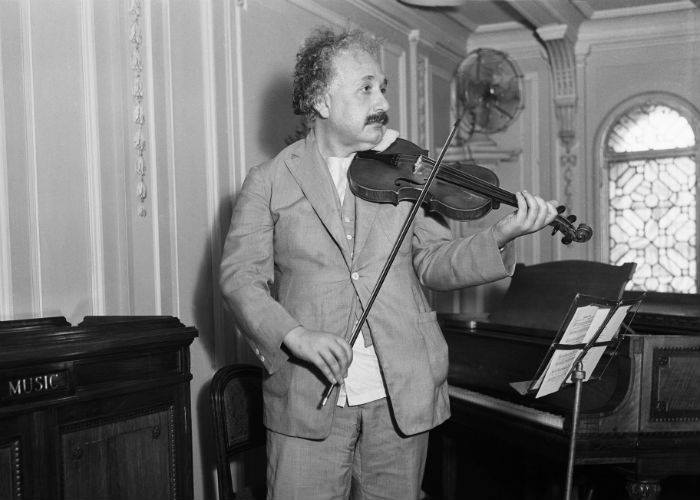
  • Einstein’s Music Pi Day Dreams

    Einstein’s Music Pi Day Dreams

    “If I were not a physicist, I would probably be a musician. I often think in music. I live my daydreams in music. I see my life in terms of music.”

    – Albert Einstein

    Happy Pi Day (3.14)

  • Giant Monster Movie Music King Kong Godzilla

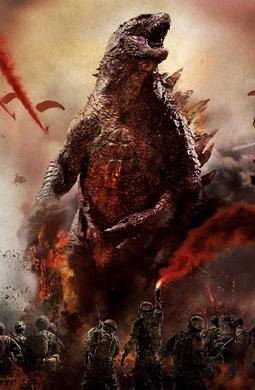
    Giant Monster Movie Music King Kong Godzilla

    Super size me!

    With King Kong back in theaters, in “Kong: Skull Island,” we’re thinking big this week, on “Picture Perfect,” with outsized thrills from movies featuring gargantuan creatures.

    We’ll begin with “Godzilla” (2014), the most recent incarnation of the pop-cultural icon, originally a metaphor for the destructive power of nuclear weapons, but now seemingly more of a jack-of-all-trades restorer of natural balance. Either way, it’s generally man’s overweening pride that brings on the destruction. The composer for this latest version was Alexandre Desplat.

    Then we’ll take a storm-swept hot air balloon to “Mysterious Island” (1961). Jules Verne’s novel becomes the framework for a series of battles between a band of castaways and giant creatures at an uncharted locale in the South Pacific. The great Ray Harryhausen provided the special effects – including giant bees, birds and crabs – and Bernard Herrmann underscored the outlandish situations to perfection.

    Henry Mancini gained world-fame for his breezy melodies for “Breakfast at Tiffany’s” and the “Pink Panther” films, but he got his start writing for B-movies of the 1950s. In “Tarantula” (1955), scientists conduct experiments on animals in order to develop a super food nutrient, as a preemptive strike against future overpopulation and world hunger. However, as the countryside becomes littered with cattle carcasses and pools of arachnid venom, clearly something has gone awry. Mancini collaborated on the score with 1950s science fiction maestro Herman Stein. Don’t go into it expecting “Moon River.”

    Finally, we’ll hear selections from literally the 800-pound gorilla of giant monster movies, “King Kong” (1933). Oscar Levant memorably described “Kong” as “a symphony accompanied by a movie.” The music was certainly a great part of the film’s initial – and enduring – success.

    Max Steiner’s concept and execution of the music for “Kong” was really the first of their kind. Thanks to “Kong” and other early efforts by Franz Waxman and Erich Wolfgang Korngold, a prototype of the Hollywood sound was formed, and the spectacular images onscreen, especially those characteristic of the fantasy and adventure genres, were expected to be accompanied by equally lavish and outlandish orchestras.

    No doubt, Hollywood would have figured it out eventually, yet it’s very gratifying to say, if it weren’t for “Kong,” there would be no “Ben-Hur,” there would be no “Star Wars,” there would be no “The Lord of the Rings.” At any rate, “Kong” got there first.

    I hope you’ll join me for these outsized musical adventures this week, on “Picture Perfect,” this Friday evening at 6:00 EST, on WWFM – The Classical Network and wwfm.org.

Tag Cloud

Aaron Copland (93) Beethoven (95) Composer (114) Film Music (139) Film Score (143) Film Scores (255) Halloween (94) John Williams (195) KWAX (229) Leonard Bernstein (103) Marlboro Music Festival (125) Movie Music (154) Mozart (89) Opera (210) Philadelphia Orchestra (89) Picture Perfect (174) Princeton Symphony Orchestra (108) Radio (88) Ross Amico (244) Roy's Tie-Dye Sci-Fi Corner (290) The Classical Network (101) The Lost Chord (268) Vaughan Williams (103) WPRB (396) WWFM (881)

DON’T MISS A BEAT

Receive a weekly digest every Sunday at noon by signing up here


RECENT POSTS