Category: Daily Dispatch

  • Beecham’s Handel A Lost Chord Celebration

    Beecham’s Handel A Lost Chord Celebration

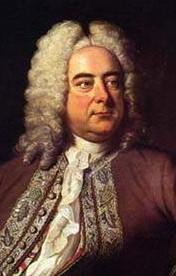
    Okay, I missed Handel’s birthday (on February 23). Time to make amends.

    Sir Thomas Beecham developed an early love for Handel, at a time when very few of his contemporaries knew more than a handful of his pieces. Certainly the operas and oratorios – with the exception of “Messiah,” which had grown fatter and fatter through years of Victorian adoration – were exceedingly scarce. Beecham despaired of this, since there was so much brilliant music, he knew, embedded within these sleeping giants.

    He responded by not only reviving some of the oratorios, in heavily reworked, though for the most part musically sensitive editions, he also arranged choice Handelian morsels into original ballet and concert suites. In doing so, he introduced audiences to much worthy music, which had previously been known only to scholars and specialists.

    This Sunday night on “The Lost Chord,” we’ll listen to Beecham’s at times eccentric, though generally delightful recordings. Alongside the trademark charm of the conductor’s approach comes a thrilling virtuosity in some of the faster music, nowhere better demonstrated than in a 1932 recording of something Beecham called “The Origin of Design,” a suite de ballet distilled from the operas “Ariodante” “Terpsichore,” “Il pastor fido,” “Giulio Cesare,” and “Rinaldo.”

    In approaching those oratorios he ventured to present whole (or something like it), Beecham was not only NOT above tinkering with the orchestration, he would toss out entire sections and rearrange mercilessly, all with the aim of cooking up a digestible evening of music which the general public might otherwise just as happily left in the freezer. At its most gauche, Beecham’s method could result in something like his last recording of Handel’s “Messiah,” which he set down in 1959. The re-orchestration was commissioned from Sir Eugene Goossens and features ample cymbal crashes and other eccentricities, which seem somehow to actual sap some of the excitement out of the original music.

    Beecham defended his padded “Messiah,” not only pointing to the composer’s documented delight in great demonstrations of sound, but also stating his fear that without some effort along the lines he’d undertaken, the greater portion of Handel’s output would remain unplayed – in his words, “possibly to the satisfaction of armchair purists, but hardly to the advantage of the keenly alive and enquiring concertgoer.”

    Despite taking great liberties, Beecham’s recording of Handel’s “Solomon,” set down in 1955-1956, is, in a word, gorgeous. It’s nowhere near what Handel conceived – there’s a huge chunk taken out of the middle, with some of the displaced numbers given refuge in wholly unrelated parts of the oratorio; Solomon, a role generally undertaken these days by a countertenor is assigned to a baritone; the cymbal crashes that disfigure Beecham’s “Messiah” turn up here, as well, but somehow, if one allows oneself to succumb to the Beecham magic, none of it is truly bothersome. In fact, the recording could be deemed an unalloyed delight. It’s not something you’d want as your only “Solomon,” yet it could be the recording of the work you return to the most.

    I hope you’ll join me for “Handeling Beecham” – Sir Thomas Beecham conducts Handel – this Sunday night at 10:00 EST, on WWFM – The Classical Network and at wwfm.org.
  • Vivaldi Meets Weill Salut Salon Birthday Music

    Vivaldi Meets Weill Salut Salon Birthday Music

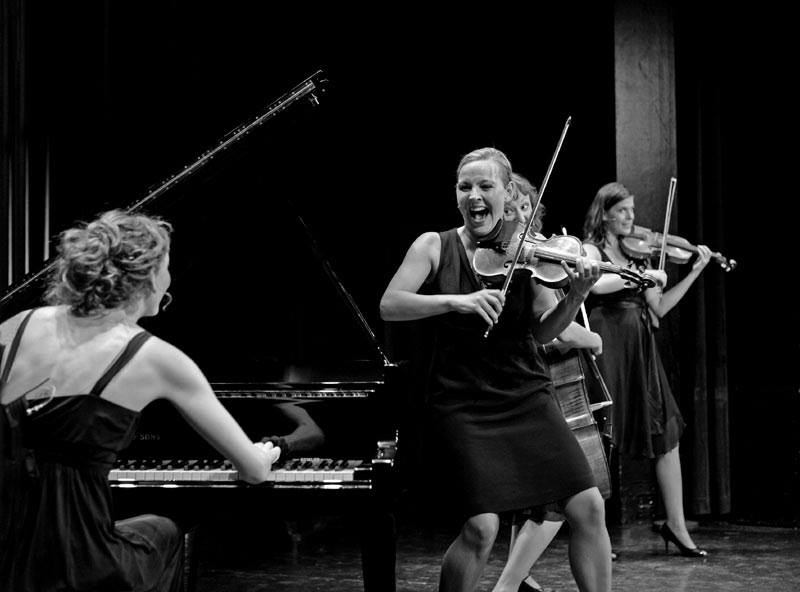
    While searching for something interesting to share for Antonio Vivaldi’s birthday, I happened across this YouTube video. The four musicians of Salut Salon create a musical narrative that carries them from Vivaldi to Weill.

    More about Salut Salon here:

    http://www.salut-salon.com/en/salut-salon/

  • Lara St. John Plays New Hope Plus Much More

    Lara St. John Plays New Hope Plus Much More

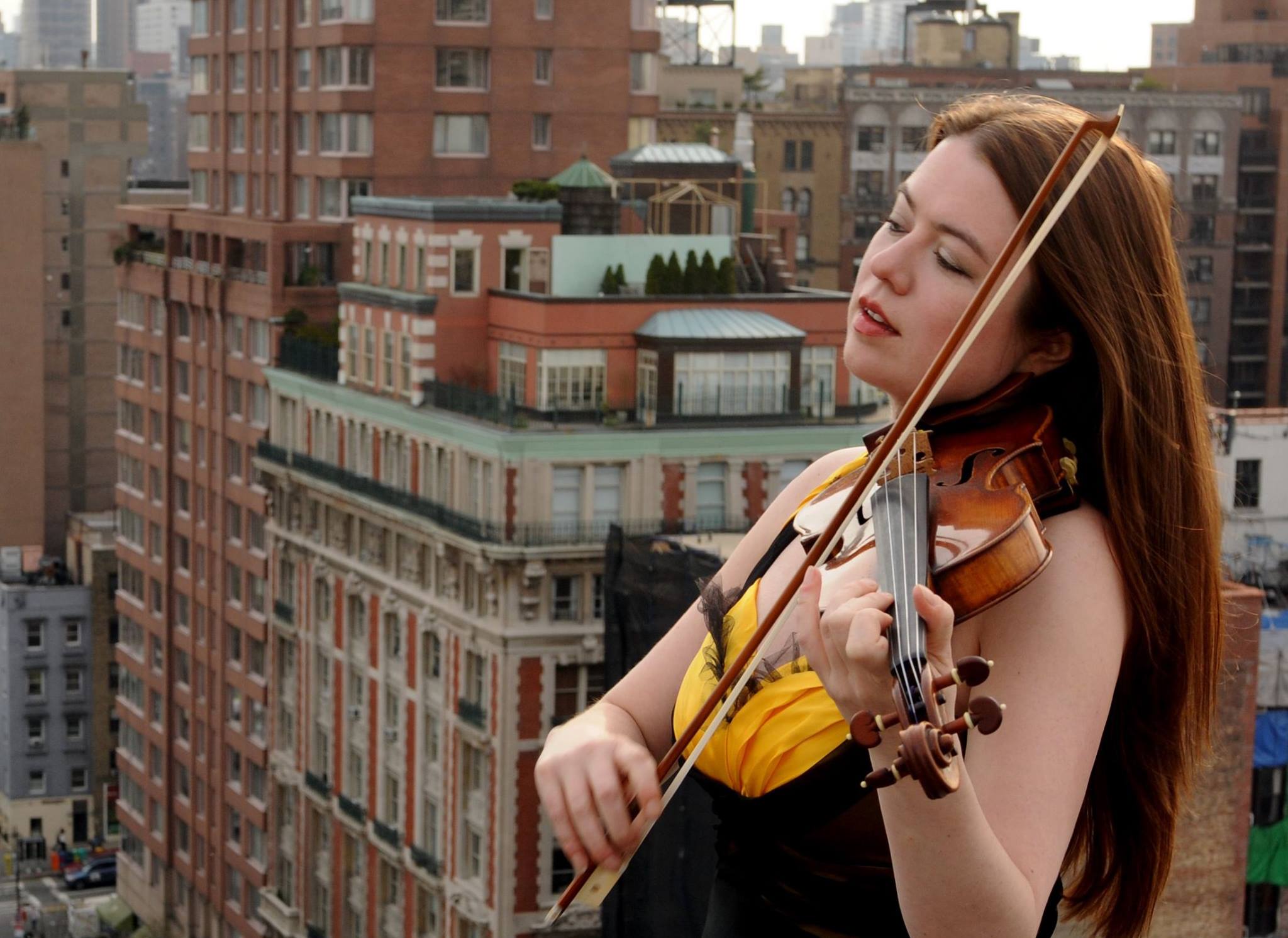
    Talk to Lara St. John about her upcoming concert in New Hope, and she is just as likely to drift to topics as diverse as a Chagall exhibit she recently attended in Montreal, her experience of playing the score for “The Red Violin” (by her friend, composer John Corigliano) live with the film, and editing videos like “Bar Fight” and “The Kosher Chicken Dance” for her YouTube channel.

    As serious artists go, St. John is refreshingly unpretentious and occasionally even a bit geeky. She is well enough versed in “Star Wars” and “The Lord of the Rings” to pepper her conversation with references to AT-ATs and dragons. Her record label, Ancalagon, is named for a pet iguana (now deceased), which in turn was named for a creature in J.R.R. Tolkien’s “The Silmarillion.”

    St. John likes to keep it interesting, and she likes to have fun. When she plays, she is often very spontaneous, and she always goes for broke.

    The Lambertville-based Riverside Symphonia will host St. John and her frequent partner, the pianist Matt Herskowitz, for a recital at St. Martin of Tours Church in New Hope on Mar. 10 at 8 p.m. On the first half of the program will be sonatas by Beethoven and César Franck.

    The second half of the concert will be made up of special arrangements made for her from material largely collected by her from Yiddish, Macedonian, Israeli, Armenian, and Hungarian sources. These showpieces form the basis of her most recent album, “Shiksa.”

    Capturing St. John in print is always a challenge. Read my most recent attempt in today’s Trenton Times.

    http://www.nj.com/times-entertainment/index.ssf/2017/03/classical_music_lara_st_john_p.html

  • Kurosawa Film Scores on Picture Perfect

    Kurosawa Film Scores on Picture Perfect

    This week on “Picture Perfect,” we’ll have music from three classic historical films by the influential Japanese director Akira Kurosawa.

    “Seven Samurai” (1954) concerns a band of ronin who come together to defend a farmers’ village against invading brigands. The simplicity of that synopsis doesn’t begin to hint at what a marvelous achievement it really is. In fact, “Seven Samurai” is regularly included on lists of the greatest films of all time. It was remade in the United States as “The Magnificent Seven.” And though “The Magnificent Seven” enjoys great popularity, a terrific cast, and an unforgettable film score, it stands only knee-high to the original. The music is by Fumio Hayazaka.

    “Seven Samurai” was Kurosawa’s first, full-out samurai film, but a samurai does feature as one of the characters in his earlier, break-out international hit, “Rashomon” (1950). In this instance, the discovery of a murdered samurai leads to a series of courtroom-style examinations, during which everyone present at the killing gives his or her own account of what transpired – including (through a medium) the murdered man himself! The conflicting testimonies reveal the slippery subjectivity of what we understand as “truth.” The film, the first from Japan to receive wide exposure abroad, had such an impact that the term “Rashomon effect” entered the English language.

    Kurosawa had great respect not only for American movies, but also Western classical music. This led him, on occasion, to request of his composers that they emulate certain well-known pieces. In the case of “Rashomon,” Hayazaka was encouraged, during one of the segments, to channel Ravel’s “Bolero.” “Rashomon” was remade as, among other things, “The Outrage,” a middling western starring Paul Newman.

    Masura Sato sought out Hayazaka as a teacher on the merits of his music for “Rashomon.” Following his master’s early death from tuberculosis at the age of 41, Sato stepped in to fill the void as Kurosawa’s composer of choice. Sato would score eight of Kurosawa’s films (his first, a completion of Hayazaka’s score for “Record of a Living Being”). He too could be called upon to conjure the spirit of Western composers, with the ghost of Verdi hovering over “Throne of Blood,” Haydn and Brahms coloring “Red Beard,” and in the case of “Yojimbo” (1961), Franz Liszt lending attitude to masterless samurai Toshiro Mifune, who wanders into a remote town and sets about playing two rival families off one another to his own profit.

    “Yojimbo” provided the basis for the first of Sergio Leone’s spaghetti westerns, “A Fistful of Dollars.” What’s interesting about that is not only Leone’s reliance on the scene-by-scene structure of the plot, but also that its composer, Ennio Morricone, emulated the kind of goofy juxtapositions and unexpected orchestrations used by Sato in the original film. Kurosawa himself was inspired by the western tropes of John Ford movies and the pulp fiction of Dashiell Hammett.

    As a bonus, I will include just a little music from one of my least favorite Kurosawa films (beside “Rhapsody in August”), “Dodes’kaden” (1970). “Dodes’kaden” marked a break with Kurosawa’s classic style. It was his first film shot in color, for one thing – truly lurid Technicolor – and the first made after his break with Mifune (who was brilliant in “Rashomon,” “Seven Samurai” and “Yojimbo,” among others). The title can be translated, roughly, as “clickety-clack,” the sound of an imaginary trolley car in the fantasy world of a mentally-challenged boy who literally lives in a dump. Though it earned an Academy Award nomination for Best Foreign Film, its commercial failure drove Kurosawa into a deep depression and even to attempted suicide.

    For as much as I personally dislike the film, the composer of its soundtrack, Toru Takemitsu is regarded as one of Japan’s most important classical concert composers. Interestingly, like Sato, Takemitsu was a protégé of Kurosawa’s friend and frequent colleague, Fumio Hayazaka.

    I hope you’ll join me for music from Kurosawa classics (and “Dodes’kaden”), this Friday evening at 6:00 EST, on WWFM – The Classical Network and at wwfm.org.
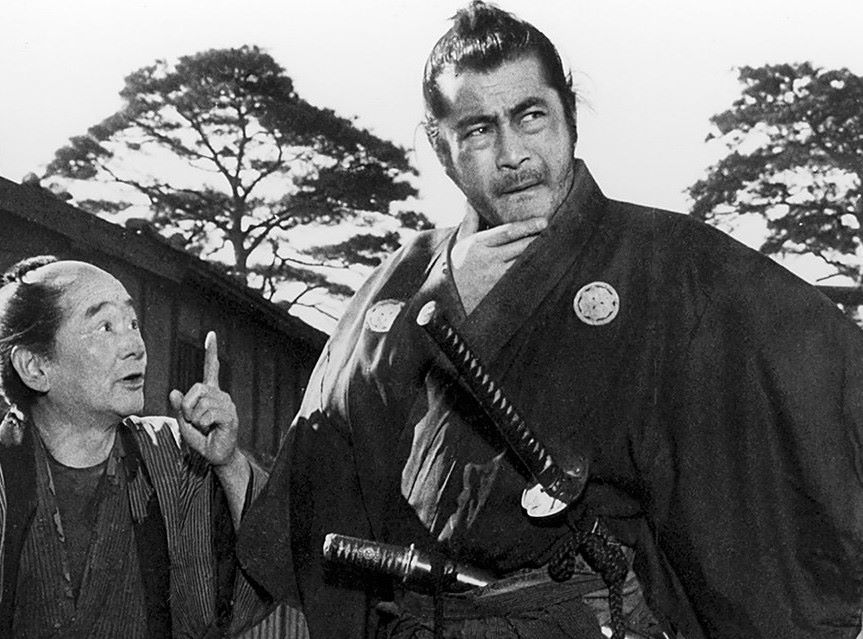
    Tune in early, between 4 and 6:00, for a birthday tribute to Spanish composer Federico Moreno Torroba and Elie Siegmeister’s “Theater Set,” assembled from his film score to “They Came to Cordura” – from which “Picture Perfect” takes its signature music!

  • Early Music Month on WPRB: Medieval to Modern

    Early Music Month on WPRB: Medieval to Modern

    The pull of history will be strong tomorrow morning on WPRB, as we celebrate Early Music Month. We’ll examine the influences of the Middle Ages and the Renaissance on “contemporary” composers – that is to say, composers who lived within the past 100 years. In fact, several of them (William Kraft, Paul Lansky, and Kile Smith) are still very much with us.

    At 9:00, I’ll be joined by John Burkhalter, a stalwart of the local Early Music scene and a member of the Guild for Early Music. He’ll fill us in on the Guild and its series of upcoming concerts featuring vocal and instrumental music from the 12th through the 18th centuries. The concerts will be presented by the Guild’s member groups throughout the month of March. You’ll find a complete schedule at guildforearlymusic.org.

    Plainchant and polyphony, pavanes and galliards, madrigals and lute pieces, all will shimmer as if from a distant mirror, as we enjoy 20th and 21st century classics inspired by the Middle Ages and the Renaissance, this Thursday morning from 6 to 11 EST, on WPRB 103.3 FM and at wprb.com. I’ll be feeling a tad Middle Aged myself, on Classic Ross Amico.


    #EarlyMusicMonth
    Early Music America

Tag Cloud

Aaron Copland (93) Beethoven (95) Composer (114) Film Music (139) Film Score (143) Film Scores (255) Halloween (94) John Williams (195) KWAX (229) Leonard Bernstein (103) Marlboro Music Festival (125) Movie Music (154) Mozart (89) Opera (210) Philadelphia Orchestra (89) Picture Perfect (174) Princeton Symphony Orchestra (108) Radio (88) Ross Amico (244) Roy's Tie-Dye Sci-Fi Corner (290) The Classical Network (101) The Lost Chord (268) Vaughan Williams (103) WPRB (396) WWFM (881)

DON’T MISS A BEAT

Receive a weekly digest every Sunday at noon by signing up here


RECENT POSTS