Category: Daily Dispatch

  • Furtwängler: Genius, Controversy, and the Third Reich

    Furtwängler: Genius, Controversy, and the Third Reich

    Though he continues to stir controversy, Wilhelm Furtwängler was, indisputably, one of the greatest conducting talents of the 20th century.

    Furtwängler, who succeeded Arthur Nikisch and Richard Strauss as director of Germany’s greatest orchestras – including, most notably, the Berlin Philharmonic, from 1922 to 1945 and again from 1952 to 1954 – remained in Germany throughout the National Socialist regime.

    Widely perceived as politically naïve, Furtwängler engaged in a dangerous game with the Third Reich, arguing vociferously in favor of Jewish musicians within his orchestra, those who could be considered his rivals (Bruno Walter, Otto Klemperer), and even those who were long dead (Joseph Joachim, Felix Mendelssohn). He went so far as to threaten to tender his resignation should the Nazis insist on the removal of Jews from the cultural sphere. Goebbels complained, “Can you name me a Jew on whose behalf Furtwängler has not intervened?”

    Either he had an accurate grasp of his own worth to German culture, or he didn’t realize how close he trod to the flame. Himmler wanted to send him to a concentration camp. Goebbels and Göring were in favor of concessions. Encouraged, the conductor felt himself to be a force for positive change. But of course, he was just being played. The Nazi racial policies remained in place and the situation only grew worse.

    What Furtwängler didn’t seem to realize was that he was being used as a propaganda tool, held up to the world as a paragon of Teutonic superiority. Wishing to appease one of the country’s most visible artists, the authorities allowed Jews to remain in the Berlin Philharmonic, though privately they grumbled about Furtwängler lacking “national sentiment.”

    Revealingly, Furtwängler never joined the Nazi Party. He refused to conduct Nazi anthems, and while he retained a semblance of power he would not appear in halls adorned with swastikas. He did not give the Nazi salute, even in his private dealings with Hitler. It was only after getting into a shouting match with the Führer himself that Furtwängler realized the enormity of the fight.

    In 1934, he publicly declared Hitler an “enemy of the human race” and referred to the political situation in Germany as a pigsty. He conducted Hindemith’s “Mathis der Maler,” which had been banned by the Nazis on account of the composer’s allegedly “degenerate” (modernist) tendencies. The concert created a sensation and triggered a political firestorm. Furtwängler was forced to resign from his artistic posts, and the authorities seized the opportunity to Aryanize the Berlin Philharmonic. Fortunately, Furtwängler had already found positions for most of the Jewish personnel in foreign orchestras.

    He was told that if he himself were to leave the country, he would never be allowed back in. Not wanting to be separated from his family, he decided to remain. What followed was a years-long game of cat-and-mouse between the conductor and the Reich. Furtwängler was publicly granted privileges, while penalized in ways never apparent to the foreign press. It was only through political sleight-of-hand that the Reich could get anything worthy of pro-German propaganda out of him.

    With the rise of an opportunistic young conductor by the name of Herbert von Karajan, Furtwängler became marginalized. Karajan did everything for himself; Furtwängler had done everything for the sake of art and humanity.

    It’s so easy for biographical details to get in the way of a proper appreciation of Furtwängler’s art. For him, music was something that existed beyond the notes on the page and involved active, subjective intervention on the part of the conductor in order to be realized. More than most, a Furtwängler interpretation rises and falls on the strength of the performer.

    I hope you’ll join me, as we observe Furtwängler’s birthday with an electrifying recording of Schumann’s Symphony No. 4, this afternoon between 4 and 7 p.m. EST, on WWFM – The Classical Network and at wwfm.org.


    “He once said to me that the most important thing for a performing artist was to build up a community of love for the music with the audience, to create one fellow feeling among so many people who have come from so many different places and feelings. I have lived with that ideal all my life as a performer.”

    — Dietrich Fischer-Dieskau
  • King James Bible A Musical Portrait

    King James Bible A Musical Portrait

    Imagine living in an era when a high level of education and scholarship were valued in a ruler. In the early 17th century, the English citizenry – not just the nobility – possessed a healthy appreciation for higher learning. Furthermore, the education of the masses must have been considerable for the plays of William Shakespeare and the like to be appreciated as popular entertainment. In such an environment, it is hardly surprising that music would be valued highly in all of its forms.

    King James I of England was a scholar, a poet, and an author of literary works. His greatest gift to literature, however, must be the King James Bible, the work of no less than 47 prominent scholars. The Bible, completed in 1611, appeased the Church of England (with nary a reference to a pope) and unified the country through a standardized book of scripture. The finished work was not merely functional; it was a work of art. It is hardly surprising that its influence would color the output of the country’s greatest artists.

    Today’s noontime concert on The Classical Network will be organized under the title, “King James and His Bible: A Musical Portrait.” The program, made up of royal and devotional music from the Tudor and Stuart courts, will be presented by the Parthenia Viols Consort. There will be works by William Byrd, John Dowland, Alfonso Ferrabosco II, Tobias Hume (a panegyric to tobacco!), John Jenkins, Thomas Tomkins, and John Ward, along with a new commission by Tawnie Olson.

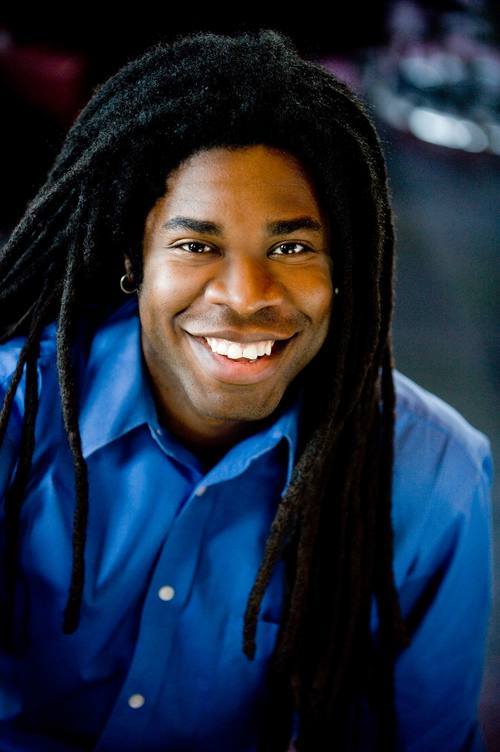
    The group will be joined by Dashon Burton, Bass-Baritone. Burton, in addition to his solo work in recital, opera and oratorio, is a founding member of the Grammy Award-winning contemporary vocal ensemble Roomful of Teeth.

    Following the concert broadcast, stick around for Burton’s new recording of Craig Hella Johnson’s oratorio “Considering Matthew Shepard,” made with the company of voices Conspirare, a moving artistic response to actions of hate and cruelty that cost a young man his life.

    I hope you’ll join me for an afternoon of enlightenment and compassion, from 12 to 4 p.m., on WWFM – The Classical Network and at wwfm.org.


    PHOTO: The dashing Dashon Burton

  • Veljo Tormis Estonian Choral Music Icon Dies

    Veljo Tormis Estonian Choral Music Icon Dies

    The shaman of Estonian music has died.

    Veljo Tormis was bigger at home, allegedly, than even his internationally more famous compatriot, Arvo Pärt. Extremely influential as a composer of choral music, Tormis also wrote orchestral and instrumental works, 35 film scores, and an opera.

    Making his name as a kind of neo-classicist, as exemplified by his “Overture No. 2,” he gradually turned to Estonian folk music, which he transformed through the use of modernist techniques. He breathed new life into the Estonian runo song, lending vitality to a dead tradition.

    Politically censored during the 1970s and ‘80s, Tormis nevertheless retained his popularity, celebrated throughout the Soviet Union and Eastern Europe. Since Estonia regained its independence in 1991, his music has steadily gained traction in the West. Perhaps his most famous piece is “Raua needmine” (“Curse Upon Iron”), a setting of a text from the Kalevala, which invokes shamanistic ritual as a critique of the evils of war.

    “It is not I who makes use of folk music,” Tormis once said, “it is folk music that makes use of me.”

    I hope you’ll join me today between 4 and 7:00 p.m., as we remember Veljo Tormis, alongside observances of the birthdays of composers Muzio Clementi and Rutland Boughton, on WWFM – The Classical Network and wwfm.org.


    “Raua needmine” (“Curse Upon Iron”):

    Overture No. 2:

    Live performance of “Curse Upon Iron” with the Netherlands Chamber Choir, completely up my alley!


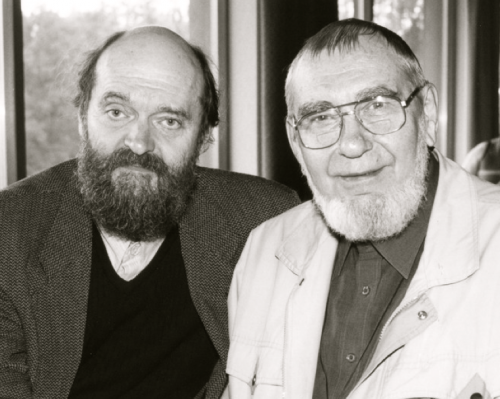
    Veljo Tormis (right) palling around with Arvo Pärt

  • The Frankfurt Group: English Music Pioneers

    The Frankfurt Group: English Music Pioneers

    The Frankfurt Group, sometimes called the Frankfurt Gang, met at the Hoch Conservatory in Frankfurt-am-Main in the 1890s. The group included Balfour Gardiner, Roger Quilter, Norman O’Neill, Cyril Scott, and the youngest of the bunch, the piano prodigy Percy Grainger.

    Later, though never officially part of the group, other figures became closely associated, including Frederic Delius, Sir Thomas Beecham, and the composer Frederic Austin.

    The Hoch Conservatory of the day had the reputation of being one of the very finest in Europe. Clara Schumann had been on the faculty there until 1892 – within a few years of the Frankfurt Group’s arrival. In fact, at least one of them, Cyril Scott had already been there.

    Scott arrived at the school early, at the age of 12, and then later returned for a second stint. Balfour Gardiner was also there twice, taking a break to attend Oxford. Grainger was 13 at the time he was admitted. He was to remain at the Hoch Conservatory for four-and-a-half years.

    What united this brilliant array of young talent in a foreign land? Well, there was shared language and culture, of course, but also a determination to break away from the dominant, Teutonic musical thinking of the time, and especially the place, to create a fresh English art.

    I hope you’ll join me for “Hochschule Musical,” sampling works by members of the Frankfurt Group, this Sunday night at 10:00 EST on “The Lost Chord,” on WWFM – The Classical Network and at wwfm.org.


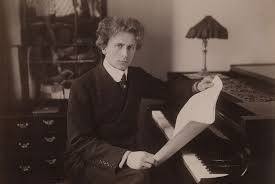
    PHOTOS: Former classmates (clockwise from top) Percy Grainger, Cyril Scott, and Roger Quilter

  • Roberta Peters Queen of the Night Dies at 86

    Roberta Peters Queen of the Night Dies at 86

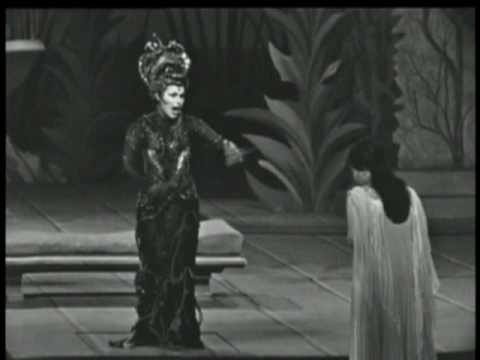
    One more for Roberta Peters, who died on Thursday at the age of 86. A superb Queen of the Night!

    This is what opera used to be like, before it became more about the directors.

Tag Cloud

Aaron Copland (93) Beethoven (95) Composer (114) Film Music (139) Film Score (143) Film Scores (255) Halloween (94) John Williams (195) KWAX (229) Leonard Bernstein (103) Marlboro Music Festival (125) Movie Music (154) Mozart (89) Opera (210) Philadelphia Orchestra (89) Picture Perfect (174) Princeton Symphony Orchestra (108) Radio (88) Ross Amico (244) Roy's Tie-Dye Sci-Fi Corner (290) The Classical Network (101) The Lost Chord (268) Vaughan Williams (103) WPRB (396) WWFM (881)

DON’T MISS A BEAT

Receive a weekly digest every Sunday at noon by signing up here


RECENT POSTS