Category: Daily Dispatch

  • WWFM Today Orli Shaham Newman & Oltman

    WWFM Today Orli Shaham Newman & Oltman

    I hope you’ll tune in to WWFM this afternoon, as I’ll be joined by a couple of special guests.

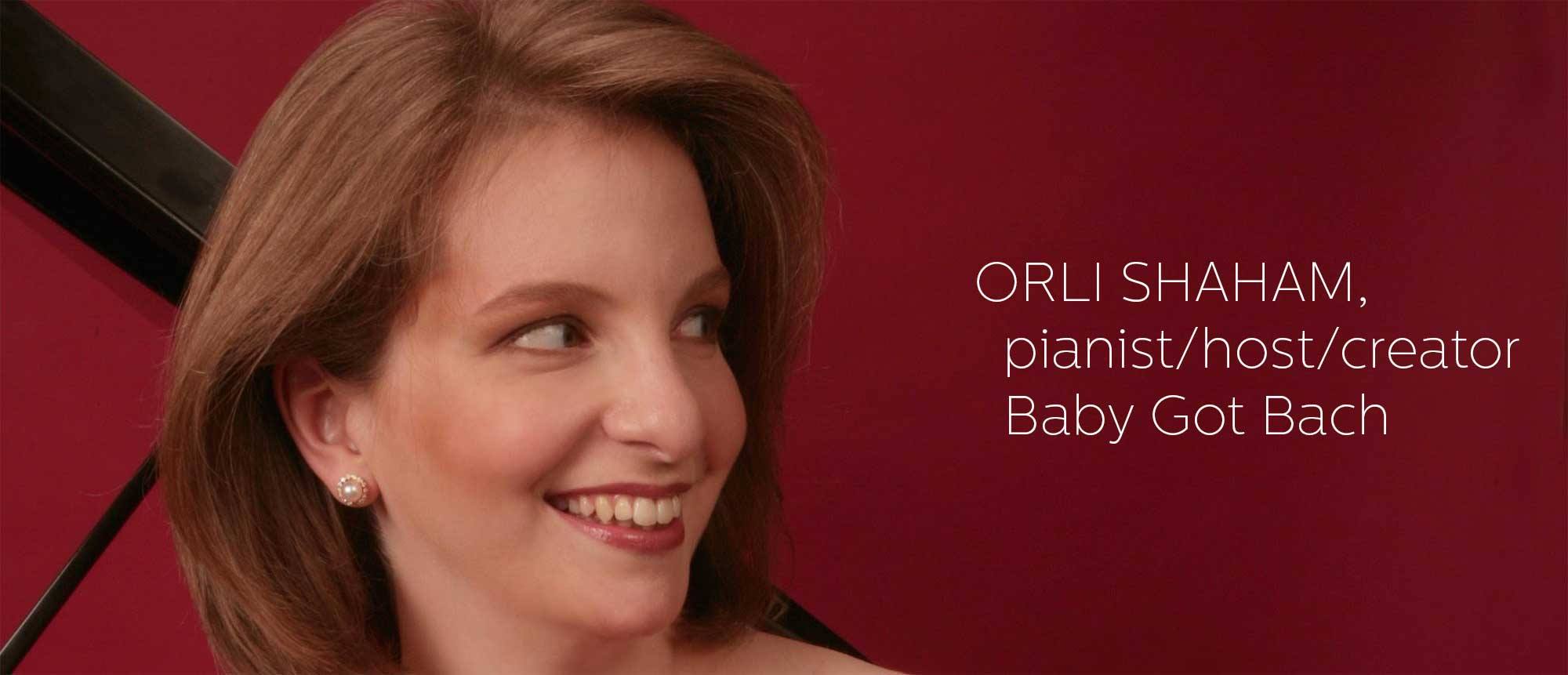
    In the 4:00 hour, pianist Orli Shaham will chat with me by telephone about her Baby Got Bach program, which she’ll be bringing to Princeton University’s Richardson Auditorium as part of the Princeton University Concerts Series, this Saturday at 1 p.m. Baby Got Bach is designed to introduce children 3 to 6 to the joys of interactive music-making. You can find out more at babygotbach.org.

    Then we’ll be sampling from Orli’s performances of music by Alberto Ginastera, from a new album celebrating the centenary of one of Argentina’s most famous composers.

    In the 6:00 hour, Michael Newman of The Newman & Oltman Guitar Duo will swing by to talk about a special Veterans Day concert, presented by Raritan River Music, that will be held at historic Bethlehem Presbyterian Church, near Pittstown, NJ, on Sunday at 2 p.m. Guest artists will include singers-songwriters-storytellers Sally Rogers and Claudia Schmidt. For more information, look online at RaritanRiverMusic.org.

    For the rest of this afternoon, we’ll be observing the birthdays of an eclectic assortment of composers and conductors, including Karl Ditters von Dittersdorf, John Foulds, Friedrich Kalkbrenner, Douglas Lilburn, and Giuseppe Sinopoli.

    There’s a lot to celebrate, from 4 to 7:00 EDT, on WWFM – The Classical Network and wwfm.org.

  • 70 Degree November Autumn Music on WPRB

    70 Degree November Autumn Music on WPRB

    What’s the deal with 70 degree November? They want us to change our clocks; can’t we just reset the calendar? But I guess that’s been tried a couple of times. At least the trees seem to understand the time of year.

    Tomorrow morning on WPRB, we will be conjuring an idealized autumn, with music reflective of the season’s two faces – on the one hand, the riotous colors of changing leaves, with rowdy kids pumped up on mad cider and candy corn; on the other, steely skies and denuded trees.

    Jack Frost will be out with his paint kit, even as temperatures are slated to spike into the mid-70s. The geese will be hightailing it south for the winter, from 6 to 11 EDT, on WPRB 103.3 FM and at wprb.com. It’s always autumn in our hearts, on Classic Ross Amico.

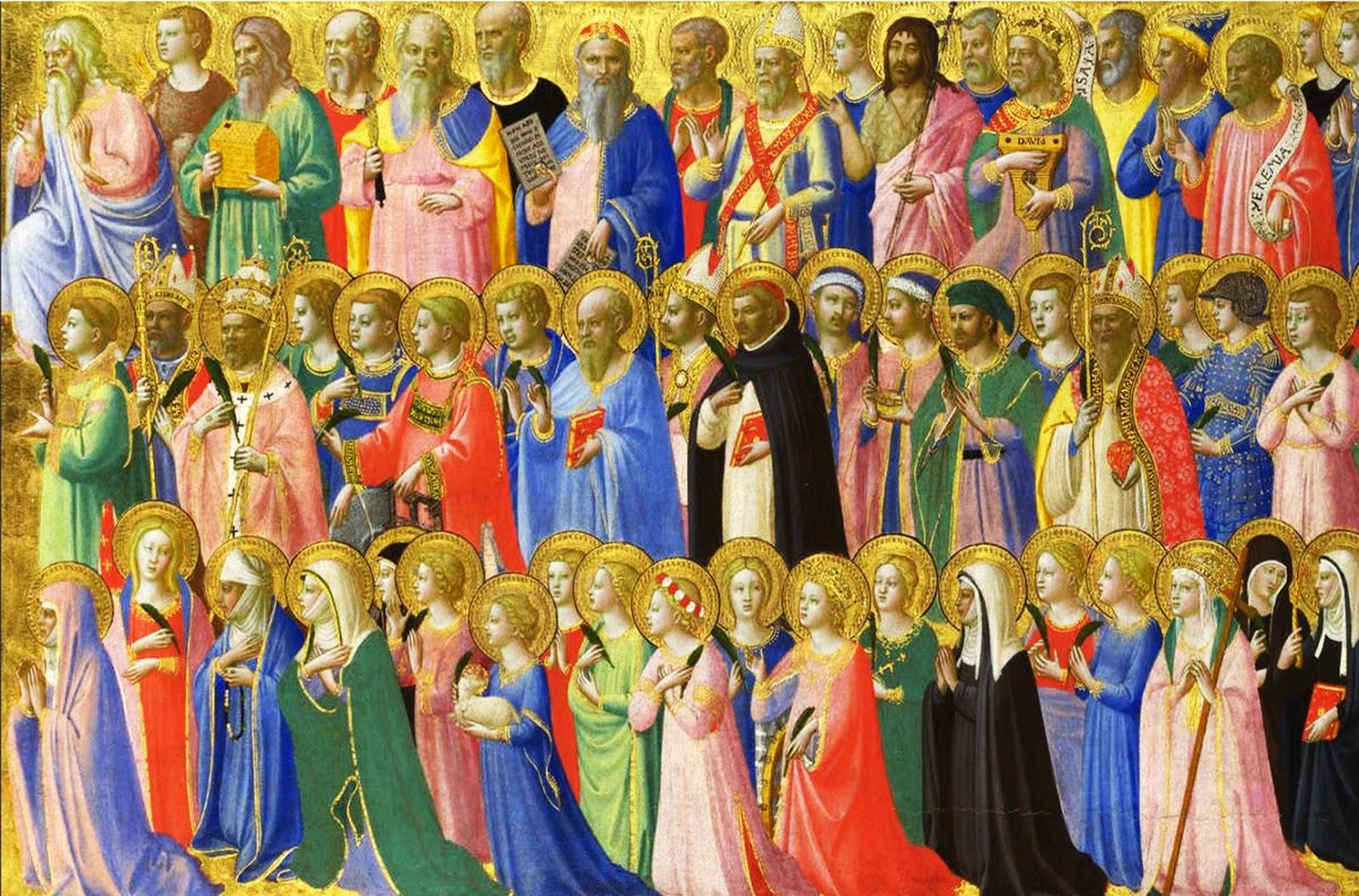
  • All Saints’ Day Mozart & Musical Saints

    All Saints’ Day Mozart & Musical Saints

    It’s November 1. All Saints’ Day.

    While Mozart may have been no saint, he certainly did write some divine music. I hope you’ll join me for today’s Noontime Concert, as we enjoy his Serenade No. 10 in B-flat for 13 wind instruments, the so-called “Gran Partita.” The performance, by the period instrument ensemble Grand Harmonie, took place at Harvard Memorial Chapel in Cambridge, MA, on October 17, 2015. Grand Harmonie’s next concert, an all-Mozart program, will be held on Friday at 7:30 p.m. at St. Ignatius of Antioch, 552 West End Ave., in New York City. For more information, look online at grandharmonie.org.

    Following the noon concert, we will continue with the afternoon’s programming, which will be devoted to some musical saints. Featured will be Franz Liszt’s “St. Francis of Assisi’s Sermon to the Birds,” Johann Sebastian Bach’s “St. Anne” Prelude and Fugue, Sir Arnold Bax’s “St. Patrick’s Breastplate,” Norman Dello Joio’s “The Triumph of Saint Joan,” and Ottorino’s “Church Windows” (which includes panels devoted to St. Michael the Archangel, St. Clare, and St. Gregory the Great), as well as music by St. Hildegard von Bingen.

    I hope you’ll join me between 12 and 4 p.m. EDT for some heavenly music, on WWFM – The Classical Network and at wwfm.org.

  • Karl Krueger American Music Pioneer

    Karl Krueger American Music Pioneer

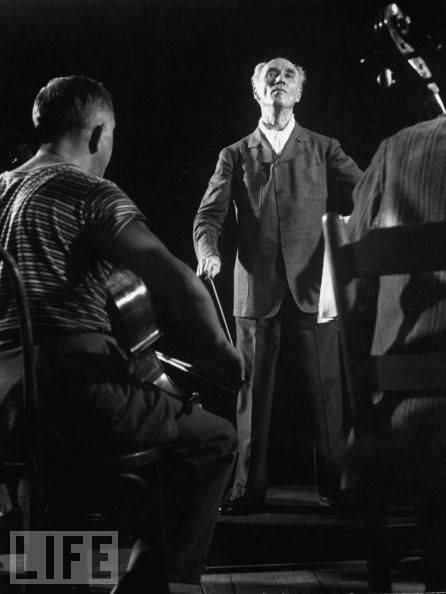
    Born in New York City to German immigrant parents, Karl Krueger’s sympathies were never far from the American heartland. He served as artistic director and principal conductor of the newly founded Kansas City Symphony from 1933 to 1943, and his greatest legacy lay in a series of pioneering recordings he set down for the Society for the Preservation of American Musical Heritage.

    His father wanted him to be lawyer, but the pull of music was too strong. Krueger studied in Vienna with Robert Fuchs and became the assistant of conductor Arthur Nikisch. Nikisch referred him to Franz Schalk, conductor of the Vienna State Opera. Krueger was appointed assistant conductor to the Opera and the Vienna Philharmonic. Schalk proclaimed, “I have no doubt that he will play an important role among the leading orchestral conductors of his time.”

    Though he served as principle conductor of the Seattle Symphony, from 1926 to 1932, as music director of the Detroit Symphony Orchestra, from 1943 to 1949, and was invited back to guest conduct the Vienna Philharmonic, Krueger’s name is largely unrecognized today, beyond the sphere of collectors.

    This Sunday night on “The Lost Chord,” we’ll listen to recordings Krueger made for the society he established in 1958. Its purpose was to document and promote works by neglected American composers, at the time little more than footnotes in our music history books. Significantly, the records were first distributed to libraries, rather than being made available for purchase through retailers. A number of the recordings have been reissued over the years by The Library of Congress. More recently, some have appeared on the Bridge Records, Inc. label.

    Leave it to Krueger to unearth the most interesting work by Horatio Parker. Parker, the hidebound teacher and aesthetic nemesis of Charles Ives, wrote two symphonic poems, both of which were recorded by Krueger. Wholly unexpected is Parker’s treatment of “Vathek,” the early gothic novel by William Beckford. The novel blends elements of the supernatural, excess, and immorality in an Oriental setting.

    Arthur Farwell, best remembered for his work inspired by Native American sources, wrote incidental music in 1916 for a play by Lord Dunsany, called “The Gods of the Mountain.” The work is another piece of Orientalism, in this case about a band of beggars who impersonate a city’s stone gods and partake of much sensual indulgence, until the real gods return and change the impostors to stone. In a final twist, the inhabitants of the city take the transformation of the beggars as verification of their status as genuine gods.

    Finally, we’ll hear music by Arthur Foote, who has fared better than some other American composers of his era. His rarely-heard work from 1900, “Four Character Pieces after the Rubaiyat of Omar Khayyam,” is drawn from a piano cycle he composed the previous year. It was given its first performance by the Chicago Symphony, under the direction of Frederick Stock.

    By the end of its run, Krueger’s Society had issued over 100 LPs of American music, with some of the repertoire dating as far back as the 18thcentury. Karl Krueger died in Illinois in 1979 at the age of 85.

    Join me for “Pioneer Spirit” – landmark recordings by Karl Krueger – this Sunday night at 10 EDT, on WWFM – The Classical Network and at wwfm.org.

  • Opera Ashes Halt Met Performance

    Opera Ashes Halt Met Performance

    I didn’t have a chance to post this yesterday, so you may very well have heard about it by now, but it seems an oddly appropriate story for Hallowe’en. In fact, it may be the craziest Metropolitan Opera news (from an audience standpoint) since an 82 year-old singing coach deliberately plunged to his death in 1988 during an intermission of a nationally broadcast performance of Verdi’s “Macbeth.”

    http://www.nytimes.com/2016/10/30/nyregion/metropolitan-opera-cancels-performance-white-substance.html

    http://nypost.com/2016/10/29/man-scattering-friends-ashes-during-opera-prompted-met-shutdown/

    The scattering of ashes into an orchestra pit is not unprecedented, by the way. Berlioz alleged, in the 1865 edition of his autobiography, that prior to a performance of his “Romeo and Juliet,” which he was about to conduct in Breslau in 1854, a lawyer poured the ashes of his wife into a tuba from a balcony.

    The latest incident comes a week after the Catholic Church banned the scattering of ashes, which it decried as “pantheistic or naturalistic or nihilistic.”

    Expect heightened security in the future. First we have to take off our shoes at the airport; now we’ll be cavity searched thanks to some nutbone (whom police name as Roger Kaiser, 52, a jeweler from Dallas), who thought he was honoring a friend and even bragged about it beforehand.

    The opera may have been “William Tell,” but nobody else did.

Tag Cloud

Aaron Copland (93) Beethoven (95) Composer (114) Film Music (139) Film Score (143) Film Scores (255) Halloween (94) John Williams (195) KWAX (229) Leonard Bernstein (103) Marlboro Music Festival (125) Movie Music (154) Mozart (89) Opera (210) Philadelphia Orchestra (89) Picture Perfect (174) Princeton Symphony Orchestra (108) Radio (88) Ross Amico (244) Roy's Tie-Dye Sci-Fi Corner (290) The Classical Network (101) The Lost Chord (268) Vaughan Williams (103) WPRB (396) WWFM (881)

DON’T MISS A BEAT

Receive a weekly digest every Sunday at noon by signing up here


RECENT POSTS