Category: Daily Dispatch

  • Copland’s Appalachian Spring on The Classical Network

    Copland’s Appalachian Spring on The Classical Network

    It’s an aseasonal treat this afternoon, as WWFM concludes its binge festival of “What Makes It Great.” Rob Kapilow will deconstruct Aaron Copland’s “Appalachian Spring,” followed by an uninterrupted performance of the piece, which was recorded in April at Merkin Concert Hall at Kaufman Music Center in New York City.

    “What Makes It Great” concludes its binge run today, beginning at 12:00 EDT. Enjoy the upcoming season as a member of The Classical Network. For a donation of $75, we will send you the “What Makes It Great” mug. On one side is the name of the show, “What Makes It Great,” and on the reverse is the answer, “You!” In fact, we’d be happy to send you the mug for your commitment to become a sustaining member of The Classical Network in the amount of $5 a month – that’s a savings of $15! Put it toward the beverage of your choice.

    Of course, what you’re really paying for is all the great music that comes your way each and every day on The Classical Network, including that heard on “Picture Perfect,” “The Lost Chord,” and my recently instated afternoon live air shifts. Be sure to mention how much you enjoy these in the comments section when you make your donation at wwfm.org. Your commitment now could shorten our live membership campaign, which will begin on the morrow. The sooner we reach our goal, the sooner we’ll get back to presenting uninterrupted music.

    Stick around: following Rob’s informative analysis of “Appalachian Spring,” and its exemplary performance, we’ll enjoy a late romantic symphony by Ukrainian composer Boris Lyatoshynsky. I’ll be with you until 4:00, on WWFM – The Classical Network and at wwfm.org.

  • Avant-Garde Fun with Crumb and Berio

    Avant-Garde Fun with Crumb and Berio

    Just because someone classifies you as avant-garde doesn’t mean your music can’t be fun. Join me today as we celebrate two of music’s more engaging avant-gardists, George Crumb and Luciano Berio.

    Crumb, who makes his home in Swarthmore, Pa., near Philadelphia, turns 87 today. Sure, he’s written his share of spooky music, but, like Charles Ives, personal connections and playful juxtapositions are seldom far away. For example, he’s devoted his twilight years to colorful and inventive settings of hymns and folk tunes from his formative years, growing up in West Virginia, which he’s collected into seven cycles for voice and percussion, titled “American Songbook.” These are remarkably effective and affecting works, especially when heard live in concert and the breadth and subtlety of the instrumentation can be fully appreciated.

    Be that as it may, what we’ll hear this afternoon are five humoresques, titled “Mundus Canis” (“A Dog’s World”), a musical portrait gallery for guitar and percussion of the Crumbs’ family dogs. Apparently Yoda, a fluffy white mixed-breed adopted from a New York City pound, was especially disobedient.

    In his best-known music, Berio had a tendency to work in collages (a term the composer disliked), but he also made groundbreaking use of electronics and extended techniques. There’s none of that in his own set of “Folk Songs,” from 1964. Written for his wife, the mezzo-soprano Cathy Berberian, the songs are mostly drawn from traditions of various countries and cultures, but some of them were actually written by Berio himself.

    We’ll also raise a glass to German-Jewish composer and conductor Ferdinand Hiller, a close friend of Felix Mendelssohn. Mendelssohn and Hiller were both directors of the Leipzig Gewandhaus Orchestra. One of Hiller’s pupils was Max Bruch, who was not Jewish. It was through Hiller that Bruch was introduced to the Yom Kippur prayer “Kol Nidre,” which became the basis for one of Bruch’s most famous concert pieces. Hiller was also the dedicatee of Schumann’s Piano Concerto.

    I hope you’ll join me for music of Crumb, Berio, Hiller and more, today from 4 to 7 p.m., on WWFM – The Classical Network and at wwfm.org.


    PHOTO: George Crumb with “bad dog” Yoda

  • Fanelli The Mummy & Debussy’s Debt

    Fanelli The Mummy & Debussy’s Debt

    Ernest Fanelli is one of those poor, unsung prophets of music history who wrote works brimming with colorful ideas, expressed well ahead of their time, but were unappreciated, unnoticed, or fell short of their potential, only to have later masters capitalize, either wittingly or unwittingly, on their innovations.

    In the case of Fanelli, there is a very good chance his unpublished manuscripts fueled the imagination of Claude Debussy, who in turn influenced the course of not only French music but of broader musical thinking. That’s not to say that Fanelli was of the same caliber of Debussy, but like Hans Rott, whose lone symphony clearly influenced Mahler, he is a forgotten, though essential footnote in the history of a new kind of music.

    In particular, episodes from “The Romance of the Mummy” anticipate not only Debussy and Ravel, but also Paul Dukas and Florent Schmitt, Holst, Sibelius, Respighi, Richard Strauss and even Stravinsky, a figure Fanelli would not have known. That’s not to say all of these composers were familiar with Fanelli’s work – in many cases, it’s simply a matter of music history finally catching up – but Debussy most probably was. Once his music was finally given a public hearing, Debussy did his best to distance himself from Fanelli. Debussy was even known to have done an about-face if he happened to walk into a café and saw Fanelli sitting at the piano.

    Fanelli lived from 1860 to 1917. A French composer of Italian descent, he studied at the Paris Conservatory for a stint – allegedly under Charles-Valentin Alkan (although it’s unlikely, since Alkan had already quit the Conservatory by the time he entered). Later, he returned to study under Léo Delibes. Fanelli was unable to complete either course, due to lack of funds. In the meantime, he eked out a career as a percussionist.

    He was seeking employment as a copyist in 1912, when he showed Gabriel Pierné an example of his handwriting from one of his unpublished manuscripts, written some 30 years earlier. Pierné was so taken by the music itself that he arranged for its belated premiere.

    “The Romance of the Mummy,” based on a novel by Théophile Gautier, tells the tale of an English archaeologist, who exhumes and falls in love with – well, a mummy. Papyrus roles in her mausoleum reveal her back-story and fate. She is Tahoser, who falls in love of Poeri, a handsome Hebrew. The Pharaoh (unnamed, though it would have been Ramses II) has his sights set on Tahoser himself. However, the lovely young woman falls ill when she finds Poeri is in love with Rachel. She is healed by the prophet Moses, who initiates her into the cult of Jehovah. Pharaoh becomes an enemy of the Jewish people. He abducts Tahoser. When he dies in the Red Sea, in circumstances described in the Book of Exodus, Tahoser is crowned Queen of Egypt. Hence, her presence in the pharaoh’s tomb.

    The first set of tableaux is titled “Thebes,” and is made up of the subsections “Before Tehoser’s Palace,” “On the Nile,” and “Triumphal Return of the Pharaoh.”

    It was the conductor Adriano who discovered a second set of tableaux in the music library of Radio France, titled “Festivities in the Pharaoh’s Palace.” The three subsections of the second set are called “In a Room in the Palace – The Naked Jugglers,” “Grotesque Dance of the Egyptian Jesters,” and “Triumphant Hymns – Orgy.” The music received its first performance in the recording we’ll hear tonight, on “The Lost Chord,” a 2002 release, on the Marco Polo label.

    By the time the first set was performed publicly, the composer had already stopped writing music for 18 years. Poor Ernest Fanelli. He is a forgotten pioneer – though undoubtedly others took his innovations to greater heights.

    I hope you’ll join me for “Mummy Dearest” – Ernest Fanelli’s “The Romance of the Mummy” – this Sunday night at 10 EDT, on WWFM – The Classical Network and at wwfm.org.

  • Liszt’s Birthday & Hungarian Rhapsody Cartoons

    Liszt’s Birthday & Hungarian Rhapsody Cartoons

    Happy birthday, Franz Liszt (1811-1866).

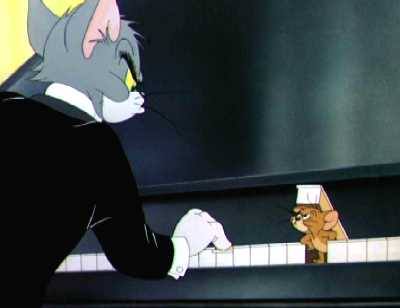
    Someone put together a compendium of the use of the “Hungarian Rhapsody No. 2” in cartoons. I’m a little under the weather today, so enjoy.

  • WPRB Thanks & Pledge Drive Extension

    WPRB Thanks & Pledge Drive Extension

    I’d like to extend a note of personal thanks to everyone who contributed to WPRB 103.3 FM yesterday morning during Classic Ross Amico. It was kind of a slow start, and then, at a point, when it finally got busy, we were understaffed with telephone volunteers, possibly dropping a few calls, yet we managed to raise something like $1500.

    Your support demonstrates not only that you appreciate all that I do, getting out of bed at 4:00 in the morning, putting together an interesting program, interviewing guests from the arts community, and most of all, sharing the music, it also shows that you care about maintaining an independent, locally-based alternative to the bland homogeneity that settles drowsily across the playlists and presentation heard on many other radio stations.

    It’s heartening that our contributors have been so generous and, as always, enthusiastic. However, the station still came up somewhat short of its $60,000 goal. Therefore, WPRB is leaving up its pledge page for another week. We won’t be hard pitching over the air, but we will put out the call occasionally, for anyone who really wanted to contribute but either missed the opportunity or could not.

    Sorry, the special “Classic Ross Amico” thank you gifts of lovingly assembled CDs are no longer available (well, maybe, if you contact me directly, but you need to make a pledge to the WPRB page); however, the stickers, the downloads, the calendar and the WPRB apparel are all still yours for the taking, for the next week only. Follow the link to make a pledge and claim your gifts:

    http://wprb.com/wprb-membership-drive-2016/

    I’d also like to thank the labels, performers and distributors who were so kind as to help me secure premiums for the drive: John Baker of Affetto Records, Clipper Erickson, piano, of Westminster Conservatory, Tom Steenland of Starkland Records, Becky Starobin of Bridge Records, Inc., and Gail Wein of Classical Music Communications.

    Thanks also to WPRB’s Sandy Steiglitz, Marvin Rosen and Jack Hollingsworth for donating their time and on-air talent and for helping to answer the telephones. Nobody’s too proud at WPRB, unless it be the justifiable pride of sharing unusual music with our devoted listeners. Thank you again for your support!

Tag Cloud

Aaron Copland (93) Beethoven (95) Composer (114) Film Music (139) Film Score (143) Film Scores (255) Halloween (94) John Williams (195) KWAX (229) Leonard Bernstein (103) Marlboro Music Festival (125) Movie Music (154) Mozart (89) Opera (210) Philadelphia Orchestra (89) Picture Perfect (174) Princeton Symphony Orchestra (108) Radio (88) Ross Amico (244) Roy's Tie-Dye Sci-Fi Corner (290) The Classical Network (101) The Lost Chord (268) Vaughan Williams (103) WPRB (396) WWFM (881)

DON’T MISS A BEAT

Receive a weekly digest every Sunday at noon by signing up here


RECENT POSTS