This Sunday night on “The Lost Chord,” we honor the accomplishments of Gordon Jacob.
Jacob’s is perhaps a name most frequently encountered these days as an orchestrator. He did a popular arrangement for full orchestra of Vaughan Williams’ “English Folk Song Suite,” originally composed for symphonic band; he orchestrated Sir Edward Elgar’s Organ Sonata; and his arrangement of the ballet “Les Sylphides” has been eclipsed only by that of Roy Douglas.
But he was also a prolific composer himself. In all, he wrote some 400 works. In fact, when weighing the size of his output against his reputation, it’s tempting to underestimate – as the Angel did his Biblical namesake – Jacob’s tenacity.
We’ll be listening to an example of his work as an arranger, his “William Byrd Suite,” in a classic recording on the Mercury label, and his rarely-heard Symphony No. 1, dedicated to the memory of his brother, who died in the First World War, in its world premiere recording on the Lyrita label.
I hope you’ll join me as we grapple with the range of Jacob’s accomplishments, in “Wrestling Jacob,” tonight at 10 ET, with a repeat Wednesday evening at 6 – or that you’ll enjoy it later as a webcast at http://www.wwfm.org.
In the meantime, follow the link for a witty survey ranking the various depictions of Jacob wrestling the angel in Western Art:
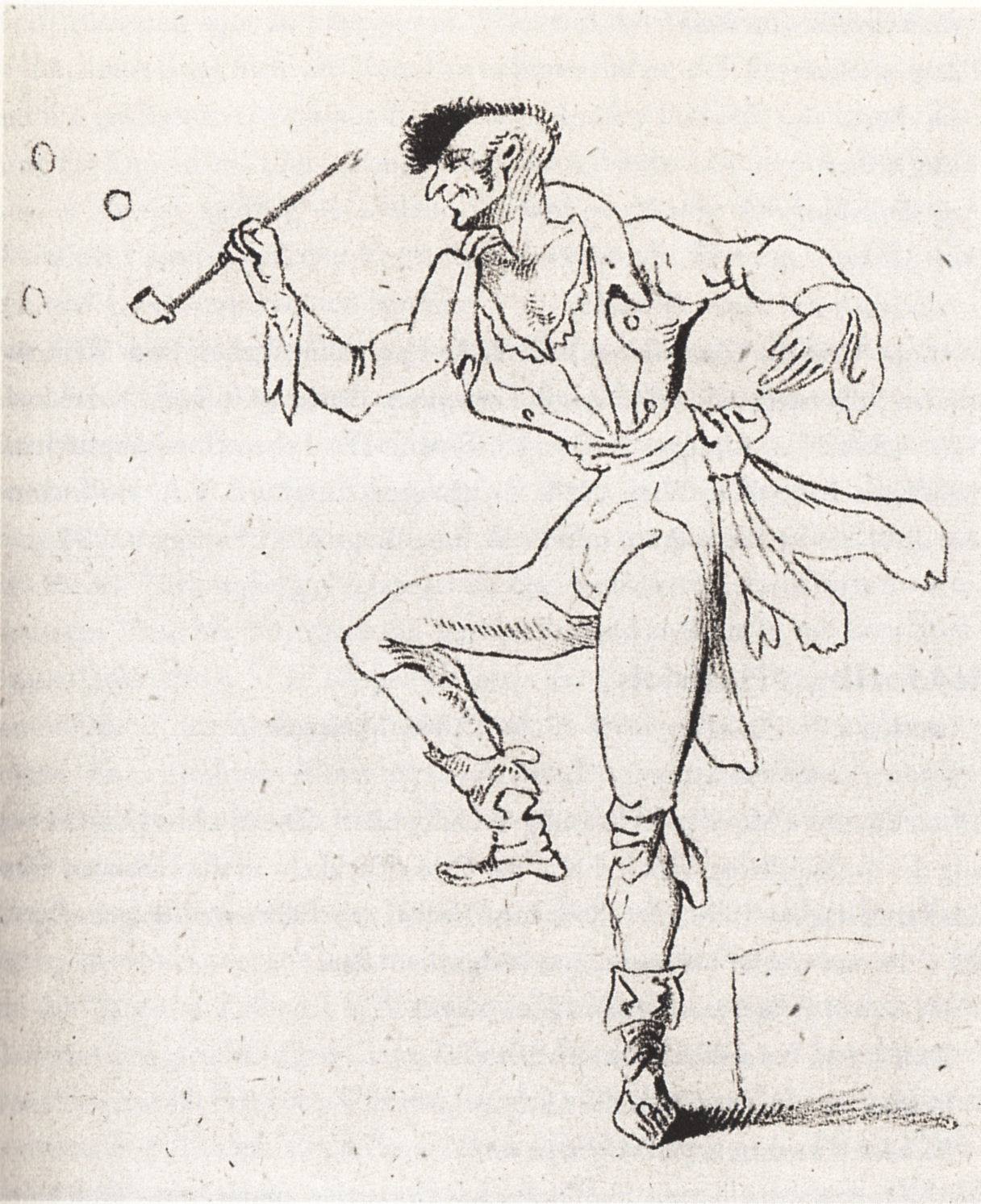
Today is the birthday of E.T.A. Hoffman (1776-1822), and what a good day for it! Mid-winter is the perfect time to enjoy Hoffmann’s tales of madness and obsession.
Not only was Hoffmann a seminal author of dark fantasy and horror, he was also a jurist, a draftsman, a caricaturist, and of course a composer and music critic.
Well, perhaps I shouldn’t say “of course.” Hoffmann is most famous for his writings, and justifiably so. None of his musical compositions have attained anything like repertoire status. However he did manage to turn out a lovely Harp Quintet, and his opera, about the water spirit “Undine,” certainly shows promise, though given the source – after all, he was the author of “The Sandman” and “Mademoiselle de Scuderi” – it is a mite disappointing.
Perhaps that is the viewpoint of someone looking back from a more jaded era, when the fantastic is routinely hammered home in all its CGI vulgarity. By contrast, Hoffmann’s tales are dream-like and insinuating in ways that still have the power to haunt across the centuries.
Musically, from our perspective, Hoffmann is perhaps more important for having inspired other, more enduring composers, who wrote works like “Coppelia” (Delibes), “The Nutcracker” (Tchaikovsky) and of course “The Tales of Hoffmann” (Offenbach). Even so, these works seldom reflect the spirit of Hoffmann’s originals.
Of the Romantics, surprisingly, only Robert Schumann seems to have really got it. You can really hear how Hoffmann got into his head in works like “Kreisleriana” and the “Nachtstücke.” But Schumann was perhaps one step away from “Sandman” material anyway.
Hoffmann’s tales have had a more palpable influence on 19th century literature, firing the creative imagination of writers from Dostoyevsky to Dumas to (least surprisingly) Edgar Allan Poe.
If all you know is “The Nutcracker” or the Offenbach opera, you don’t really know Hoffmann. Though Tchaikovsky had an intuitive grasp of the idiom, he was working from a watered down adaptation by Dumas. It took Maurice Sendak to bring the story back to its roots.
Sadly, I just learned via Google that Pacific Northwest Ballet has just concluded its final run of this gutsy production. Apparently, it was too freaky for audiences expecting to be spoon-fed sugar plums, so next season the company will take up the insipid Balanchine version, which inexplicably thrives like fungus on a fruitcake. Is this really the same artist who choreographed “Agon?”
Fortunately, the PNB Sendak version was made into a feature film in 1986.
This is a “Nutcracker” that will put hair on your chest.
Anyway, “The Nutcracker, “The Tales of Hoffmann,” and especially “Coppelia” are almost like children’s book versions of the originals. If you have a taste for such things, you owe it to yourself to at least read “The Sandman.” Here it is, though it’s really not the kind of story you should read off of a computer:
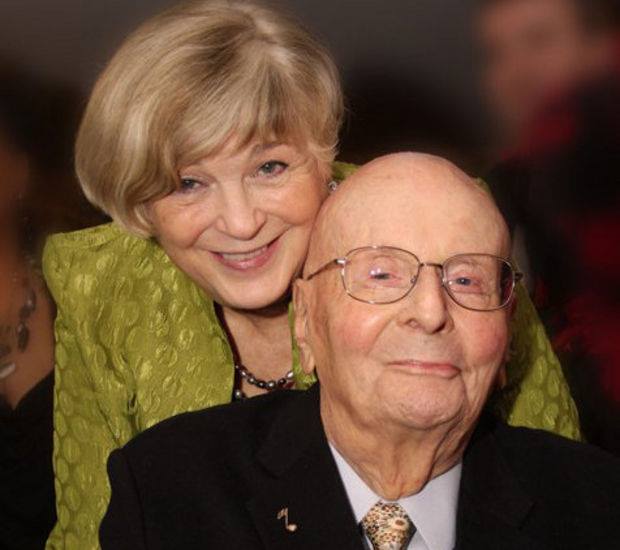
One of William H. Scheide’s final acts of musical beneficence will be made manifest this Tuesday, when Mark Laycock conducts the English Chamber Orchestra at the The Kimmel Center for the Performing Arts in Philadelphia.
The program will include Mozart’s Sinfonia concertante in E-flat Major, K. 364, and the Symphony No. 29 in A Major, along with English composer Robin Holloway’s “Ode for Four Winds and Strings” and Sir Edward Elgar’s “Serenade for Strings.” The event will mark the English Chamber Orchestra’s first appearance in Philadelphia.
Proceeds from the concert, which will coincide with the 248th anniversary of Mozart’s birth, will benefit the Philadelphia-based non-profit organization Musicopia. Musicopia is devoted to providing music education and opportunities to the young, with the intent to inspire lifelong involvement in music and the application of related skills to all aspects of a child’s life.
This week on “Picture Perfect,” it’s an interplanetary exchange program (though, granted, not always a peaceful one), with music from movies about visitors to and from Mars.
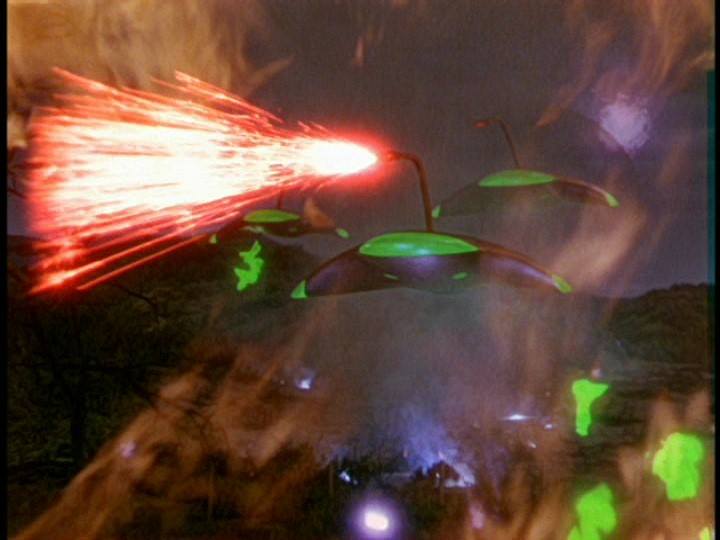
The first half of the show will compare and contrast selections from two film adaptations of H.G. Wells’ Martian invasion novel, “The War of the Worlds” – the classic 1953 version, produced by George Pal, with music by Leith Stevens, and the Steven Spielberg blockbuster, from 2005 (titled, simply, “War of the Worlds”), with music by John Williams.
Then we’ll take it to the Red Planet, when an American astronaut is stranded with his test monkey, in 1964’s “Robinson Crusoe on Mars,” with music by Van Cleave.
And finally, Edgar Rice Burroughs’ John Carter gets the big screen treatment, in 2012, a hundred years after the fact, in… well, “John Carter.” (Why Disney dropped “of Mars” from the title – something that would have actually said something about the subject matter – is anybody’s guess.)
Unfortunately the intervening decades robbed Burroughs’ creation of much of its freshness, with dozens, if not hundreds, of science fiction novels and movies having raided the author’s pulp treasure trove, making “John Carter” less striking than it might have been.
And I’m sure you already know where I stand on CGI. I would have loved this film had it been made in the ‘70s or ‘80s, using miniatures and matte paintings. Don’t get me wrong, I still enjoyed it, but it didn’t give me a lift, as few movies do these days. That said, it certainly wasn’t the train wreck the press made it out to be.
The music was by Michael Giacchino, who thankfully uses an orchestra and employs leitmotif, though perhaps doesn’t weave so rich a tapestry as might have some of his forebearers. It certainly ends the hour on a romantic note, a welcome relief after dodging so many Martian heat rays.
I hope you’ll accompany me to and from Mars, on “Picture Perfect,” music for the movies, this Friday evening at 6 ET, with a repeat Saturday morning at 6, or that you’ll partake of the webcast (once it’s posted), at http://www.wwfm.org.
Only in Italy. A game show, on which a blindfolded contestant attempts to identify an opera singer?
Here Giuseppe di Stefano gets a doll:
Does anybody know this program? It’s called “Il musichiere,” and YouTube is full of clips. It’s definitely worth having a look at a few of them. They are nostalgic, touching, and at times downright Felliniesque.
The host is Mario Riva. How could he have died at 48, when (judging from the clips) he’s got to be at least 60?