
I realize this is an investment of your time, but it’s actually worth it. Even if you only watch the first few minutes, and you care nothing at all for twelve-tone music, you will find it witty and informative. It’s a brilliant blend of music theory, philosophy and pure hilarity. (“Also, he was a horse-faced fascist!”). This is one talented YouTuber. If you’re not careful, you might just learn something.
Category: Daily Dispatch
-

Viktor Ullmann Music from Terezin
Tonight on “The Lost Chord,” to coincide with Holocaust Remembrance Day, we present music of Viktor Ullmann. Ullmann was one of the best-known composers to be interned in Terezin, or Theresienstadt, the “model camp” set up by the Nazis to deceive the foreign press and the International Red Cross.
There, concert orchestras, chamber groups and jazz ensembles were formed. Operas were staged, and the Verdi Requiem was mounted no less than fourteen times. At Terezin, composers continued to create, until deportation to Auschwitz.
Ullmann wrote in 1944, “…that musically I have been challenged not hindered by Theriesenstadt, that we did not just sit by Babylon’s rivers bewailing our fate, and that our will to create culture was as strong as our will to live.”
We’ll be listening to a cross-section of Ullmann’s music written in the camp, including a piano sonata (performed by Terezin survivor Edith Kraus, who died last year at the age of 100), a concert overture and a song cycle; also, a piano concerto written shortly before his arrest, a period of hardship for the composer, as he began to be stripped of his rights and his options to make a living. He never heard the concerto performed in his lifetime. Ullmann died at Auschwitz in 1944.
Ironically, most of his unpublished works dating from before his internment are lost. It is his music written at Terezin, for the most part, which survives. The music written during his confinement, then, becomes a metaphor for the indomitable spirit of the artist.
The composer lives on through his works, on “Ullmann Victorious.” You can hear it tonight at 10 ET, with a repeat Thursday night at 11, or listen to it later as a webcast, at http://www.wwfm.org.
To enhance your appreciation of Ullmann’s “Der Mensch und sein Tag” (“Man and His Day”), I am posting English translations of the aphoristic texts below, so that they may be read while listening to the music.
Of perhaps related interest, WWFM will rebroadcast “Vera’s Story,” Vera Goodkind’s first-hand account of her rescue from the Nazis by Swedish diplomat Raoul Wallenberg. Her remarks are augmented by music of composers who were caught up in the Holocaust. The program was produced by Rachel Katz and is narrated by Bill Zagorski. “Vera’s Story” will air Monday at 5 p.m. ET.
“DER MENSCH UND SEIN TAG” (MAN AND HIS DAY), Op. 47
12 Portraits by Hans-Günter Adler-
WALK INTO MORNING
Sight. Hands in front of eyebrows
and maternal light. Meadowland.
A blade of grass. A step. Dew on the flowers. -
SONG
So much. So much and still more.
A great ocean, surging and pounding –
flutes lightly, horns heavily. -
HOME
In the ground, the cool ground. So colourful.
Billowing fields and meadows around.
In the ground – hidden heart and mouth. -
TO THE BELOVED
With you, in smiles and tears.
Nearness of hand and mouth. Longing
fades. With you no blind fancy. -
FLOWERS
Inward, buried deep and warm.
Breath – singing to life.
Bright goblets, lips, tongues. -
IN THE PARLOUR
Tightly pressed to one another.
Planted with care and trouble.
Animate and inanimate. Mute and loud. -
THE NEIGHBOUR
Help is good. Hand in hand.
Door to door and wall to wall:
quite united. Bond and band. -
PRAYERS
Scattered in the chalice of piety
ripe corn offered
to the gladdened protector and creator. -
IN THE FOREST
Dappled, close and far and scent.
The sun dreams, the air slumbers.
Crepitation. Calcification. Trees. Scent. -
FADE
Down, down. The bell tolls.
Clouds glow. Evening glimmers.
Down, down. The moon-breath shimmers. -
NIGHT
Come, gentle sleep! Come, sweet night!
The ground relaxes in muted glory.
Lone thoughts sink to earth. -
SILENCE
Stillness. Silence. Looking and watching.
Tranquil in blessed reflection.
Sleep before the divine.
-
-
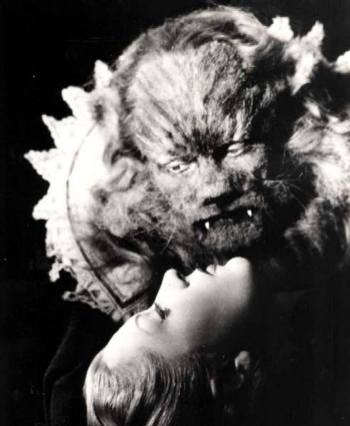
Beauty and the Beast The Best Fairy Tale Movie?
The best fairy tale movie of all time? Off the top of my head, I think so.
Turner Classic Movies: TCM is showing Jean Cocteau’s ineffably lovely “La Belle et la Bête” (“Beauty and the Beast”) on “The Essentials” tonight at 8:00 ET. Though the film was made in 1946, it certainly has enough tricks in its imaginative quiver to teach a thing or two to the CGI-crazed directors of today.
Moody, atmospheric, dreamy, clever, hypnotic, funny and romantic, with production design like something Gustav Doré might have conceived while smoking Dutch Masters, Cocteau’s masterpiece stars Jean Marais and Josette Day.
The alternately mysterious and majestic score is by Les Six veteran Georges Auric. Cocteau, you’ll recall, was the publicity machine that propelled Auric, Francis Poulenc, Darius Milhaud, Arthur Honegger, Germaine Tailleferre and Louis Durey to fame in Paris circa 1920.
If you only know the Disney version, you’re in for a real treat. A completely disarming film. It’s a good night to stay in and pop popcorn. Don’t miss this one.
-

Shakespeare Film Scores Olivier vs Branagh
We continue our celebration of the 450th anniversary of the birth of William Shakespeare on “Picture Perfect” this week, with music from film adaptations made by Laurence Olivier and Kenneth Branagh. The two overlapped on a handful of the Shakespeare plays, including “Henry V” and “Hamlet.” William Walton was Olivier’s house composer, and Patrick Doyle provides the scores for Branagh.
Walton and Olivier collaborated on three big projects, with Olivier as actor, director and usually producer – “Henry V” (1944), “Hamlet” (1948) and “Richard III” (1955). Earlier, in 1936, Walton scored a film version of “As You Like It.” Olivier didn’t direct this one, but rather appeared in one of the leads as the lovesick Orlando. In the role of Rosalind was the more unconventional choice of Austrian actress Elisabeth Bergner, who had played the role on stage. Her husband, Paul Czinner, directed. The film exudes great charm, and Walton’s music is as close to springtime as it gets.
Branagh is today’s foremost popularizer of the Bard. His turn as actor and director in “Henry V” (1989) boldly placed him toe-to-toe with Olivier. Amazingly – and deservedly – comparisons were not unfavorable. Branagh’s performance was nominated for an Academy Award. (Olivier, too, had been nominated, and received a special award for his “Outstanding achievement as actor, producer and director in bringing ‘Henry V’ to the screen”). However, by the time Branagh came to direct his version of “As You Like It” (2006), a number of factors had changed.
Following “Henry V,” things continued promisingly with a crowd-pleasing romp, “Much Ado About Nothing” (1993). But then Branagh mounted an unabridged, four-hour film adaptation of “Hamlet” (1996), laden with crazy cameos from Jack Lemmon (bad) to Charlton Heston (amazingly good), followed by a headscratch-inducing, American Songbook-laden “Love’s Labours Lost” (2000), which was universally panned. It certainly didn’t help Shakespeare’s clout in the eyes of distributors.
“As You Like It” received theatrical showings overseas, but was shown in America only on HBO. In Branagh’s version, the forest of Arden is transferred to 19th century Japan. There, English traders encounter ample kimonos, kabuki theatre, ninjas and a sumo wrestler. As always, Doyle provides a score that is lyrical and lovely.
It’s instructive to view the two directors’ takes on “Henry V” in the context of the times in which they were filmed. When Olivier brought Harry the King to the big screen, England was in throes of the Second World War and his “Henry” bubbles over with patriotic zeal.
Branagh, on the other hand, offers a darker, post-Vietnam “Henry,” with his charismatic, ambitious king plunging his country into a war that is both costly and messy. Fortunately, as history tells us, the long-bow saves the day, and Branagh’s Henry makes us forget his cold rejection of old friendships with a hair-raising rendition of the St. Crispin’s Day speech that makes anyone who hears it want to fight the French, consequences be damned.
Join me Friday evening at 6 ET for “Picture Perfect: Music for the Movies,” or catch the show later as a webcast, at http://www.wwfm.org.
-

Remembering Shakespeare Happy 450th
“Old men forget; yet all shall be forgot,
But he’ll remember, with advantages,
What feats he did that day.”We remember, Bill. Happy 450th.
Tag Cloud
Aaron Copland (93) Beethoven (95) Composer (114) Film Music (145) Film Score (143) Film Scores (255) Halloween (94) John Williams (195) KWAX (229) Leonard Bernstein (104) Marlboro Music Festival (125) Movie Music (160) Mozart (91) Opera (213) Philadelphia Orchestra (89) Picture Perfect (174) Princeton Symphony Orchestra (109) Radio (88) Ross Amico (244) Roy's Tie-Dye Sci-Fi Corner (290) The Classical Network (101) The Lost Chord (269) Vaughan Williams (105) WPRB (397) WWFM (881)