It’s 4:40 EDT.
Join the Sun Lion, the Moon Bull, and Mother Earth in welcoming summer with the ballet “Solstice” (1949) by American composer Lou Harrison. The actual music starts at the 2-minute mark. Before that is a brief spoken intro.

It’s 4:40 EDT.
Join the Sun Lion, the Moon Bull, and Mother Earth in welcoming summer with the ballet “Solstice” (1949) by American composer Lou Harrison. The actual music starts at the 2-minute mark. Before that is a brief spoken intro.

As our mega heat wave continues to intensify here in the mid-Atlantic, moronic sun-worshippers everywhere welcome the longest day. Summer arrives in the Northern Hemisphere at 4:40 p.m. EDT.
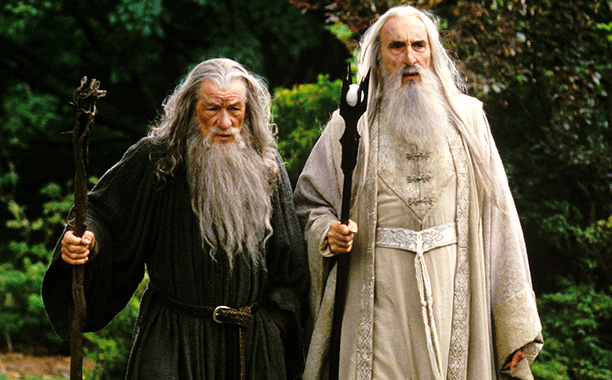
We can thank these cheery gnomes, with their wooden clogs and domesticated insects, for all of our woes. Hail, His Majesty, the Sun!

Roy and I have already experienced two heat-related brownouts between us, but I’ll remind you anyway: if all proceeds as planned, we’ll hold our (already-been-postponed-from-last-week) discussion about the classic television series “The Wild Wild West” (1965-69) tomorrow night on Roy’s Tie-Dye Sci-Fi Corner.
Artemus Gordon is hard at work devising a back-up energy source, in proto-steampunk fashion. Hope to see you in the comments section as we endeavor to overcome all obstacles with our visionary gadget-of-the-week, this Friday evening at 7:00 EDT!
https://www.facebook.com/roystiedyescificorner
You’ll find more information in my post from last Thursday and some interesting remarks about the show’s music in the comments section.
https://www.facebook.com/photo/?fbid=1323473315238395&set=a.883855802533484
A reminder that all episodes of “The Wild Wild West” are available for free streaming on Pluto TV.

Cartoon in this week’s The New Yorker. What’s the dealio with all the standing ovations the last number of years? You’d think we were watching a Franz Liszt-Niccolò Paganini smackdown every night of the week, with Farinelli grinding over a row of crush cars in his monster truck. Standing ovations for unexceptional performances – that is to say, performances that are absolutely fine, but not exactly life-altering – is the shadow pandemic nobody talks about. Worst of all is when the numbnuts in front of me stand, blocking my view of the stage, making me look like a numbnut, because now I have to stand too!

Is Juneteenth poised to become the next Mardi Gras/St. Patrick’s Day/Cinco de Mayo? Well, at least it’s not a drinking holiday yet.
While I venture to guess it’s still all fairly new to most white folks (I was probably ahead of the curve, thanks to Ralph Ellison’s novel, “Juneteenth,” finally published in full, posthumously, in 1999), I can’t say its wider dissemination is altogether a bad thing. For classical music lovers, especially, there has been so much to discover – and yes, to celebrate – as the result of sweeping cultural changes and broader awareness over the past few years, and by no means restricted to June 19.
Some may roll their eyes at all the “over-exposure” of Florence Price, but come on, admit it, isn’t it a little invigorating to hear some American music other than the same old Gershwin and Copland? In the interest of full disclosure, I offer this as someone for whom Copland is probably one of my favorite composers. So much Black classical music, if it was known at all, was almost never heard, unless it was on that one, scrappily-played, often out-of-print and hard-to-find recording. For how many years was I hungry to hear the complete symphonies of William Grant Still? Now they’re getting played – in concert, no less!
For those of you tiring of George Walker’s “Lyric for Strings” (and how could you?), look at it as a corrective. At some point, the pendulum will swing back, and ideally this belated inundation of Black music will lead to the best of it taking its place in the active repertoire. It can’t happen unless people know it’s out there and are exposed to it.
I look forward to the day that we’ll be past the point of anyone grousing about quotas or “woke” or any of that nonsense. People are ridiculous creatures. It’s easy to deride and it’s tempting to mock – believe me, I can be as cynical as anyone, and in all things – but really, there are many sincere concert programmers out there who are just trying to do the best that they can. For anyone who happens merely to be paying lip-service to the zeitgeist, I’m sure there are many more who want to do the right thing.
For those for whom the holiday has always meant something (June 19 is the date in 1865 on which the federal enforcement of the Emancipation Proclamation guaranteed freedom to enslaved peoples in all Confederate states following the Civil War), I can imagine how, after a while, it could all get to be a little much for them, too. The more popular it becomes, the more corporate or Disneyfied it risks becoming. How long before Juneteenth is ruined by the Man?
Anyway, celebrate responsibly, everyone, and remember – keep the Juneteenth in Juneteenth!
Florence Price, “Juba” from the Symphony No. 1
George Walker, “Lyric for Strings”
William Grant Still, “Serenade”
Adolphus Hailstork, “Celebration!” (composed for the U.S. Bicentennial)
Aaron Copland (93) Beethoven (95) Composer (114) Film Music (124) Film Score (143) Film Scores (255) Halloween (94) John Williams (188) KWAX (229) Leonard Bernstein (101) Marlboro Music Festival (125) Movie Music (139) Opera (202) Philadelphia Orchestra (89) Picture Perfect (174) Princeton Symphony Orchestra (106) Radio (87) Ralph Vaughan Williams (85) Ross Amico (244) Roy's Tie-Dye Sci-Fi Corner (290) The Classical Network (101) The Lost Chord (268) Vaughan Williams (103) WPRB (396) WWFM (881)