Category: Daily Dispatch

  • Airport Movie Music on “Picture Perfect” Radio

    Airport Movie Music on “Picture Perfect” Radio

    This week on “Picture Perfect,” get ready to take flight, with music from movies about airports and airplanes.

    In the original “Airport” (1970), producer Irwin Allen established the prototype for disaster movies of all stripes by placing an all-star, aging cast in spectacular peril. Burt Lancaster! Dean Martin! George Kennedy! Jean Seberg! Jacqueline Bisset! Helen Hayes! The list goes on and on, longer than the longest runway. The bongo-laden theme is by veteran film composer Alfred Newman,” from the last of his over 200 scores.

    Another movie with something of the same feel is “The V.I.P.s” (1963), allegedly inspired by the real-life love-triangle of Vivien Leigh, Laurence Olivier, and Peter Finch. The story is set at London Heathrow Airport, where flights are delayed because of a dense fog. The film was written by Terrence Rattigan and the parts cast from another laundry list of stars, including Elizabeth Taylor, Richard Burton, Louis Jourdan, Maggie Smith, Rod Taylor, and Orson Welles, with Margaret Rutherford in an Academy Award-winning performance. The music is by Miklós Rózsa.

    By contrast, Steven Spielberg’s “The Terminal” (2004) is an (intentionally) comic take on the predicament of a hapless Eastern European who finds himself in a kind limbo, trapped in an international arrivals terminal in New York, after his country erupts into civil war, so that his passport and other documentation are no longer valid. His plight mirrors that of real-life Mehran Karimi Nasseri, an Iranian who lived for 17 years in a terminal at Charles de Gaulle Airport.

    Tom Hanks plays the unfortunate traveler, who makes the terminal his home, and Catherine Zeta-Jones the airline attendant with whom he strikes up a relationship. The music is by regular Spielberg collaborator John Williams, and I think you’ll find it quite different from the Williams known for his work on “Star Wars” and “Indiana Jones.”

    Finally, we’ll turn to the Alfred Hitchcock thriller “North by Northwest” (1959), a film in which Cary Grant encounters love and danger in, on, and from a variety of planes, trains, and automobiles. Planes are particularly significant. During the course of the film, it’s revealed that the title is in reference to a Northwest Airlines flight; Eve Kendall (Eva Marie Saint) must do all she can to avoid getting on a plane with Phillip Vandamm (James Mason); and of course, Roger Thornhill (Grant) flees from a strafing crop duster. Bernard Herrmann’s opening fandango propels us into the adventure.

    Rush more to Rushmore. Departure time below, for “Picture Perfect,” music for the movies, now in syndication on KWAX, the radio station of the University of Oregon!


    Remember, KWAX is on the West Coast, so there’s a three-hour difference for the Trenton-Princeton area. Here are the respective air-times of my recorded shows (with East Coast conversions in parentheses):

    PICTURE PERFECT, the movie music show – Friday on KWAX at 5:00 PACIFIC TIME (8:00 PM EDT)

    THE LOST CHORD, unusual and neglected rep – Saturday on KWAX at 4:00 PACIFIC TIME (7:00 PM EDT)

    Stream them here!

    https://kwax.uoregon.edu/

  • One Million Years BC Raquel Welch & Dinosaurs

    One Million Years BC Raquel Welch & Dinosaurs

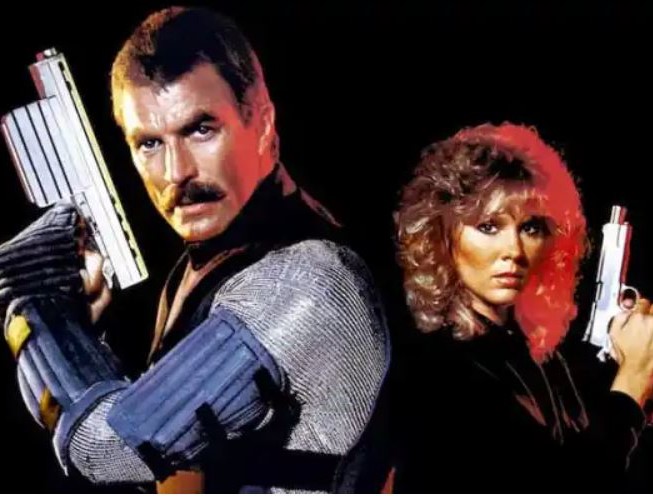
    Beach season may be over, but it’s never too late for Raquel Welch in a fur bikini. Roy and I will brave anything, even Ray Harryhausen-animated Pteranodons, to discuss “One Million Years B.C.” (1966) on the next Roy’s Tie-Dye Sci-Fi Corner.

    Prehistoric cave people face off against dinosaurs – and each other – in yet another wish-fulfillment fantasy from Hammer Studios. Thrill to erupting volcanoes, giant iguanas, and grunting hirsute men with spears. Also… Martine Beswick dances!

    Hammer! Harryhausen! Hairy beachwear!

    Count to one million in the comments section, as we test your patience with a conversation about “One Million Years B.C.” Not all the dinosaurs will be on screen, when we livestream on Facebook, YouTube, etc., this Friday evening at 7:00 EDT!

    https://www.facebook.com/roystiedyescificorner

  • Gustav Holst Beyond The Planets A Musical Genius

    Gustav Holst Beyond The Planets A Musical Genius

    It’s interesting that Gustav Holst and Ralph Vaughan Williams were born only three weeks apart, albeit separated by two years. Uncle Ralph’s birthday looms on October 12 – but for today, we celebrate Holst!

    “Gustav” may be a strange name for one of England’s greatest composers. Even stranger, he was actually christened Gustavus. Also, there was a “von” in his name – Gustavus Theodore von Holst. Holst’s father was of Swedish, Latvian, and German descent. His great-grandfather had also been a composer, who taught harp at the Imperial Russian Court in St. Petersburg. Continuing in the family trade, his grandfather set up shop in England. In doing so, he added the “von,” thinking it lent a little gravitas and might help to drum up business. Sensibly, Gustav dropped the prefix with the outbreak of war with Germany in 1914.

    Like Vaughan Williams, Holst was born in Gloucestershire. Both were students at the Royal College of Music, who studied with Sir Charles Villiers Stanford. Significantly, they were also linked by a common destiny, spearheading a movement to establish a distinctly “English” national sound in music. They accomplished this by getting their hands dirty, tying on their boots and striking out for the fields and fens, to collect songs of the countryside, already endangered by encroaching industrialization. In some of their best original music, both composers assimilate English folk inflections into their respective styles.

    Holst himself was an exacting teacher, who took his duties very seriously. However, in common with the best of his profession, he never imposed his will on his students, but rather shepherded them in finding their own solutions. Holst served as director of music at St. Paul’s Girls’ School, Hammersmith, and at Morley College.

    Of course his masterpiece would be “The Planets,” composed between 1914 and 1916. Hard to believe, in a world of composers schooled on the piano, that Holst’s principal instrument was the trombone! I recall listening to this music for the first time in my teens and thinking “Jupiter,” in particular, positively exuded “England.” Its roistering, galumphing, perhaps even Falstaffian antics give way to a stately, processional theme, later adapted into the patriotic hymn “I Vow to Thee, My Country.” But with the passage of time, and longer familiarity, “The Planets’” English identity, detectable in every note, has become increasingly evident.

    Even so, Holst was never of a provincial mindset. On the contrary, he was a much more adventurous – and frequently modernist – composer than he is frequently given credit for having been. His literary inspirations were far-ranging, from Thomas Hardy to Walt Whitman to Sanskrit. His music is often less emotive than Vaughan Williams’. I’ve always detected more of an objective detachment in his works. Remarked Vaughan Williams, “He was not afraid of being obvious when the occasion demanded, nor did he hesitate to be remote when remoteness expressed his purpose.”

    The two were one another’s most constructive critics. When Holst died, comparatively young, at the age of 59, Vaughan Williams felt his friend’s passing keenly. Aside from the personal loss, from a professional and artist standpoint, suddenly he was bereft of his most valued confidante and advisor.

    Holst’s legacy can be detected best in those composers who reacted against Vaughan Williams and the pastoral school. His economy and restraint appealed to the generation of Walton, Britten, and Tippett. Also – and I never see this remarked upon – I detect his spirit often in the film and concert music of Bernard Herrmann. (Herrmann was a great anglophile, who championed Holst.) There is a certain aloofness, perhaps even a chill, in the work of both artists, but also great sensitivity.

    Happy birthday, Gustav Holst (1874-1934)! You may be regarded by some as a one-hit wonder, but it is an assessment made in ignorance. May the inertia of your greatest success carry listeners far beyond “The Planets.”


    The composer’s most famous music, “Mars, the Bringer of War” (1914)

    “Jupiter, the Bringer of Jollity” (1914)

    “Beni Mora” (1910)

    Vaughan Williams’ setting of “Seventeen Come Sunday” from his “English Folk Song Suite” (1923)

    Listen for the tune in Holst’s “Somerset Rhapsody” (1906), about three minutes in

    “Choral Hymns from the Rig Veda” (1911), anticipating Britten?

    First Choral Symphony (1923-24); RVW expressed only “cold admiration” for it

    “Hammersmith” (1930), prelude and scherzo

    6 Choral Folk Songs (1916): “Song of the Blacksmith”
    https://www.youtube.com/watch?v=DbNwpJPlpAQ

    12 Welsh Folk Songs (1930-31): “My sweetheart’s like Venus”

    Finally, a collaborative work, “Pan’s Anniversary,” a masque written by Ben Jonson, circa 1620, revived in 1905 for a production at Stratford-upon-Avon. Vaughan Williams composed most of the incidental music, with Holst stepping up to arrange some dance tunes under considerable time pressure. The piece was released for the first time on Albion Records, the recording branch of the Ralph Vaughan Williams Society, with some colorful bonuses.

    https://rvwsociety.com/pans-anniversary/

    You can sample the entire album, including an arrangement of the “Fantasia on a Theme by Thomas Tallis” for voices and strong octet, here:

    The Albion catalogue sports much unusual and intriguing RVW fare, often in world premiere recordings. You’ll find some great gift ideas for the musical anglophile who “has everything.”

    https://rvwsociety.com/albionrecords/

    If nothing else, get them a subscription to the Ralph Vaughan Williams Society Journal.

    https://rvwsociety.com/

    While I’m at it, I should also mention there is a society devoted to Gustav Holst!

    http://www.holstsociety.org/index.php


    PHOTO: Holst (left) with Vaughan Williams, who never could tie a tie

  • Stephen Gould Bayreuth Tenor R.I.P.

    Stephen Gould Bayreuth Tenor R.I.P.

    American heldentenor Stephen Gould has died. Since 2004, he appeared at Bayreuth nearly 100 times. Gould, 61, announced his retirement from singing only last month. Later, he revealed on social media that he had been diagnosed with bile-duct cancer, “with complications,” and that there would be no cure. He took the opportunity to express his gratitude to Bayreuth and for all the fond memories. He faced his disease clear-eyed and went out with real class.

    As a young singer, Gould auditioned for a national tour of Andrew Lloyd Webber’s “The Phantom of Opera” – as a joke, he said – and he wound up singing in the show for close to eight years!

    I recall this ballsy Bayreuth production of “Tannhäuser,” directed by Tobias Kratzer, from 2019, featuring a dwarf, a drag queen, and Gould in clown make-up. Not sure it’s exactly what Wagner had in mind, but I know you will love it. Sorry, no subtitles. You’ll just have to sprechen sie Deutsch.

    https://www.youtube.com/watch?v=4PyAFw5x588

    If it’s not to your taste, here’s a duet from Korngold’s “Die tote Stadt” with Nadia Michael

    An obituary in Opera Wire

    Obituary: Tenor Stephen Gould Dies at 61

    An interview from 2019

    https://www.dw.com/en/the-late-bloomer-of-tenors-stephen-gould/a-49739198

    R.I.P.

  • Lili Boulanger’s “Soleils de Septembre”

    Lili Boulanger’s “Soleils de Septembre”

    In observing Lili Boulanger’s birthday anniversary on August 21st, I came across this piece I’d never heard before, and I decided to squirrel it away for September. This is Boulanger’s lovely setting of “Soleils de Septembre” (“The Suns of September”), from 1912. She would have been in her late teens. The poem, by Auguste Lacaussade (1815-1897), inspires a melancholy meditation on the change of seasons and the passage of time; but Boulanger’s setting concludes with a sense of optimism, a series of trills, suggestive of birds and sunshine, “the intoxication of song,” and “the happiness of loving.” The piece takes on an added degree of poignancy, when we reflect that the composer would die young, in 1918, at the age of 24.

    You’ll find the song at the link, with an English translation of the text below.

    Under these warm rays of suns of September
    The sky is soft, but pale, and the earth turns yellow.
    In the forests the leaf has the color of amber;
    The bird no longer sings on the edge of its nest.

    From the roof of the plowmen have fled the swallows;
    The sickle has passed on the golden ear of corn;
    No one hears in the air shivers of wings:
    The blackbird whistles alone in the depths of the troubled woods.

    The mousse is perfume-free, the herbs without softness;
    The rush on the ponds looks anxious;
    The sun, which turns pale, a warm sadness
    Fills in the distance the plain and the mountains and the heavens.

    The days are abbreviated; the water running in the valley
    No longer the joyous noises that delighted the air:
    It seems like the earth, and chilly and veiled,
    In his first chills he feels winter.

    O changing seasons! O inexorable laws!
    What mourning nature, alas! will cover himself!
    Suns of happy months, irreparable spring,
    Farewell! Streams and flowers will shut up and die.

    But console yourself, earth! O Nature! O Cybele!
    Winter is a sleep and is not the death:
    The springs will come back to make you green and beautiful;
    Man ages and dies, you do not grow old!

    You will return to the streams, dumb by the cold,
    Under the leafy arches their singing murmurs;
    To birds you will make their nests in the greenery;
    To the lilacs of the valley you will return its scents.

    Ah! captive germs when you break the chains,
    When, from the sap to flow, spilling the liquor,
    You will make the roses and the oaks bloom again,
    O Nature! with them make my heart bloom again!

    Return to my breast dried up poetics sap,
    Pour into me the heat of which the soul feeds,
    Bring the sheaves of my dreams to my forehead,
    Covers my bare boughs from the flowers of my mind.

    Without the intoxication of songs, my high and dear drunkenness,
    Without the happiness of loving, what do the days matter to me?
    O suns! O spring! I do not want youth
    What to always sing, only to love always!

Tag Cloud

Aaron Copland (93) Beethoven (95) Composer (114) Film Music (124) Film Score (143) Film Scores (255) Halloween (94) John Williams (188) KWAX (229) Leonard Bernstein (101) Marlboro Music Festival (125) Movie Music (139) Opera (202) Philadelphia Orchestra (89) Picture Perfect (174) Princeton Symphony Orchestra (106) Radio (87) Ralph Vaughan Williams (85) Ross Amico (244) Roy's Tie-Dye Sci-Fi Corner (290) The Classical Network (101) The Lost Chord (268) Vaughan Williams (103) WPRB (396) WWFM (881)

DON’T MISS A BEAT

Receive a weekly digest every Sunday at noon by signing up here


RECENT POSTS