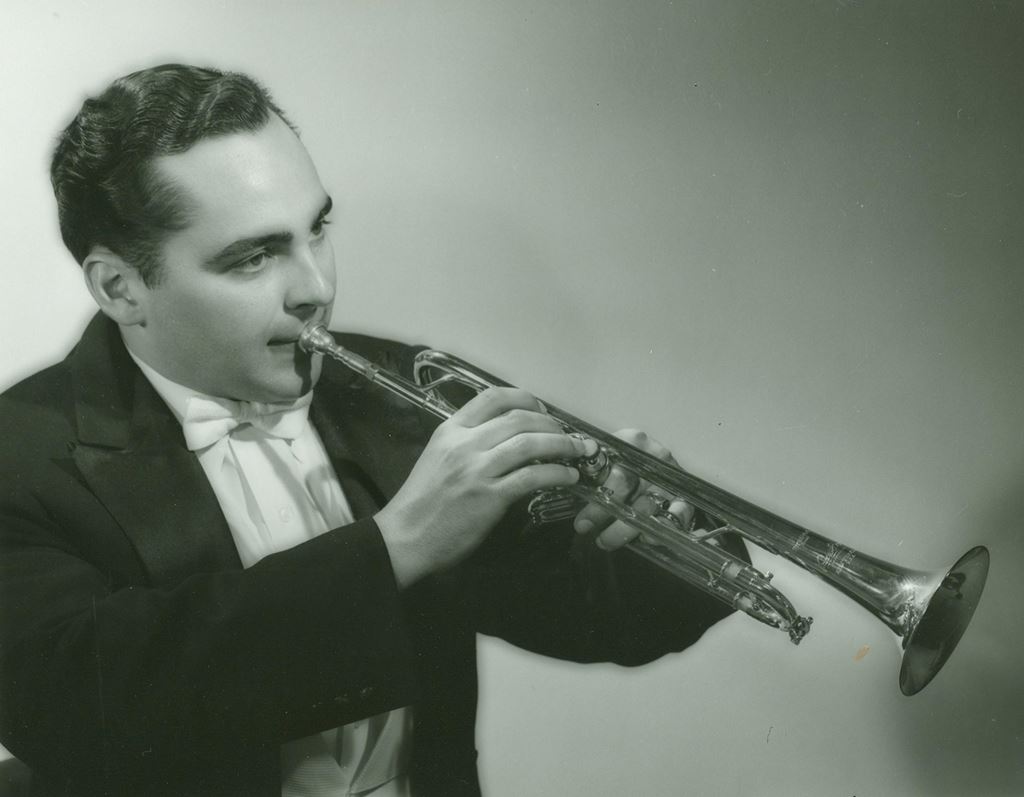
Here’s Leonard Bernstein playing the shofar during a rehearsal for his nonsectarian, humanistic “Mass” at the Kennedy Center in September 1971. It’s been observed that there are echoes of the shofar’s tekiah in both “West Side Story” and “Candide.” Many other classical composers have been influenced by and have emulated this distinctive call on the ram’s horn. Some have even employed the horn itself.
More on this another time. For now, if you observe the holiday, may you be inscribed, and best wishes for a sweet new year!
Nick sat down against the charred stump and smoked a cigarette. He lit a match and watched it burn and as it burned he thought of boxers and marlins and the Spanish Civil War. The stories were brave and strong and good. He ordered a mojito and prepared to face the music.
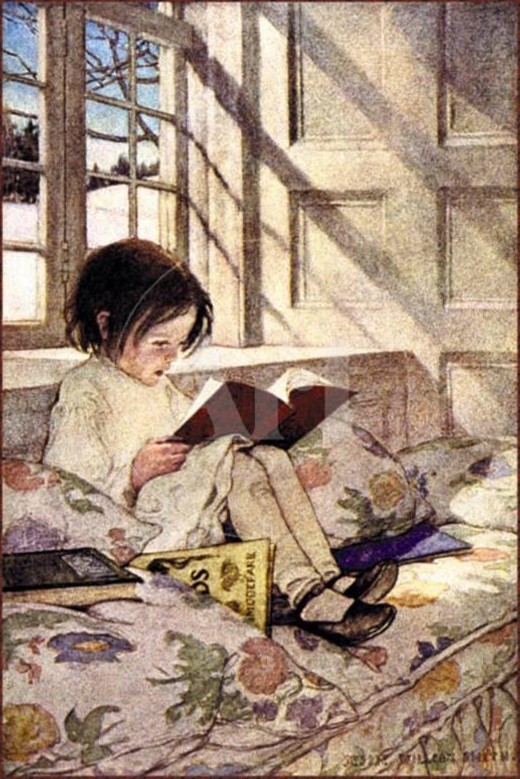
This week on “Picture Perfect,” the focus is on Ernest Hemingway.
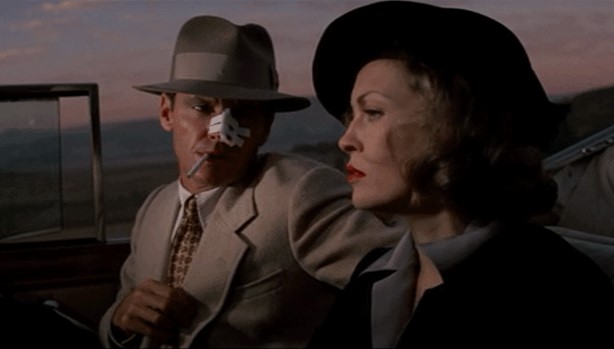
Seemingly at odds with Hemingway’s minimalist, “iceberg” style, big screen adaptations of the writer’s work show what the stories don’t tell. In the case of 1946’s “The Killers,” the screenwriters unapologetically just made stuff up, an entire back story explaining the motivations for the hit of boxer “Swede” Anderson. Fortunately, those screenwriters happened to include an uncredited John Huston, who virtually codified noir with “The Maltese Falcon.”
“The Killers” provided Burt Lancaster with his break-out role. It also features a knock-out score by Miklós Rózsa, in which he uses the dum-dee-dum-dum motto later made famous by the television series “Dragnet.”
In 1977, George C. Scott reunited with his “Patton” director, Franklin J. Schaffner, for an adaptation of Hemingway’s posthumously published novel, “Islands in the Stream.” Scott gives one of his best performances as a Hemingway-like figure living on a Caribbean island. “Patton” composer Jerry Goldsmith wrote the music. Goldsmith spoke of it often as his favorite score.
Hemingway himself handpicked the leads for the 1943 adaptation of “For Whom the Bell Tolls,” with Gary Cooper and Ingrid Bergman falling in love against the backdrop of the Spanish Civil War. The music was by the prolific and versatile Victor Young.
And finally, Spencer Tracy is the whole show, as he faces off against a large marlin, in the 1958 version of “The Old Man and the Sea.” Dimitri Tiomkin’s music earned him his fourth Academy Award.
Join me for an hour of laconic grace and stoic manliness on “Picture Perfect,” music for the movies, now in syndication on KWAX, the radio station of the University of Oregon!
Remember, KWAX is on the West Coast, so there’s a three-hour difference for the Trenton-Princeton area. Here are the respective air-times of my recorded shows (with East Coast conversions in parentheses):
PICTURE PERFECT, the movie music show – Friday on KWAX at 5:00 PACIFIC TIME (8:00 PM EDT)
THE LOST CHORD, unusual and neglected rep – Saturday on KWAX at 4:00 PACIFIC TIME (7:00 PM EDT)
When Eugene Ormandy took the Philadelphia Orchestra to China for its first concert there, 50 years ago today, he was sure to include, alongside Mozart and Brahms, some music from the American Heartland.
Roy Harris (1898-1979) was born in a log cabin, in Lincoln County, Oklahoma, on Lincoln’s birthday. If that doesn’t imbue a composer with a sense of destiny, I don’t know what will. Harris went on to became one of our great American symphonists. In particular, his Symphony No. 3 of 1939 has been much beloved and frequently performed. Unfortunately, we don’t hear all that much of his music anymore. And that’s a damned shame.
Philadelphia would be the first American orchestra to perform in China (the London and Vienna Philharmonic Orchestras had appeared earlier the same year), having received an invitation in response to Nixon’s historic visit in 1972. According to first-hand accounts, audience reactions to the performances were difficult to decipher. On the street, people were curious, but stand-offish. Red banners and likenesses of Mao, Lenin, and Stalin festooned Tiananmen Square. The local orchestra played Western music (Beethoven), but only in rehearsal, for training purposes. In summer, musicians pruned trees.
Here are some interesting, balanced impressions, from a diary kept by one of the Philadelphians:
In all, the orchestra played six concerts. This was the trip on which Philadelphia performed the notorious “Yellow River” Concerto, a piano concerto written by committee and overseen by Madame Mao herself. Interesting that a country that did its damnedest to suppress decadent Western influence would shamelessly pilfer from the Western Romantics. As an encore, the pianist played a set of variations on “Home on the Range,” apparently a concession to Nixon. According to the diarist, Madame Mao did not care for “The Pines of Rome.” Mao himself was a no-show.
Also included on the programs were “The Stars and Stripes Forever” and the “Chinese Worker’s March.” Again, the Beijing audience seemed impassive. Performances were received with more enthusiasm in Shanghai.
While I haven’t been able to locate any recordings of the Chinese concerts, here’s Ormandy and the Philadelphians playing Harris in Russia in 1958. Additional American offerings included Samuel Barber’s “Adagio for Strings” and George Gershwin’s “An American in Paris,” which were played alongside Igor Stravinsky’s “The Firebird.” You can hear the tepid applause in Russia, when following the link.
The ”Yellow River” Concerto has been described as a first cousin to Richard Addinsell’s “Warsaw Concerto.” Prior to their departure, the Philadelphia Orchestra gave the U.S. premiere of the piece, one of the works requested by the Chinese to be performed on the impending tour. Daniel Epstein was the soloist at its Saratoga Springs debut. Epstein would accompany the orchestra to China and record the concerto with the the musicians on their return. The album was released on on RCA Records. For some reason, it was never reissued on CD, but is now available for purchase as an mp3.
Diplomat Nicholas Platt, who accompanied Nixon to Beijing in 1972, and later traveled with and advised Ormandy, talks about some of the complications surrounding the Philadelphia Orchestra’s trip to China.
Peruvian soprano Yma Sumac was born 100 years ago today. Marketed as an Incan princess (an assertion supported by the Peruvian government), Sumac possessed a preternatural five-octave range. That’s a Guinness record.
She was a pioneer in the world music genre, dubbed the Queen of Exotica. At times, she emulated bird song, at others she sounded like a didgeridoo. She attributed her extraordinary range to having been reared in the Andes, where the high altitude caused her to develop her exceptional lung power.
She was certainly one of a kind. I imagine her as having stepped out of the pages of W.H. Hudson’s “Green Mansions.”
Here, she sings “Chuncho” (“The Forest Creatures”), from 1954, by her husband, Moisés Vivanco.
On June 25, 1953, Sumac appeared on a Lewisohn Stadium concert, conducted by Leonard Bernstein. The program included the Piano Concerto No. 4 by Heitor Villa-Lobos, with Bernardo Segall the soloist, Aaron Copland’s “Danzon Cubano,” and “Three Brazilian Dances” by Camargo Guarnieri, with Sumac performing works by Vivanco and others. Here, she’s like a human theremin as she lends her voice to Debussy’s “Clair de lune.”
She appeared in “Secret of the Incas” with Charlton Heston, in 1954, a primary inspiration for “Raiders of the Lost Ark.”
Decades later, in 1987, she appeared on “Late Night with David Letterman.”
She received a late-career boost from the lounge revival of the 1990s, as her albums began to be reissued on compact disc. Her recording of “Ataypura” was used to introduce Ben Gazzara as Jackie Treehorn in the “The Big Lebowski.” (It’s the second song she sings at the “Secret of the Incas” link above).
“Gopher Mambo,” from 1954, again by Vivanco, has been used many times, including at the 2018 Olympics.
Sumac’s final concert appearance was at the Montreal Jazz Festival, on July 1, 1997, when she was 74 years-old. “The Peruvian Songbird” died in 2008 at the age of 86.
He played tennis with Gershwin. He adored Hopalong Cassidy. He feared the number 13.
That’s right, kids! It’s Arnold Schoenberg’s birthday!
In common with many composers who fled political unrest in Europe, Schoenberg settled in Los Angeles. He was outspoken about his dislike of many of his contemporaries. Igor Stravinsky, similarly catty, lived only a few miles away. Earlier in their careers, they were on friendly, or at least cordial terms (by Schoenberg and Stravinsky standards), but after 1925, when Schoenberg wrote a “nasty verse” (according to Stravinsky) and set it as a canon, the friendship cooled. For his part, Stravinsky told the press that he viewed Schoenberg as more of a chemist than an artist. Their contempt for one another never mellowed, and the trash talk flowed.
This is from Schoenberg’s “Three Satires.” “Vielseitigkeit” (“Versatility”) is a palindromic canon. It can be performed front to back or back to front by inverting the music and reading it backwards. Igor is savaged as “kleine Modernsky.”
“But who’s this beating the drum?
Why, it’s little Modernsky!
He’s had his hair cut in an old-fashioned queue,
And it looks quite nice!
Like real false hair!
Like a wig!
Just like (or so little Modernsky likes to think)
Just like Papa Bach!”
Meow, boys!
After Schoenberg’s death, Stravinsky apparently developed an interest in “chemistry,” as he began to assimilate Schoenberg’s twelve-tone system of composition into his later works.
This one, “Requiem Canticles,” was given its first performance at Princeton’s McCarter Theater on October 8, 1966. In attendance were Aaron Copland and J. Robert Oppenheimer. Afterward, Oppenheimer requested that the piece be played at his funeral. The request would be honored only four months later. The “Requiem Canticles” would also be performed at Stravinsky’s funeral in Venice in 1971.
Ironically, Stravinsky and Schoenberg shared a disciple in Robert Craft, who conducted this recording. Craft championed both composer’s music and apparently was accepted in both camps.
I wonder if Schoenberg ever met Rachmaninoff? Now that would be a scowling contest I would pay to see.