
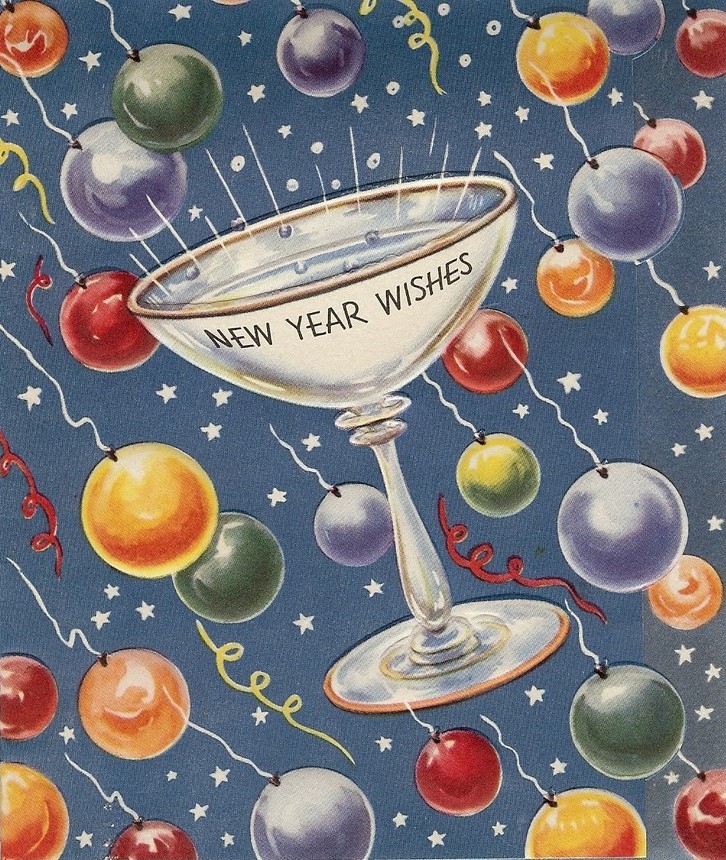
They say a picture is worth a thousand words. I think this one pretty much encapsulates my sentiments and impressions, touching the last 24 hours, better than I could ever express. Happy journey into the new year, everyone!
Category: Daily Dispatch
-

Music Blog Hiatus Ends 2024
The last weeks of 2023 have passed in a blur. Happy New Year, everyone, and thanks for following the page. Here’s hoping for a return to substantial music posts in 2024 (if they have Wi-Fi at the sanitarium)!
-
New Year’s Operetta & Light Music on KWAX
I hope you’ll join me on this Saturday morning, the last of 2023, for some uplifting music calculated to charm and to cheer, on an all-new episode of “Sweetness and Light.”
We’ll enjoy selections from operetta, including a concert overture on themes from Franz Lehár’s “The Merry Widow,” a duet from Oscar Straus’ “A Waltz Dream,” and the irresistible “Song of the Laugh,” an insert aria employed in Sidney Jones’ “The Geisha,” in a vintage recording, performed by Ukrainian soprano Claudia Novikova. Trust me, it will put a smile on your face!
In addition, we’ll have some variations on the familiar New Year’s melody “Auld Lang Syne” – one a playful multi-movement set in the styles of different composers by Franz Waxman (who wrote scores for such classic films as “The Bride of Frankenstein,” “Sunset Boulevard,” and “The Nun’s Story”), conceived for an informal New Year’s Eve get-together with his neighbor, Jascha Heifetz, and friends; the other, an orchestral showpiece incorporating parodies of no less than 129 familiar melodies, by British Light Music master Ernest Tomlinson.
Erich Wolfgang Korngold, who enjoyed a successful run of reviving the operettas of Johann Strauss II, brought some of that same breezy Old World elegance to his own Hollywood film scores, proving that you can take the composer out of Vienna, but you can’t take Vienna out of the composer, as demonstrated in his “Flirtation Waltz” from the 1936 Errol Flynn classic “The Prince and the Pauper.”
I’ll be wishing you a sweet New Year this week on “Sweetness and Light.” Sweeten your morning and lighten your spirit by listening to it on KWAX, the radio station of the University of Oregon, this morning at 11:00 Eastern Time (8:00 on the West Coast). Stream it effortlessly at the link!
-
Laughing Through Cold Season with Hoffnung Music
It may be cold and flu season, and the holidays may dish up, among other things, a banquet of contagion. But, as it’s said that laughter is the best medicine, this week on “The Lost Chord,” we’ll laugh in the New Year with highlights from the notorious and uproarious Hoffnung Music Festival concerts.
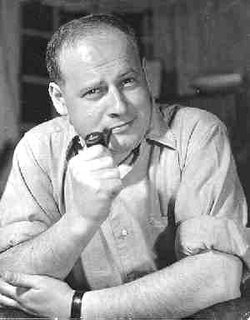
Gerard Hoffnung was a boy when his family arrived in London, refugees from Nazi Germany. In his new home, he cultivated the persona of an English gentleman, though one with a decidedly impish bent. He attained celebrity through his work as a cartoonist, a sparkling panelist, and a public speaker. He was lauded as a brilliant improviser with a dry wit and a masterly sense of timing. He also played the tuba well enough that he was able to tackle the Vaughan Williams concerto.
Following a successful April Fool’s concert in 1956, Hoffnung embarked on the enterprise which, alongside his cartooning, ensured a kind of immortality – the first of the Hoffnung Music Festival concerts. The concerts brought together representatives of England’s finest musical talent to lampoon what, especially at the time, might have been perceived as a rather stodgy art form.
There would be three Hoffnung concerts in all. Alas, the third was presented posthumously. Hoffnung collapsed at his home in 1959, and died of a cerebral hemorrhage three days later, at the age of only 34. An untimely finish for a character who seemed his entire life to be a brilliant, fully-developed, middle-aged man, always at the peak of his form.
I hope you’ll join me as we celebrate Hoffnung’s whimsical legacy. We’ll hear Sir Malcolm Arnold’s “A Grand, Grand Overture,” for orchestra, organ, electric floor polisher, and three vacuum cleaners – the work was dedicated to President “Hoover” – and Franz Reizenstein’s “Concerto populare,” billed as “a piano concerto to end all piano concertos,” among others.
It’s a lighthearted playlist calculated to put a smile on your face and lend a boost to your spirits – to say nothing of your immune system. He who laughs last laughs best. So “Have a Ball,” on “The Lost Chord,” now in syndication on KWAX, the radio station of the University of Oregon!
Remember, KWAX is on the West Coast, so there’s a three-hour difference for those of you listening in the East. Here are the respective air-times for all three of my recorded shows (with East Coast conversions in parentheses):
PICTURE PERFECT, the movie music show – Friday on KWAX at 5:00 PM PACIFIC TIME (8:00 PM EST)
SWEETNESS AND LIGHT, the light music program – ALL NEW – Saturday on KWAX at 8:00 AM PACIFIC TIME (11:00 AM EST)
THE LOST CHORD, unusual and neglected rep – Saturday on KWAX at 4:00 PM PACIFIC TIME (7:00 PM EST)
Stream all three, at the times indicated, by following the link!
-

Jules Verne Movie Music on KWAX Picture Perfect
This week on “Picture Perfect,” with the New Year only days away, we’ll greet the future with music from movies inspired by Jules Verne’s novels of science, progress, and adventure.
We’ll hear selections from “20,000 Leagues Under the Sea,” composed by Paul J. Smith; “In Search of the Castaways,” by William Alwyn; “Journey to the Center of the Earth,” by Bernard Herrmann; and “Around the World in 80 Days,” by Victor Young.
Of course, science and technology are all well and good for what they are, but there are times when the best solution is an expertly-wielded harpoon!
Your grit and resourcefulness are always welcome on “Picture Perfect,” music for the movies, now in syndication on KWAX, the radio station of the University of Oregon!
Remember, KWAX is on the West Coast, so there’s a three-hour difference for those of you listening in the East. Here are the respective air-times for all three of my recorded shows (with East Coast conversions in parentheses):
PICTURE PERFECT, the movie music show – Friday on KWAX at 5:00 PM PACIFIC TIME (8:00 PM EST)
SWEETNESS AND LIGHT, the light music program – ALL NEW! – Saturday on KWAX at 8:00 AM PACIFIC TIME (11:00 AM EST)
THE LOST CHORD, unusual and neglected rep – Saturday on KWAX at 4:00 PM PACIFIC TIME (7:00 PM EST)
Stream all three, at the times indicated, by following the link!
Tag Cloud
Aaron Copland (94) Beethoven (95) Composer (114) Film Music (151) Film Score (143) Film Scores (255) Halloween (102) John Williams (198) KWAX (233) Leonard Bernstein (105) Marlboro Music Festival (125) Movie Music (166) Mozart (91) Opera (215) Philadelphia Orchestra (90) Picture Perfect (174) Princeton Symphony Orchestra (110) Radio (90) Ross Amico (244) Roy's Tie-Dye Sci-Fi Corner (290) The Classical Network (101) The Lost Chord (269) Vaughan Williams (107) WPRB (397) WWFM (881)