Category: Daily Dispatch

  • Man Who Fell to Earth Deep Dive & Space 1999 Con

    Man Who Fell to Earth Deep Dive & Space 1999 Con

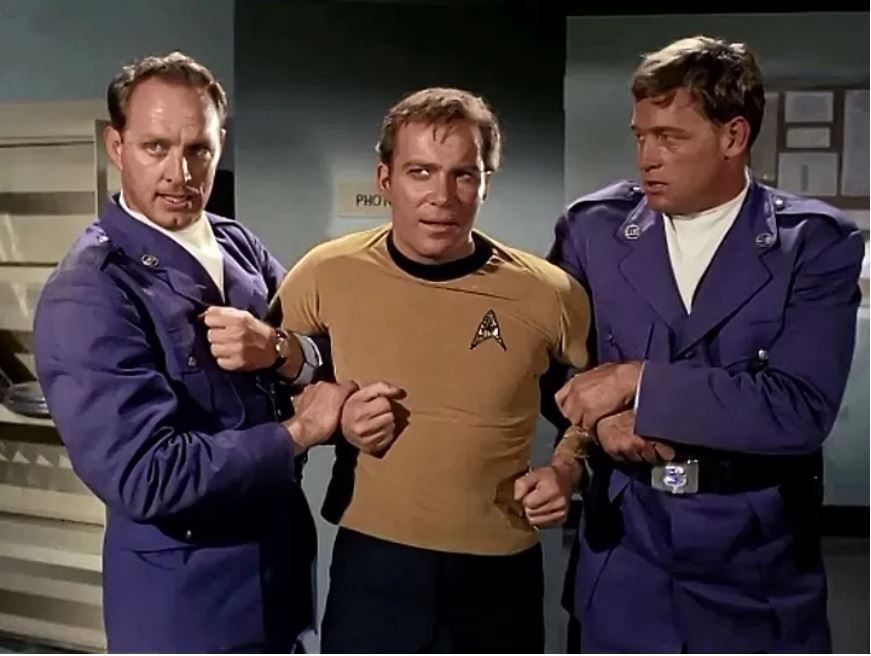
    It may have been a new, somewhat disorienting format, but our conversation about “The Man Who Fell to Earth” (1976) was up to the usual Roy & Ross standard.

    Last night was my first experience with StreamYard, with all the bells and whistles, including scrolling ticker, text banners, and a panoramic view of my CD library. (One viewer compared the effect to VistaVision.) But the content is only as strong as the talking points and the viewer comments that propel the dialogue.

    There were a number of very perceptive, and often hilarious insights. My pick for the week goes to Randy Piazza, who defined the film as an example of “the rarely-explored post-Watergate government distrust arthouse avant-garde sex sci-fi genre.” That, folks, is the movie in a nutshell. We could have closed-up shop and got on with our lives at the 22-minute mark.

    But if you’re curious to see the whole thing, it’s archived on the “Roy’s Tie-Dye Sci-Fi Corner” Facebook page.

    For any of you who are fans of the television series “Space: 1999,” you will be interested to know that there is a virtual convention being held this weekend, “Destination: Moonbase Alpha,” and Roy will be among the interviewers. The schedule is chock-full of talent associated with the show (including series stars Barbara Bain and Nick Tate and award-winning special effects artist Brian Johnson). It’s a two-day event, beginning this afternoon at 1:00 EDT. You’ll find details at the link.

    https://www.facebook.com/Destinationmoonbasealpha

    Roy and I will reunite for a discussion about the spy-fi parody “Our Man Flint” (1966), with flinty James Coburn in the title role. The Bond will be strong, when you join us in the comments section for another Roy’s Tie-Dye Sci-Fi Corner, next Friday evening at 7:30 EDT!

    https://www.facebook.com/roystiedyescificorner

  • Trains on Film: Music for Movie Lovers

    Trains on Film: Music for Movie Lovers

    Trains have always been very good for drama. They are symbols of departures and arrivals. They are conveyors of prisoners and vehicles of escape. They are objects of romance and objects to “hobo around” on. They are harbingers of civilization, and they are transports be robbed. You can fight on top of them. You can make out with Eva Marie Saint, or you can protect Marie Windsor so that she can testify against the mob. You can shuffle off to Buffalo.

    From the beginning, trains have provided good escapist fun at the movies. This week on “Picture Perfect,” we’ve got an hour of music from four memorable films in which trains play an important role.

    In “Strangers on a Train” (1951), arguably Alfred Hitchcock’s most underrated film of the 1950s, Farley Granger plays a tennis pro who unwittingly becomes involved in a double-murder plot (criss-cross!) through a chance encounter on a passenger train with a psychopath named Bruno (probably Robert Walker’s finest performance). The music is by Dimitri Tiomkin, who scored four films for Hitch – including “Shadow of a Doubt,” “I Confess,” and “Dial M for Murder.”

    Burt Lancaster stars in a film titled, simply, “The Train” (1964), as a reluctant railroad inspector who is persuaded to join the French Underground’s efforts to delay the transport of masterpieces looted from the museums of Paris by the Nazis, since Allied liberation of France is imminent. Paul Scofield plays the art-loving German officer determined to move the art at all costs. Real trains were destroyed in the making of the film, real dynamite was employed, and Lancaster, as was often the case, did all his own stunts. The score is by Maurice Jarre.

    “Murder on the Orient Express” (1974) is based on one of the best-known Agatha Christie vehicles involving her recurring character, celebrated detective Hercule Poirot. The late Albert Finney portrays Poirot most memorably in this, the first and best of the all-star Christie thrillers, set on a long-distance passenger train connecting Paris to Istanbul. The list of suspects includes Lauren Bacall, Martin Balsam, Ingrid Bergman, Sean Connery, John Gielgud, Anthony Perkins, Richard Widmark, and Michael York. The unforgettable score is by Richard Rodney Bennett.

    Finally, we turn to the lighthearted caper “The Great Train Robbery” (1979), starring Sean Connery, Donald Sutherland, and Leslie-Anne Down. Michael Crichton wrote the screenplay, after his own novel, which in turn was based on an actual historical incident – an 1855 heist, in which an unbelievable amount of gold disappeared from a moving train. Crichton also directed the film. The music is by the great Jerry Goldsmith.

    All aboard! We’ll be taking the train today, on “Picture Perfect,” music for the movies, this Saturday evening at 6:00 EDT, on WWFM – The Classical Network and wwfm.org.


    TOP: Sutherland and Connery

    BOTTOM (left to right): Farley Granger and Alfred Hitchcock pass in the night; Finney as Hercule Poirot; Lancaster means business

  • Proms Cancelled A Missed Opportunity for Music?

    Proms Cancelled A Missed Opportunity for Music?

    The BBC has cancelled the last two Proms, out of respect for the Queen’s passing. Last night, barely an hour after her death was announced, the Philadelphia Orchestra took the stage of Royal Albert Hall to play “God Save the Queen” and “Nimrod” from Elgar’s “Enigma Variations.”

    Traditionally, the Last Night of the Proms is a raucous affair, marked by audience participation and lots of flag-waving, “popular” in the truest sense. Many people attend the event that ordinarily would never set foot in a concert hall. Certainly, you’re not going to please everyone, but might not the scheduled programs have been altered to include selections of a more suitable mood?

    The music of Ralph Vaughan Williams has been very well-represented on this year’s Proms, as well it should be, in his sesquicentennial year. Interestingly, it turns out that the Queen was an admirer of Vaughan Williams’ Symphony No. 5. This serene work by a 71 year-old composer bears a message of consolation and hope and has been offering solace to audiences since its premiere in June 1943 – the height of World War II – introduced on a Prom concert at Albert Hall, no less. An air-raid warning sounded before the concert, but was ignored.

    Might not this favorite of the Queen, a symphony of such national significance and great humanity, have been substituted, rather than simply turning out the lights and leaving everyone to pass the evenings at home with their phones and tellies?


    Vaughan Williams’ Symphony No. 5

    “O Taste and See,” composed for the Queen’s coronation in 1953

  • WWFM Celebrates 40 Years of Classical Music

    WWFM Celebrates 40 Years of Classical Music

    A few more memories of WWFM – The Classical Network for the station’s 40th anniversary.

    TOP: Live broadcast of Choral Arts Philadelphia performance of Bach’s “Christmas Oratorio,” with Rachel Katz and Alice Weiss

    BOTTOM (left to right): Hand-in-hand with David Dubal; from an old program guide, with Bliss Michelson, Richard Gladwell and Marjorie Herman, and Heidi Jamieson, Win Howard, Ted Otten, and Michael Kownacky; with Mike Harrah at one of the editing booths

  • Queen Elizabeth II Dies at 96

    Queen Elizabeth II Dies at 96

    According to a statement issued by Buckingham Palace, Queen Elizabeth II died peacefully today at Balmoral Castle, her estate in the Scottish Highlands, with her family around her. She was 96 years-old.

    Elizabeth reigned as Queen of England from 1953. In 2015, she became the country’s longest-reigning monarch. She lived to see the massive celebrations in honor of her 70th year on the throne, held only this past June. Now Charles is King.

    Under the circumstances, it doesn’t seem appropriate to link a bunch of festive coronation marches. Instead, here’s Herbert Howells’ “Behold O God Our Defender,” composed on Christmas Day, 1952, also for Elizabeth’s coronation.

    “When beggars die, there are no comets seen;
    The heavens themselves blaze forth the death of princes.”

    Or of queens, for that matter. R.I.P.

Tag Cloud

Aaron Copland (93) Beethoven (95) Composer (114) Film Music (136) Film Score (143) Film Scores (255) Halloween (94) John Williams (195) KWAX (229) Leonard Bernstein (103) Marlboro Music Festival (125) Movie Music (151) Mozart (88) Opera (206) Philadelphia Orchestra (89) Picture Perfect (174) Princeton Symphony Orchestra (108) Radio (88) Ross Amico (244) Roy's Tie-Dye Sci-Fi Corner (290) The Classical Network (101) The Lost Chord (268) Vaughan Williams (103) WPRB (396) WWFM (881)

DON’T MISS A BEAT

Receive a weekly digest every Sunday at noon by signing up here


RECENT POSTS