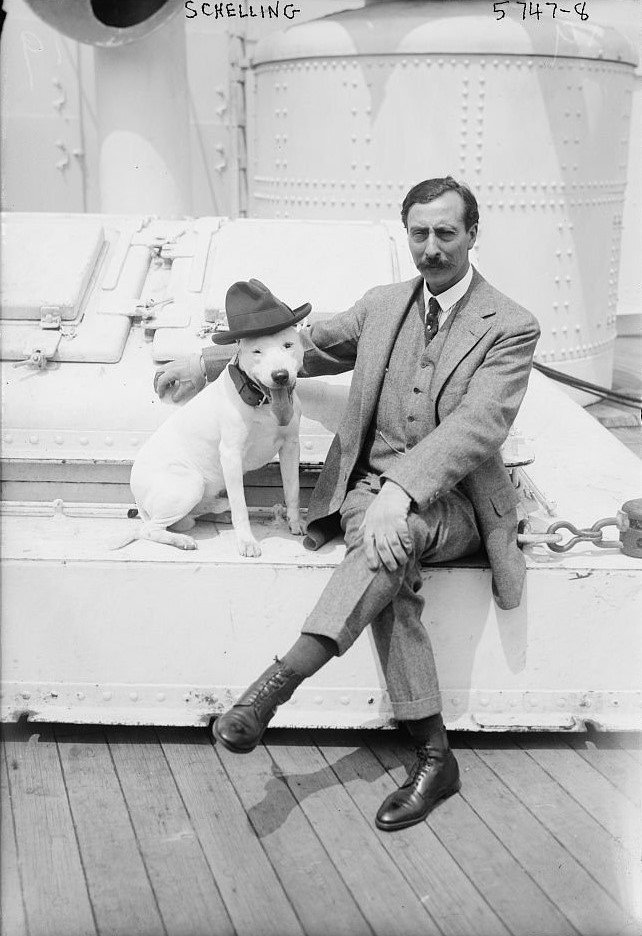
You might say that Ernest Schelling was a Jersey boy who made good. He also happened to be responsible, in part, for the death of Enrique Granados.
Schelling, a celebrated pianist who for a period of three years became the exclusive pupil of Ignacy Paderewski, was born in Belvidere, NJ on this date in 1876.
A child prodigy, he made his debut at Philadelphia’s Academy of Music at the age of 4. At 7, he was admitted to the Paris Conservatory. Among the other notable musicians he worked with were Hans Huber, Moritz Moszkowski, and Theodor Leschetizky. Leschetizky was the pupil of Carl Czerny, who of course studied with Beethoven.
As a conductor, Schelling became music director of the Baltimore Symphony Orchestra, which he led from 1935 to 1937. Well before Bernstein, he conducted the New York Philharmonic Young People’s Concerts, beginning in 1924. They were such a success, he took them on tour, with stops in Philadelphia, Los Angeles, London, and Rotterdam.
Schelling gave the U.S. premiere of Granados’ piano cycle “Goyescas.” In fact it was he who encouraged the composer to craft the music into an opera. Granados liked the idea, and “Goyescas” was given its first performance at the Metropolitan Opera in 1916.
It created such a sensation that Woodrow Wilson – former president of Princeton University and former governor of New Jersey – invited the composer to the White House, an offer Granados could hardly refuse. Granados postponed his homeward journey. A few weeks later, he was drowned in the English Channel, after his ship, the S.S. Sussex, was torpedoed by a German submarine.
Thanks a lot, Ernest Schelling – and by the way, happy birthday.
Schelling plays Liszt’s Sonata in B minor:
Willem Mengelberg conducts Schelling’s “A Victory Ball:”
Season 4 of “Stranger Things” breathtakingly jumped the shark in innumerable ways. And yet somehow it remained compellingly watchable. Once I was able to get into it, that is. And I have to say, all the classical music on the soundtrack was a very nice bonus.
I’m aware that the latest season dropped on Netflix some time ago (in two “volumes,” on May 27 and July 1), but after watching the underwhelming first episode – which, for me, ventured a little too eyerollingly into CW Network-style teen angst – I wound up taking a prolonged break. I tune in to “Stranger Things” for the calculated ‘80s nostalgia and monsters from the Upside-Down, thank you.
Fortunately, at the urging of friends, I finally took it up again in earnest, and sure enough, yet again I found myself caught up in its icky tendrils. It’s been the pattern with this series that there’s been a kind of slow burn at the start that belies the relentless insanity to come. Hats off to the Duffer Brothers, the show’s creators, for their willingness to gamble big, because for as ludicrous as the whole thing has become, they’ve managed to take the series in some truly unexpected directions, while remaining true to its core.
If you’re unfamiliar with the series, one of its most charming characteristics is the way it raids the pop culture of the 1980s (Steven Spielberg, Stephen King, Dungeons & Dragons and, this season especially, “A Nightmare on Elm Street” and “Poltergeist” ) and rearranges it in fresh ways. Actor Robert Englund, Freddy Krueger himself, has a pivotal cameo.
The episode that allows everything that’s been presented in the first three seasons to be viewed in a totally different light (from multiple perspectives, even) is a knockout. But I always go in for that sort of thing when it’s done well. Admittedly, not everyone does. I was one of the few who was delighted with the topsy-turvy “Back to the Future Part II.”
Tonally, Season 4 is all over the place, but that’s kind of become a “Stranger Things” hallmark. Even as the stakes are impossibly high, it’s not afraid to go goofy. For most of its 13-hour running time, the show kept me engaged and laughing.
And what do you know, in this series driven by demons, conspiracy theory, and the paranormal, the KORNGOLD VIOLIN CONCERTO gets a major showcase in Episode 6, when the gang shows up in Salt Lake City to enlist a computer hacker. Her household turns out to be a mash-up of the kinds of theatricals once staged by the Bronte siblings and the March sisters. Wild children cavort with swords and bows-and-arrows and ruffed collars and pasted-on mustaches, while on a portable record player on the floor spins an LP of Korngold’s concerto.
According to the show’s timeline (set in 1985), it would have to be either the Heifetz or Perlman recordings, since I believe those were the only performances available then. But I’m skeptical as to whether or not the creative team was so scrupulous as not to employ a recording of more recent vintage. Of course, now the concerto is in the repertoire of every major violinist.
Erich Wolfgang Korngold, a former prodigy from Vienna, came to Hollywood in the 1930s, where he achieved wider popularity with his swashbuckling film scores for Errol Flynn classics like “Captain Blood,” “The Adventures of Robin Hood,” and “The Sea Hawk.”
For the average viewer, Kate Bush, Metallica, and Ella Fitzgerald will probably leave the biggest impressions, but Season 4’s soundtrack also sports selections by Verdi, Puccini, Bach, Debussy, Tchaikovsky, and Philip Glass, with Paisiello’s opera “Nina” a major influence on the plot that few will catch. These days, you can’t get much stranger than that!
Heifetz plays the last movement of Korngold’s Violin Concerto
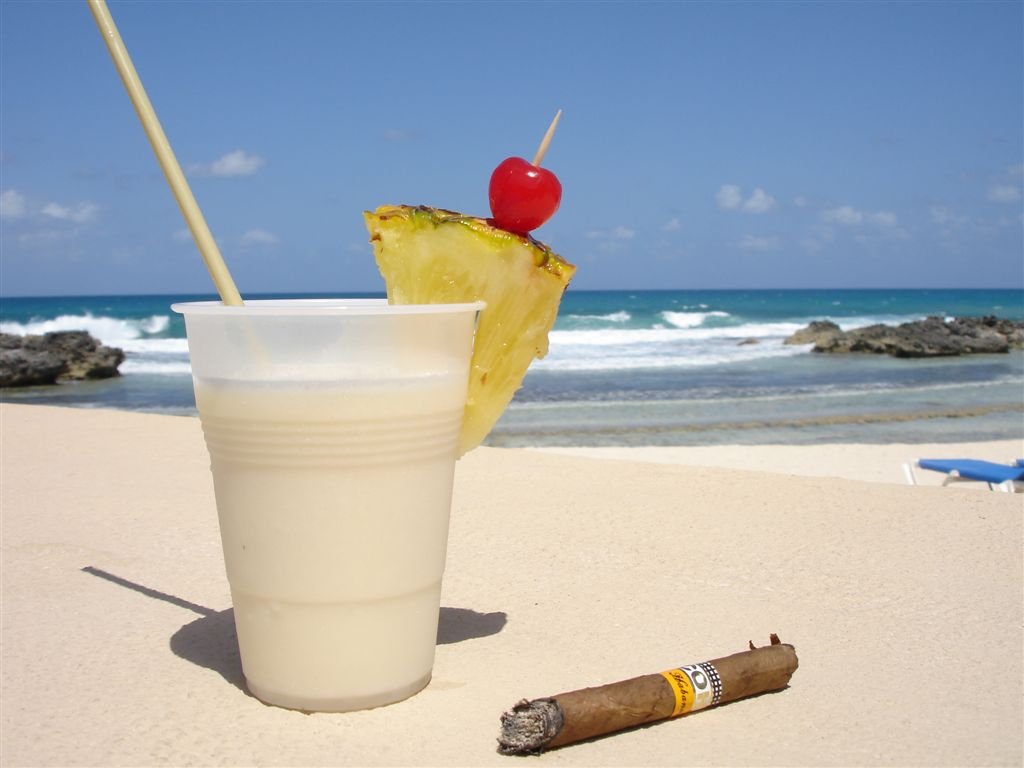
This Sunday night on “The Lost Chord,” we pack our bags and strike out for the Caribbean.
We’ll have music by two composers with Puerto Rican connections: Ernesto Cordero (b. 1946), though born in New York, was raised there; Roberto Sierra (b. 1953) was born there and now teaches at Cornell.
Cordero studied at the Conservatory of Music in Puerto Rico and the Royal Conservatory of Music in Madrid. He did post graduate work in composition in Rome and New York (with Julián Orbón). He also studied guitar under the legendary Regino Sáinz de la Maza (who gave the premiere of Rodrigo’s “Concierto de Aranjuez”) and Alirio Díaz.
Cordero’s music is distinguished by its Caribbean flavor. He has written at least eight concertos to date. We’ll be listening to his “Concierto Festivo” (2003), dedicated to Pepe Romero.
Sierra studied composition in Hamburg with György Ligeti. In 1986, his opera, “El mensajero de plata” (“The Silver Messenger”), was given its premiere at the Interamerican Festival in San Juan. In 1985, Zdenek Macal conducted the first performance of Sierra’s first major orchestral composition, “Jubilo,” with the Puerto Rico Symphony Orchestra. Macal took the work to Carnegie Hall in 1987, with the Milwaukee Symphony Orchestra, effectively kickstarting Sierra’s international career.
Sierra spent three seasons as Milwaukee’s composer-in-residence, from 1989 to 1992. The culmination of his residency was the world premiere of “Tropicalia” (1991). The work falls into three movements: “Foliage” is evocative of a rainforest; “Nocturne” conjures childhood memories of fireflies and “coqui,” Puerto Rican tree frogs; and “Celebration” is full of upbeat, indigenous rhythms.
Cultivate a taste for rum and plantains with “Port of Riches,” this Sunday night at 10:00 EDT, on WWFM – The Classical Network and wwfm.org.
G’day! This week on “Picture Perfect,” we’re off to the antipodes for an hour of music from films set in the Australian bush.
Ealing Studios shot several movies there – three independently, and then two in collaboration with MGM. The first was “The Overlanders” (1946), told in semi-documentary style, about a wartime push to evacuate Australia’s Northern Territory, with its 5000 settlers and a million head of cattle, before an anticipated Japanese invasion. The music is by John Ireland. Despite its excellence, it would prove to be Ireland’s only film score.
Ealing’s final independent Australian venture was “Bitter Springs” (1950). The film tells the tale of an Australian pioneer family, which encounters problems with the local Aboriginal people when its headstrong patriarch denies access to a watering hole.
The thematic material was by Ralph Vaughan Williams, who left it to composer and conductor Ernest Irving to arrange and orchestrate what he felt needed for the various cues. Vaughan Williams wrote his friend and colleague to express his pleasure with the finished product. Irving would soon receive the dedication of Vaughan Williams’ Symphony No. 7, the “Sinfonia Antartica” (itself derived from RVW’s film score to Ealing’s “Scott of the Antarctic”).
Both of these films, “The Overlanders” and “Bitter Springs,” are essentially westerns set in the Australian outback. From a little closer to our own time, we’ll hear music from another film that’s unapologetic in its use of American western motifs, “Quigley Down Under” (1990).
The film stars Tom Selleck as an American cowboy, hired by an Australian rancher, played by Alan Rickman, allegedly to shoot dingoes; however, he soon finds that the rancher’s real purpose is to rid the land of Aborigines – a proposition Quigley naturally rejects, setting up the film’s conflict.
The score is by Basil Poledouris, a composer who achieved cult status for his work on films like “Robocop” and especially “Conan the Barbarian,” though he never really seemed to receive the recognition the deserved. He did, however, win an Emmy for his score to “Lonesome Dove.”
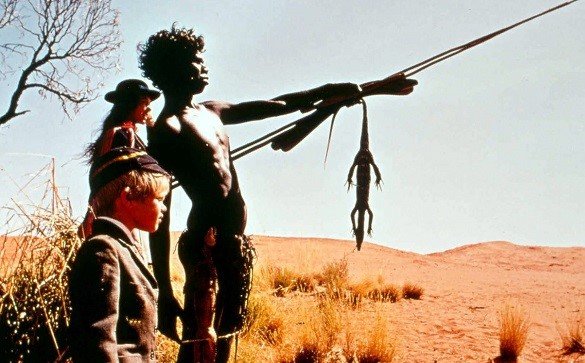
Finally, we’ll have just a bit from John Barry’s haunting score to Nicholas Roeg’s “Walkabout” (1971), in which two British children find themselves stranded in the bush and survive only through the aid of a young Aborigine.
We’re heading down under and out back this week, on “Picture Perfect,” music for the movies, this Saturday evening at 6:00 EDT, on WWFM – The Classical Network and wwfm.org
I’ve written about Dame Ethel here before. I always liked her music and was a champion of her stuff before it was cool. I’ve said it before and I’ll say it again: I find her Serenade in D, a symphony in all but name, more rewarding than anything written in the form by either of her near-contemporaries, Parry or Stanford. What’s even more remarkable is the range of her development, that the same composer who wrote the Serenade in 1890 (when she was already 32), a big-hearted, Brahmsian creation full of great tunes, arrived at her last, meditative symphony, “The Prison,” as much an oratorio or cantata for vocal soloists and orchestra, in the ruminative manner of Mahler, in 1930.
This is not a bad article, even if the slant makes her out to be more of a battle-axe than she really was. Yes, she was determined (as she had to be), and yes, she busted out some windows, but in between she was just trying to live a happy, fulfilling life like the rest of us. Unquestionably Smyth had lesbian inclinations (most of her lovers were women), but there’s no way in hell she would have described herself as “defiantly queer.” One of the things I find so annoying these days is how everyone, whether specialist or person on the street, seems hellbent on interpreting the past through the lens of the present. Hence, we get the front-loaded insinuation about Smyth’s allegedly bigoted views, as an English citizen whose consciousness was formed during the height of the Victorian era. I just read her memoirs a month or two ago, and trust me, she was not a repugnant, malicious person in any respect.
Ironically, this preoccupation with snap judgments and pigeonholing is the very thing that limited Smyth during her career as a “lady composer.” It’s as misguided as the now seemingly ensconced practice of updating with lurid productions operas composed generations ago, in an attempt to make them seem more “relevant” to the present. If the music and the story and the overall effect truly are timeless, is it really necessary to make everything look like a New Jersey rest stop? If you wonder what I’m ranting about, see the stills from the recent Glyndebourne production of Smyth’s “The Wreckers” at the link (by clicking on the BBC photo below).
I’m grateful that Dame Ethel is getting so much attention now after decades of comparative neglect. I suppose there is a pendulum effect in any revolution, and there is usually a period of overcompensation before things start to swing back, but I long for the day that artists of all backgrounds are finally accepted for their inherent worth, without having to over-politicize everything. I love Smyth for the beauty of her music, not because she was “defiantly queer” or “problematically bigoted.” Hopefully in a few decades, none of this will mean anything. We’ll have learned from history and evolved, and finally we can get back to experiencing the music.