Category: Daily Dispatch

  • Jason Argonauts Medea Outer Limits Discussion

    Jason Argonauts Medea Outer Limits Discussion

    Ever wonder why “Jason and the Argonauts” (1963) ends where it does? Because Medea gets the final cut!

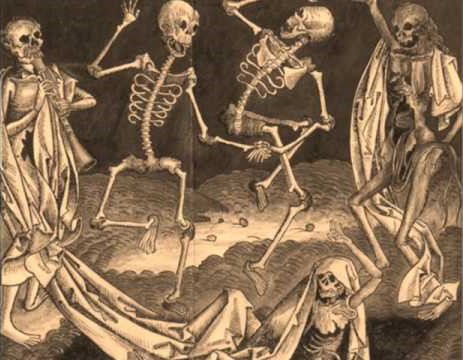
    Seriously, how can you possibly top a duel with seven meticulously-animated skeletons? The three-minute sequence took stop-motion virtuoso Ray Harryhausen 4 ½ months to complete.

    But nobody seems to care that Jason never does get around to retaking the kingdom of his father. Learn more about Medea’s grisly solution to seemingly everything during last night’s discussion about this beloved classic.

    We’ll be off next Friday, but next Sunday Roy will be joined by a very interesting panel, as the topic with be a new book about the seminal sci-fi-horror-dark fantasy television series “The Outer Limits,” focused specifically on the unforgettable episode “Nightmare” (1963).

    Zooming in to talk about it will be Dave Rash (who put together the book), Dominick Stefano (son of scriptwriter and series creator Joseph Stefano), David Frankham (who has a substantial role in the actual episode), and Michael L. Schuman (whose critical assessment of the episode is included in the book).

    The conversation is guaranteed to be “out there.” Join Roy and company for a chat about “The Outer Limits,” on the next Roy’s Tie-Dye Sci-Fi Corner, livestreamed on Facebook, next Sunday evening, August 7, at 7:30 pm EDT!

    https://www.facebook.com/roystiedyescificorner


    BONUS! For anyone who loves Bernard Herrmann’s music for “Jason and the Argonauts,” I’ll be featuring a substantial selection from it on “Picture Perfect,” music for the movies, this Saturday evening at 6:00 EDT, on WWFM – The Classical Network and wwfm.org!

  • Vaughan Williams Champion Andrew Manze

    Vaughan Williams Champion Andrew Manze

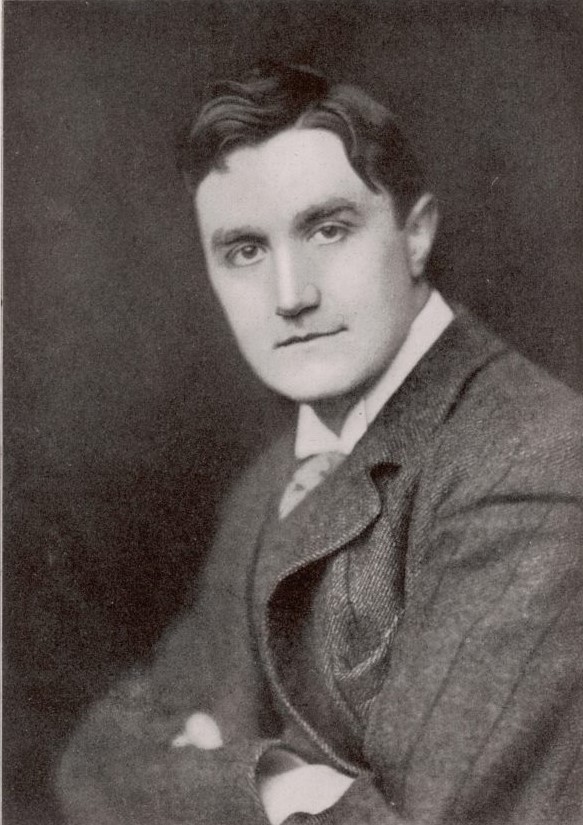
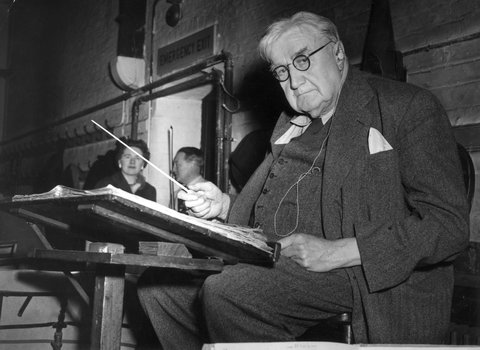
    Having broadcast his recordings with The English Concert for all these years, I’d always regarded Andrew Manze as a Baroque specialist. In fact, he studied violin with Ton Koopman and Simon Standage. How pleased I am, then, to see him blossom into such an ardent champion of the music of Ralph Vaughan Williams, whose symphonies he’s recorded with the Royal Liverpool Philharmonic Orchestra for the Onyx label (though I confess I have yet to hear his interpretations).

    Here’s an appreciation of RVW he wrote this week for The Guardian. So shameful that Vaughan Williams is receiving so little love in the U.S. during his sesquicentennial year.

    “I have been lucky enough to perform his music outside the UK and see how it touches and speaks to musicians and audiences who know nothing of its cultural roots. The most common reaction to hearing one of the symphonies is a sort of bemused appetite for more: how many of these ARE there? Why didn’t we know them already?”

    https://www.theguardian.com/music/2022/jul/26/ralph-vaughan-williams-visionary-genius-lark-ascending?fbclid=IwAR0b5z_5K1z46uImIwyfd7z7qaxY81cXDjc37s2BGSpkSjwoxfeRSKXyeQA

  • Jason and the Argonauts Hydration Tips

    Jason and the Argonauts Hydration Tips

    Remember: in the summer, it’s important to stay “hydrated.”

    On the next Roy’s Tie-Dye Sci-Fi Corner, we’re enlisting a crew of hirsute, out-of-shape fighting men (including a 39 year-old Hercules, who looks, at best, to be in his late 50s) for a journey to the far-side of the world in our quest for the Golden Fleece and a discussion of “Jason and the Argonauts” (1963).

    Everything that you loved about this movie as a kid still holds up: the vindictive, fruit-loving harpies, an oversized bronze automaton in serious need of WD-40, destruction by crumbling cliff-faces narrowly averted by tuna-tailed Triton, and sinister skeleton warriors sprung nonsensically from hydra’s teeth. Also, Nancy Kovack (a.k.a. Mrs. Zubin Mehta) and Honor Blackman!

    Roy and I will do our best to emulate the perfect alchemy of Ray Harryhausen and Bernard Herrmann this week, when we talk about “Jason and the Argonauts.” Are we stop-motion animation, or is it just Roy’s internet connection? Pour yourself a tall glass of water and join the conversation in the comments section. We livestream on Facebook, this Friday evening at 7:30 EDT!

    https://www.facebook.com/roystiedyescificorner

  • Ernő Dohnányi A Forgotten Hungarian Genius

    Ernő Dohnányi A Forgotten Hungarian Genius

    While Béla Bartók is respected as the foremost Hungarian composer of the 20th century, Ernő Dohnányi, until recently, has been subject to neglect, at least in proportion to his significance. Sure, Bartók and his friend, Zoltán Kodály, were at the forefront of the whole nationalist movement, traipsing around the countryside in order to document authentic folk traditions before they were swallowed up forever by industrialization. But as director of the Budapest Academy of Music and music director of the Budapest Philharmonic Orchestra, Dohnányi would exert as much influence over his country’s musical development as that of his folk music-mad friends and contemporaries

    Unfortunately, he would become the target of character assassination campaigns after World War II, in which he was painted as a Nazi sympathizer. Dohnányi was investigated and cleared several times by the U.S. Military Government, and in fact has been defended as a forgotten hero of Holocaust resistance, since it was through his administrations that countless Jewish musicians survived. Also, between the wars, he went to bat for Kodály, a leftist, by refusing to fire him from the Budapest Academy. As a result, Dohnányi too lost his position, albeit temporarily. Nevertheless, he continued to be eyed with suspicion, and his slandered reputation never fully recovered.

    Equally fatal is the fact that much of his music bears a more cosmopolitan stamp than that of the Hungarian composers of his era that are now so celebrated. His composition teacher, the German-born Hans von Koessler (known in Hungary as János Koessler), was a cousin of Max Reger. Of course, Koessler also taught Bartók and Kodály. But Dohnányi was perfectly happy nestled in the world of Brahms. For his international career, he assumed the name Ernst von Dohnanyi.

    I’ve always been partial to Sir Malcolm Sargent’s recording of Dohnanyi’s gorgeous Serenade in F sharp minor, with the London Symphony Orchestra. Unfortunately, the sound file doesn’t seem to be posted anywhere. For as much as I appreciate the existence of this CD, the performance is a comparatively weak substitute – in my humble opinion, of course:

    In the meantime, nice to have discovered this live performance of Dohnanyi’s best-known piece, the “Variations on a Nursery Tune,” with André Previn conducting. The soloist is the Brazilian pianist Cristina Ortiz, cute as a button. The piece has its share of “inside” musical jokes, but the best one must be the agonizingly portentous build-up to the pianist’s first entrance – here complete with a stroll through the cemetery, beneath the chilly gaze of an ominous medieval castle!

    Furthermore, the entire orchestra appears to be dressed as Captain Kirk.

    Happy birthday, Ernő Dohnányi. Energize!


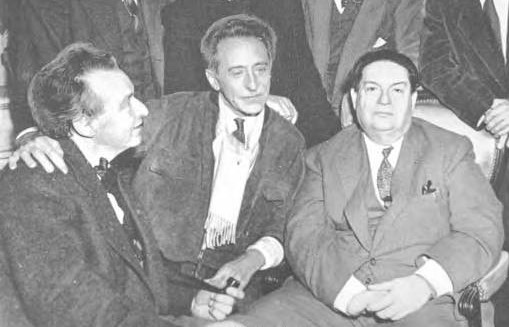
    PHOTO: Dohnányi (left), boldly taking the train with Bartók

  • Enrique Granados: A Spanish Musical Master

    Enrique Granados: A Spanish Musical Master

    Yesterday, I wrote about the untimely death of Enrique Granados in connection with his delayed return from the U.S., after being invited to the White House by Woodrow Wilson following the sensational debut of his opera “Goyescas” at the Metropolitan Opera. Granados’ ship was torpedoed in the English Channel by a German U-boat, and the composer drowned when attempting to save his wife.

    Granados was born on this date in 1867. He is best-remembered, of course, for his delectable piano miniatures, which contain music of great beauty and sensitivity. He’s sometimes described as “the Spanish Chopin.” I prefer to think of him as “the Spanish Grieg.” And that is not in any way to damn him with faint praise. He may be my favorite Spanish composer.

    Here’s a pleasing recital by Pablo Matías Becerra (including “Valses poéticos,” Spanish Dance No. 2 “Oriental,” “El pelele,” Spanish Dance No. 7 “Arabesca,” “Allegro de concierto,” and “Escenas románticas”)

    Anyone looking to gain a more comprehensive overview of the scope of Granados’ compositional output could do worse than to seek out three volumes of his orchestral works recorded by Pablo González and the Barcelona Symphony Orchestra and National Orchestra of Catalonia, on the Naxos label.

    Also, a piece for piano, organ, and three choruses, called “Song of the Stars,” lost for nearly a century.

    None of the orchestral pieces rise to the level of the piano music, in my opinion, but they all contain some very charming, wholly neglected music. One of the volumes includes a half-hour symphonic poem, “Dante” (little charm here, perhaps, but plenty of drama), which will surely modify your view of the composer.

    Just before Granados’ fateful homeward journey from New York, he made some live-recorded player piano rolls for the Aeolian Company’s “Duo-Art” system. Here are two of them.

    Granados playing “The Maiden and the Nightingale” from “Goyescas”

    And the Spanish Dance No. 5 “Andaluza”

    In 1909, he began a piano concerto. This was interrupted by “Song of the Stars” and the operatic version of “Goyescas.” The concerto would be left unfinished at the time of Granados’ death.

    In 2011, the sketches were rediscovered and a realization undertaken. Keep in mind, the completed work is purely conjectural, the first movement built on two surviving fragments. The other movements were adapted from existing Granados works: the Spanish Dance No. 2 “Oriental” and “Capricho español” (for Movement II) and “Allegro de concierto” (for Movement III). Here’s a performance in concert.

    An ironic footnote: one of the Granados’ sons, also named Enrique, became a champion swimmer, who competed in the 1952 Summer Olympics.

    Happy birthday, Enrique Granados. And gracias.


    Alicia de Larrocha plays “Goyescas,” in its original guise

    The operatic version

Tag Cloud

Aaron Copland (93) Beethoven (95) Composer (114) Film Music (136) Film Score (143) Film Scores (255) Halloween (94) John Williams (195) KWAX (229) Leonard Bernstein (103) Marlboro Music Festival (125) Movie Music (151) Mozart (88) Opera (206) Philadelphia Orchestra (89) Picture Perfect (174) Princeton Symphony Orchestra (108) Radio (88) Ross Amico (244) Roy's Tie-Dye Sci-Fi Corner (290) The Classical Network (101) The Lost Chord (268) Vaughan Williams (103) WPRB (396) WWFM (881)

DON’T MISS A BEAT

Receive a weekly digest every Sunday at noon by signing up here


RECENT POSTS