Thanks for sharing, @[100063792690234:2048:U.S. 1 Newspaper – PrincetonInfo]! In case you missed it, here’s a link to my article in this week’s edition.
Category: Daily Dispatch
-
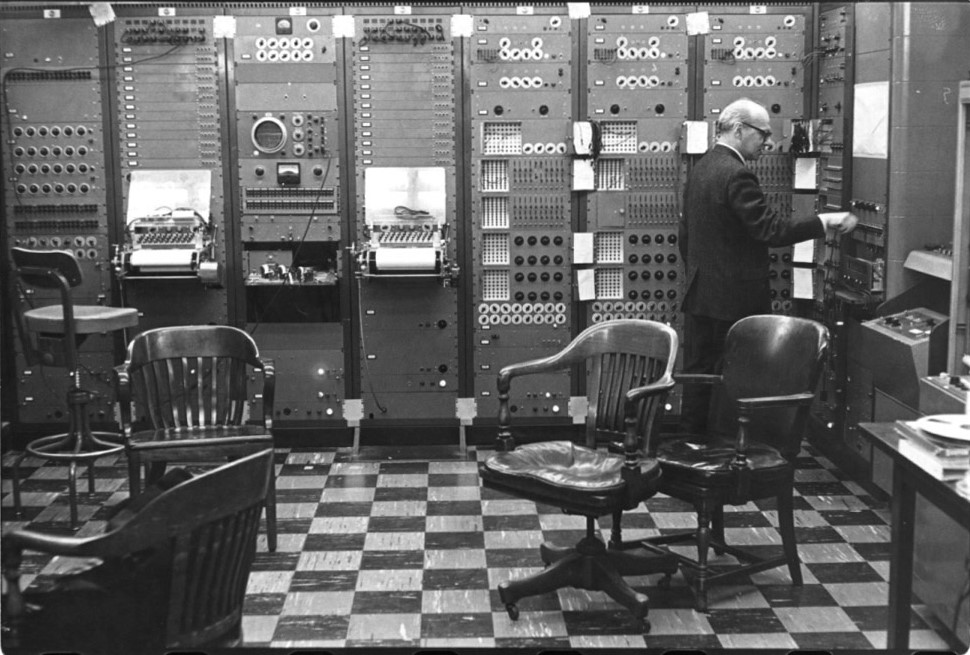
Princeton’s Lost Music: A Digital History
60 years ago, Princeton University engineers noticed members of the music department, staring agog at a recently-installed computer. It wasn’t long before a not-so-unlikely alliance was formed that helped to change history. New Jersey’s role in the creation of digital music is the subject of a new podcast, “Composers & Computers.”
The accessible, absorbing presentation illuminates the work of engineers at RCA Laboratories in Princeton in the 1950s, Princeton music faculty at the Columbia-Princeton Electronic Music Center in New York, and musicians who first entered the computer center in the Princeton University EQuad in 1962, with the intention of harnessing a new IBM 7090 to synthesize music.
No less than 20 subjects were interviewed for the series, to create an oral history spanning six decades. Commentary, anecdotes, and insights are punctuated and underscored by samples of electronic music, from Milton Babbitt and Charles Wuorinen (his Pulitzer Prize-winning “Time’s Encomium”) to Stevie Wonder and The Beach Boys.
Aaron Nathans, Digital Media Editor at Princeton’s School of Engineering and Applied Science, is the mastermind behind the podcast. He too is an interesting, multifaceted individual, who became the unexpected co-subject of an article I wrote for this week’s U.S. 1 Newspaper – PrincetonInfo.
Learn more about electronic music pioneers Milton Babbitt, Godfrey Winham, Paul Lansky, Ken Steiglitz, and their colleagues and students, and the continued vitality of the Princeton computer scene as exemplified by the Princeton Laptop Orchestra and the multidisciplinary experimentation of Naomi Leonard and her “Rhythm Bots.”
Look for the story in print in area vending machines and local businesses, or find immediate gratification here:
The “Composers & Computers” podcast, sponsored by Princeton University’s School of Engineering and Applied Science, can be heard on iTunes, Spotify, Google Podcasts, Stitcher, and other platforms. Show notes, including playlists, sources, rare photos, and podcast audio, are also available at https://engineering.princeton.edu/series/composers-computers-podcast
ONCE UPON A TIME IN NEW YORK: Princeton composer Milton Babbitt at the Columbia-Princeton Electronic Music Center
-
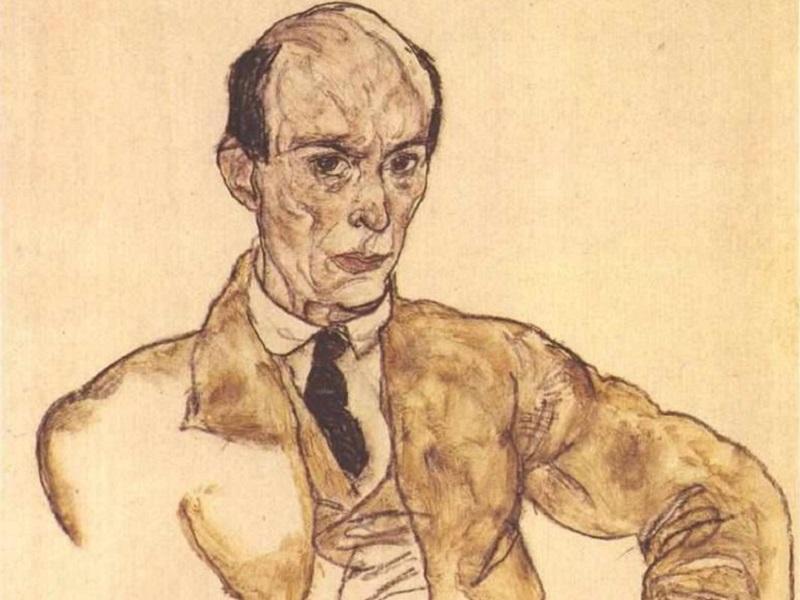
Schoenberg: Beyond the Twelve-Tone Legend
Okay, pointy heads! It’s back to school – the Second Viennese School – for the birthday of Arnold Schoenberg.
The dour high priest of twelve-tone music was full of surprises. I venture to guess that many would be nonplussed to learn that the greatest prophet of dodecaphonic music claimed artistic kinship with Johannes Brahms. But then, some conductors (notably Karajan and Solti) have tried to interpret him that way. Even so, he remains one of the most hated composers among concertgoers who prefer programs of unsullied Beethoven and Dvořák.
Schoenberg may have preached the death of tonality, but he composed at least three Romantic masterpieces, “Verklärte Nacht” (“Transfigured Night”), “Pelleas und Melisande,” and the opulent oratorio “Gurrelieder,” before venturing into Expressionism with works like his Chamber Symphony No. 1. In the meantime, he also orchestrated his share of Viennese operettas and arranged Strauss waltzes for performance by his friends.
By the time he came to America, Schoenberg was probably the least “popular” composer in the world (if one of the most influential), but at his new home in Los Angeles his tennis partner was none other than George Gershwin. The two also shared a love of painting.
Adding to this “beautiful mountain” of contradictions, Schoenberg, like that other titan of 20th century music, Igor Stravinsky, made a game attempt to break into films. He was courted to write music for the 1937 big screen adaptation of Pearl Buck’s “The Good Earth,” but his proposed fee of $50,000 put an end to that.
Schoenberg did once prophesy that one day “grocer’s boys would whistle serial music on their rounds.” Maybe he actually meant cereal music. While to my knowledge that has yet to pass, I did once catch myself walking down the street humming the Golden Calf music from “Moses und Aron.”
Happy birthday, Arnold Schoenberg!
Schoenberg remembers his friend, George Gershwin
Gershwin films Schoenberg
Schoenberg home movies (Gershwin appears at the 30-second mark)
Schoenberg in private
Schoenberg on Alban Berg
“Gurrelieder,” Part I (1900-03, 1910)
Chamber Symphony No. 1 (1909)
“Pierrot Lunaire” (1912)
“Variations for Orchestra” (1926-8), conducted by Bruno Maderna
“Moses und Aron” (1930-32), The Golden Calf
A kinder, gentler Schoenberg – the Suite for String Orchestra (1935)
TWELVE IMAGES FOR TWELVE TONES: As this gallery demonstrates, Schoenberg wasn’t always the grim, humorless figure his portraits would suggest (images identified when you click through)
-
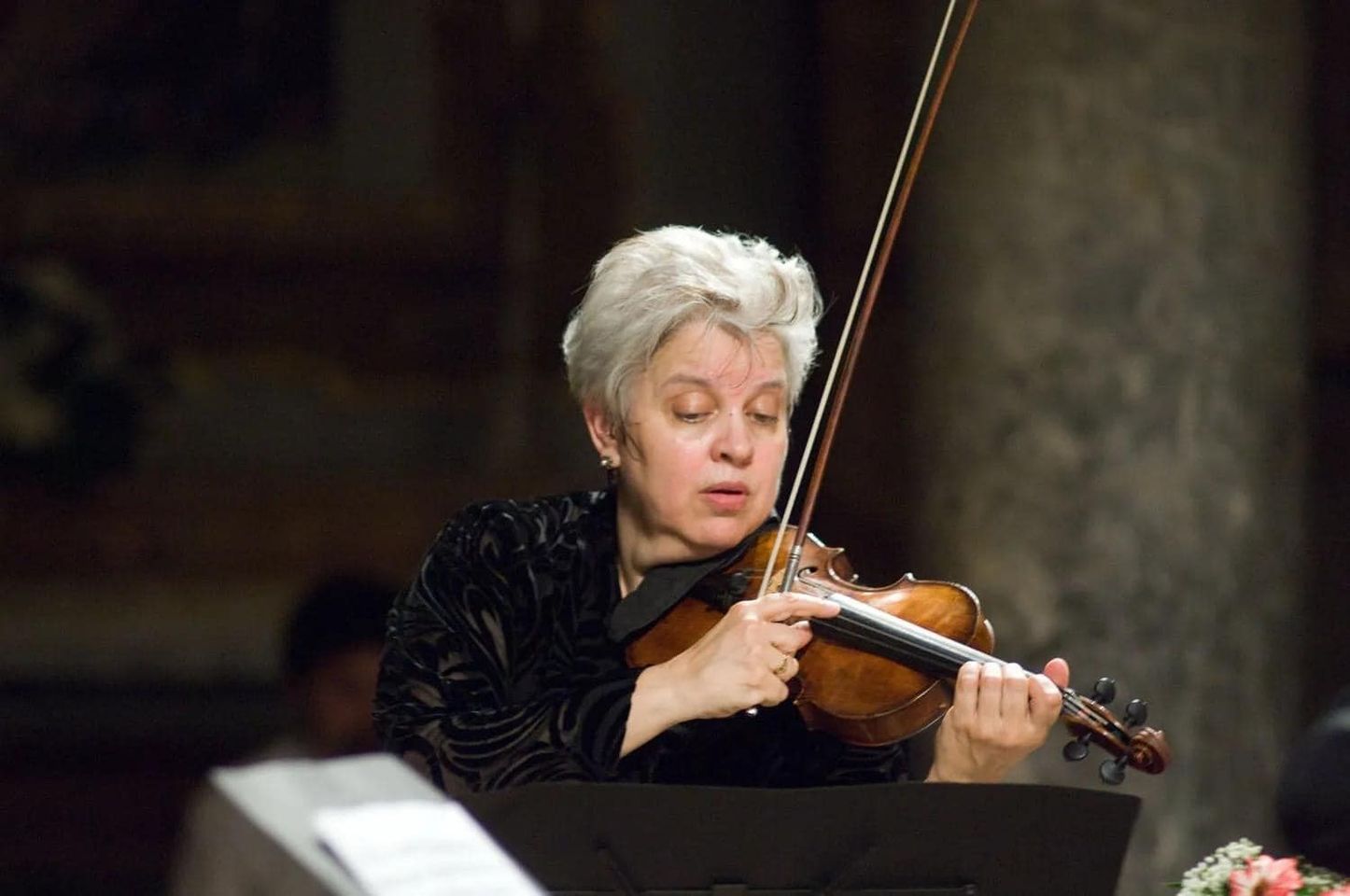
Jorja Fleezanis Minnesota Orchestra Concertmaster Dies
The violinist Jorja Fleezanis has died. Fleezanis served as concertmaster of the Minnesota Orchestra for twenty years (1989-2009). At the time of her appointment, she was only the second woman to be named concertmaster of a major U.S. orchestra.
Prior to her run in Minnesota, she was associate concertmaster in San Francisco for eight years. And before that, she was with the Chicago Symphony from the age of 23.
Fleezanis gave the world premiere of John Adams’ Violin Concerto, a work commissioned for her by the Minnesota Orchestra, in 1994.
With acclaimed pianist Garrick Ohlsson and principal cellist of the San Francisco Symphony Michael Grebanier, she formed the FOG Trio.
Public radio listeners with long memories will also remember her from her frequent appearances on “St. Paul Sunday” with Bill McGlaughlin.
Fleezanis was 70 years-old.
Plenty examples of her artistry on YouTube, both with the FOG Trio and her colleagues from the San Francisco Symphony.
Haydn & Brahms
Beethoven
Schumann
Arensky, Chausson & Saint-Saëns
Elgar
Dvořák piano trios
Dvořák quartet with members of the San Francisco Symphony
San Francisco Ravel
San Francisco Hindemith
San Francisco Shostakovich
Fleezanis interview
https://interlude.hk/in-touch-with-jorja-fleezanisconcertmaster-and-prophet/
-
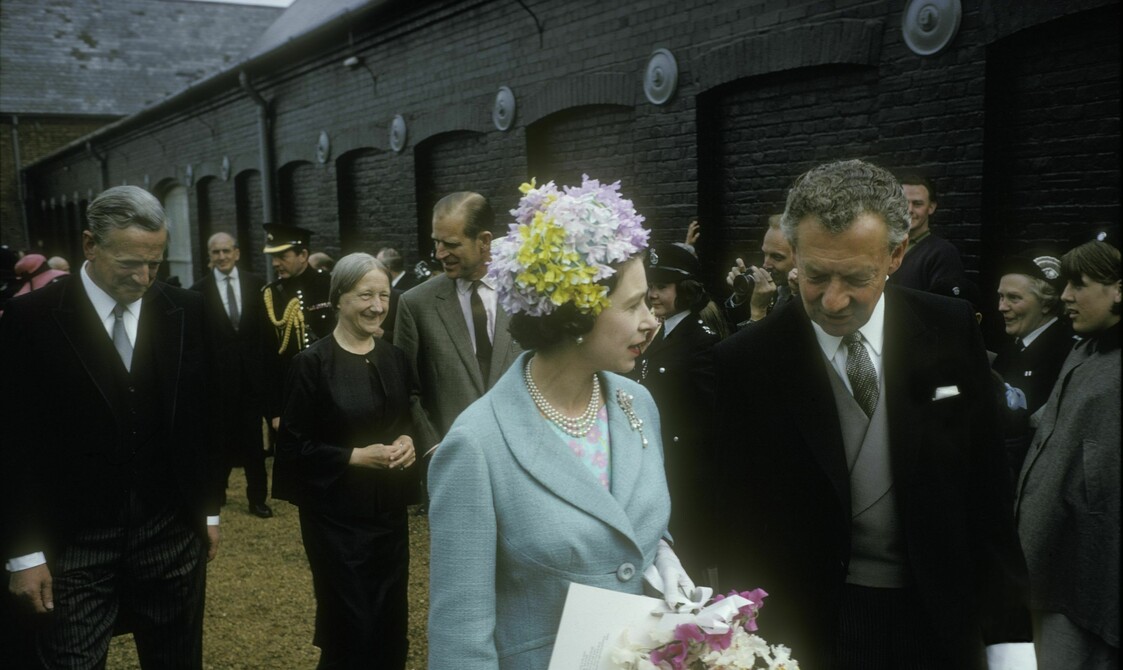
Queen Elizabeth II & Benjamin Britten’s Friendship
Thank you so much to Colin Curless, who directed me to this touching article (linked below) about Queen Elizabeth II and her exceptional kindness to Benjamin Britten toward the end of his life. Britten enjoyed a special relationship with the Royal Family. The Queen Mother was a patron of the Aldeburgh Festival, founded by Britten in 1948, and the Queen, by all appearances, was a good friend over at least the course of his last decade.
Britten wrote an opera, “Gloriana,” as part of the celebrations surrounding Elizabeth’s coronation in 1953. It was given its premiere at Covent Garden with members of the Royal Family, including the Queen, in attendance. The opera, which portrayed Elizabeth I in what many considered an uncomfortably human light, was downbeat and “modern” and rather coolly received. If Elizabeth II didn’t care for it, she didn’t hold it against him. In fact, the composer was left with the impression that she was “delighted and flattered.”
The Queen opened the Snape Maltings Concert Hall at Aldeburgh in 1967, for the festival’s 20th anniversary. After the hall was damaged by fire in 1969, again she was in attendance at its reopening in 1970.
Britten never spoke publicly about his sexuality and was very careful about public displays of affection with his muse and life partner, the tenor Peter Pears. Nevertheless, the couple came under scrutiny of the police and at one point Britten wondered if Pears would have to be set up in a sham marriage.
It was only in 1967 that same-sex relationships were decriminalized in England. (In Scotland, it was not until 1981, and in Ireland 1993.) Although homosexuality was illegal in the UK for the first 54 years of Britten’s life, the Queen tacitly acknowledged his and Pears’ relationship, and after the composer’s death, she sent Pears a personal message of condolence. In all, Britten and Pears were creative and personal partners for almost 40 years.
When Britten died in 1977, his memorial service at Westminster Abbey was headed by the Queen Mother. It’s believed that Britten had declined a knighthood some years earlier (oddly, there doesn’t seem to be a record of it), but toward the end of his life, he accepted a life peerage.
This article is the first time I ever heard that he was offered the post of Master of the Queen’s Music – unusually, by Elizabeth herself, rather than an assistant, in advance of a public announcement – which Britten felt he had to turn down in light of his failing health.
You can read more about the Queen and Britten here:
No one seems to have posted online the definitive recording of Britten’s “A Birthday Hansel,” with Pears and harpist Osian Ellis, the work composed for the Queen Mother referenced in the article. (There are other performances available if you search on YouTube.) However, I did come across this interesting 10-minute documentary, full of fascinating footage and commentary. The Queen makes an appearance around the 7-minute mark.
PHOTO: Britten and the Queen at Aldeburgh. In the background, left to right, Peter Pears, Imogen Holst (daughter of Gustav, a composer herself who served as Britten’s assistant), and Prince Philip
Tag Cloud
Aaron Copland (94) Beethoven (95) Composer (114) Film Music (151) Film Score (143) Film Scores (255) Halloween (103) John Williams (198) KWAX (233) Leonard Bernstein (105) Marlboro Music Festival (125) Movie Music (166) Mozart (91) Opera (216) Philadelphia Orchestra (91) Picture Perfect (174) Princeton Symphony Orchestra (110) Radio (90) Ross Amico (244) Roy's Tie-Dye Sci-Fi Corner (290) The Classical Network (101) The Lost Chord (269) Vaughan Williams (107) WPRB (397) WWFM (881)