Category: Daily Dispatch

  • MLK Ellington Music Meaning Faith

    MLK Ellington Music Meaning Faith

    “Everybody longs for meaning. Everybody needs to love and be loved. Everybody needs to clap hands and be happy. Everybody longs for faith. In music… there is a stepping stone towards all of these.”

    – Martin Luther King, Jr.


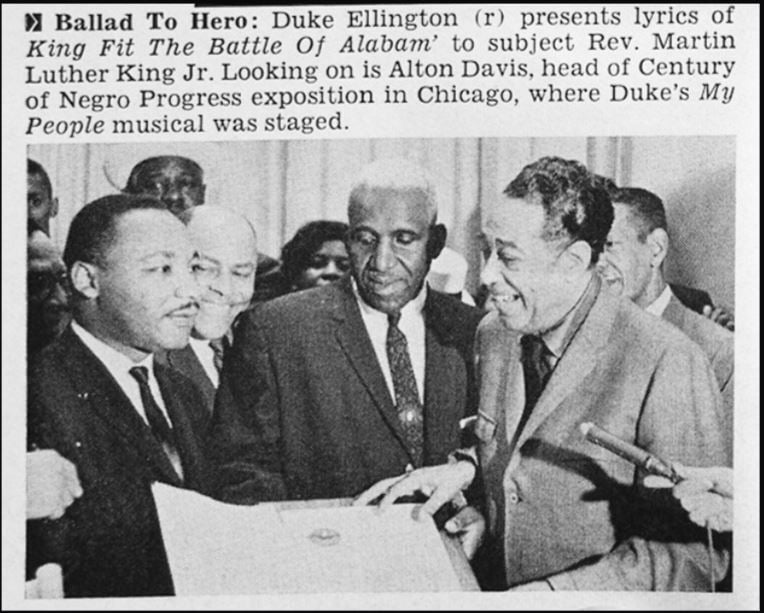
    Duke Ellington’s eulogy to MLK, “Three Black Kings” (King of the Magi, King Solomon, and Martin Luther King Jr.)

    https://www.youtube.com/watch?v=lhr1ZQ7vPeY

    “King Fit the Battle of Alabam’”

    Ellington meets MLK in Chicago

  • Everett Lee, Pioneering Conductor, Dies at 105

    Everett Lee, Pioneering Conductor, Dies at 105

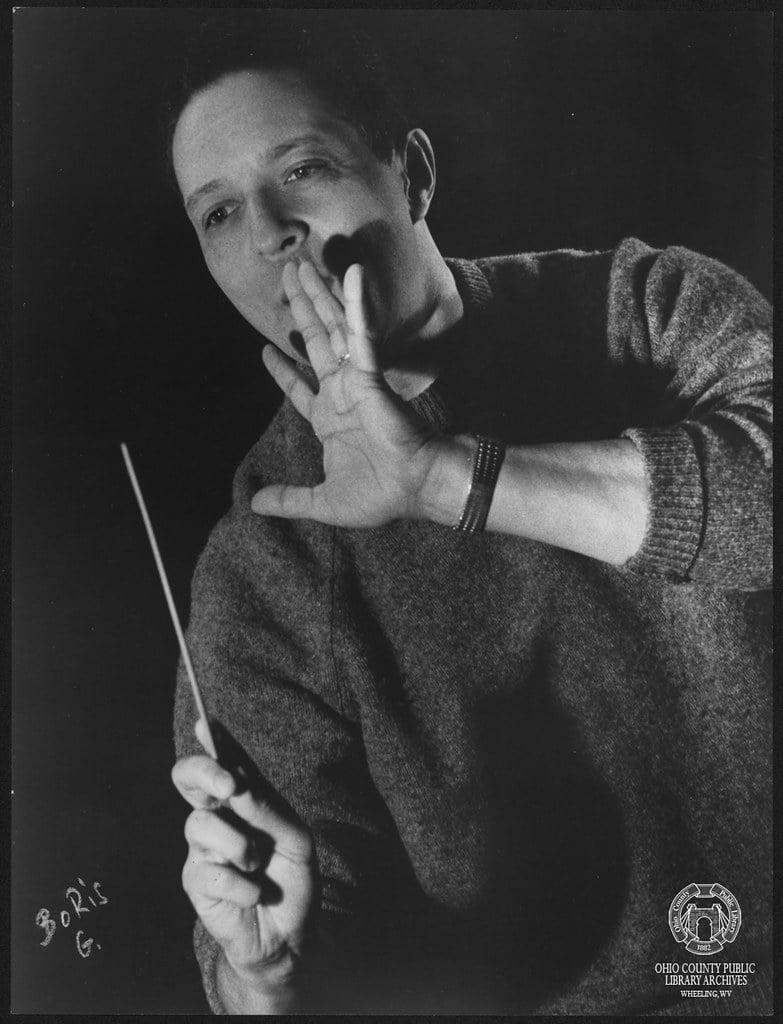
    Pioneering conductor Everett Lee has died at the age of 105. And what a lot he must have seen!

    Lee was the first African American to conduct on Broadway, rising from the pit orchestra as a substitute to direct “Carmen Jones,” and then employed by Leonard Bernstein as full-time conductor of “On the Town.” That was in 1945.

    Lee was also the first Black conductor of an established symphony orchestra below the Mason-Dixon Line (while guesting with the Louisville Orchestra) and the first to conduct a major American opera company (“La traviata” at New York City Opera in 1955, returning the following season to conduct “La bohème”).

    Lee received encouragement especially from Bernstein and Artur Rodzinski, and worked with such conductors as Leopold Stokowski and Serge Koussevitzky.

    Though regular employment seems not to have been an issue, Lee found that many of the best opportunities were closed to him on account of his race. Once, he was considered by Rodgers and Hammerstein to lead a national tour of one of their shows, but in the end, fearing trouble in the South, they decided to go with somebody else.

    To maintain his presence as a conductor, Lee organized the Cosmopolitan Symphony Orchestra. The orchestra, interracial and multiethnic, was staffed with underdogs in the field – Jews, Chinese, Slavs, Italians, and women.

    Eventually, like African American conductor Dean Dixon (born in 1915), Lee left America to seek better opportunities abroad. He moved to Munich in 1957 and was hired as music director in Norköpping, Sweden, in 1962.

    He returned to the U.S. to conduct the New York Philharmonic – orchestra of his former mentors Rodzinski and Bernstein – for the first time on January 15, 1976, a concert given in honor of Martin Luther King’s birthday. On the program was Sibelius’ Violin Concerto, Rachmaninoff’s Piano Concerto No. 3, and “Kosbro” by African American composer David Baker (Baker revealed the title was short for “Keep on Stepping, Brothers”).

    Lee’s first wife, Sylvia, was hired by the Met in 1953, becoming the first African American on the house’s staff. (Of course, Marian Anderson would be the first on stage, in 1955.) But for Everett Lee, despite invitations to guest conduct, a permanent position with a major orchestra in the United States or Europe remained elusive.

    In 1979, he became music director of the Bogata Philharmonic Orchestra of Colombia.

    Lee died on December 12 in Malmö, Sweden.


    A must-read account of Lee’s life and accomplishments:

    http://www.brooklyn.cuny.edu/web/academics/centers/hitchcock/publications/amr/v43-1/oja.php

    Everett Lee tribute, including footage of him conducting:

  • Jean-Jacques Beineix Director of Diva Dies

    Jean-Jacques Beineix Director of Diva Dies

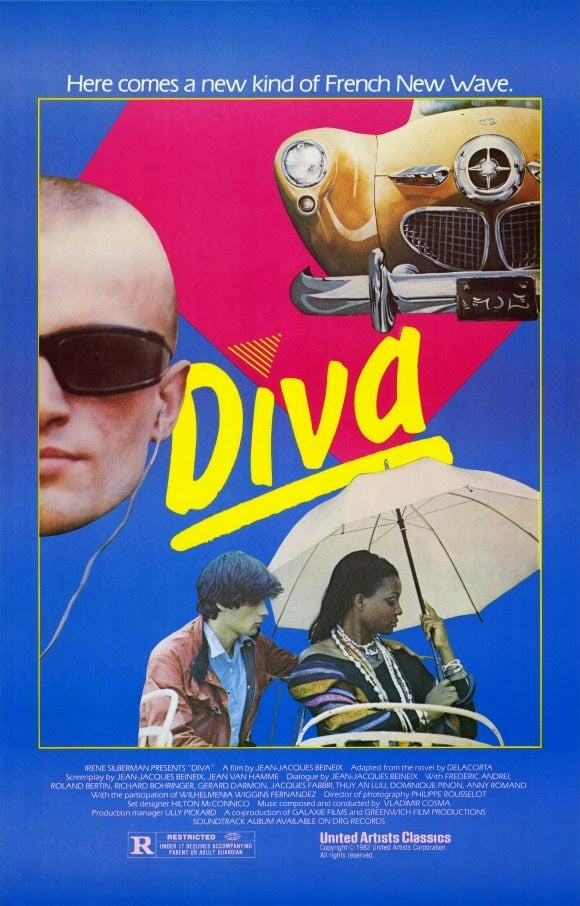
    Jean-Jacques Beineix, the director of “Diva,” has died.

    If you’ve seen “Diva,” I’m sure your memory needs no refreshing. If you haven’t seen it, it’s a fatally cool, colorful, post-New Wave French thriller, featuring Ray-Ban wearing punk gangsters, a moped-riding mailman obsessed with opera, and Philadelphia soprano Wilhelmenia Wiggins Fernandez, who sings the big aria from Alfredo Catalani’s “La Wally.” The rest of the soundtrack, which I was able to purchase at the local mall (!), was composed by Vladimir Cosma.

    I remember reading an effusive review of the film in David Denby’s column in New York Magazine and so very badly wanting to see it, figuring I never would, since (1) it was French, (2) it was 1981, and (3) I was 15 and living in the Lehigh Valley. There was no internet at the time and home video availability in those days, you’ll recall, was spotty at best. Even if I could find it, the purchase of a foreign film would have been prohibitively expensive.

    O me of little faith! I hadn’t banked on the Allentown art house, the 19th Street Theatre (now the Civic Theatre of Allentown). 19th Street was where I could see films like “El Norte,” “Fitzcarraldo,” and “My Brilliant Career,” when, living in a small town, you couldn’t expect to see them anywhere else – unless they happened to turn up later at one of the local universities. It was at 19th Street that I first saw “Diva.”

    Then, what do you know, in the mid-‘80s, it became a favorite on WHYY, Philadelphia’s public television station, so I was able to see it again and again. In the interim, I watched it on the big screen a second time in college and then at Philadelphia’s greatly missed (Theater of the Living Arts (TLA) on South Street, back in the days when it was still the city’s best movie house. I used to hit that theater three times a week. $2.50 admission with my student I.D.

    On weekdays, the double features were changed every other day, with the biggest draws, the cult favorites and crowd-pleasing classics, saved for the three-day weekend.

    “Diva” was one fun, sharp-looking film – a foreign movie for people who think they don’t like foreign movies. Kind of to the early ‘80s what “Run, Lola, Run” was to the late ‘90s.

    It’s sobering to reflect that Beineix, 75 years-old at the time of his death, was in his early 30s when he made “Diva.” Mon Dieu, how time flies.


    Wiggins sings “La Wally”

    The film’s trailer

    Beineix obituary in Variety

    https://variety.com/2022/film/news/jean-jacques-beineix-director-of-diva-and-betty-blue-dies-at-75-1235154713/

  • Australian Classical Music This Sunday

    Australian Classical Music This Sunday

    This Sunday night on “The Lost Chord,” it’s summer in Oz. Escape to the Land Down Under, for an hour of music from Australia.

    Alfred Hill was born in Melbourne in 1870, but spent much of his early life in New Zealand. He studied abroad at the Leipzig Conservatory and played second violin in the Gewandhaus Orchestra, under then-kapellmeister Carl Reinecke. He also performed in concerts conducted by Brahms, Tchaikovsky, Grieg, and Max Bruch.

    Over the course of his career, Hill founded, and/or pushed for, important institutions in both Australia and New Zealand, including one devoted to Maori studies. He composed more than 500 works, among them 12 symphonies, 8 operas, numerous concerti, a mass, 17 string quartets, two cantatas on Maori subjects, and 72 piano pieces. We’ll hear one of his brief-though-atmospheric tone pictures, “The Moon’s Golden Horn.”

    Then we’ll turn to Peter Sculthorpe, who was born in Tasmania in 1929. Sculthorpe studied at the Melbourne Conservatorium. Following a period of post-graduate struggles, he won a scholarship to study with Egon Wellesz at Oxford University. Unfortunately, he had to abandon his doctoral studies when his father fell gravely ill. In 1963, Sculthorpe became a lecturer at the University of Sydney, where he remained, more or less, until his death in 2014.

    He was one of Australia’s most-honored composers. Much of his music is concerned with Australia and its South Seas environs. The inspiration for many of his works over the decades was his admiration for, and affinity with, Australia’s indigenous cultures. Major philosophical concerns included conservation and the preservation of the environment.

    We’ll listen to “Earth Cry,” an evocative piece from 1986. Scored for didgeridoo and orchestra, the work is a plea for balance, suggestive of the Aborigine mindset of living in accordance with natural law and the needs of the land.

    Colin Brumby was born in Melbourne in 1933. Like Sculthorpe, he attended the Melbourne Conservatorium, before studying abroad – in his case, in Spain and London – then joined the staff of the music faculty at the University of Queensland. For a few years, he directed the Queensland Opera Company. He received his doctorate from the University of Melbourne, and then returned to Europe for further studies in Rome. In 1981, he received an Advance Australia Award for his services to music. He composed orchestral pieces, music for the stage, choral, chamber and instrumental works, until his death in 2018.

    If you love the concertos of Sergei Rachmaninoff, you owe it to yourself to hear Brumby’s Piano Concerto No. 1, from 1984. The work is written in the grand romantic style for a former classmate of some 30 years earlier, the pianist Wendy Pomroy. The piece certainly is a throwback to an earlier age and an unremitting delight.

    Slip another shrimp on the barbie, crack open a Foster’s, and join me for “Left Out Back,” neglected music from Australia, this Sunday night at 10:00 EST, on WWFM – The Classical Network and wwfm.org.
  • THX 1138 Robert Duvall Dystopia

    THX 1138 Robert Duvall Dystopia

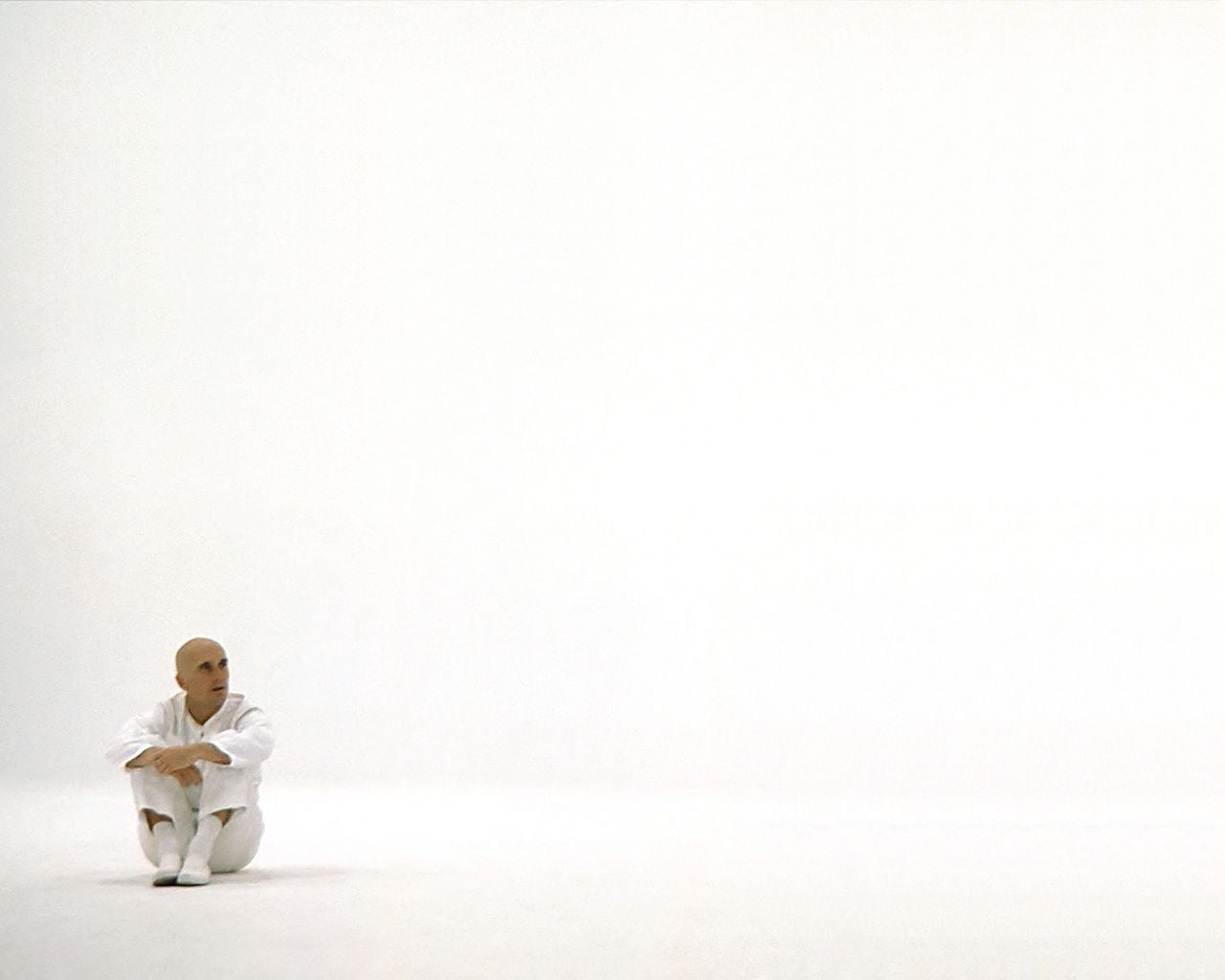
    Sex, drugs, and Robert Duvall. Roy and I enjoy a warm chat about a chilly dystopia, in our conversation about “THX 1138” (1971). Miraculously, the show didn’t simply devolve into George Lucas bashing. Take your medicine, and see for yourself here:

    Next week, we’ll continue with the winter of our discontent, when we discuss “The Abominable Snowman” (1957), with the unlikely team of Forrest Tucker and Peter Cushing. You ain’t seen nothing yeti. Join us next Friday evening at 7:00 EST!

    IN THE MEANTIME, tomorrow night, Roy will host a visit from actor CARL HELD. Held will talk about his prolific career in classic television, including appearances on “Star Trek,” “The Outer Limits,” “The Invaders,” “Mission: Impossible,” “Perry Mason,” “The F.B.I.,” “The Lotus Eaters,” “The Saint,” “The Big Valley,” “Space: 1999,” “The Incredible Hulk,” “Charlie’s Angels,” and “Falcon Crest,” among others.

    Don’t miss this special appearance, on the next Roy’s Tie-Dye Sci-Fi Corner. The conversation with be HELD, this Sunday evening at 7:00 EST!

    https://www.facebook.com/roystiedyescificorner

Tag Cloud

Aaron Copland (93) Beethoven (95) Composer (114) Film Music (136) Film Score (143) Film Scores (255) Halloween (94) John Williams (195) KWAX (229) Leonard Bernstein (103) Marlboro Music Festival (125) Movie Music (151) Mozart (88) Opera (207) Philadelphia Orchestra (89) Picture Perfect (174) Princeton Symphony Orchestra (108) Radio (88) Ross Amico (244) Roy's Tie-Dye Sci-Fi Corner (290) The Classical Network (101) The Lost Chord (268) Vaughan Williams (103) WPRB (396) WWFM (881)

DON’T MISS A BEAT

Receive a weekly digest every Sunday at noon by signing up here


RECENT POSTS