Category: Daily Dispatch

  • Paris Blues Guitarist Serge Reggiani Mystery Solved

    Paris Blues Guitarist Serge Reggiani Mystery Solved

    A few days ago, following the death of Sidney Poitier, I shared a clip from “Paris Blues” (1961), in which Louis Armstong engages in a “battle royal” in a subterranean jazz club with a trombonist played by Paul Newman. Poiter’s character plays tenor sax.

    Unsurprisingly, the actors are ghosted on the soundtrack by Murray McEachern (Newman) and Paul Gonsalves (Poitier), both members of Duke Ellington’s band. Ellington also composed the film’s underscore. To refresh your memory, here’s the clip I included with the original post:

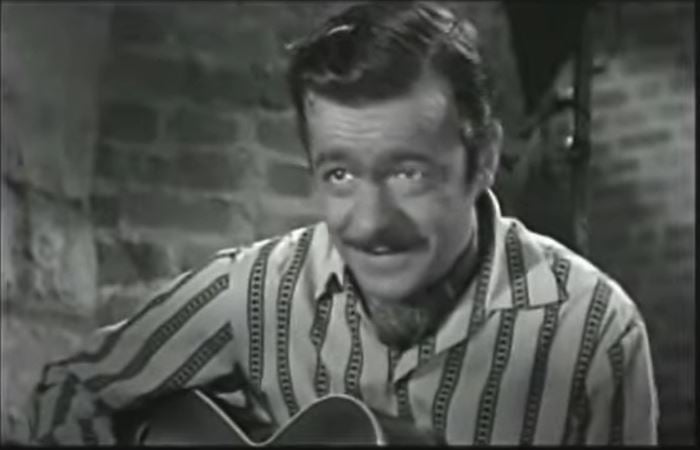
    Now, only this morning, I was asked about the identity of the guitarist in the scene. The answer turned out to be pretty involved, so to increase the return on my investment, I figured I might as well recycle it as a separate post. I hope you find it interesting:

    “This was a tangle that took me a little while to unravel. There are two guitarists credited among the personnel of Ellington’s offscreen band (ghosting for Newman and the rest): Les Spann (who is black) and Jimmy Gourley (who is white, but looks nothing like the character).

    “For a minute, I thought maybe it could be Johnny Reinhardt, younger brother of Django Reinhardt (who died in 1953). Johnny was also featured in a film called ‘Paris Blues,’ but I believe this was an entirely different animal, possibly a short. None of these guitarists resembles the musician onscreen.

    “Finally, I figured out it was actor Serge Reggiani (photo attached), credited as The Gypsy. A few years after his appearance in ‘Paris Blues,’ Reggiani embarked on a parallel career as a singer of French chansons.

    “I was thrown off the scent by TCM, of all things, since they misattribute the part to Roger Blin in the clip below. Blin, who actually played Fausto the Moor, was also a renowned director, especially in connection with the plays of Samuel Beckett. He staged the first performances of ‘Waiting for Godot,’ ‘Happy Days,’ and ‘Endgame’ (the latter of which was dedicated to him).

    “Here are a few glimpses of Reggiani the actor, misidentified as Blin:

    https://www.tcm.com/video/262385/paris-blues-1961-movie-clip-wheres-the-gypsy?fbclid=IwAR3z5EDnY0Ojvu6Brgz3xU-AexqfFBl4Cb_DPx_erF08UDfX4aWMVX_CgTM

    Another musical mystery solved. I hope Turner Classic Movies sees this and offers me a job!


    BONUS: Reggiani sings “Sarah”

  • Italian Orchestra at Dubai Expo Hear Rossini Verdi

    Italian Orchestra at Dubai Expo Hear Rossini Verdi

    I received a note from a cousin living in Palermo that her orchestra, the Orchestra Sinfonica Nazionale dei Conservatori Italiani (ONCI), was chosen to represent Italy at the Dubai Expo last month. As the name suggests, musicians were selected by audition from conservatories across the country. Last night, I finally settled in to enjoy their committed performances of music by Rossini, Donizetti, Bellini, Mascagni, Puccini, and Verdi. Perhaps you will too. Here’s the complete concert, presented on December 14:

    https://virtualexpodubai.com/listen-watch/events/italy-italian-conservatory-orchestra?fbclid=IwAR0PDUFh14rS_znKDpt7eWEoIfi_VwjVamPH-OcbsMpHHlwAmsdTTlmtJ9U#video

    With more about my talented cousin here:

    La giovane violinista nissena Alice Rosapane protagonista il 14 dicembre a Dubai con l’Orchestra Nazionale dei Conservatori Italiani.

  • Leifs Saga Symphony Viking Weekend on WWFM

    Leifs Saga Symphony Viking Weekend on WWFM

    This Sunday night on “The Lost Chord,” Viking Weekend continues! Brace yourself for Icelandic composer Jon Leif’s “Saga Symphony.” Scored for tuned anvils, stones, whip, shields of iron, leather, and wood, great wooden casks played by large hammers, and six ancient long horns, or lurs, the work is an intriguing blend of extravagance and austerity.

    Leifs studied in Leipzig and wound up stranded in Nazi Germany for much of World War II. You’d think the National Socialists would have gone ape for this musical advocate of Norse heroism, but two things worked against him: the modernist language of much of his output, and the fact that his wife and children were Jewish. Also, he found Wagner repellent, asserting that Wagner completely misunderstood the essence and artistic tradition of the North. Public performances of Leif’s works were discouraged (and would have been impractical anyway). Under the circumstances, he preferred to attract as little attention to himself as possible. He found escape in rereading the Icelandic sagas, even as he was used for propaganda purposes to strengthen Germany’s relations with Scandinavia.

    Leifs finally managed to obtain permission to leave Germany in 1944. Unfortunately, suspicion of Nazi associations further hindered acceptance of his music abroad. It was only with a series of compact disc recordings released on the Swedish label BIS, beginning in the 1990s, that Leifs – who died in 1968 – was revealed to be Iceland’s most important composer, with a voice as distinctive as any of his time.

    Iceland of a hundred years ago was a very different place than it is now. Leifs didn’t hear his first orchestra until he traveled to Leipzig. The “Saga Symphony” is a direct response to Franz Liszt’s “A Faust Symphony,” a performance of which sent the young composer into ecstasies. He went home and immediately began work on the piece we’ll hear tonight. However, his own approach to the symphony is quite different from Liszt’s. In terms of symphonic development, there is none to speak of. In its place are evocative fields of static harmonies.

    Each of the work’s five movements is a character portrait of a hero from the Norse sagas: the vitriolic warrior Skarphéðinn Njálsson (Njál’s Saga), who hacks and hews with his battle axe; the strong-willed Guðrún Ósvífsdóttir (Saga of the Laxardals), who avenges herself against her husband’s killer; the latently heroic comic braggart and coward Björn of Mörk, who takes shelter behind the swashbuckler Kári Sölmundarson, as Kári avenges the deaths of Njál and his sons; Grettir Ásmundarson, who vanquishes the ghost of Glámr in a wrestling match, only to be haunted ever after; and the warrior-poet Tormod Kolbrunarskald (The Foster Brother’s Saga), who pulls an arrow from his heart and even in the throes of death formulates an intricate poem.

    Greet your fate with courage and stoicism. Join me for “Liking the Viking,” this Sunday night at 10:00 EST, on WWFM – The Classical Network and wwfm.org

  • Marilyn Bergman Legendary Lyricist Dies at 93

    Marilyn Bergman Legendary Lyricist Dies at 93

    16-time Academy Award nominated lyricist Marilyn Bergman has died. Bergman worked with her husband, Alan, for over half a century, to expand the American Songbook with insistently memorable fare, including “In the Heat of the Night” – the title song of the film starring Sidney Poitier, who died on Thursday at 94 – with music by Quincy Jones (it’s sung by Ray Charles on soundtrack), “Nice ‘n’ Easy” for Frank Sinatra, “What Are You Doing the Rest of Your Life” for the film “The Happy Ending,” and “You Don’t Bring Me Flowers,” with Neil Diamond. Their songs were performed and recorded by Fred Astaire, Tony Bennett, Rosemary Clooney, Aretha Franklin, and Michael Jackson.

    The Bergmans were recognized with three Oscars, for “The Windmills of Your Mind,” from “The Thomas Crown Affair,” the title song from “The Way We Were,” and their body of songs for “Yentl.” Along the way, they also collected three Emmys and a Grammy Award for Song of the Year (again, for “The Way We Were”).

    Composer-collaborators included Marvin Hamlisch, Henry Mancini, Dave Grusin, John Williams, and especially Michel Legrand.

    Marilyn Bergman began formulating her first lyrics following an accident in college, after a fall down the stairs broke both her shoulders. Unable to play the piano or even write, she began preserving her inspirations on tape.

    While both Bergmans hailed from Brooklyn (Marilyn’s maiden name was Keith), they didn’t meet until they were in California. The couple wed in 1958.

    The team was inducted into the Songwriters Hall of Fame in 1980. At the time of her death Marilyn was 93 years old. She is survived by her husband, now 96.


    “The Windmills of Your Mind”

    “In the Heat of the Night”

    “You Don’t Bring Me Flowers”

    “What Are You Doing the Rest of Your Life”

    “The Way We Were”

  • Happy Birthday Robert Moran Composer & Legend

    Happy Birthday Robert Moran Composer & Legend

    Happy birthday, Robert Moran, the only composer who’s had the wisdom to repeatedly top off my wine glass with chilled vodka in the middle of recording an interview at his home. Keep on flying high (over Albania)!

    An aria from Bob’s opera “Desert of Roses”

    Selections from “Trinity Requiem”

    “Alice” for Scottish Ballet

    Looking groovy and introducing his “Lunchbag Opera” for the BBC

    “Buddha Goes to Bayreuth”

    “Modern Love Waltz” by Philip Glass, arranged by Robert Moran for accordion and cello

    “Waltz. In Memoriam Maurice Ravel”

Tag Cloud

Aaron Copland (93) Beethoven (95) Composer (114) Film Music (136) Film Score (143) Film Scores (255) Halloween (94) John Williams (195) KWAX (229) Leonard Bernstein (103) Marlboro Music Festival (125) Movie Music (151) Mozart (88) Opera (207) Philadelphia Orchestra (89) Picture Perfect (174) Princeton Symphony Orchestra (108) Radio (88) Ross Amico (244) Roy's Tie-Dye Sci-Fi Corner (290) The Classical Network (101) The Lost Chord (268) Vaughan Williams (103) WPRB (396) WWFM (881)

DON’T MISS A BEAT

Receive a weekly digest every Sunday at noon by signing up here


RECENT POSTS