I can hardly hear myself think, with twelve drummers drumming!
While I am generally all for extending Christmas for as long as possible, we have come finally to the twelfth day, the Feast of the Epiphany, and the official close of the season. At least in the West. For the Orthodox, today is Christmas Eve.
For the rest of us, this is traditionally the day to take down the Christmas tree and all the festive decorations and to let the tree spirits go about their business. Our wise forebears believed that it is bad luck to take down the decorations earlier. Taking them down later is equally unlucky, so that if you miss the date, you’re supposed to leave everything up for the rest of the year. Ignore this advice at the peril of your crops!
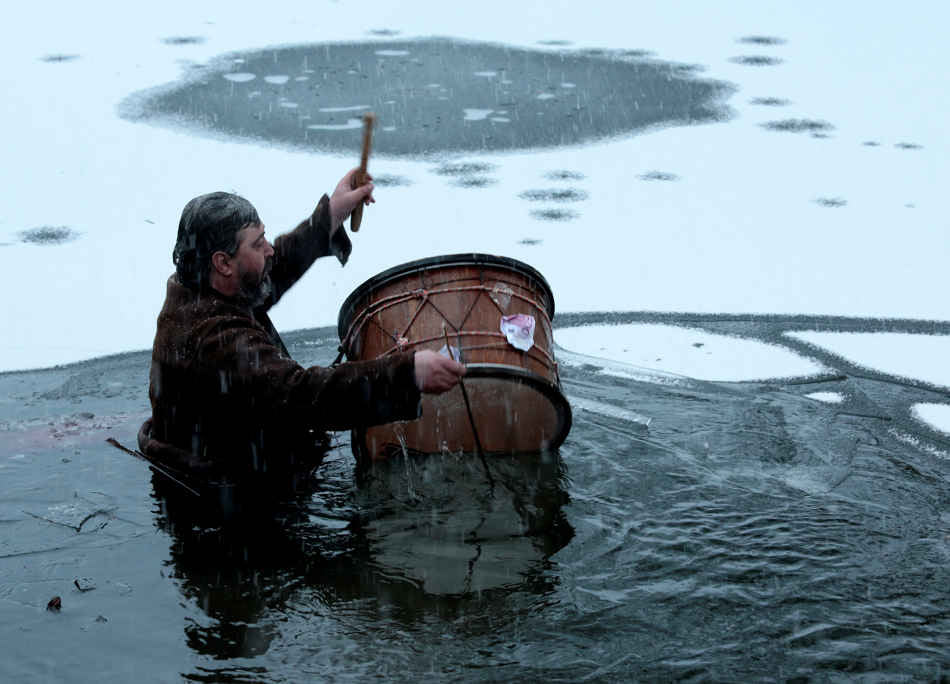
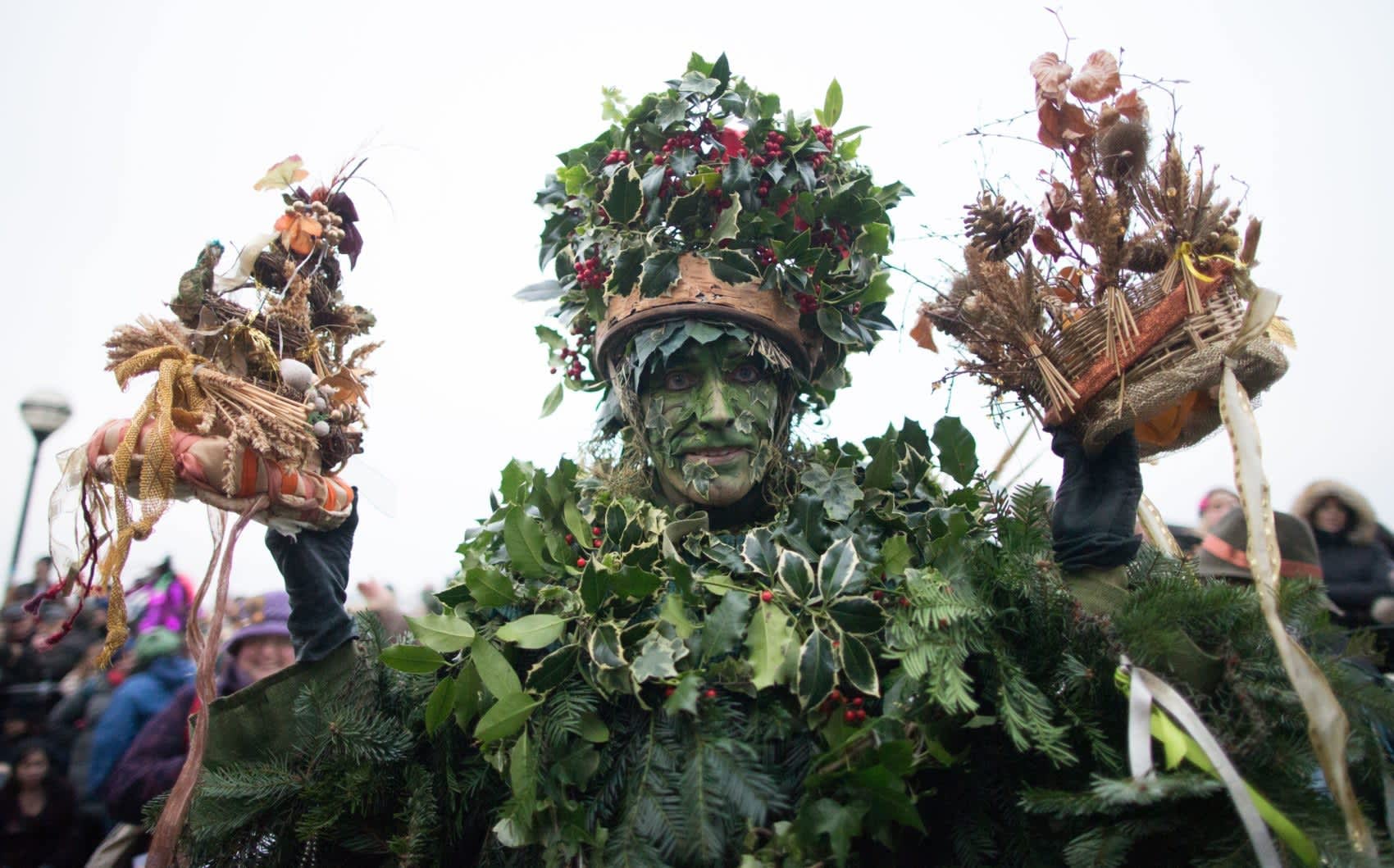
I hope La Befana, the Christmas witch, was good to you. Here are some photos of some other Epiphany celebrations, including one that involves pounding a drum while standing in frigid water.
And in case you missed it yesterday, here again is the last section of Respighi’s tone poem “Feste Romane” (“Roman Festivals”), titled “La Befana.” It’s often given in English as “Epiphany,” but it’s really named for the Christmas witch, whom Italians embrace as part of their January 6 celebrations.
Legendary hornist Dale Clevenger has died. Clevenger played for the American Symphony Orchestra (under Leopold Stokowski) and the Kansas City Philharmonic (where he was principal), before finding a permanent roost with the Chicago Symphony Orchestra. He served as principal there from 1966 to 2013. Music directors and principal conductors during that time included Jean Martinon, Sir Georg Solti, Daniel Barenboim, Bernard Haitink (who died in October), and Riccardo Muti.
Clevenger shared a Grammy Award with his colleagues in the brass sections of the Chicago Symphony and Philadelphia and Cleveland Orchestras, for their now-classic 1968 collaboration “The Antiphonal Music of Gabrieli.”
In 2003, he gave the world premiere of John Williams’ Horn Concerto. He was also acclaimed for his performances of Mozart and Richard Strauss.
Clevenger died yesterday in Italy. He was 81 years old.
In Strauss’ “Till Eulenspiegel”
From Mahler’s Fifth Symphony
Playing Haydn
Benjamin Britten’s “Serenade for Tenor, Horn and Strings”
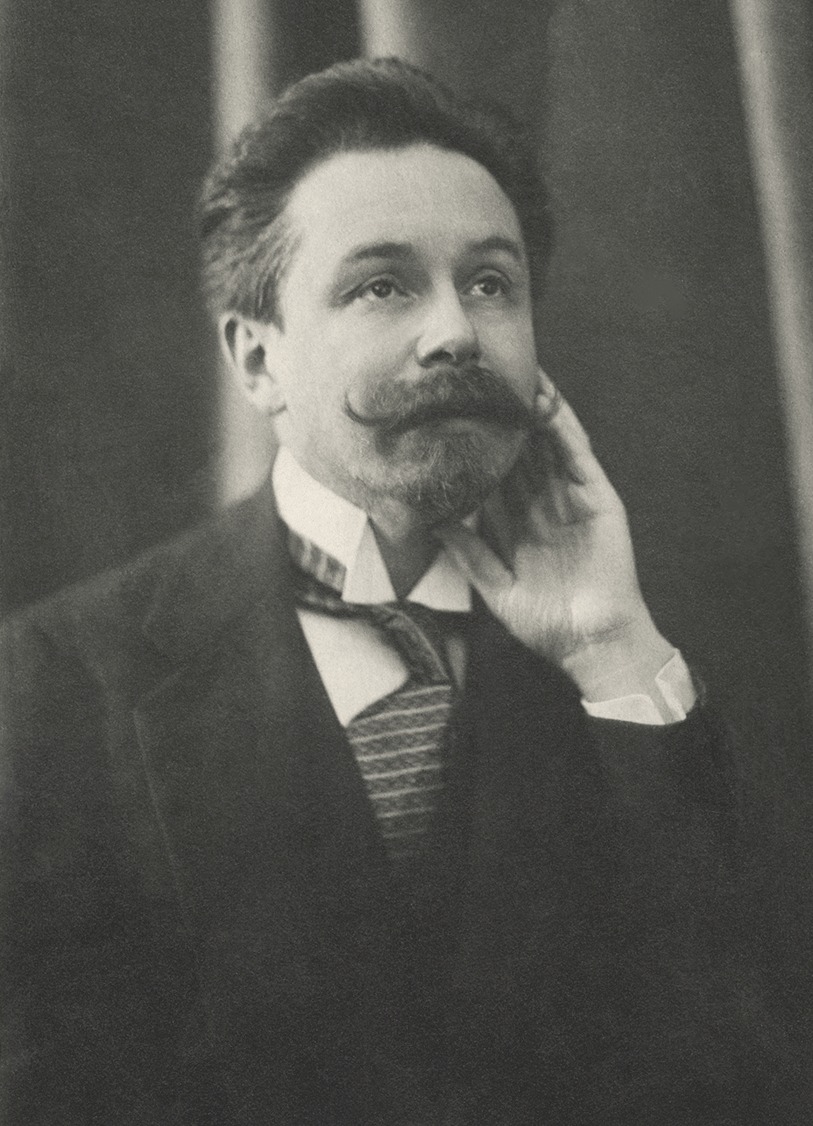
How crazy was Alexander Scriabin? This documentary will give you a pretty good idea. Only, in providing a glimpse into what made him tick, paradoxically, it makes him seem almost sane.
Overheated, roiling, euphoric – Scriabin’s music sprang from an impassioned, highly idiosyncratic logic. He began as an ardent admirer of Chopin and developed into a harmonically complex thinker, pushing into atonality and serial composition. He was also influenced by synesthesia, associating specific colors with various notes and keys.
Pantheism, Nietzsche, and Madame Blavatsky all left their marks. Ultimately, he came to regard himself as a messiah, and he didn’t necessarily mean it metaphorically. He wrote music that he believed quite literally would usher in a new world– a “symphony of fragrances,” scored for, among other things, bells suspended by ribbons from clouds – the piece performed in the foothills of the Himalayas over a span of seven days and nights, at the end of which the human race as we know it would be replaced by nobler beings.
Death. Love. Peace. It was all the same to Scriabin.
The documentary includes commentary by Vladimir Horowitz, Vladimir Ashkenazy, Mikhail Pletnev, Håkon Austbø, and Alexander Zemetin, who, for over a quarter century, worked at a realization of Scriabin’s “Prefatory Action” (itself three hours in length) to the apocalyptic “Mysterium.”
Don’t be confused by the “Old Style” grave marker. The Julian calendar fixes Scriabin’s birthday on December 25, 1871. With the adjustment to the Gregorian system, adopted by Russia in 1918, Scriabin was born on this date – January 6 – 150 years ago.
In his comparatively brief life, Scriabin aimed very high indeed. As if in punishment for his hubris, his wings were melted by a carbuncle on his upper lip. He died of blood poisoning in April of 1915, at the age of 42.
Brilliant. Highly-strung. Visionary. Ecstatic. Like the Titan of his orgiastic symphonic poem for piano, orchestra, and clavier à lumières, he was Promethean.
Happy birthday, Alexander Scriabin.
“Alexander Scriabin – Towards the Light/Calculation and Ecstasy” (1996)
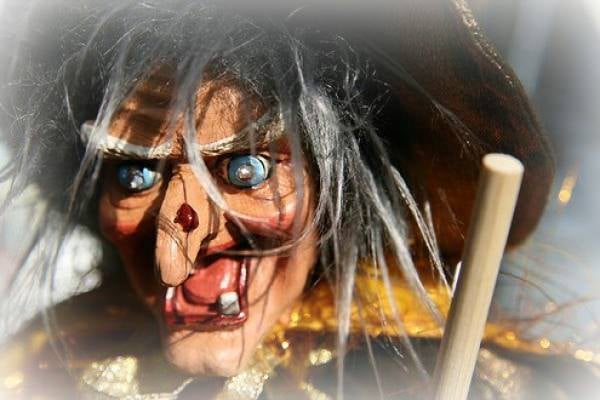
So you think you’ve dodged the wrath of Krampus, and you’ve pulled the wool over Santa’s eyes… I hope you are as fortunate with LA BEFANA, THE CHRISTMAS WITCH!
Tonight is her night. Hang your stockings by the chimney with care.
Believe it or not, if you’re steeped in the standard classical music repertoire, you’ve probably been listening to music for La Befana for many years. It forms the last section of Respighi’s tone poem “Feste Romane” (“Roman Festivals”). The thing is, it’s usually translated as “Epiphany,” probably to avoid any awkwardness at having to explain this particular occult Christmas anomaly.
Once they have sufficiently recovered from New Year’s, a lot of people take down their Christmas lights and dismantle their trees. (On the other hand, too many seem to leave them up until spring.) After all, Christmas is past, right? Wrong!
January 5, the eve of Epiphany, is Twelfth Night – the Twelfth Day of Christmas – or is it? Well, it depends on when you start the count. Is Christmas Day the First Day, or should we begin counting the day after? The day after would make January 6, Epiphany (the Christian feast commemorating the visit of the three Magi to the Baby Jesus), the Twelfth Day, which would seem to make sense.
But is Epiphany the Twelfth Day, or should Twelfth Night, a night of reveling to mark the last day of Christmas, really to be observed on the eve of Epiphany, just as Christmas Night, in England anyway, is actually Christmas Eve? The Christian world is divided – and that is only taking into account the West!
Then there’s “Old Twelfth Night” (January 17), but that’s for another post.
In any case, according to tradition, it’s perfectly fine to still have the tree and lights up, but it is bad luck to keep Christmas decorations on display beyond Epiphany. Apparently it was the Victorians who first said so, as a signal that it’s time for everyone to get back to work. The Tudors, on the other hand, kept partying right on through February 1, the eve of Candlemas (the presentation of the Christ Child at the Temple in Jerusalem).
As for Shakespeare’s play, “Twelfth Night,” which would seem to have nothing at all to do with Christmas, it is a charming corollary of a season of merriment, masked balls, and misrule. The first performance took place on Candlemas, 1602.
We may not be able to come to a consensus on the Twelfth Day, but we can say with certainty that the night of January 5 marks the arrival of Befana, the Christmas witch. Befana is the wizened crone who bestows gifts and happiness upon the good children of Italy. If the children are bad, they get a lump of coal. (If the family is poor, they get a stick.) It’s traditional to leave a glass of wine and a tasty morsel for Befana. In return, she will sweep the floors with her broom, symbolically sweeping away the problems of the old year.
Think about that when you worry that your tree is losing too many needles.
Johan Wagenaar, “Twelfth Night Overture”
Mario Castelnuovo-Tedesco, “Twelfth Night Overture”
Glenn Gould, “Twelfth Night: Incidental Music”
Samuel Barber, “Twelfth Night”
Henry Purcell, “If music be the food of love”
Sir Thomas Morley, “O mistress mine”
Erich Wolfgang Korngold, “O mistress mine”
Roger Quilter, “O mistress mine”
Amy Beach, “O mistress mine”
Sir Charles Villiers Stanford, “The rain, it raineth everyday”